Reading Skills Reading Fiction Worksheets for Ages 3-9
5 filtered results
-
From - To
Help your child develop essential reading skills with our engaging Reading Fiction worksheets, designed for children ages 3-9. At Kids Academy, we focus on nurturing young readers through fun and interactive activities that build comprehension, vocabulary, and storytelling abilities. Each worksheet offers age-appropriate content that ignites imagination and fosters a love for reading. Whether exploring characters, plots, or settings, our worksheets make learning enjoyable and effective. Prepare your child for a lifetime of literacy and success by incorporating our expertly crafted resources into your home or classroom today. Visit Kids Academy to start your child's reading adventure!
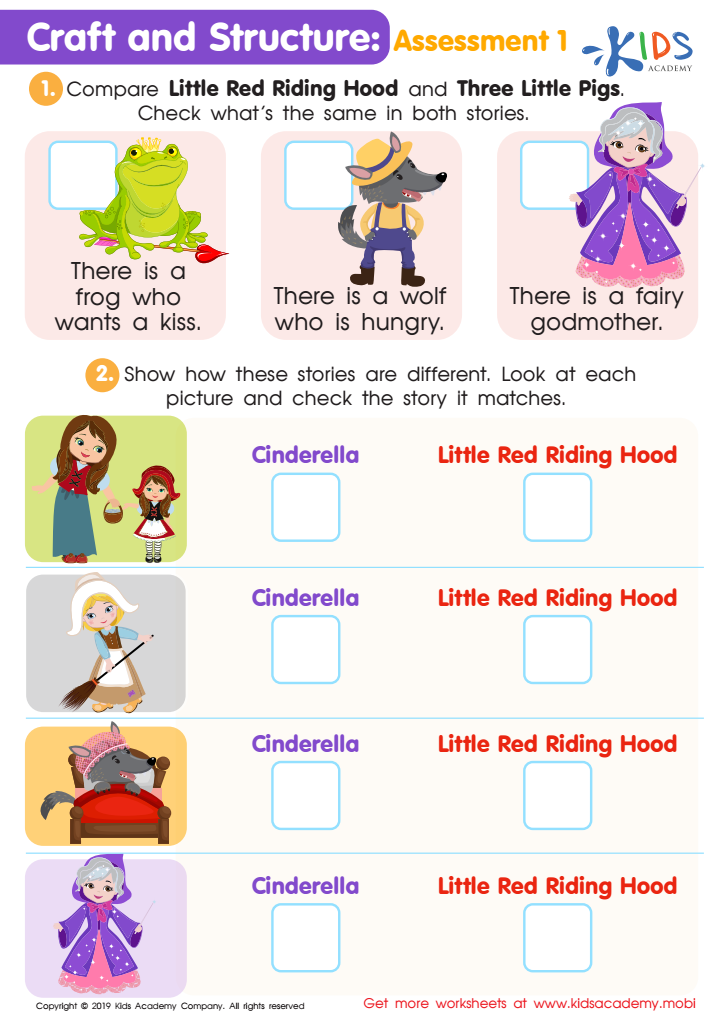
Craft and Structure: Assessment 1 Worksheet
 Assign to My Students
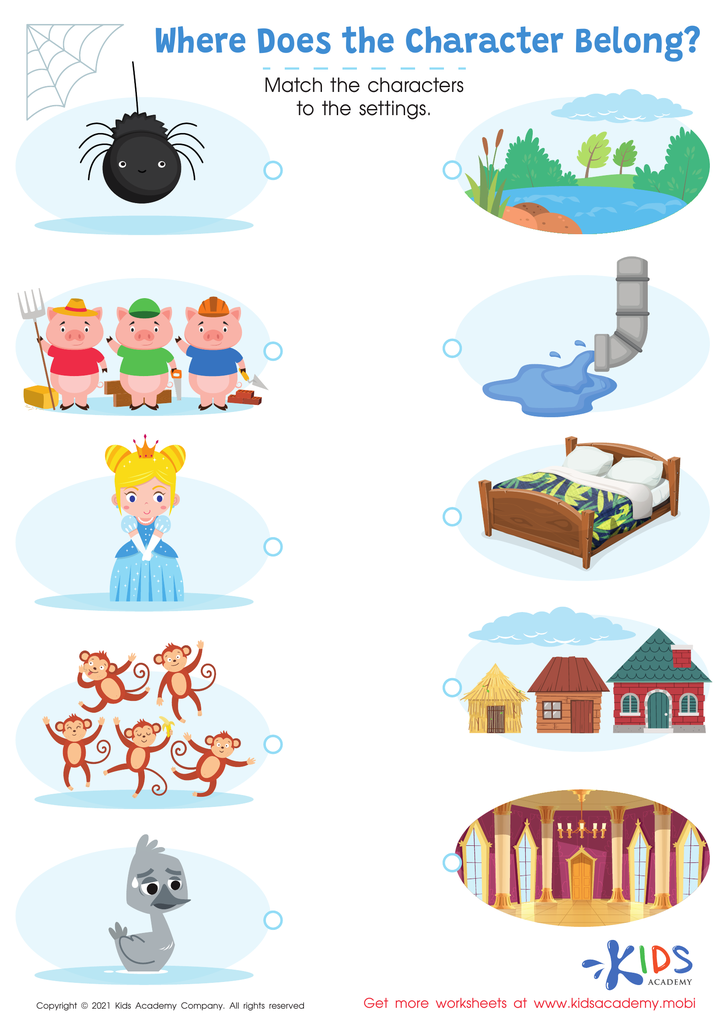
Where Does the Character Belong? Worksheet
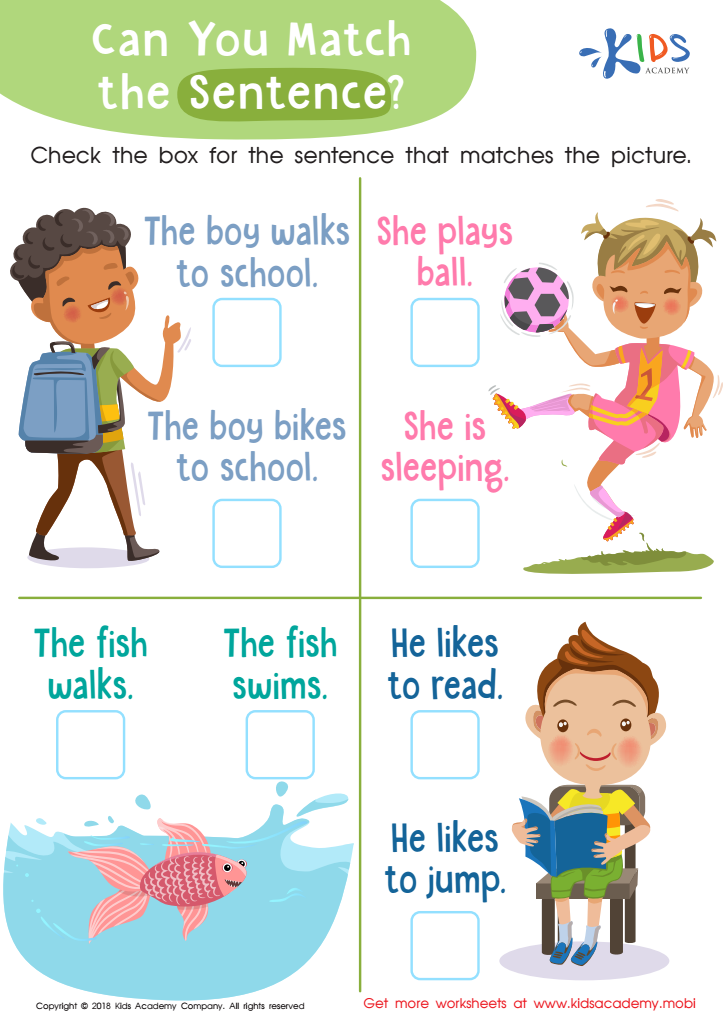
Can You Match the Sentence? Worksheet
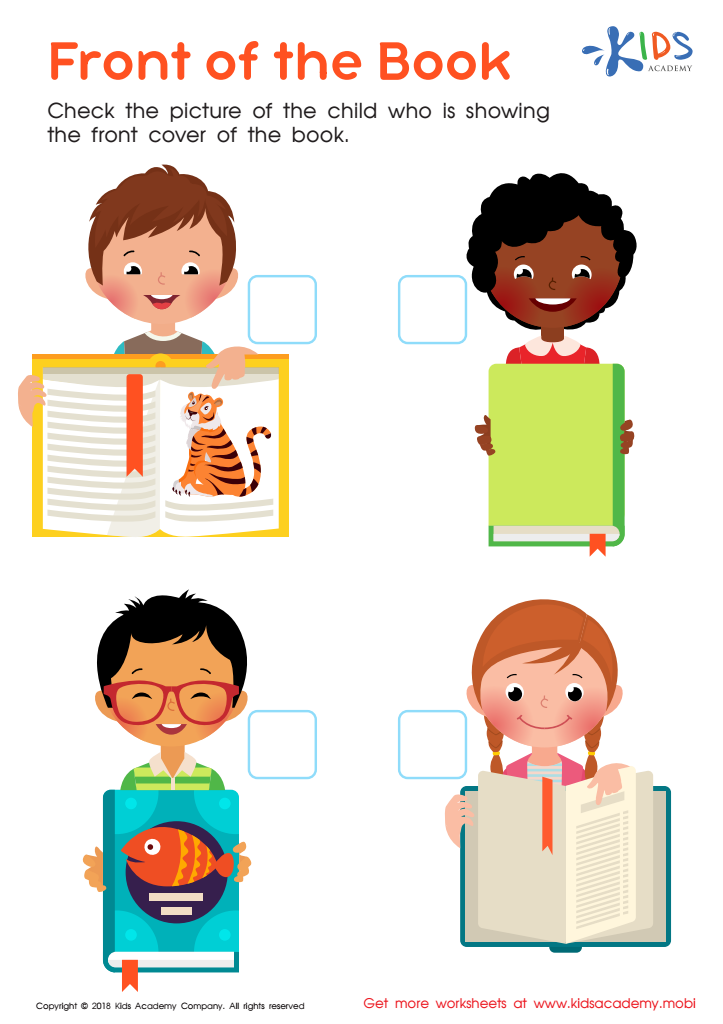
Front of the Book Worksheet
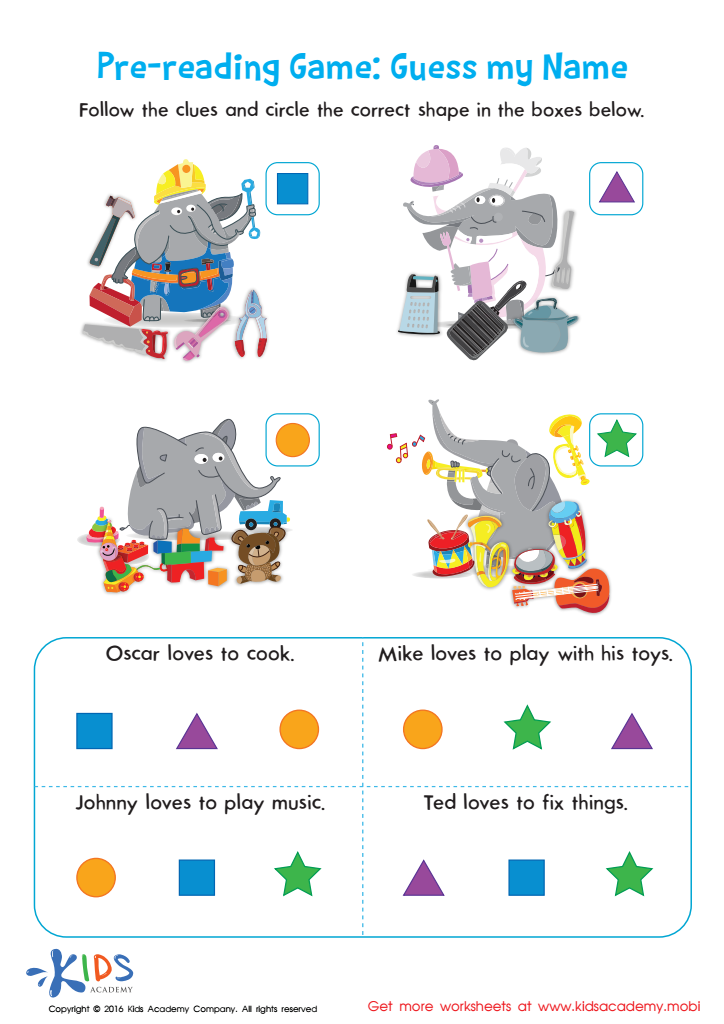
Pre Reading Worksheet Guess My Name







Reading skills are foundational to a child's development, and reading fiction plays a critical role in this journey. For ages 3-9, engaging with fiction not only enhances literacy but also sparks imagination, creativity, and emotional intelligence. When parents and teachers prioritize reading fiction, they offer children a window into diverse worlds, cultures, and experiences, broadening their perspectives.
Early exposure to reading helps develop strong vocabulary and comprehension skills. Fiction introduces new words in context, making it easier for young minds to grasp and retain them. Additionally, reading stories aloud fosters listening skills and encourages phonemic awareness, both crucial for literacy development. As children follow narratives, they learn sequencing, critical thinking, and the ability to predict outcomes.
Moreover, fictional stories often convey moral lessons and promote empathy. Characters and their adventures prompt children to identify and understand different emotions and recauthenticate perspectives. This emotional engagement builds social skills and helps children manage their feelings.
Lastly, reading together strengthens bonds between parents, teachers, and children. This shared activity provides emotional reassurance and promotes a lifelong love of reading. By focusing on reading fiction, caregivers and educators lay the groundwork for well-rounded, curious, and empathetic individuals while instilling essential academic skills.








