Visual interpretation Reading Fiction Worksheets for Ages 3-9
5 filtered results
-
From - To
Discover our engaging "Visual Interpretation Reading Fiction Worksheets" designed for children ages 3-9. These interactive resources encourage young learners to explore stories through visual cues and images, enhancing their comprehension and critical thinking skills. Each worksheet guides kids in interpreting scenarios, understanding character emotions, and connecting illustrations to narratives. Perfect for classroom or at-home use, these worksheets foster a love for reading by making it fun and relatable. Support your child's educational journey with creative activities that spark imagination and enhance their understanding of fiction. Dive into a world of stories and visuals that enrich your child's reading experience today!
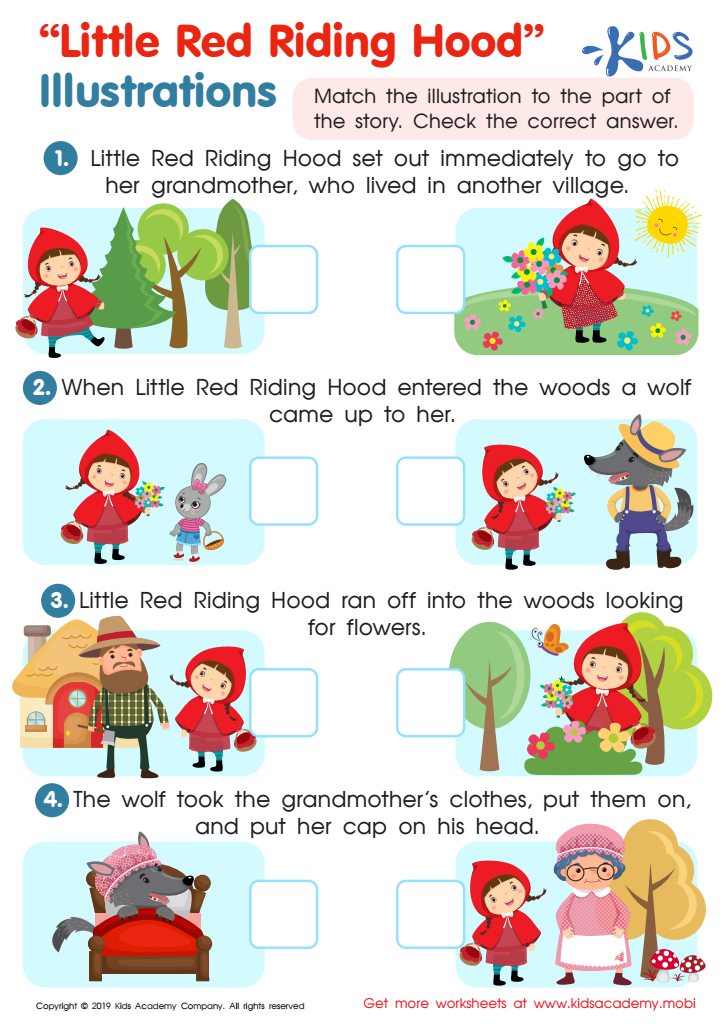
Little Red Riding Hood: Illustrations Worksheet
 Assign to My Students
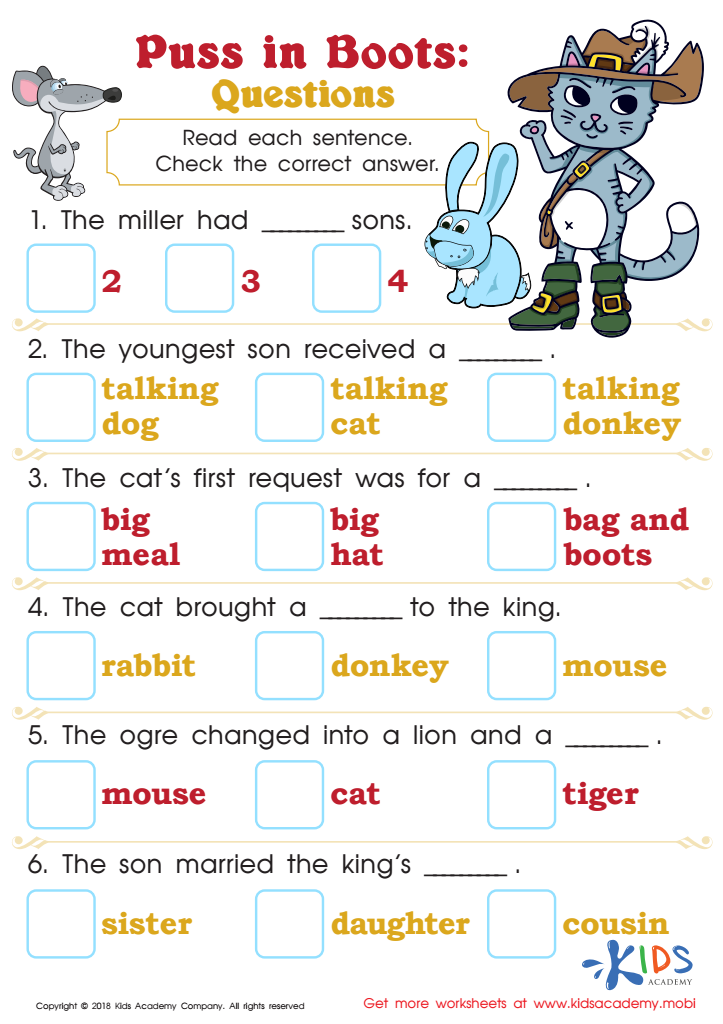
Puss in Boots: Questions Worksheet
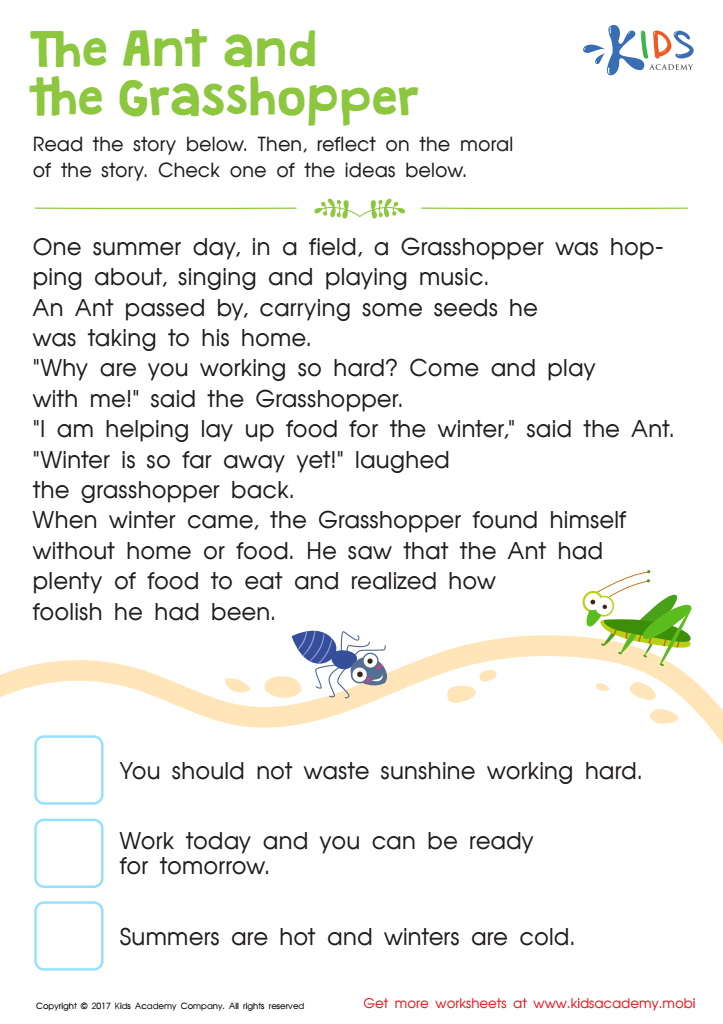
The Ant and The Grasshopper Printable
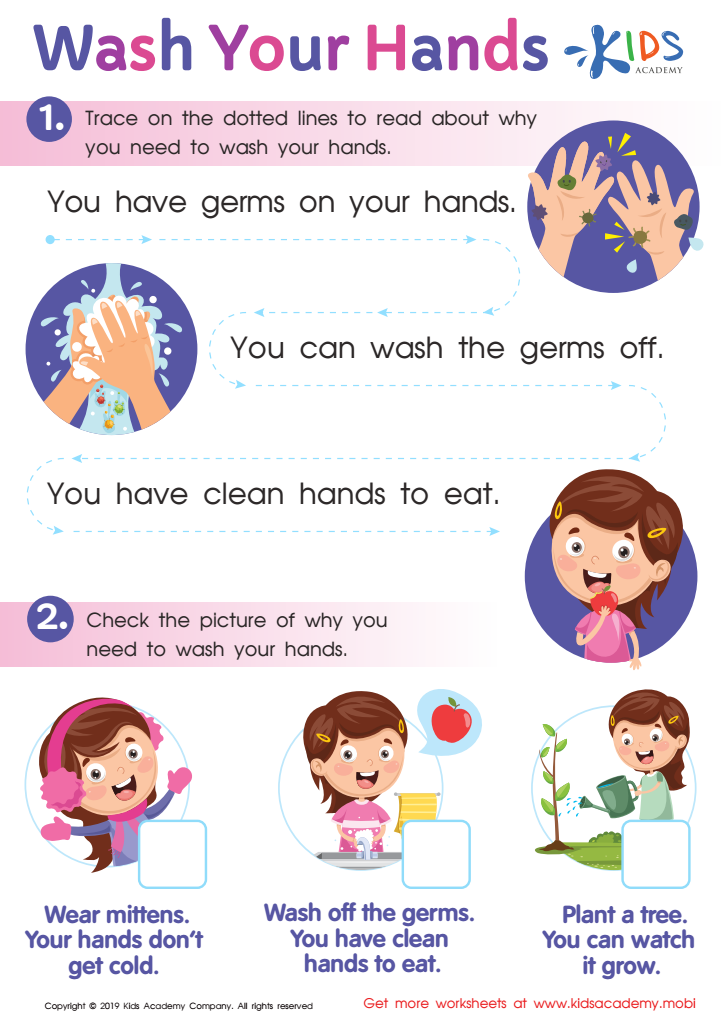
Wash Your Hands Worksheet
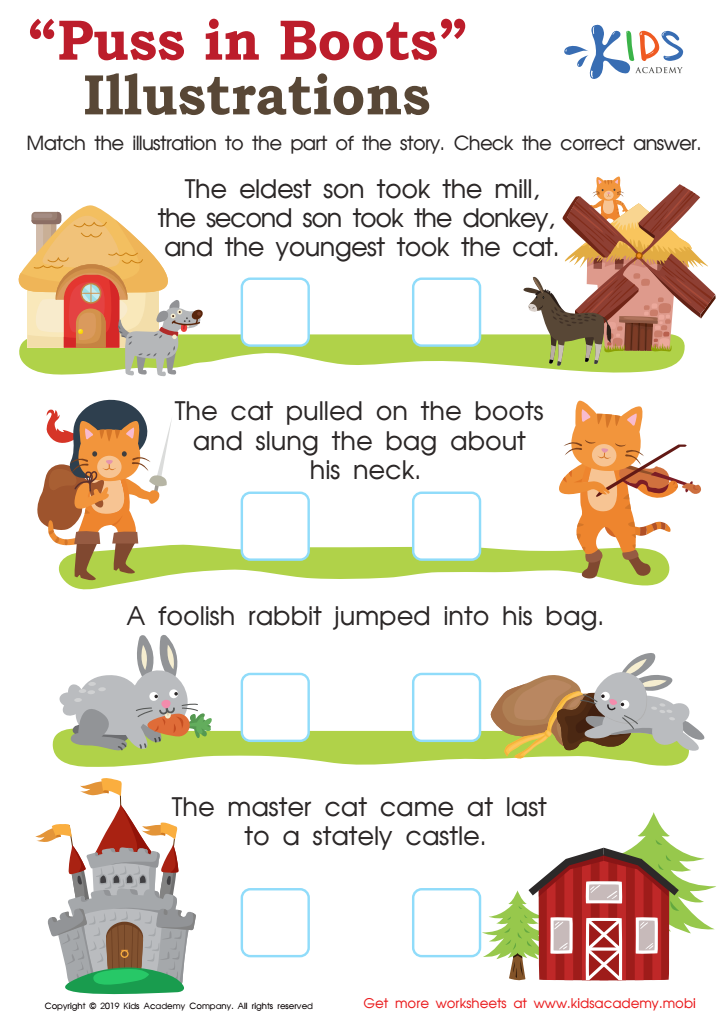
Puss in Boots Illustrations Worksheet







.jpg)
Visual interpretation in reading fiction is crucial for children aged 3 to 9, as it lays a strong foundation for literacy and cognitive development. During early childhood, children's brains are especially receptive to visual stimuli, making illustrations in storybooks a powerful tool to engage their imagination and comprehension. When parents or teachers emphasize visual cues alongside text, it helps children understand and remember the story better, enhancing their retention of characters, settings, and plotlines.
Moreover, visual interpretation aids in developing critical thinking and inferential skills. As children learn to analyze pictures and connect them to the narrative, they begin to make predictions, draw conclusions, and interpret emotions, all of which foster deeper engagement with the material. This interaction promotes not just literacy skills, but also emotional intelligence and empathy as children relate to characters’ experiences.
Additionally, visual interpretation also helps accommodate diverse learning styles. Some children may struggle with text alone, but images can provide meaningful context and support their understanding. By nurturing an appreciation for visual art within stories, parents and teachers can cultivate a lifelong love for reading, which is essential for future academic success. Thus, encouraging visual interpretation in fiction can transform young readers into confident, expressive, and thoughtful individuals.








