Improve counting skills Sight Words Worksheets for Ages 3-9
7 filtered results
-
From - To
Enhance your child's counting skills with our engaging Sight Words Worksheets, specially designed for children ages 3-9. Our worksheets seamlessly combine early literacy with foundational math concepts, ensuring a fun and effective learning experience. Each worksheet features sight words that reinforce vocabulary while presenting counting challenges that captivate young learners. Perfect for both home and classroom use, these resources encourage active participation and skill-building in a playful way. Foster confidence and competency in both reading and counting as your child explores numbers and words together. Unlock your child's potential with our vibrant, easy-to-use worksheets today!







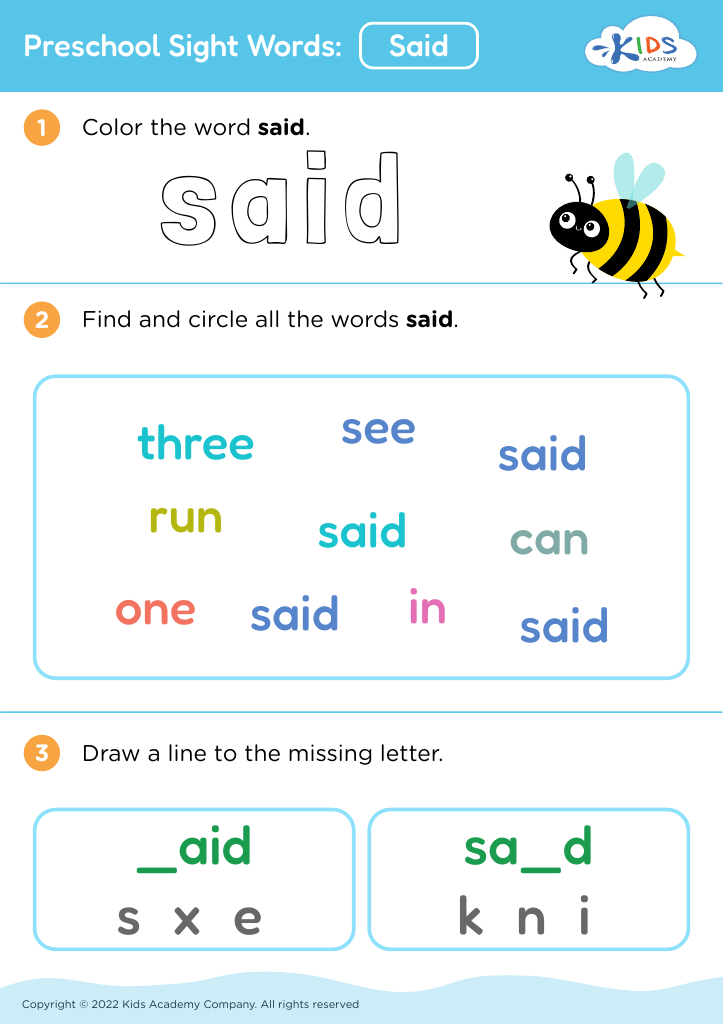
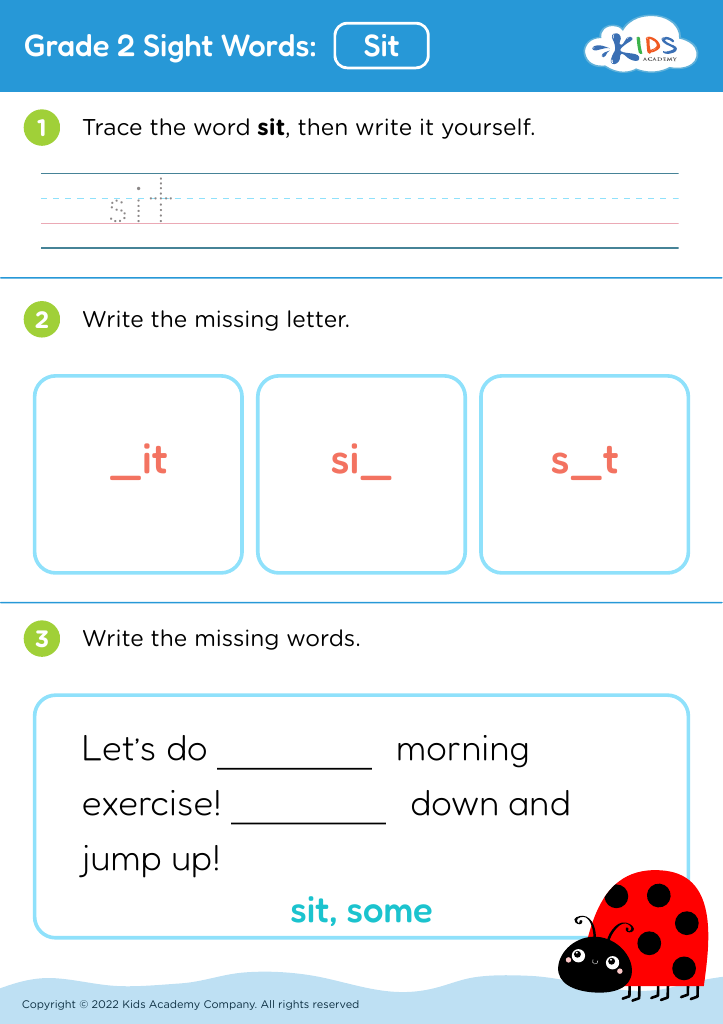
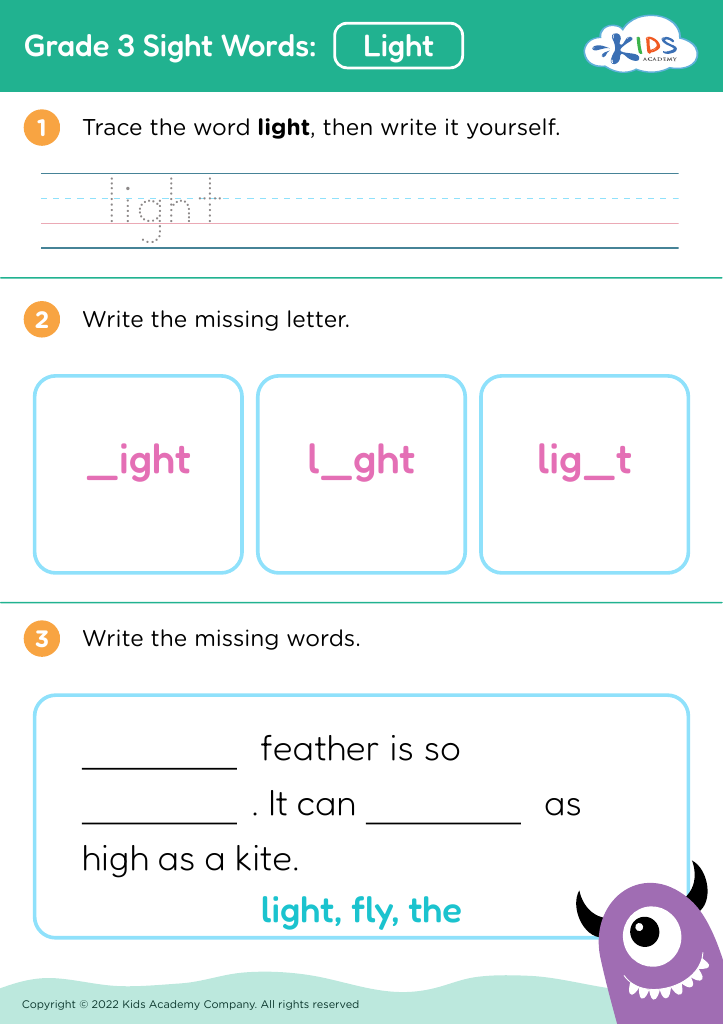
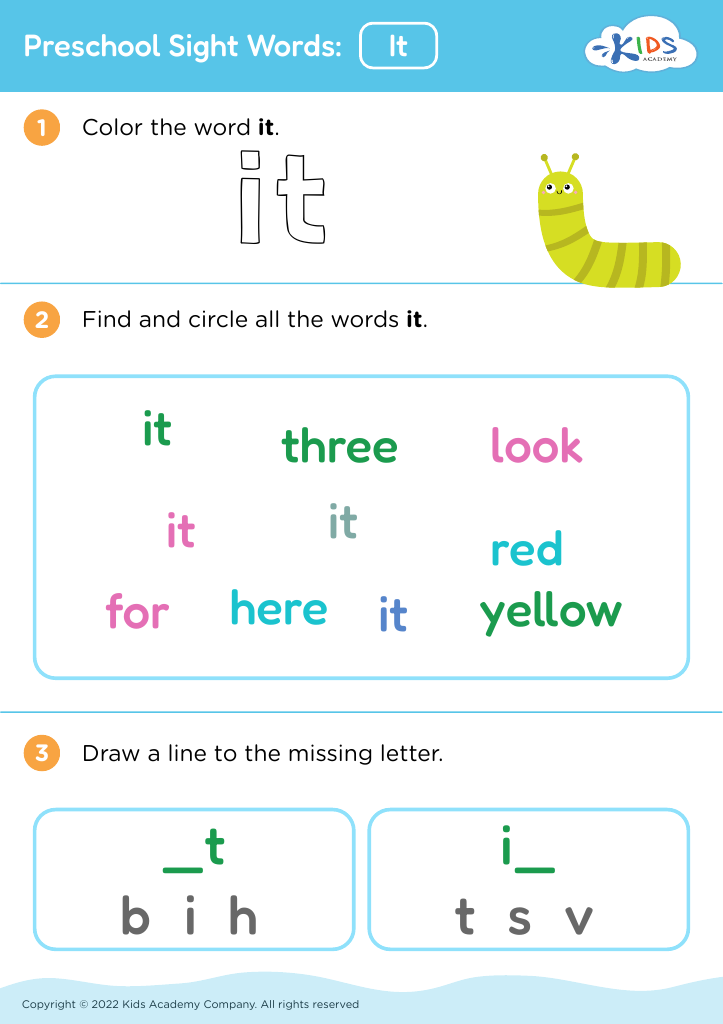
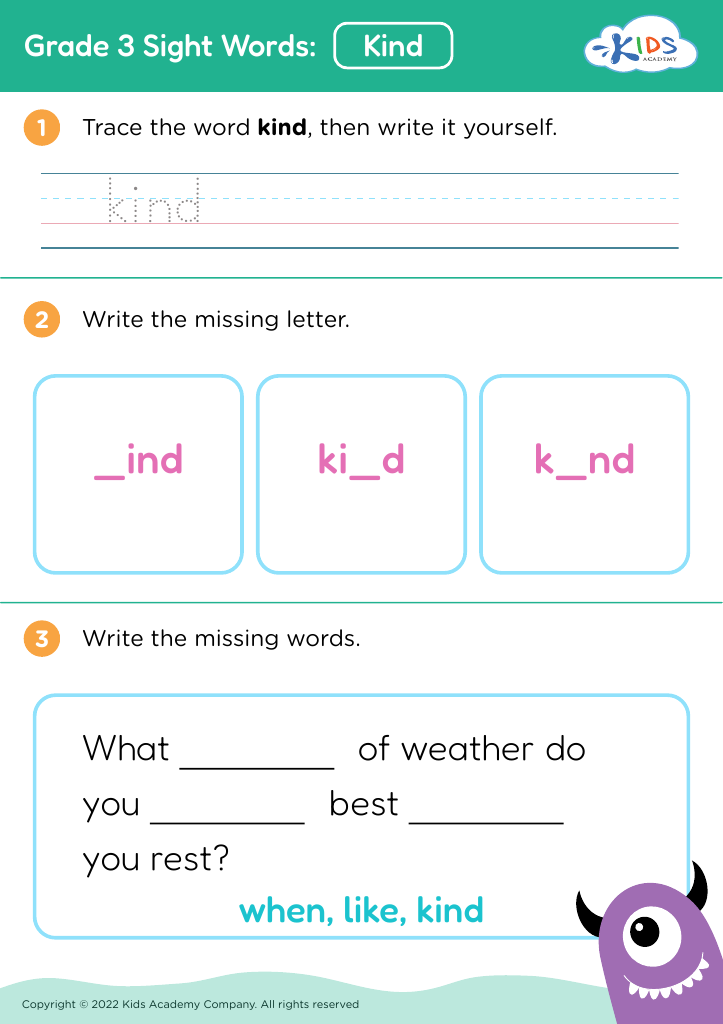
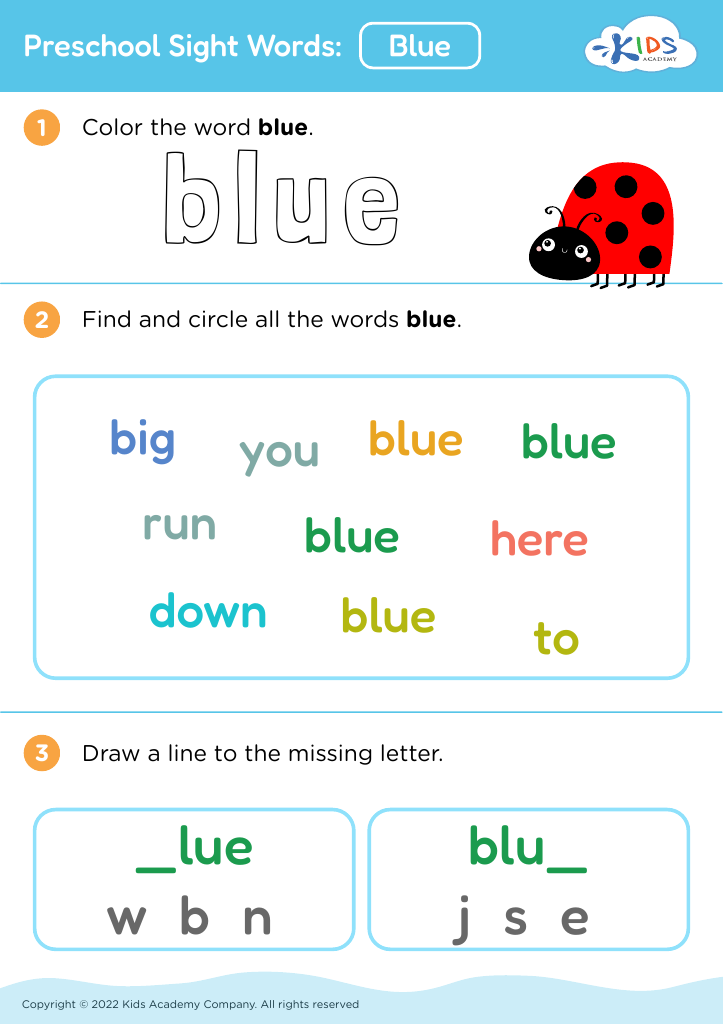








Developing counting skills and sight word recognition in children aged 3-9 lays a crucial foundation for their future academic success. Both skills are interconnected and significantly enhance a child’s cognitive development and comprehension abilities.
Counting skills help children understand basic mathematical concepts, such as addition, subtraction, and number relationships, fostering a curious mindset in young learners. Mastery of counting contributes to cognitive development, aiding in problem-solving and critical thinking. As children engage with numbers through games or practical activities, they also build confidence and foundational math fluency crucial for future learning.
Sight words, on the other hand, are frequently used words that children are encouraged to recognize without sounding them out. Proficient sight word recognition enhances reading fluency, enabling children to focus on comprehension rather than decoding individual words. Early mastery of sight words means children can enjoy the reading process and develop a love for literature.
Parents and teachers should prioritize these skills as they directly influence a child’s ability to engage with math and reading, which are essential areas of learning. Investing time and resources in developing counting skills and sight words will nurture their overall academic abilities and confidence throughout their educational journey.