Math problem-solving Sight Words Worksheets for Ages 3-9
6 filtered results
-
From - To
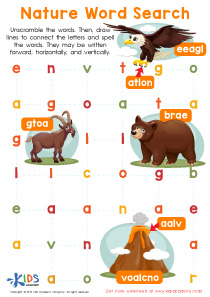
Discover our engaging Math Problem-Solving Sight Words Worksheets designed for children ages 3-9. These interactive worksheets not only enhance mathematical skills but also reinforce essential sight words, promoting literacy alongside numeracy. With colorful illustrations and fun activities, children will enjoy solving various math problems while becoming familiar with critical sight vocabulary. Perfect for homeschooling, classroom use, or extra practice, our worksheets cater to various learning styles, ensuring that every child builds confidence in both math and reading. Encourage a love for learning and set the foundation for academic success with our thoughtfully crafted resources! Explore creativity and skill-building today!
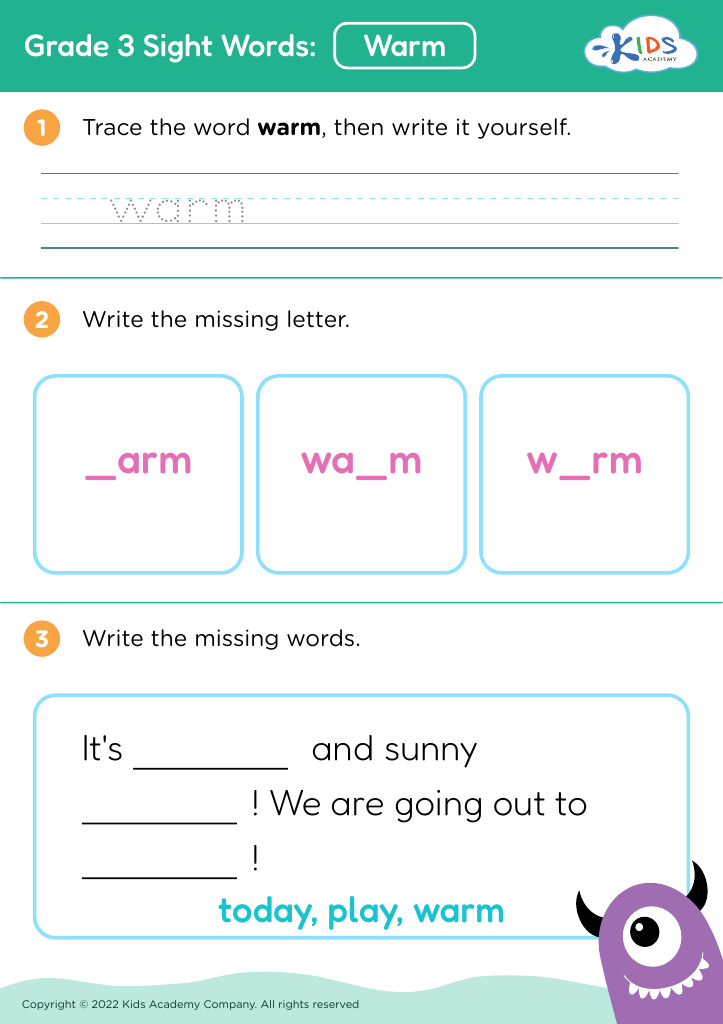





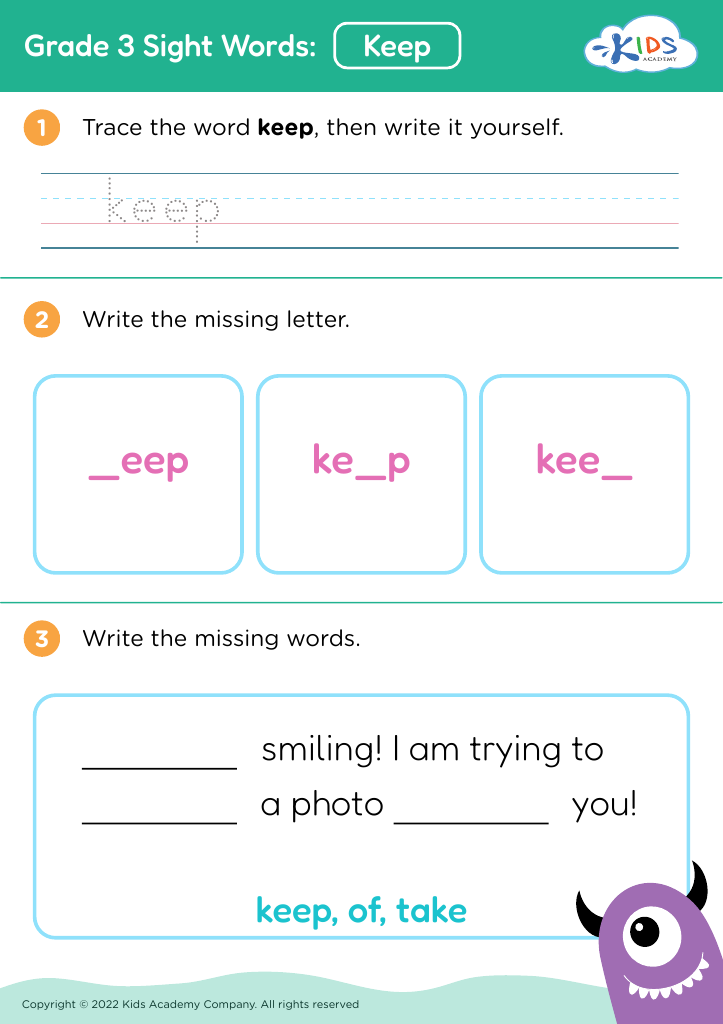
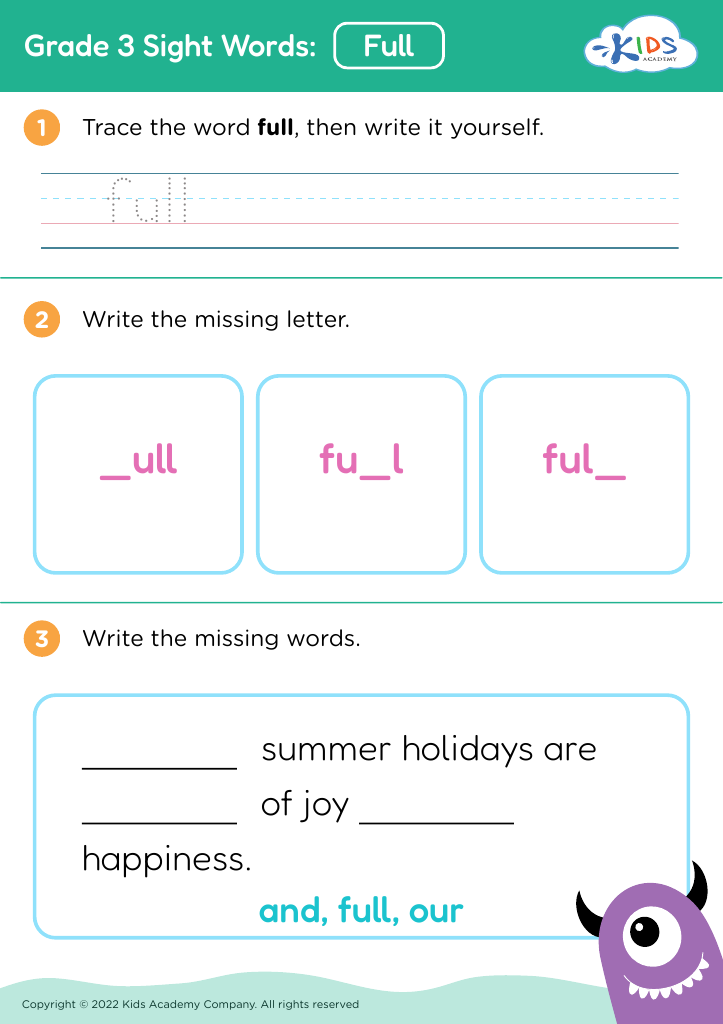
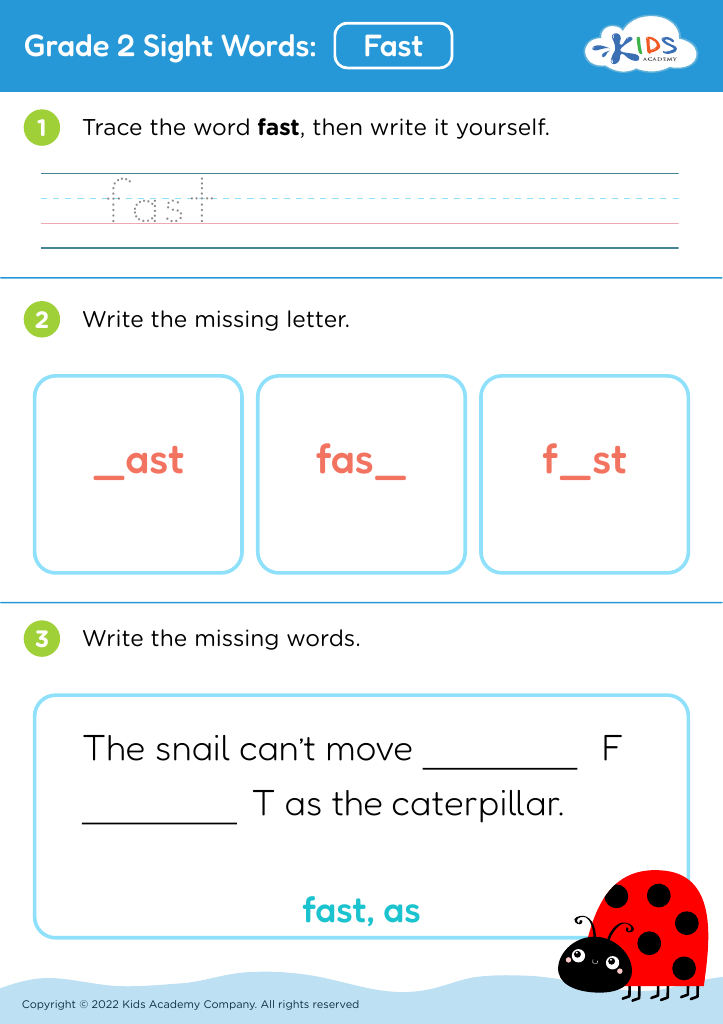
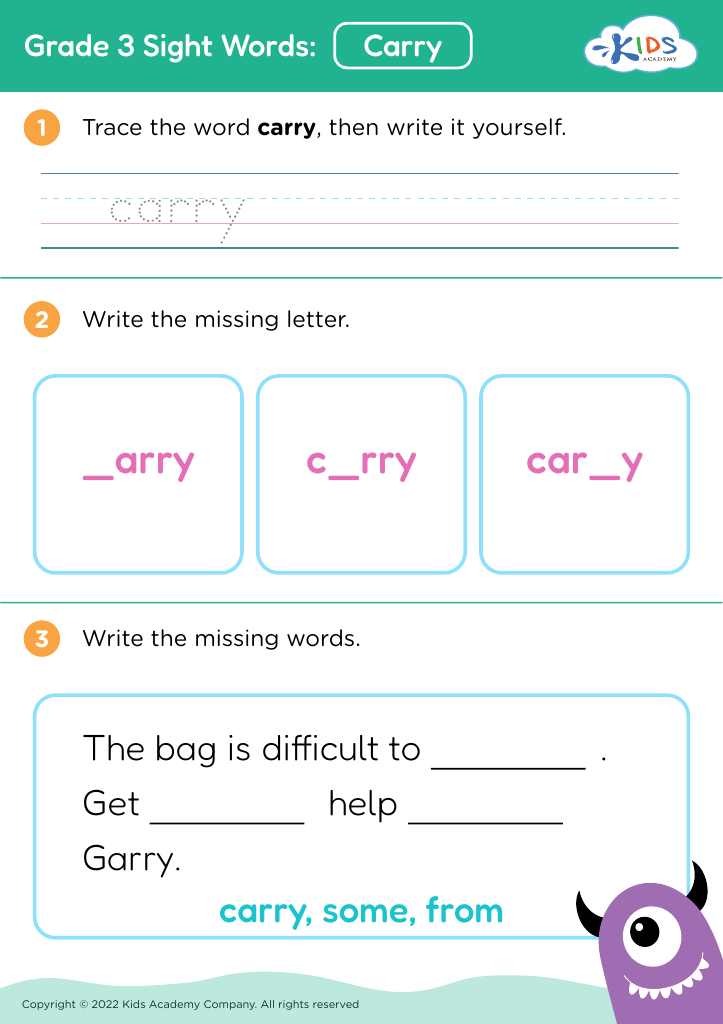
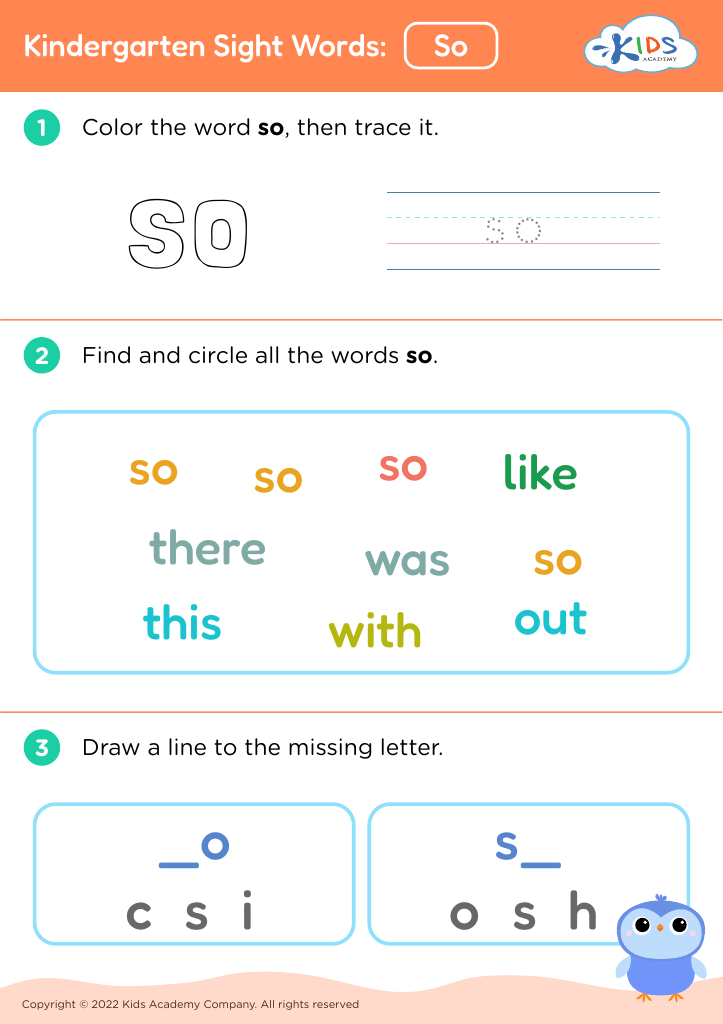








Parents and teachers should prioritize Math problem-solving and Sight Words for children aged 3 to 9 because these skills lay the foundation for future academic success. Early exposure to math problem-solving promotes critical thinking and analytical skills, which are essential not only in math but across various subjects. Engaging in math activities in playful, age-appropriate ways helps children develop a positive attitude toward math, fostering a love for learning.
Sight Words are equally important in this developmental stage. Mastering sight words enhances reading fluency, allowing children to recognize and understand common words quickly. This skill boosts their confidence and comprehension, crucial for effective communication and literacy development.
Moreover, combining math and language skills prepares children for real-world scenarios where problem-solving and effective communication go hand-in-hand. By integrating both areas, parents and teachers can support a holistic learning experience, encouraging cognitive development and helping children make connections between math and everyday life.
Furthermore, engaging with math problems and sight words collaboratively creates a supportive learning environment, strengthening the bond between parents, teachers, and children. This proactive involvement nurtures a lifelong love of learning and equips children with the skills necessary for their future educational journeys.