Reading comprehension Animals Worksheets for Ages 3-9 - Page 2
25 filtered results
-
From - To
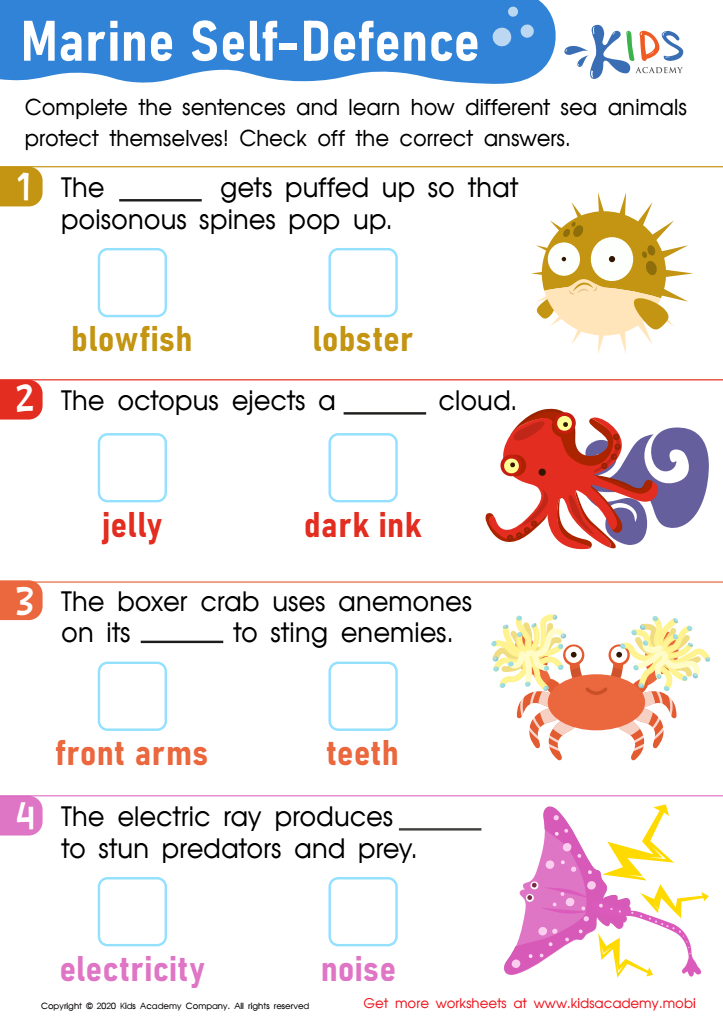
Marine Self-Defence Worksheet
 Assign to My Students








Reading comprehension in young children, particularly ages 3-9, is crucial for building a solid foundation for lifelong learning. When children engage with stories about animals, they not only learn about the world around them but also develop critical thinking skills as they infer, predict, and relate to the material. Animal stories often present relatable challenges and emotions, helping children connect with the narrative on a personal level.
When parents or teachers nurture reading comprehension through animal-focused literature, they encourage vocabulary expansion and awareness of different linguistic structures. This age-appropriate content can also spark curiosity about nature and science, paving the way for a broader understanding of ecosystems and wildlife.
Moreover, discussing stories involving animals helps bolster social-emotional skills. As children identify with characters, they learn empathy and moral lessons, understanding values like friendship, kindness, or resilience.
Overall, engaging children with reading comprehension exercises centered on animals cultivates not just literate individuals but informed and sensitive citizens. By prioritizing these learning experiences, parents and teachers empower children to explore, question, and develop a love for reading, laying the groundwork for academic success in the future.