Map reading skills Community Worksheets for Ages 3-9
3 filtered results
-
From - To
Enhance your child's map reading skills with our engaging Community Worksheets designed for ages 3-9. These fun and interactive resources help young learners understand essential concepts, such as directions, symbols, and map features. Each worksheet encourages children to explore their surroundings and fosters critical thinking through hands-on activities. With colorful visuals and easy-to-follow instructions, your child will develop valuable skills while building confidence in their ability to navigate maps. Perfect for home or classroom use, these worksheets are a fantastic tool to introduce geography and foster exploration. Help your child embark on their mapping adventure today!
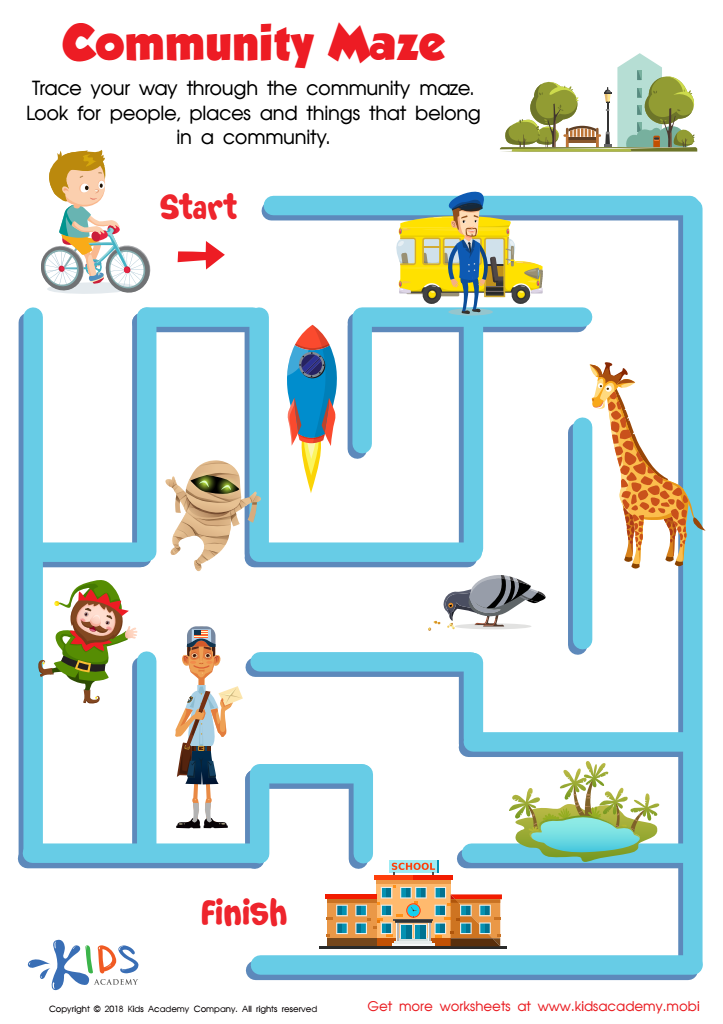
Community Maze Worksheet
 Assign to My Students
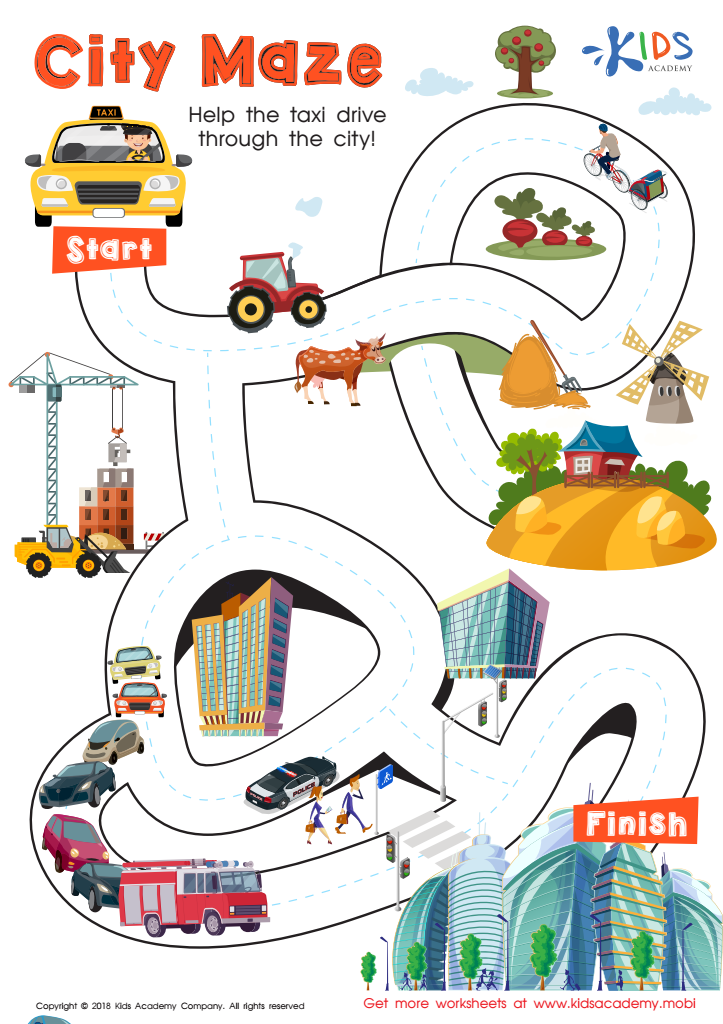
City Maze Worksheet

Towns Worksheet








Map reading skills are essential for children aged 3 to 9, fostering critical thinking and spatial awareness. For parents and teachers, nurturing these skills can significantly enhance a child's understanding of their environment. Teaching map reading enables children to interpret symbols and scale, promoting logical reasoning and problem-solving abilities. When children learn to navigate through maps, they gain confidence in their ability to explore new places and engage more deeply with the world around them.
Additionally, map reading is not only an academic skill but also a life skill. It encourages communication and collaboration as children work together to read and understand directions, broadening their social skills. The activity can also be a fun, interactive way to promote physical activity; kids can embark on real or imaginary scavenger hunts, encouraging exploration and movement.
By engaging children in map-related activities, parents and teachers can spark curiosity and creativity, laying the groundwork for further learning in subjects like geography and environmental sciences. Ultimately, developing map reading skills can nurture a child’s independence and adaptability, essential traits for their overall development and future success.








