Filters

9 filtered results

Clear all filters
Favorites
With answer key
Interactive

9 filtered results

Difficulty Level

Grade


Introducing our Number Recognition Cursive Numbers Worksheets designed for ages 3-9! These fun and educational printables help young learners master the art of cursive writing while building impeccable number recognition skills. Each worksheet offers guided tracing activities that promote fine motor development and numerical familiarity. Perfect for classrooms and homeschooling, our worksheets are crafted to bolster confidence in writing and recognizing numbers from 1 to 100. Watch as your child’s handwriting and numeral proficiency grow with every trace! Download now to support and enrich your child's learning journey, making number recognition and cursive practice an enjoyable experience.

Check out this FREE Trial Lesson on Cursive Numbers for age 3-9!

L

Favorites
With answer key
Interactive
  • 3-9
  • Number Recognition
  • Cursive Numbers
Cursive Numbers: 2 Worksheet

Cursive Numbers: 2 Worksheet

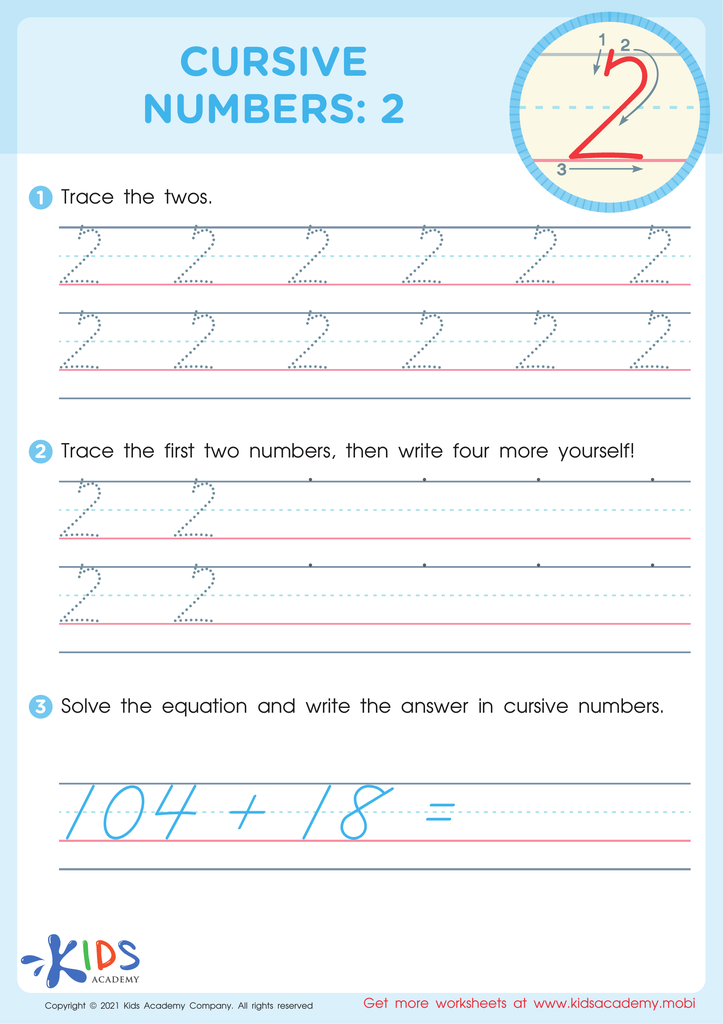
Mastering maths goes beyond basic counting and arithmetic. These tracing worksheets will help your kids practice their cursive numbers. The dotted lines are easy to follow and your kids can trace the number 2 over and over. Soon they'll be able to write it on their own. At the end of the sheet, there's a simple math equation - have your child write the answer in cursive.
Cursive Numbers: 2 Worksheet
Worksheet
Cursive Numbers: 6 Worksheet

Cursive Numbers: 6 Worksheet

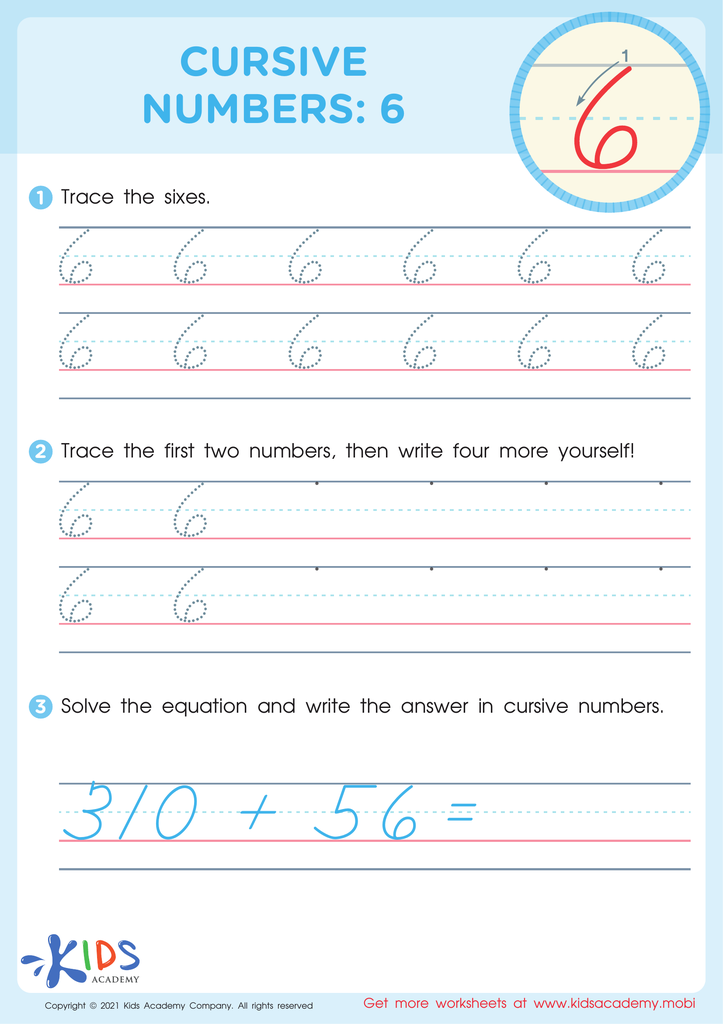
Help your children practice counting and writing numbers with cursive number worksheets. They'll learn to write the number six with dotted lines to guide them and space to practice writing it on their own. They can also solve a simple equation and write the answer in cursive. Let them practice as much as they need - it'll help them succeed.
Cursive Numbers: 6 Worksheet
Worksheet
Cursive Numbers: 0 Worksheet

Cursive Numbers: 0 Worksheet

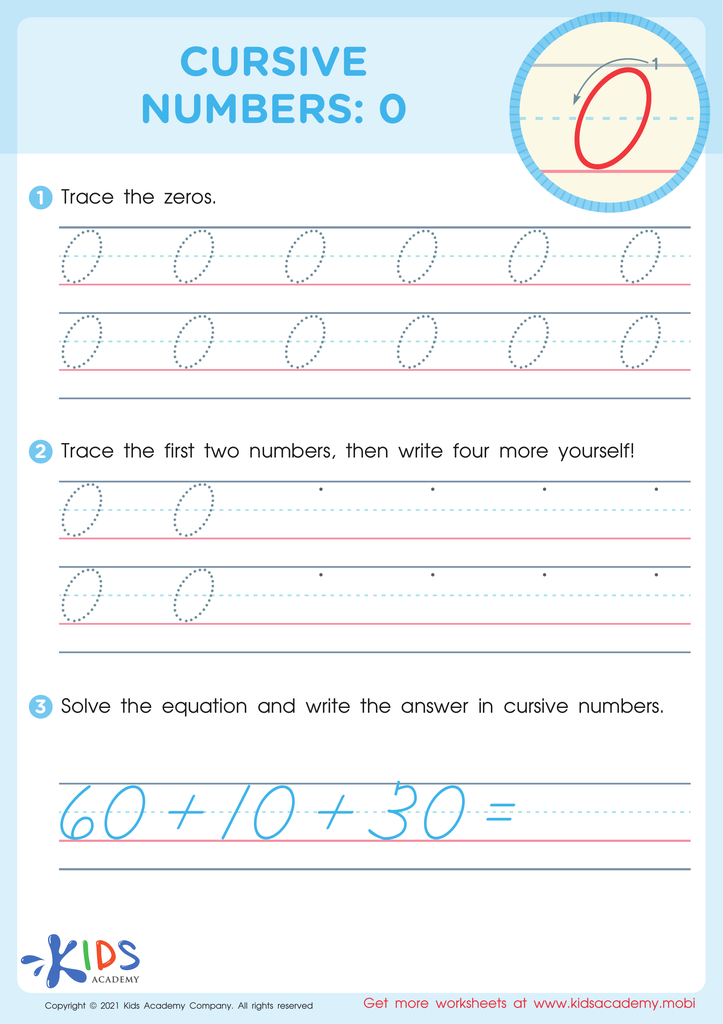
Practice makes perfect when teaching your kid handwriting. Spend time teaching them the alphabet and cursive numbers. These math worksheets have traceable numbers for them to practice with, then they can write 0 on their own. There's also a bonus math problem to solve and write the answer in cursive.
Cursive Numbers: 0 Worksheet
Worksheet
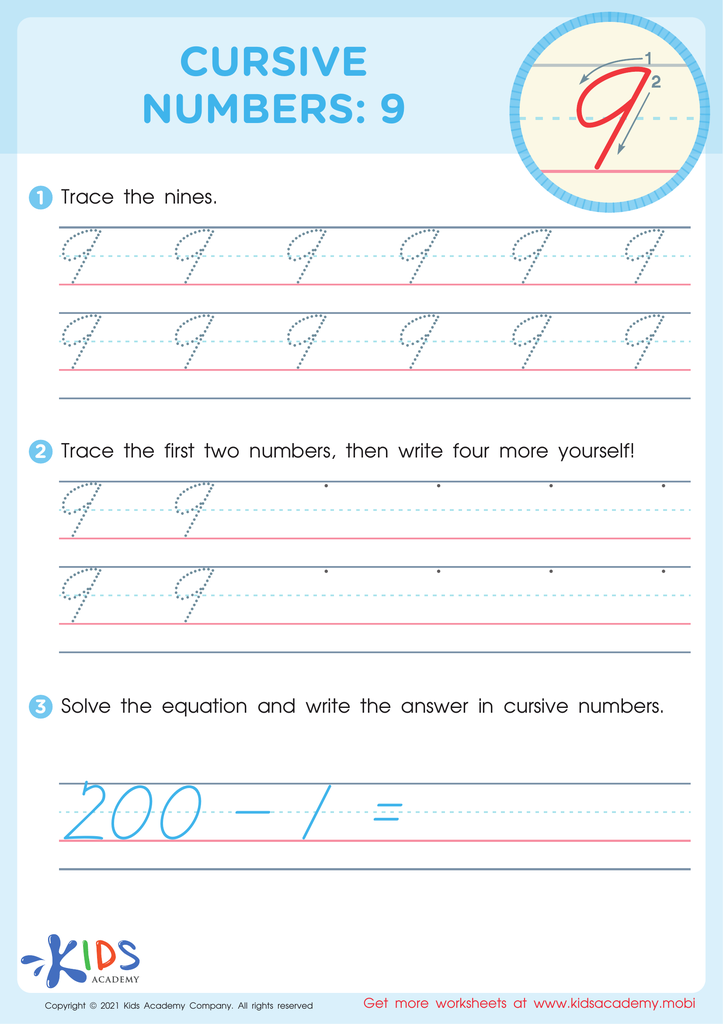
Cursive Numbers: 9 Worksheet

Cursive Numbers: 9 Worksheet

Identifying and writing numbers is key to math success. These worksheets help kids learn to trace the number 9 and build confidence. As they practice, they'll soon be able to write it on their own. Plus, they get to apply their learning and solve a simple equation at the bottom of the page. Writing the answer in cursive is a great way to help them remember!
Cursive Numbers: 9 Worksheet
Worksheet
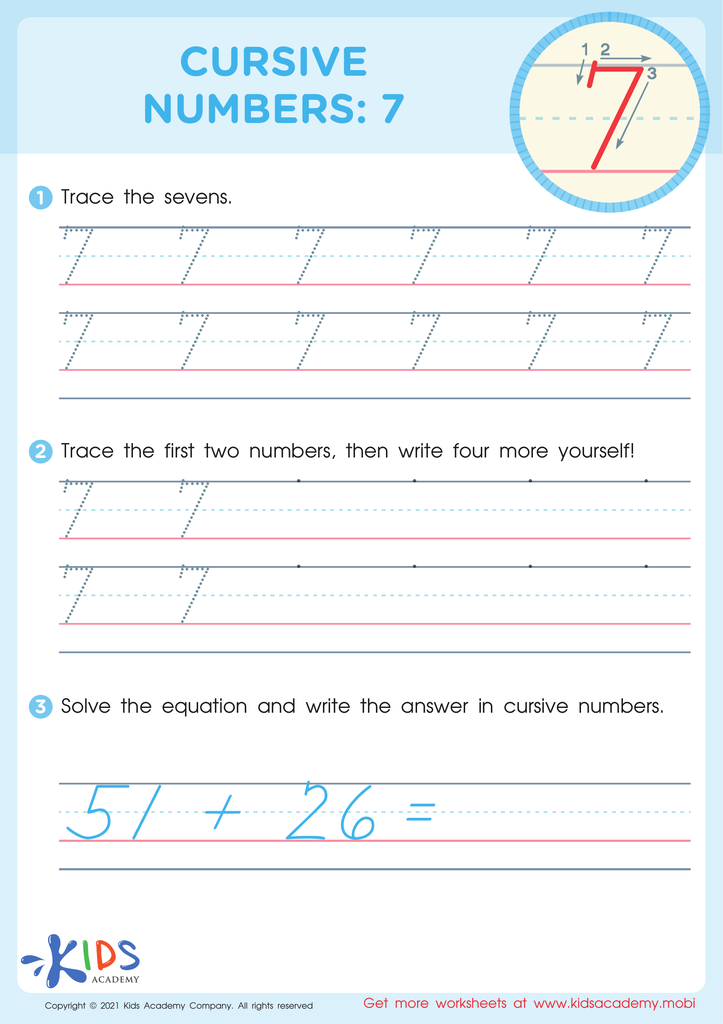
Cursive Numbers: 7 Worksheet

Cursive Numbers: 7 Worksheet

Kids learn best with engaging and easy-to-understand materials. This tracing worksheet is ideal for developing kids' writing skills, with two exercises to help them write the number 7. The first involves tracing the 6s provided and the second asking them to write four cursive 7s independently.
Cursive Numbers: 7 Worksheet
Worksheet
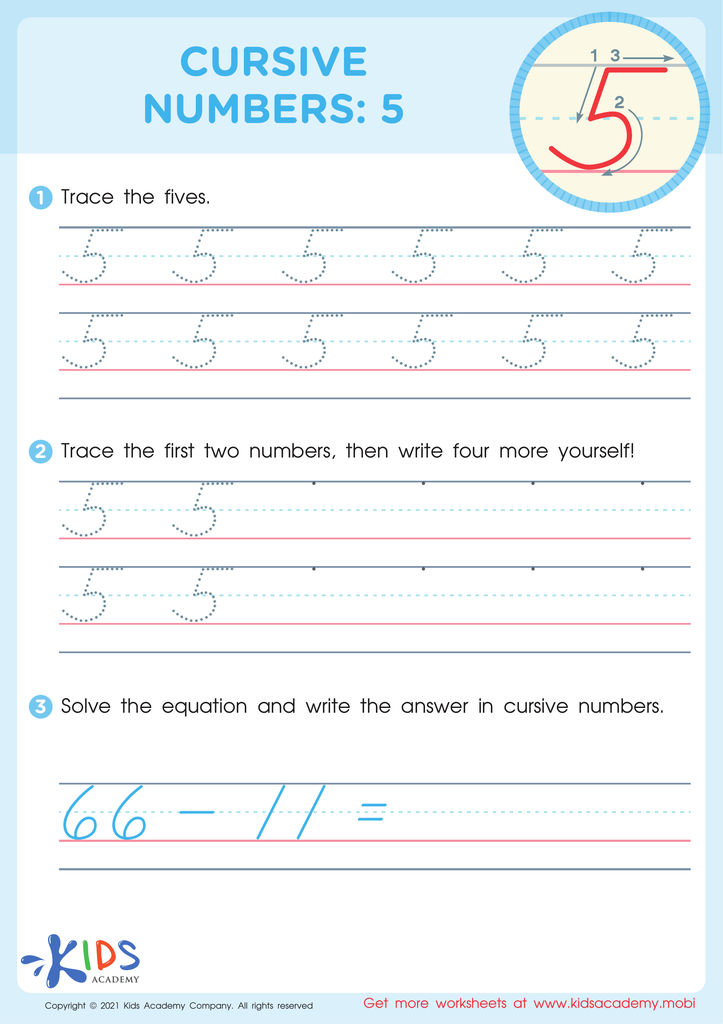
Cursive Numbers: 5 Worksheet

Cursive Numbers: 5 Worksheet

Ask your child to count to 10 to refresh their number knowledge. This worksheet is great for mastering the cursive number 5. Exercises are simple and keep them engaged, with the help of the dotted lines to trace. Constant practice will have your child writing the 5 like a pro!
Cursive Numbers: 5 Worksheet
Worksheet
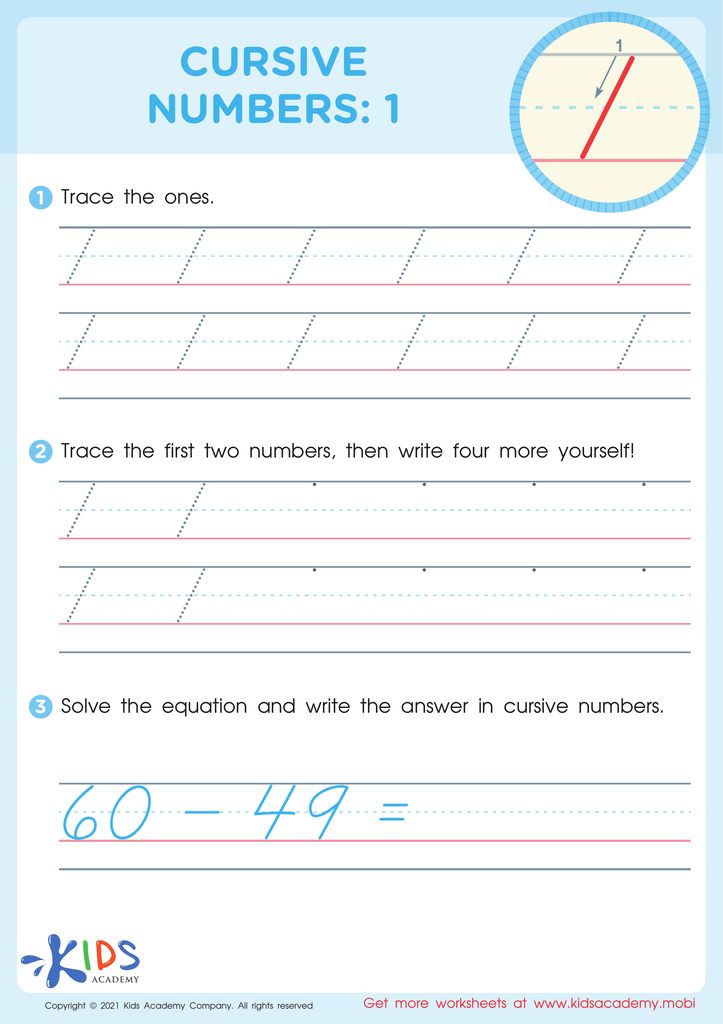
Cursive Numbers: 1 Worksheet

Cursive Numbers: 1 Worksheet

Math and handwriting are connected! Try these traceable worksheets to help your children learn cursive numbers. The tracing lines make it easy to follow, plus there's a simple subtraction exercise at the bottom for them to try. This is perfect for kids who struggle with handwriting and gives them a fun way to practice.
Cursive Numbers: 1 Worksheet
Worksheet
Cursive Numbers: 8 Worksheet

Cursive Numbers: 8 Worksheet

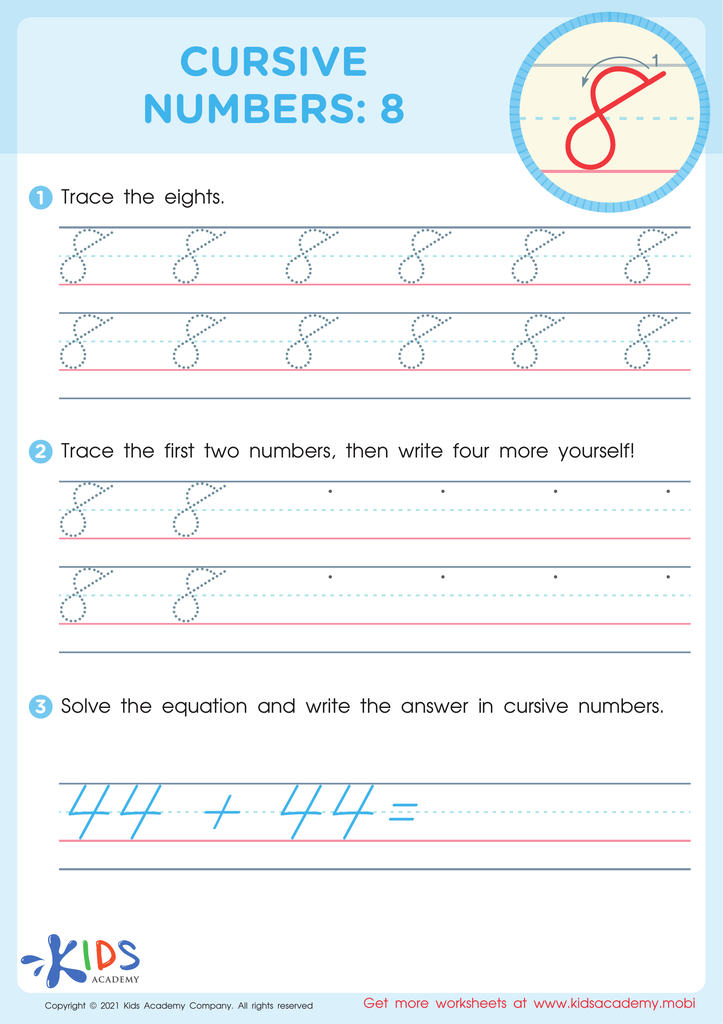
This tracing sheet helps your kids learn to write the cursive number 8. It's perfect for those struggling with handwriting. They'll trace the number 8, write it on their own, then solve a simple math equation and answer in cursive. Counting and writing numbers correctly is essential, so help your kids master it with this worksheet!
Cursive Numbers: 8 Worksheet
Worksheet
Cursive Numbers: 3 Worksheet


Cursive Numbers: 3 Worksheet

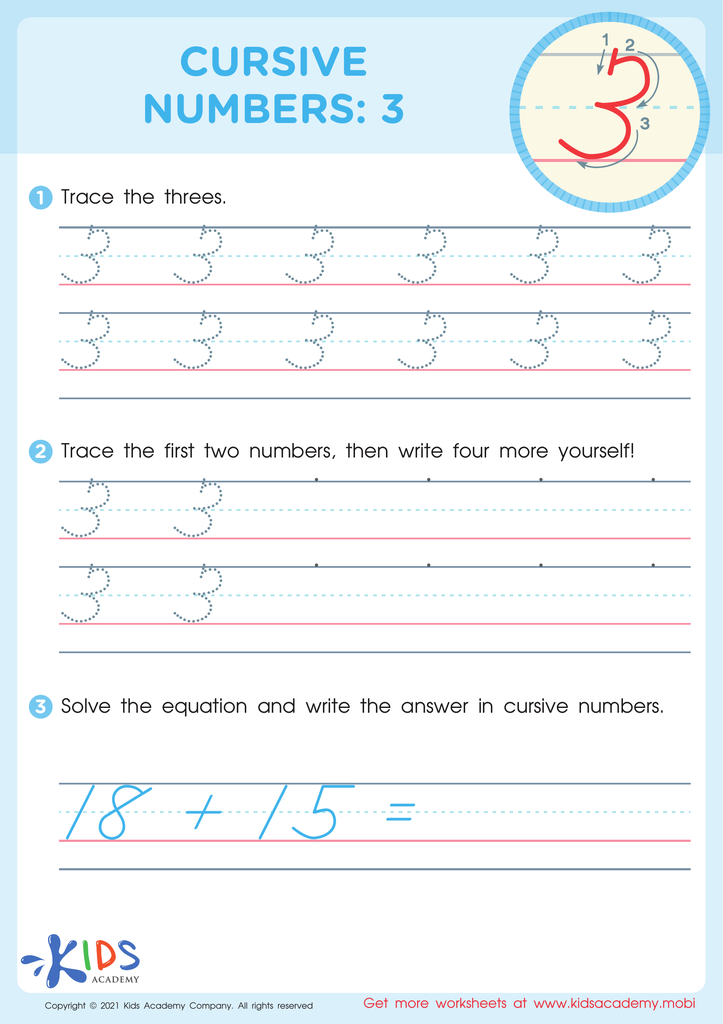
Help your child learn to write with this exercise. They'll practice tracing lines to write the cursive 3 until they gain the skill and confidence to do it on their own. Then have them write the 3 and solve the math equation on the worksheet. You can watch and encourage them as they progress. Writing is a key lesson, so offer your help to ensure they succeed.
Cursive Numbers: 3 Worksheet
Worksheet


Number Recognition in Cursive for children ages 3-9 is crucial for several developmental reasons, and both parents and teachers should prioritize it. Firstly, recognizing numbers is a foundational math skill that underpins future mathematical learning and cognitive development. Early number recognition aids in counting, basic operations, and understanding larger math concepts.

Furthermore, cursive writing itself plays an important role in fine motor skill development. Writing numbers in cursive can enhance children's hand-eye coordination and motor planning. The fluid motion required for cursive writing also encourages muscle memory, which can make overall writing more legible and efficient.

Early exposure to cursive numbers aids in literacy integration. Since children often encounter cursive in various contexts as they advance in school, having familiarity with cursive numbers can help them decode handwritten content more easily.

Additionally, the dual focus on recognizing the shapes of cursive numbers and their corresponding values can heighten general cognitive flexibility and symbol recognition skills. This has broader implications for learning and critical thinking.

Ultimately, engaging in this practice manages to be both an intellectual and practical exercise, holistically supporting a child's early education journey. Parents and teachers investing in this aspect demonstrate a well-rounded commitment to developing essential, lifelong skills.