Color Identification Writing Worksheets for Ages 3-9
4 filtered results
-
From - To
Discover engaging Color Identification Writing Worksheets designed for children ages 3-9 at Kids Academy! These vibrant activities help young learners recognize and name colors while honing their writing skills. Each worksheet combines playful exercises with educational value, making learning an enjoyable experience. Perfect for home or classroom use, these printable sheets support early childhood development by enhancing fine motor skills and cognitive abilities. Watch your child’s confidence grow as they master color identification through interactive tasks and fun, color-themed writing practices. Explore our library today and pave the way for your little one's bright academic future!

Christmas Tree Tracing Winter Words Worksheet
 Assign to My Students
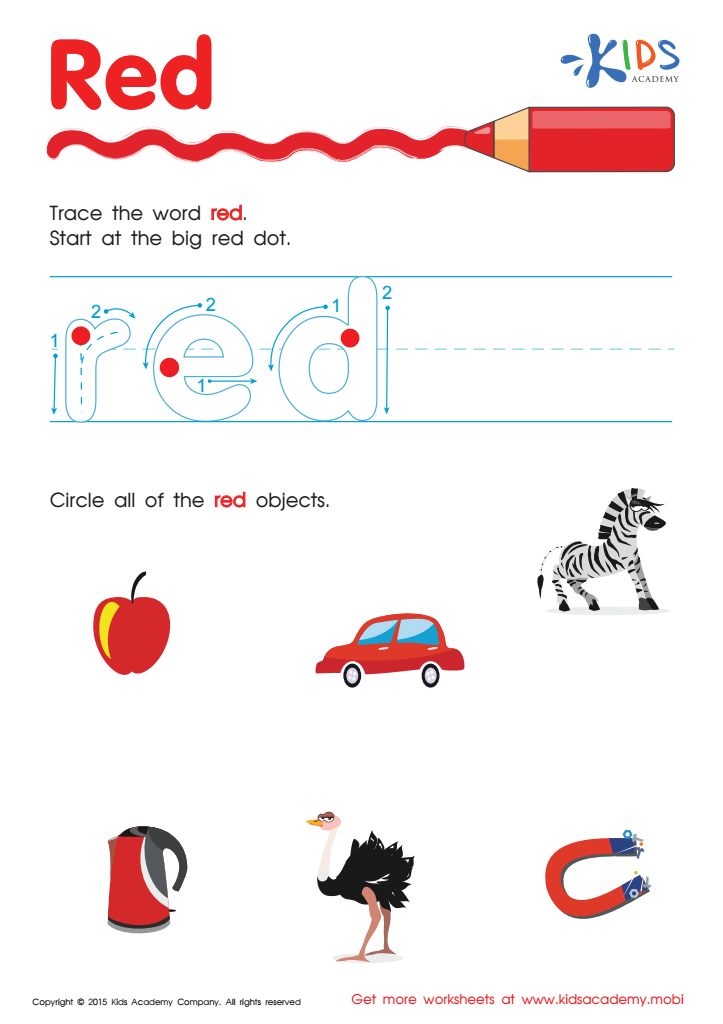
Red Tracing Color Words Printable
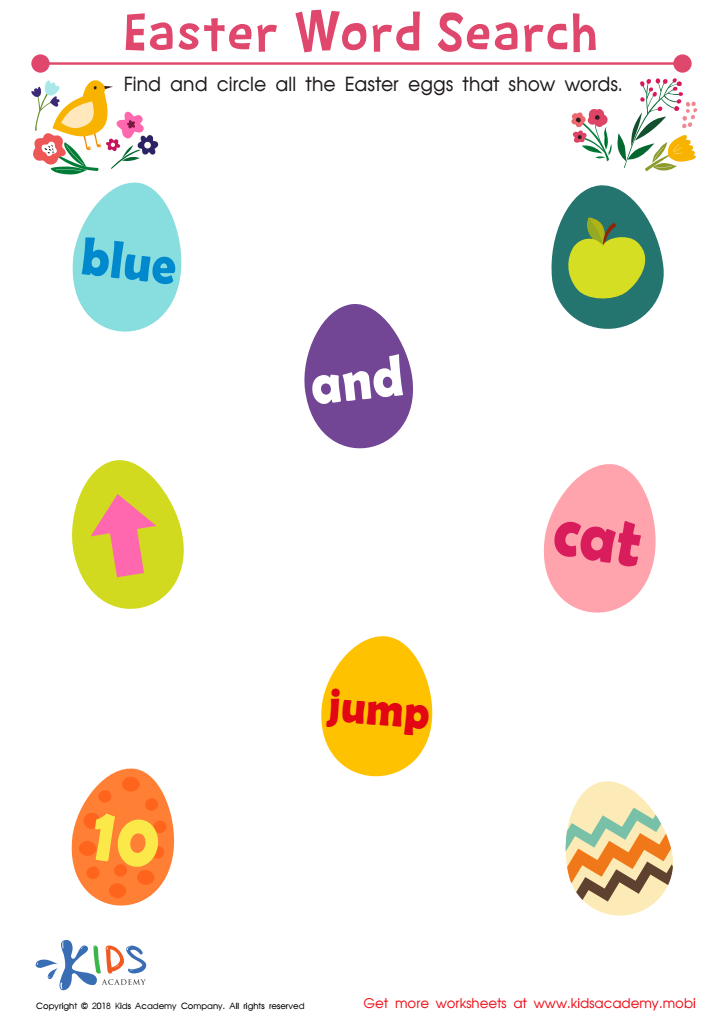
Easter Word Search Worksheet
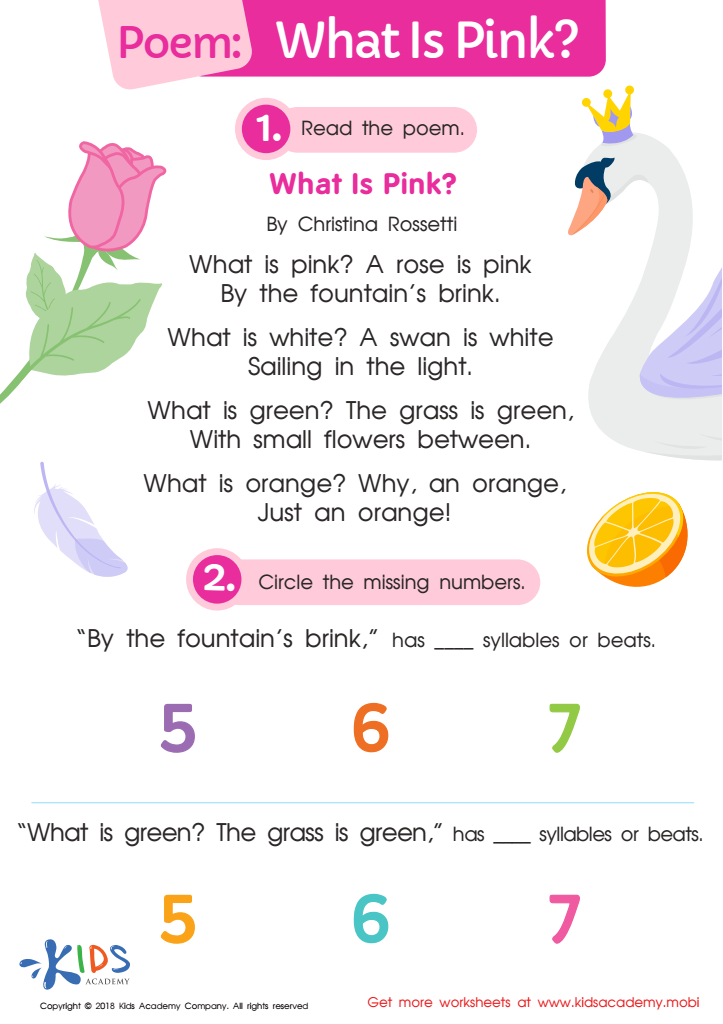
Poem: What Is Pink? Worksheet







Color identification and writing are essential developmental milestones for children aged 3-9. During early childhood, these skills play a critical role in cognitive, linguistic, and motor development. When children learn to recognize and name colors, they enhance their vocabulary, which helps in language acquisition and communication. It also aids in categorizing and organizing the world around them, fundamental for problem-solving and critical thinking.
From a motor skills perspective, writing color names requires fine motor control and coordination. Practicing these tasks strengthens hand muscles and prepares children for more complex writing activities. Essential life skills, such as focus, patience, and perseverance, are also nurtured through these activities.
Socially and emotionally, being able to identify and discuss colors can boost confidence and self-expression. Colors are omnipresent in daily interactions, from choosing what to wear to artwork and even emotions (like “feeling blue”). A strong foundation in color identification helps children in school readiness and eases their transition into more structured learning environments, where these skills are applied more intensively.
Therefore, both parents and teachers should prioritize fun, engaging, and frequent color identification and writing exercises to set the stage for comprehensive development in children.








