Handwriting practice ABC Letters Worksheets for 3-Year-Olds - Page 2
25 filtered results
-
From - To
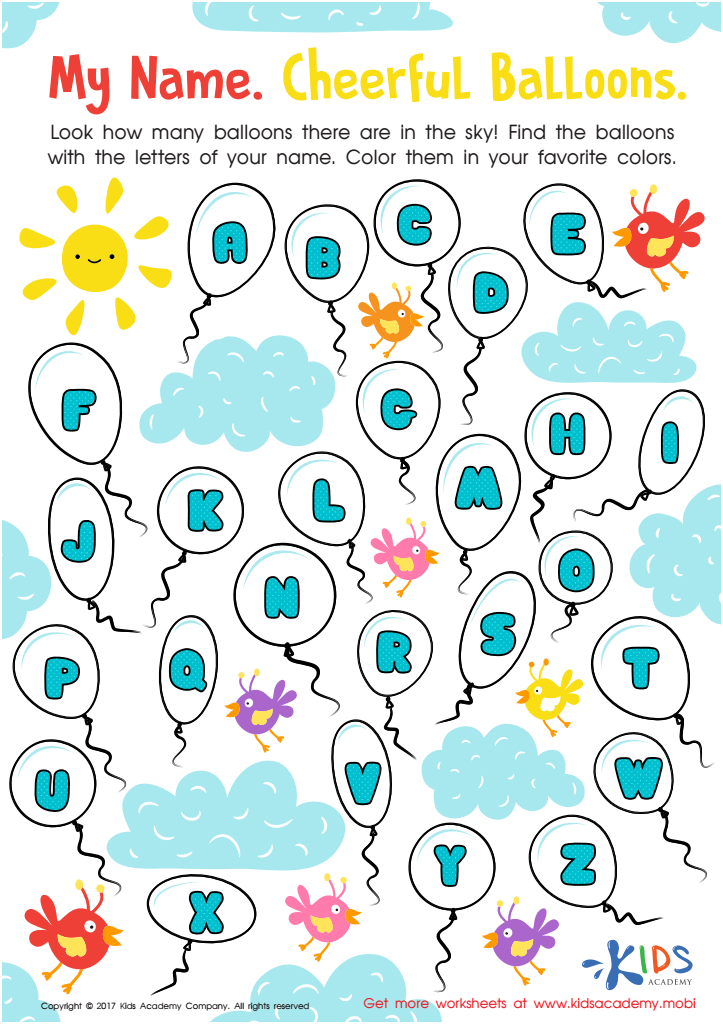
My Name: Cheerful Balloons Worksheet
 Assign to My Students









Handwriting practice for 3-year-olds is crucial for several reasons, making it essential for parents and teachers to prioritize. At this developmental stage, children are in a critical period for fine motor skill development, which handwriting practice directly supports. Improving fine motor skills helps enhance hand-eye coordination, dexterity, and strength in little fingers, all of which are foundational for future writing and other academic activities.
Moreover, learning to write letters boosts literacy skills. As children practice their ABCs, they begin to recognize letters and sounds, facilitating early reading proficiency. This letter recognition sparks engagement with language, paving the way for vocabulary development and fluency.
Handwriting also plays a role in cognitive development. As young children form letters, they are not just practicing motor skills but also engaging their memory and cognitive processing, enhancing their overall learning.
Finally, incorporating fun and engaging handwriting activities into daily routines fosters a positive learning environment. When children are encouraged to express themselves through writing, they build confidence and motivation, which are vital for lifelong learning. Therefore, investing time in handwriting practice is an important step in nurturing children’s emotional, cognitive, and motor development.







