
Letter Tracing Practice ABC Letters Worksheets for 3-Year-Olds
3 filtered results
Difficulty Level
Grade
Age
-
From - To
Subject
Activity
Standards
Introduce your little ones to the joy of writing with our "Letter Tracing Practice ABC Letters Worksheets" designed specifically for 3-year-olds. These engaging worksheets foster early literacy by making learning fun and interactive. Kids will trace each letter of the alphabet, enhancing their fine motor skills and letter recognition. Our visually appealing designs capture young children's attention, encouraging them to practice regularly. Perfect for home or preschool, these worksheets promote self-confidence as children develop essential writing skills. Watch your child progress from tracing to writing independently, building a solid foundation for future reading and writing success. Start their learning journey today!
Favorites
With answer key
Interactive
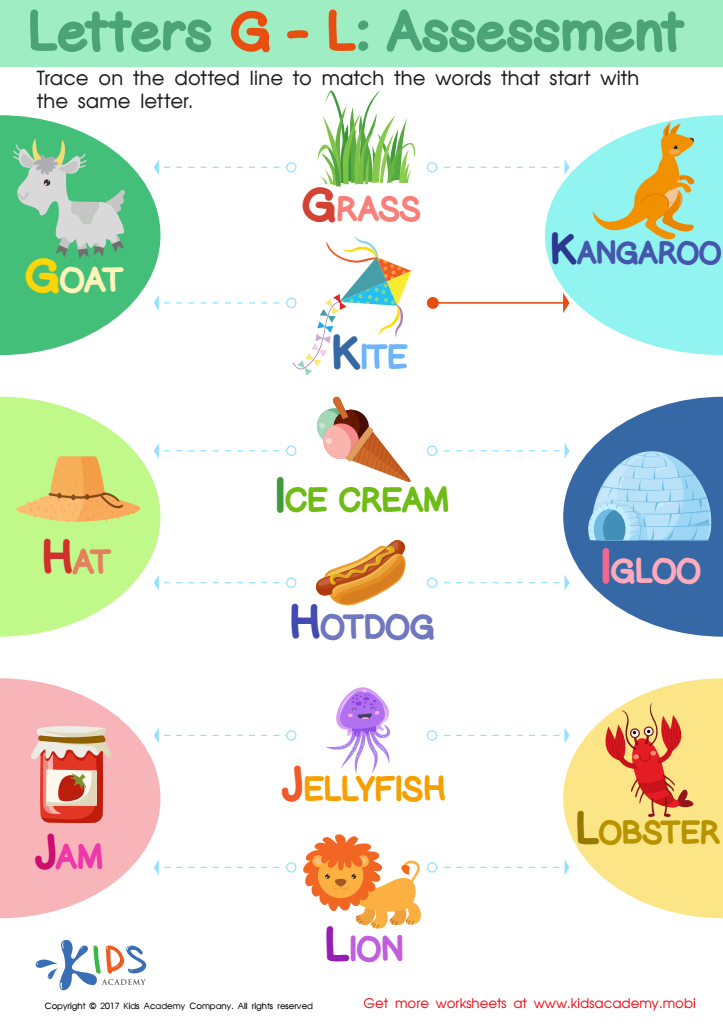
Letters G-L Worksheet
This fun worksheet helps preschoolers develop reading and phonics skills. It gets kids to match G-L words that start with the same letter, making it engaging and educational.
Letters G-L Worksheet
Worksheet





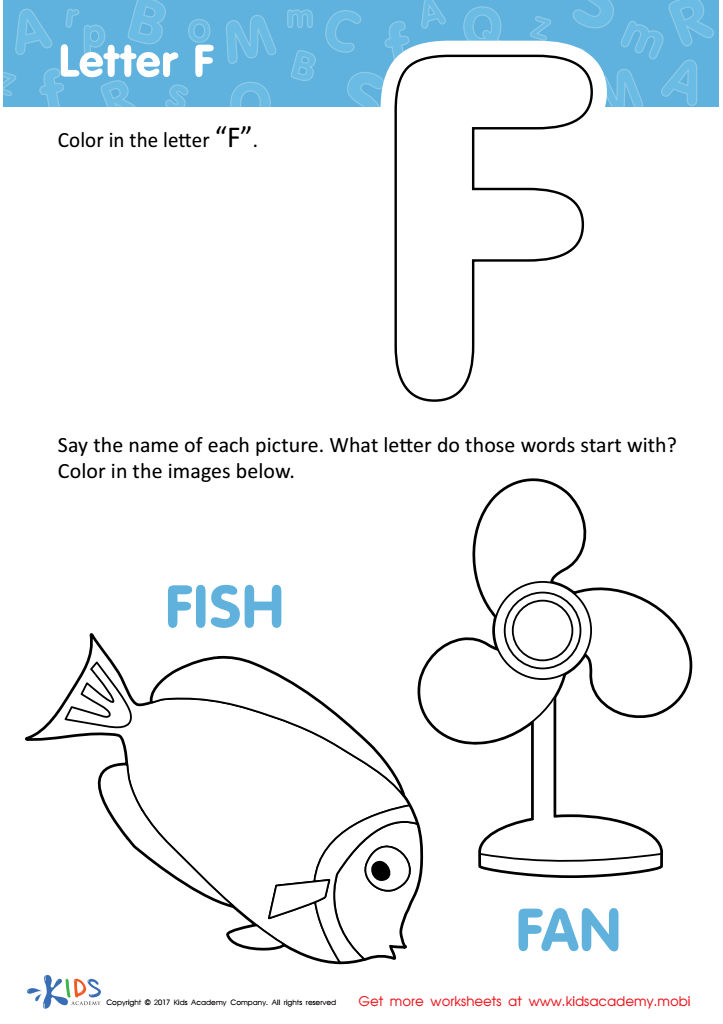
Letter F Coloring Sheet
Coloring pages help kids learn to recognize letters and sounds. Our "F" page has kids color a fish and a fan. It's a great way to introduce them to the letter "F" using words they already know.
Download (PDF)
 Assign to My Students
Assign to My Students
Letter F Coloring Sheet
Worksheet
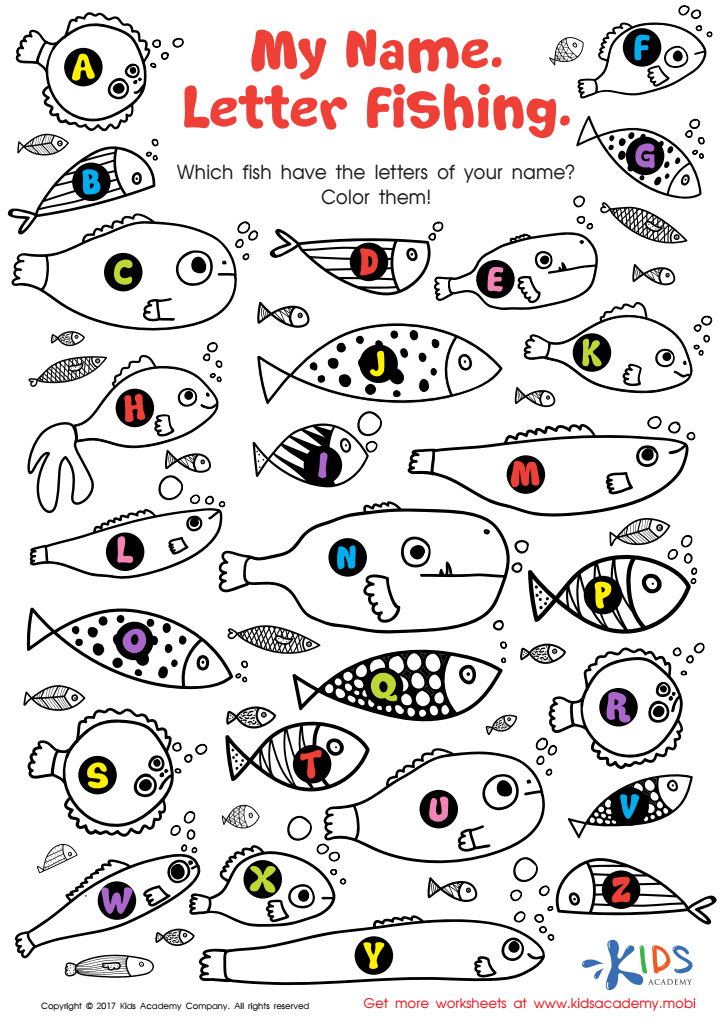
My Name: Letter Fishing Worksheet
Dive into the deep sea and search for fish with a letter on them. Can you find all the letters from your name? Color your favorite fish with crayons and be creative! On the other side, use the letters you found to write your name. Have fun coloring and finding the letters of your name! (80 words)
Download (PDF)
Assign to My Students
Assign to My Students
My Name: Letter Fishing Worksheet
Worksheet
Join Kids Academy for Free
Who is primarily going to use this learning content?








Letter tracing practice is essential for 3-year-olds as it lays the foundation for early literacy skills and fine motor development. Parents and teachers should care about this activity because it promotes children’s ability to recognize letters, which is crucial for reading and writing. By tracing letters, children learn the shapes, sounds, and structures associated with each one, facilitating phonemic awareness and advanced communication skills.
Moreover, tracing helps improve fine motor skills, which are essential for tasks like holding a pencil, cutting, and self-care activities. As children practice their letter formation, they develop hand-eye coordination and dexterity. These physical skills contribute greatly to their overall academic readiness.
Additionally, letter tracing is a fun and engaging way for children to learn. It can be integrated into various activities—like crafts or sensory play—making it an enjoyable experience rather than a monotonous task. Encouraging this practice will build confidence in their abilities, setting a positive tone for their future educational endeavors. Overall, recognizing the importance of letter tracing ensures that parents and teachers are preparing children not only for primary education but also fostering a lifelong love for learning.







