Letter tracing skills Alphabet Worksheets for 3-Year-Olds
3 filtered results
-
From - To
Boost your child’s early writing confidence with our "Letter Tracing Skills Alphabet Worksheets for 3-Year-Olds." These engaging and educational worksheets are expertly designed to introduce young learners to the alphabet through fun tracing activities. Each worksheet helps children develop fine motor skills, hand-eye coordination, and letter recognition, forming the foundation for successful writing. With colorful illustrations and easy-to-follow guides, children will enjoy tracing letters while building their confidence in a playful and effective way. Perfect for parents and teachers, these worksheets turn learning into a delightful experience, propelling little learners towards literacy success. Download and start tracing today!
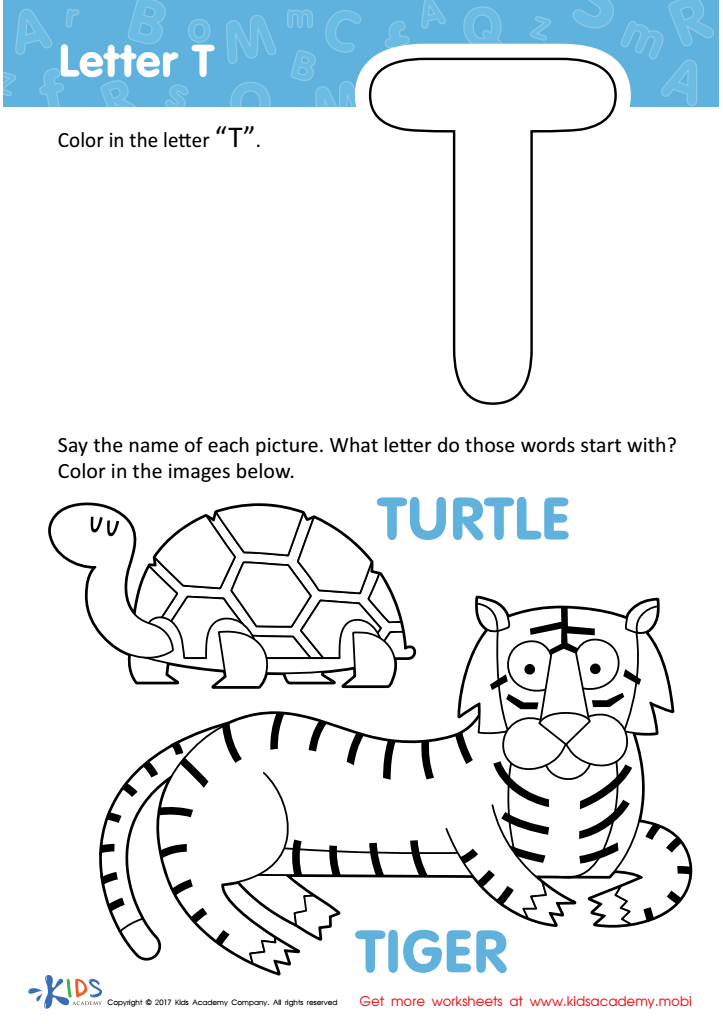
Letter T Coloring Sheet
 Assign to My Students
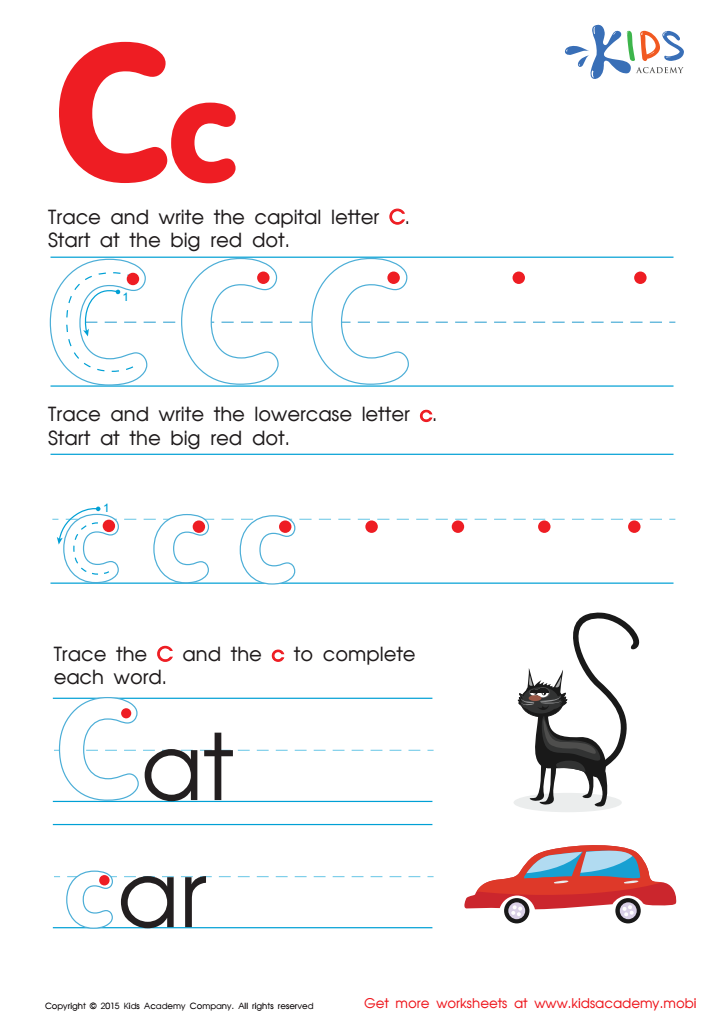
Letter C Tracing Page
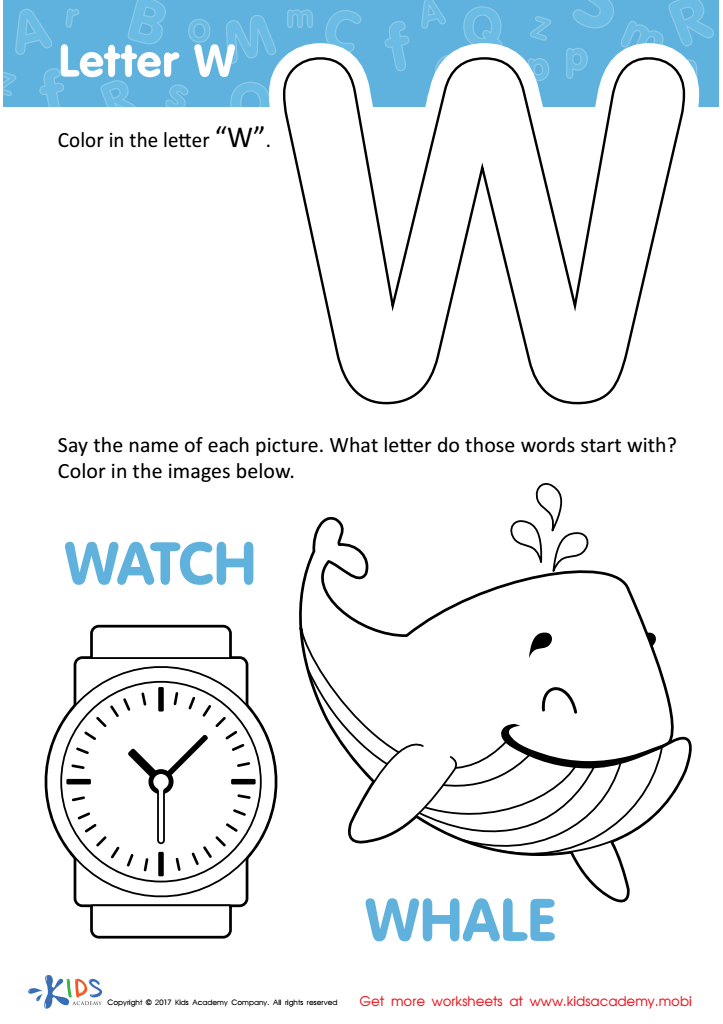
Letter W Coloring Sheet
Assign to My Students








Letter tracing skills are foundational for 3-year-olds as they lay the groundwork for future literacy and fine motor development. At this developmental stage, the brain is exceptionally receptive to learning, making it an optimal time to introduce early writing skills. Traceable letters help young children recognize the shapes and structures of the alphabet, fostering familiarity which is essential for reading readiness.
For parents and teachers, emphasizing letter tracing helps children build the muscle memory needed for proper handwriting. As kids trace letters, they enhance their hand-eye coordination and fine motor skills, which are crucial for various tasks beyond writing, such as buttoning clothes or using utensils. Furthermore, this practice nurtures children's concentration, patience, and attention to detail—all attributes that will serve them well in numerous aspects of their lives.
In preschool settings, activities like letter tracing can stimulate cognitive skills and reinforce classroom learning, making future academic challenges less daunting. Encouraging children through guided activities and positive reinforcement also boosts their confidence and enthusiasm about learning. By investing time and effort into letter tracing now, parents and teachers set the stage for lifelong academic success and a love for learning.







