Fine Motor Skills Letter Q Worksheets for 3-Year-Olds
3 filtered results
-
From - To
Enhance your child’s development with our engaging Fine Motor Skills Letter Q worksheets specifically designed for 3-year-olds. These fun and interactive activities help little ones strengthen their hand-eye coordination and dexterity while exploring the shape and sound of the letter Q. From tracing and coloring to various cutting activities, each worksheet is crafted to keep young learners engaged while developing essential fine motor skills. Perfect for homeschooling or classroom use, our printable worksheets will provide your child with a joyful learning experience that sets the stage for future literacy success. Start your child's alphabet adventure today with these delightful resources!
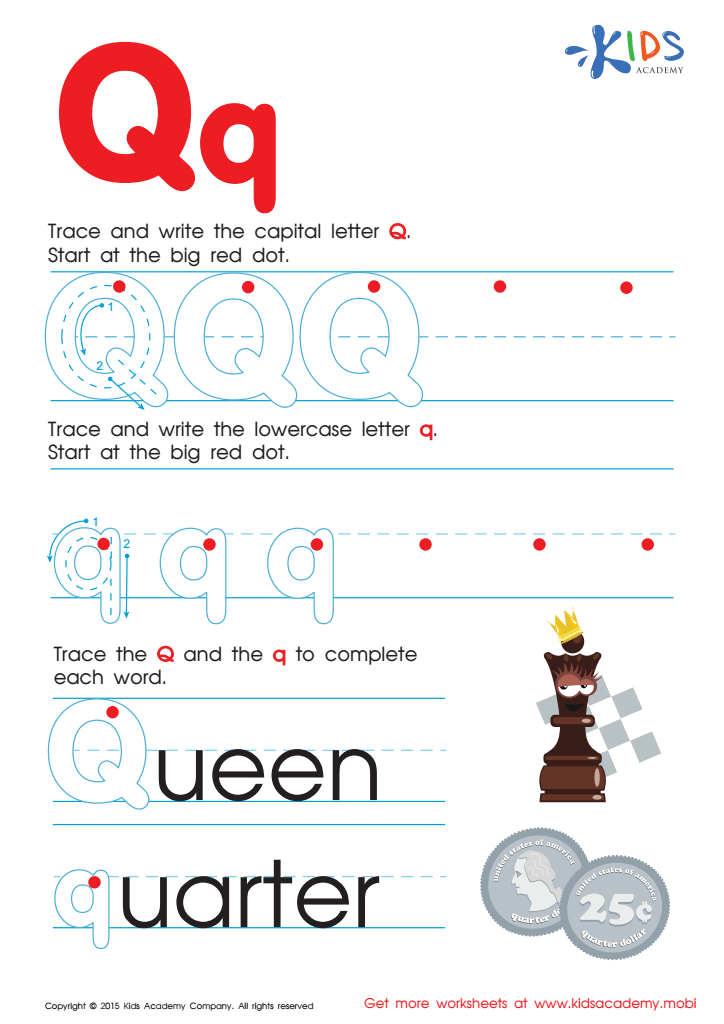
Letter Q Tracing Page
 Assign to My Students
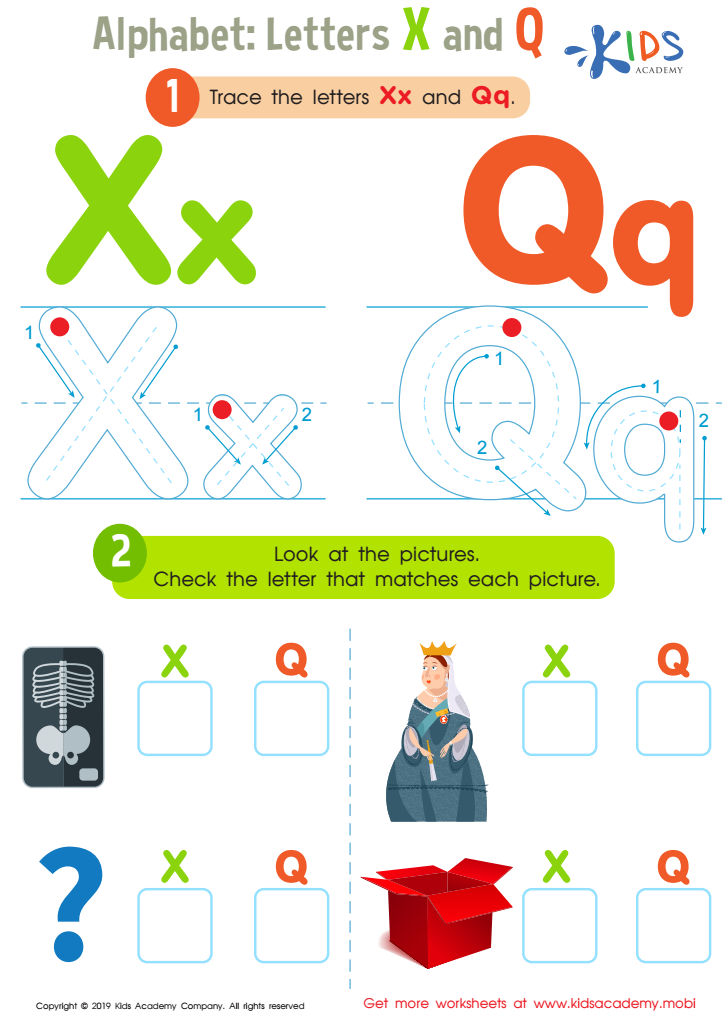
Letters X and Q Tracing Worksheet
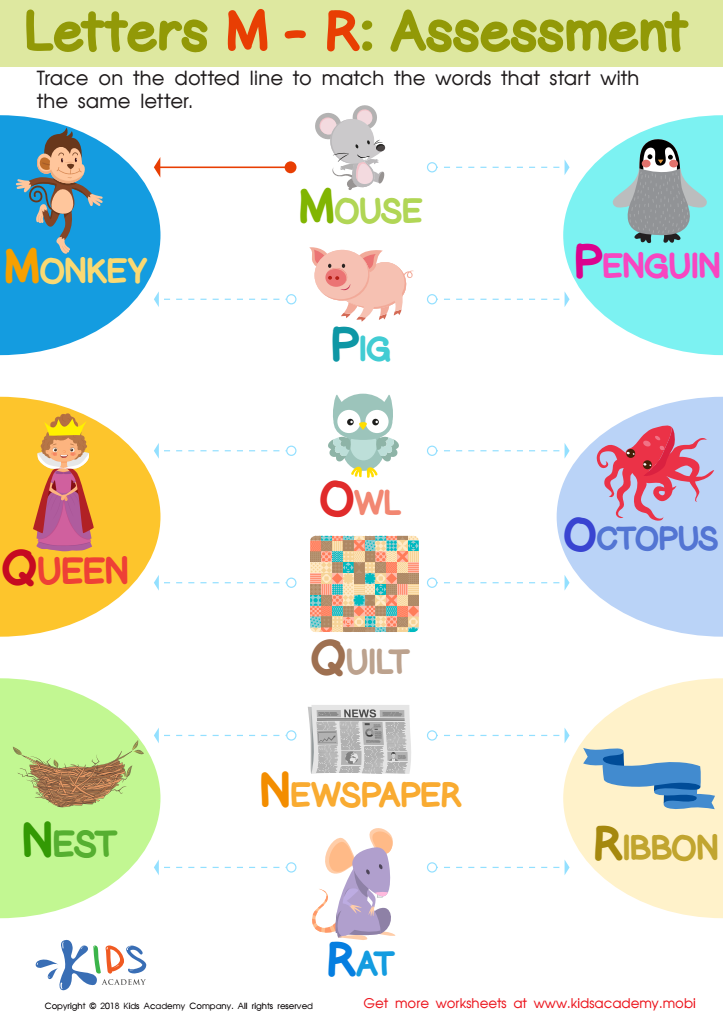
Letters M-R Tracing Worksheet





Fine motor skills are crucial for 3-year-olds as they serve as the foundation for various developmental milestones. The development of fine motor skills involves the coordination of small muscles, particularly in the hands and fingers. Focusing on activities that promote these skills, such as letter-related exercises like tracing the letter Q, can significantly enhance a child’s ability to perform everyday tasks independently.
When parents or teachers emphasize fine motor skills in letter Q activities, they are enabling children to strengthen their grip, improve hand-eye coordination, and develop spatial awareness. Engaging in such activities fosters creativity and introduces basic literacy concepts, helping children become familiar with letters and their shapes. Furthermore, as children learn to manipulate tools like crayons, scissors, and blocks while practicing the letter Q, they cultivate confidence and dexterity.
By prioritizing fine motor skill development, parents and teachers not only support early literacy but also lay the groundwork for future academic success. A child who is proficient in these skills will be better equipped to tackle activities such as writing, drawing, and playing—key components of learning and social interaction. Thus, nurturing fine motor skills at this age is integral to overall childhood development.