Letter-sound association Letter Recognition Worksheets for 3-Year-Olds
6 filtered results
-
From - To
Enhance your 3-year-old's literacy skills with our engaging Letter-Sound Association Worksheets! Designed to promote letter recognition, these interactive activities provide a fun and effective way for young learners to connect letters with their corresponding sounds. Each worksheet features vibrant illustrations and simple prompts that captivate children's attention, encouraging them to practice identifying letters and associating them with words. Perfect for parents and educators, these worksheets support early reading development and foundational skills at an age where curiosity and imagination thrive. Start your child on the path to literacy today with our easy-to-use, educational resources tailored for little learners!
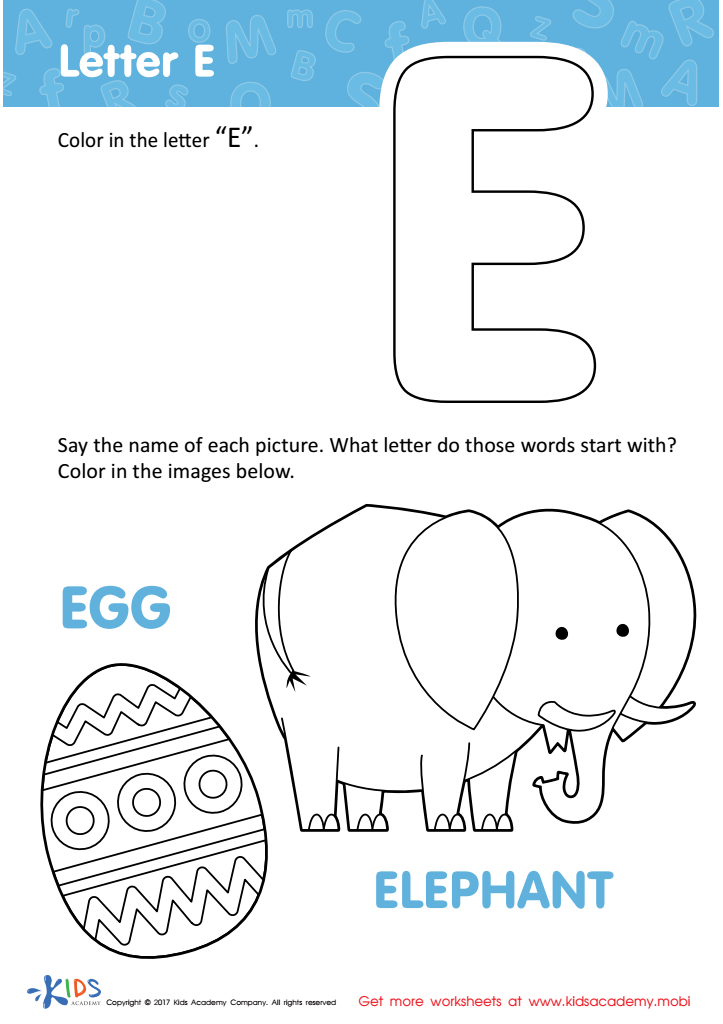
Letter E Coloring Sheet
 Assign to My Students
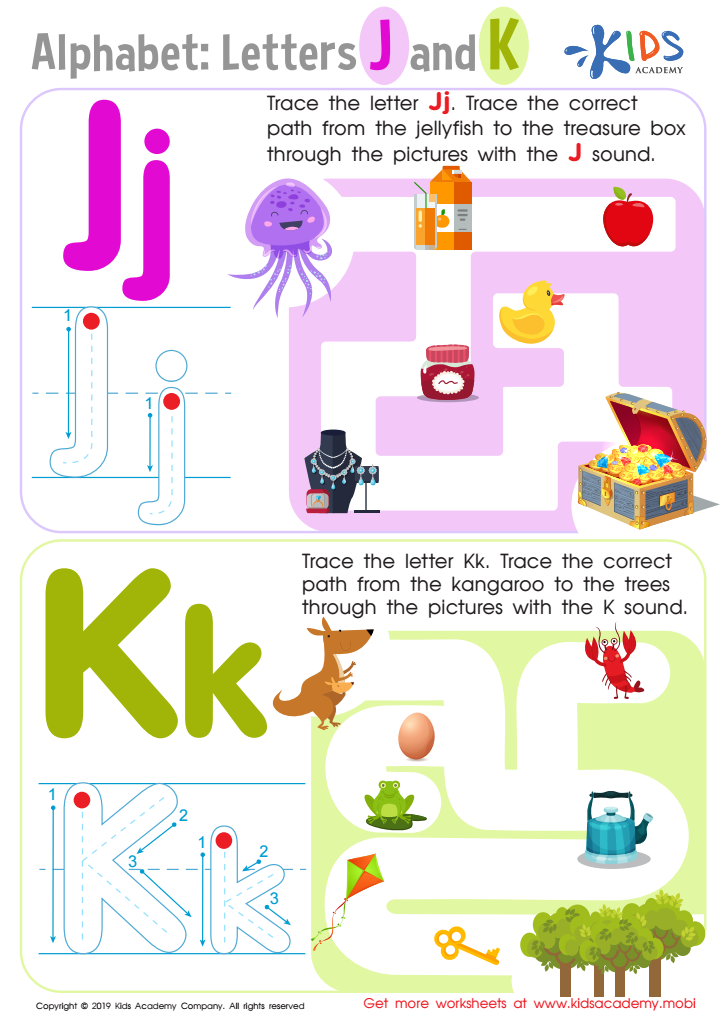
Letters J and K Tracing Worksheet
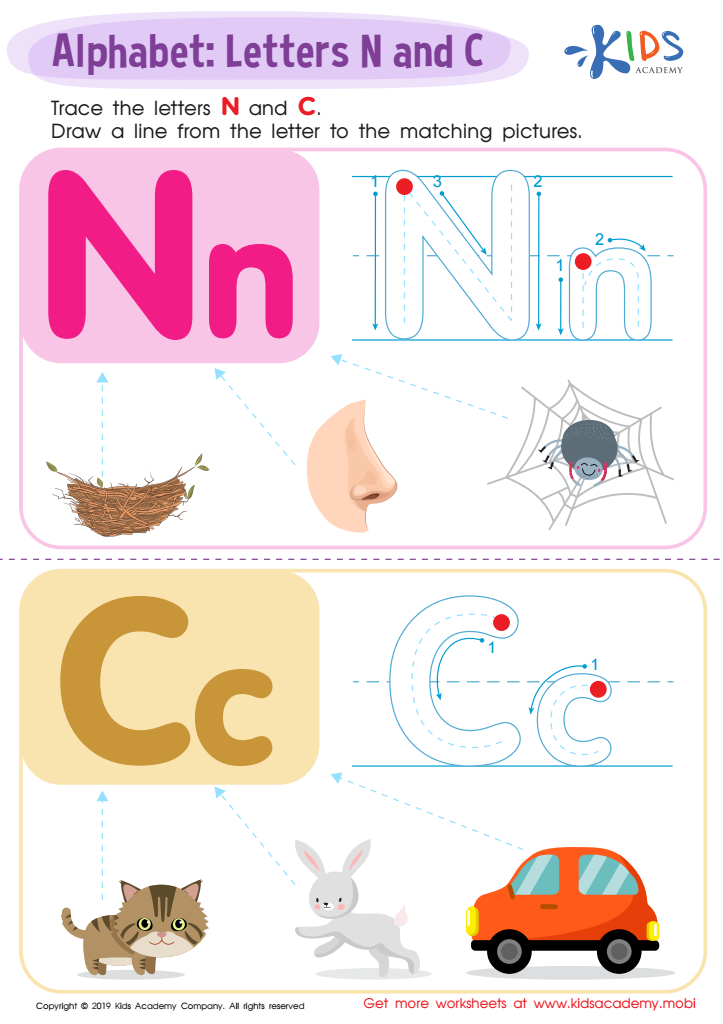
Letter N and C Tracing Worksheet
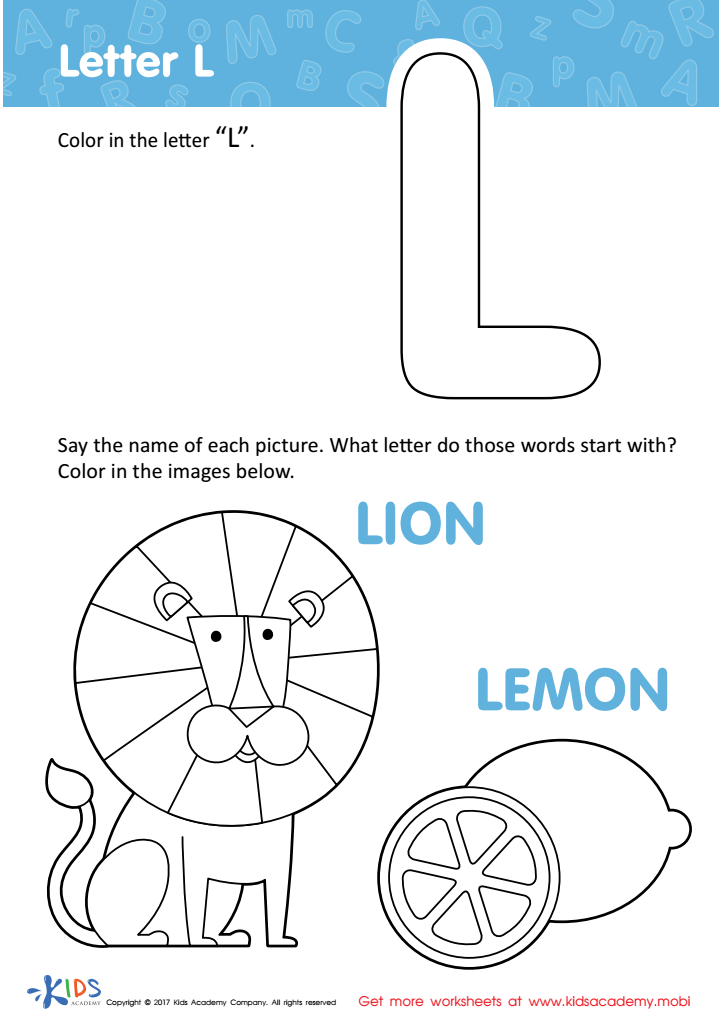
Letter L Coloring Sheet
Assign to My Students
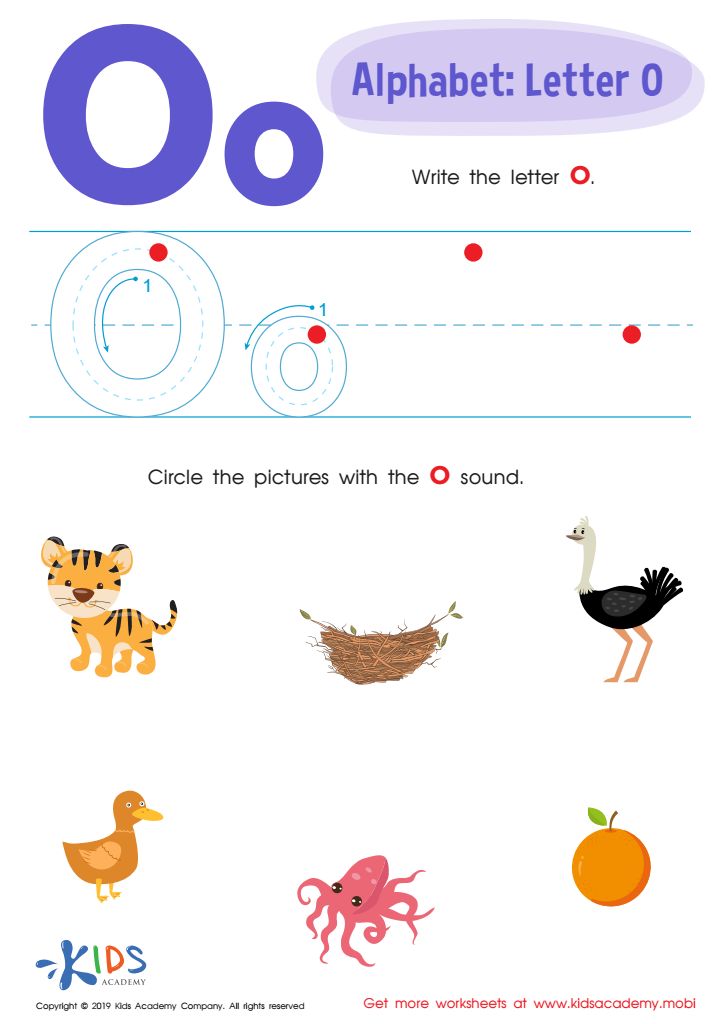
Letter O Tracing Worksheet
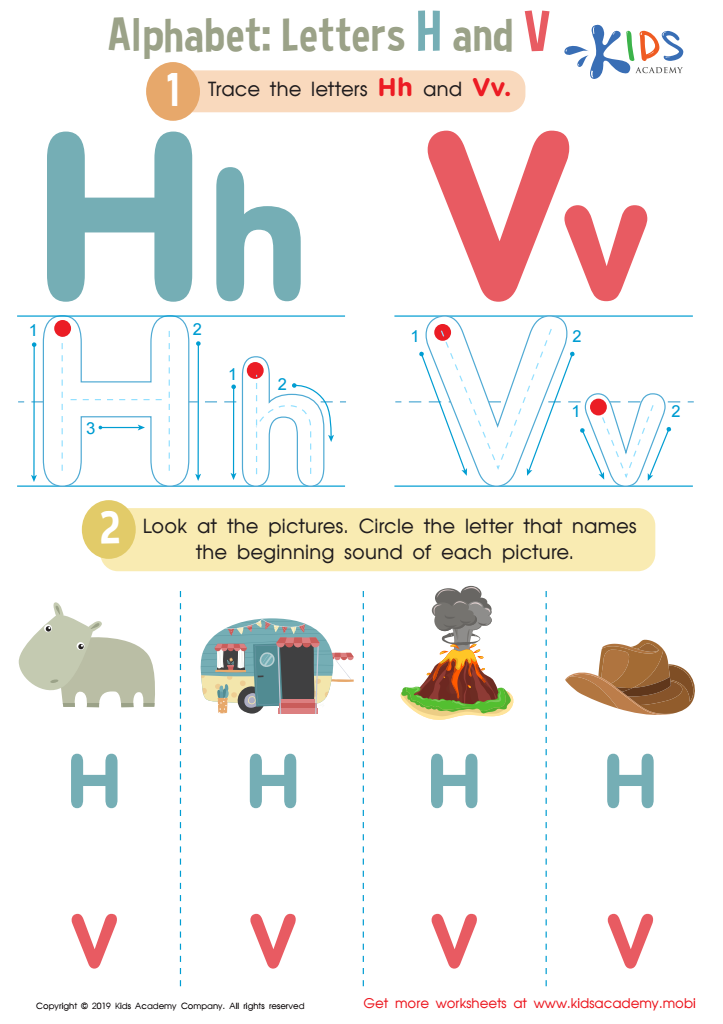
Letters H and V Tracing Worksheet








Letter-sound association and letter recognition are critical components of early literacy development, especially for 3-year-olds. At this age, children are typically developing foundational skills that significantly influence their future reading abilities. Understanding letter sounds helps children connect letters to their phonetic sounds, enabling them to decode words later on. This foundational skill is crucial for successful reading, writing, and overall communication.
Moreover, early letter recognition involves not just identifying letters but also comprehending their shapes and distinguishing between them. This ability strengthens their cognitive processes and enhances their memory and attention spans. When teachers or parents emphasize these skills through engaging activities—like singing alphabet songs, playing with letters, or using alphabet-themed games—they create a positive learning environment that fosters curiosity and motivation.
Finally, building these skills at an early age lays the groundwork for more complex literacy skills. Children who develop strong letter-sound associations and recognition are better prepared for kindergarten and the challenges of reading later on. When parents and teachers prioritize these aspects of literacy, they provide essential support for lifelong learning, giving children the tools they need to thrive academically and beyond.







