Letter Tracing Practice Letter Recognition Worksheets for 3-Year-Olds
4 filtered results
-
From - To
Boost your child's early language skills with our Letter Tracing Practice Letter Recognition Worksheets for 3-Year-Olds. Perfectly designed for little hands, these fun and engaging worksheets help kids learn the alphabet through tracing activities. Children will develop fine motor skills, enhance hand-eye coordination, and build the foundation for writing proficiency. Each worksheet features playful illustrations and large, traceable letters to ensure effective learning experiences. Foster early reading and writing with activities tailored specifically for toddlers, making education both exciting and accessible. Give your child a head start in their learning journey today!
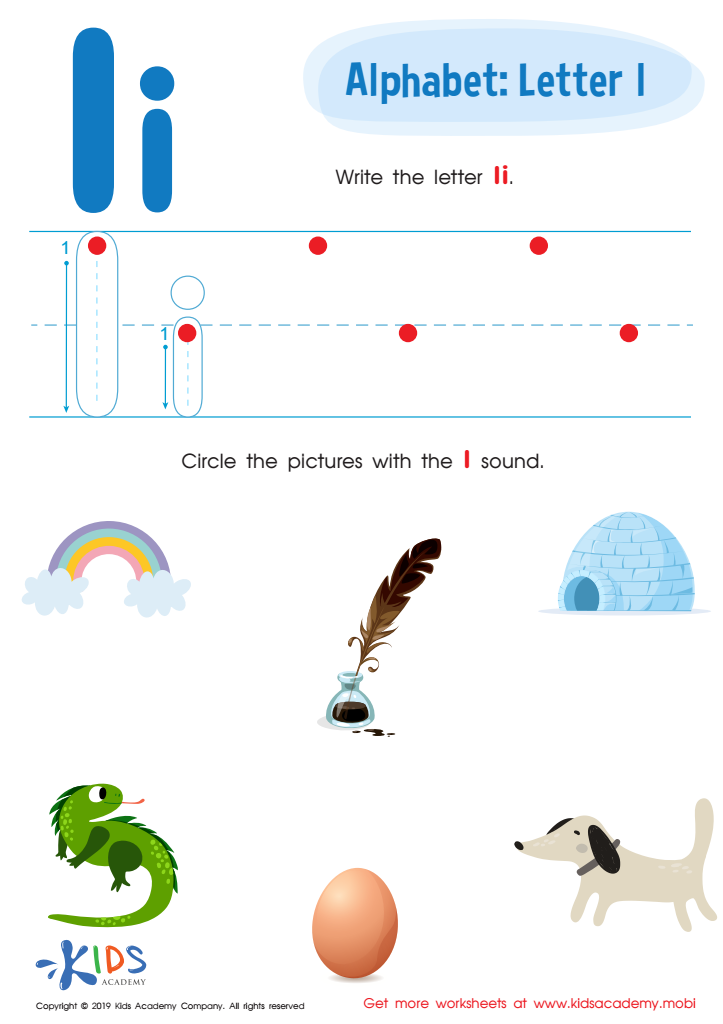
Letter I Tracing Worksheet
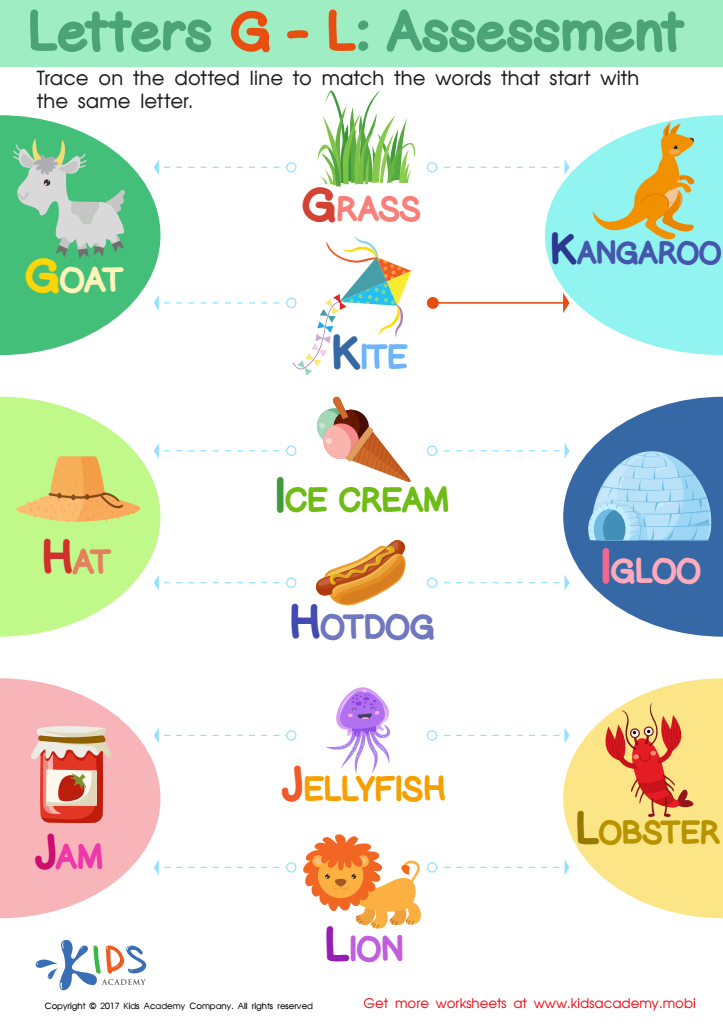
Letters G-L Worksheet
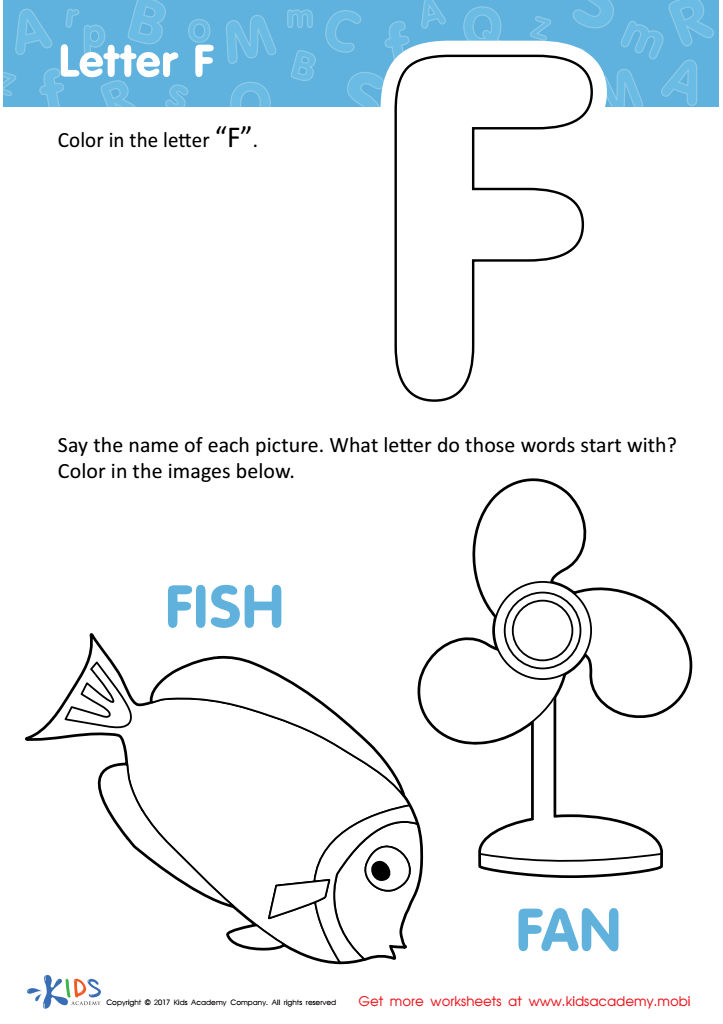
Letter F Coloring Sheet
 Assign to My Students
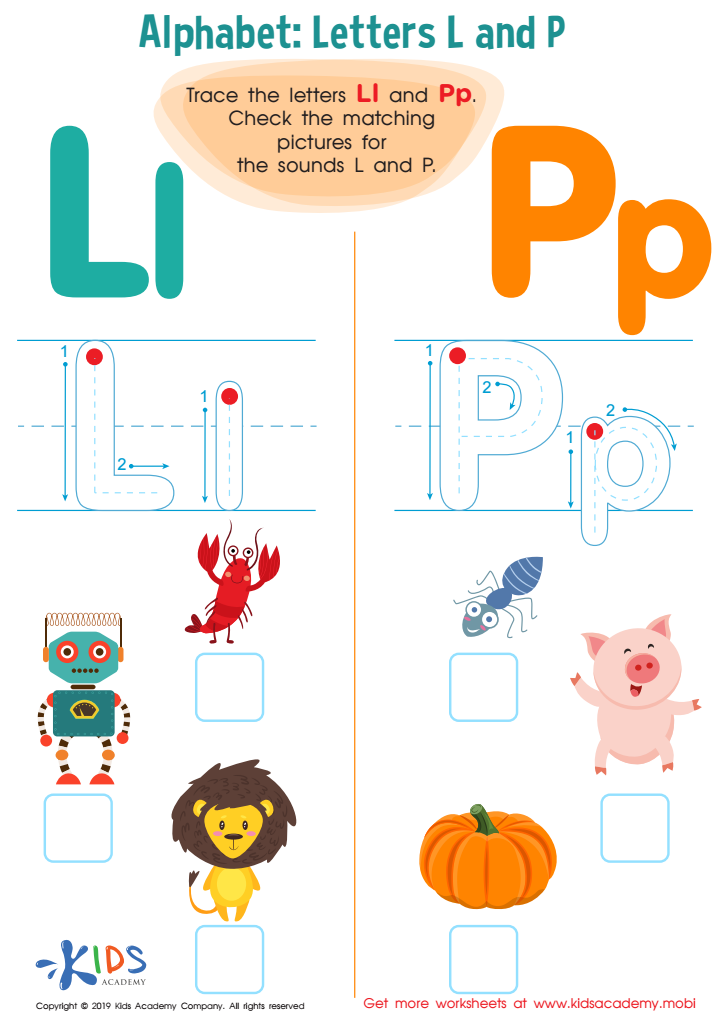
Letter L and P Tracing Worksheet








Letter tracing practice is a critical developmental activity for 3-year-olds as it lays the foundation for early literacy skills. First and foremost, this activity enhances letter recognition, which is vital for reading readiness. By repeatedly tracing letters, children become familiar with their shapes and forms. This convenience isn’t limited to letter recognition; it also bolsters their ability to distinguish between similar-looking letters, such as 'b' and 'd' or 'p' and 'q', thereby minimizing future reading difficulties.
Moreover, tracing fosters fine motor development. Young children are still building hand-eye coordination and muscle strength in their hands. The precise movements required to trace letters help improve these motor skills, which are crucial for tasks such as writing, drawing, and even self-care activities like buttoning a shirt or tying shoelaces.
Additionally, letter tracing aids cognitive development by reinforcing directionality (understanding left-to-right orientation) necessary for reading and writing in English. It also supports memory retention by constant repetition, making letter learning fun and engaging.
Teachers and parents can use letter tracing to instill positive learning habits and patience. When children complete a tracing task, they experience a sense of accomplishment, encouraging a positive attitude toward learning. Therefore, letter tracing practice for 3-year-olds is not just an educational activity but a comprehensive developmental tool that benefits various fundamental skill areas.







