Rhyming skills development Rhyming Worksheets for 3-Year-Olds
3 filtered results
-
From - To
Enhance your child's language abilities with our engaging rhyming worksheets for 3-year-olds! Designed to promote early literacy skills, these fun activities cultivate a love for reading and help children recognize patterns in words. Our worksheets provide joyful rhyming practice, featuring vibrant illustrations and simple exercises that encourage creativity and improve phonemic awareness. As your little ones explore various rhyming pairs, they will develop essential skills that form the foundation for reading success. Perfect for parents and educators seeking effective tools to support language development, our rhyming worksheets make learning an exciting adventure for curious toddlers! Start nurturing their rhyming skills today!
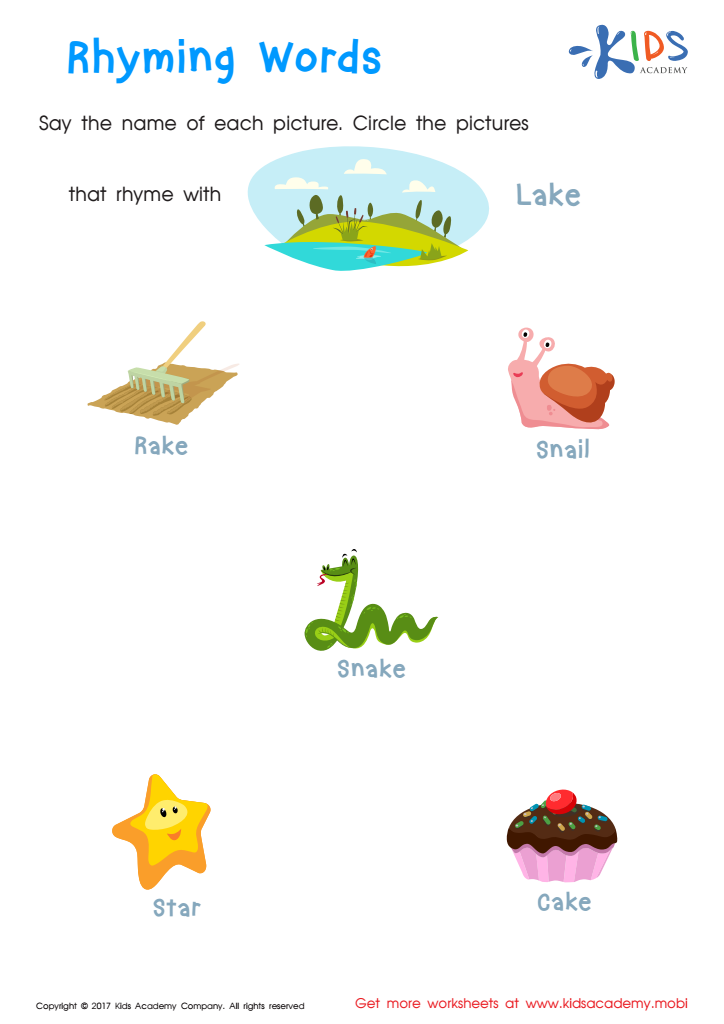
Rhyming Words Rhyming Worksheet
 Assign to My Students
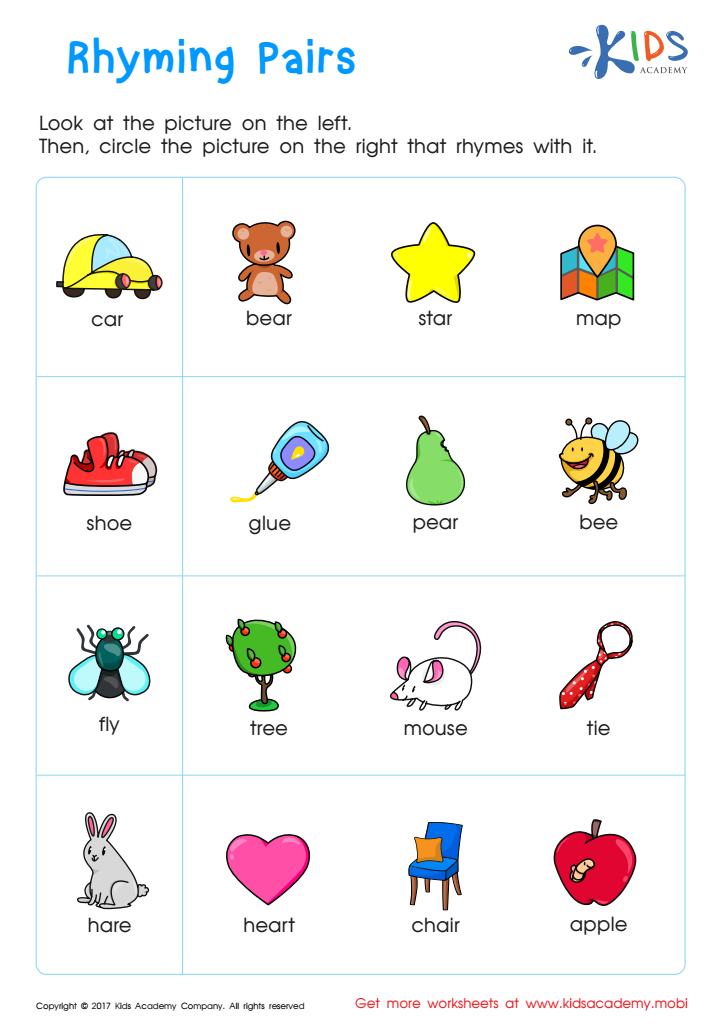
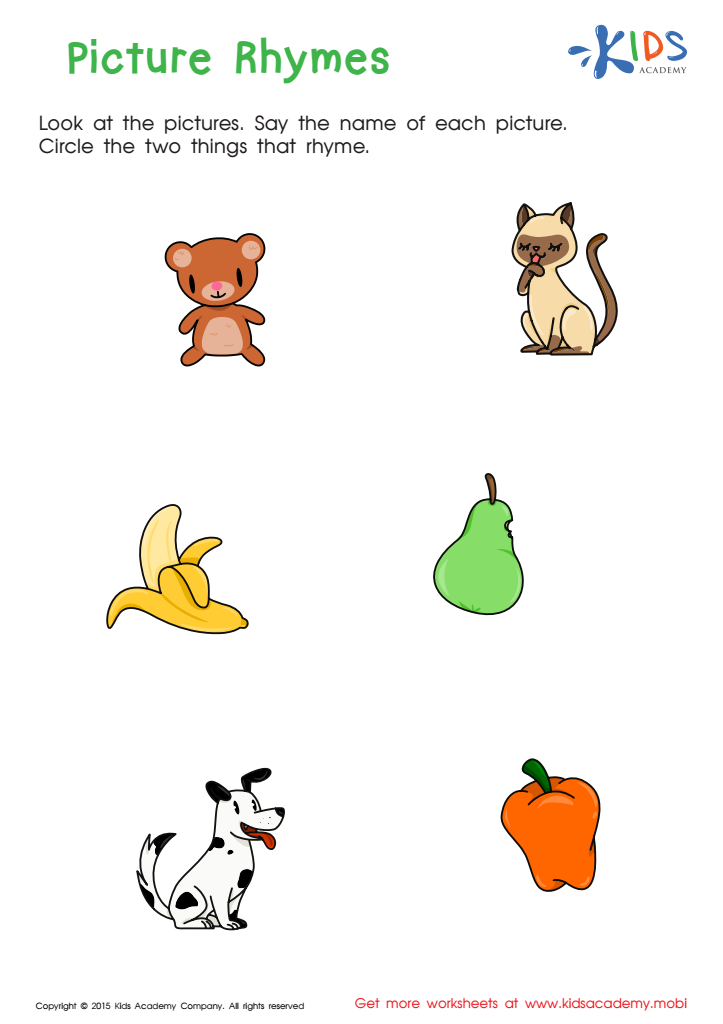
First Words: Picture Rhymes Worksheet








Rhyming skills are essential for the language and literacy development of 3-year-olds, and both parents and teachers should pay close attention to nurturing these skills. Rhyming helps children develop phonemic awareness, the ability to hear and manipulate sounds in speech, which is foundational for reading and writing. By recognizing and producing rhymes, children strengthen their understanding of sound patterns, which aids in decoding words as they learn to read.
Moreover, rhyming activities enhance vocabulary acquisition. Engaging with rhyming books, songs, and games introduces new words and concepts while making learning fun and interactive. This playful approach fosters a positive attitude toward language and literacy.
Additionally, honing rhyming skills supports cognitive development. It encourages memory recall as children remember words that sound alike and develops critical thinking as they identify and create words that rhyme.
Lastly, rhyming cultivates early social skills. When children engage in rhyming activities with peers or caregivers, they learn to listen and collaborate in playful ways, building important communication skills. Thus, prioritizing rhyming development in early education creates a solid foundation for future literacy success, social interaction, and a lifelong love for language.







