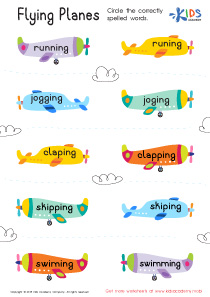
Vocabulary enhancement Rhyming Worksheets for 3-Year-Olds
3 filtered results
-
From - To
Boost your child’s vocabulary with our engaging Rhyming Worksheets designed for 3-year-olds! These fun, printable activities encourage early language development through the joyful exploration of rhymes. Each worksheet is carefully crafted to capture your little one’s imagination while enhancing their verbal skills. Kids will love connecting words through playful exercises that foster phonetic awareness and expand their vocabulary. Suitable for home or classroom use, these worksheets make learning interactive and enjoyable. Watch as your child gains confidence in their language abilities while having a blast with rhyming! Dive in and nurture a lifelong love for words today!
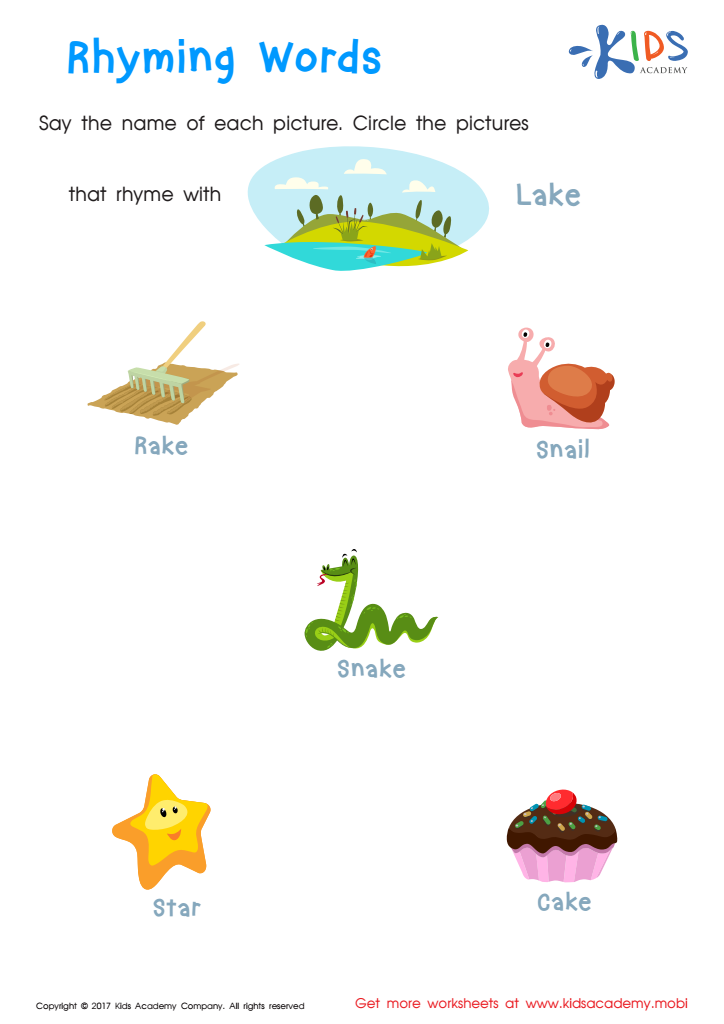
Rhyming Words Rhyming Worksheet
 Assign to My Students
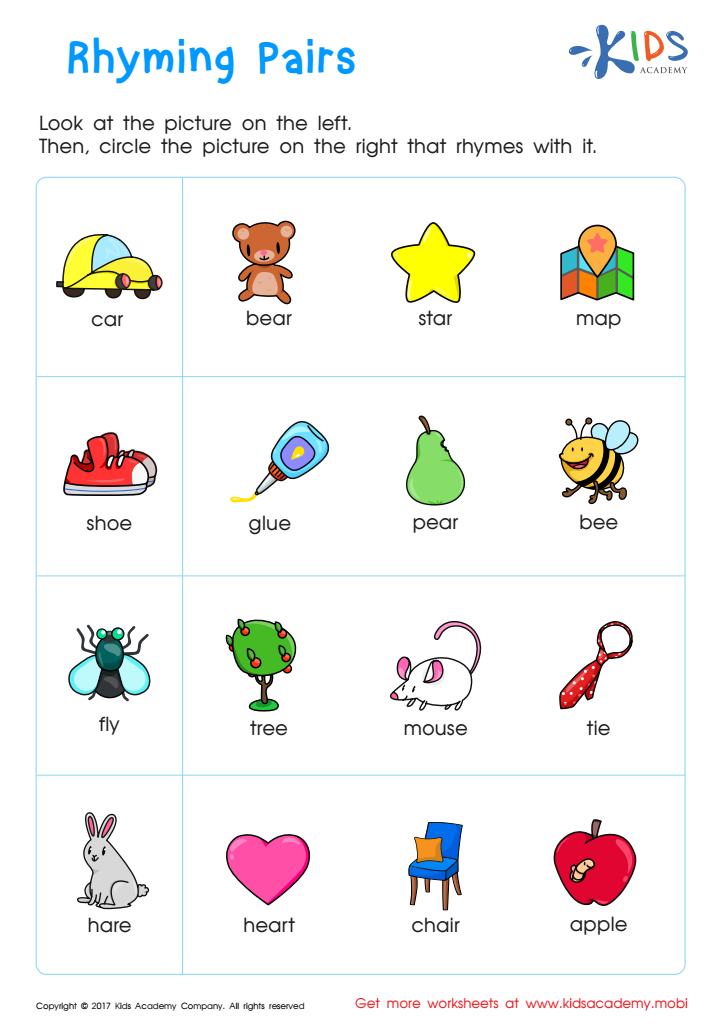
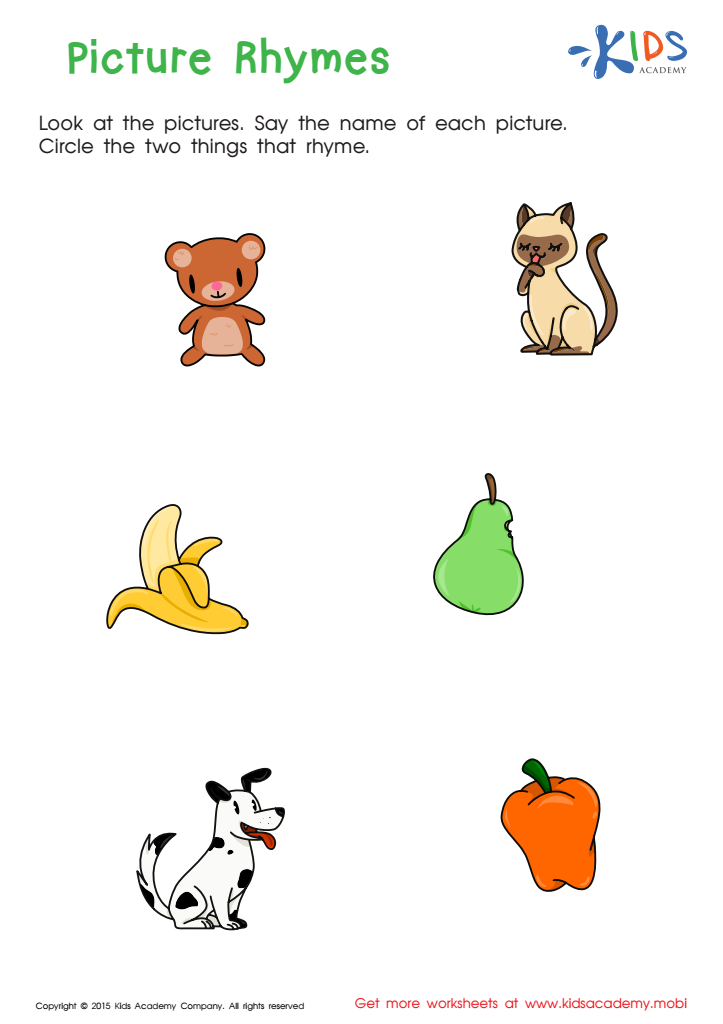
First Words: Picture Rhymes Worksheet







Vocabulary enhancement through rhyming is crucial for 3-year-olds as it lays a strong foundation for language development and literacy skills. At this age, children are highly receptive and capable of absorbing new vocabulary through engaging and playful methods. Rhyming introduces them to phonemic awareness, which is the ability to hear and manipulate sounds in words—a skill essential for future reading success.
When parents and teachers incorporate rhyming into everyday activities, such as reading rhyming books or singing songs, children not only expand their vocabulary but also improve their memory and auditory skills. The rhythmic patterns and repetition associated with rhymes make learning enjoyable, capturing children's attention and making words stick in their minds.
Moreover, rhyming fosters creativity and imagination, as children begin to write or invent their own rhymes. This playful exploration of language boosts their confidence in expressing themselves. Finally, enhancing vocabulary at this early stage creates stronger communicators who can articulate their thoughts and feelings more effectively, ultimately leading to better social interactions and academic success. By prioritizing rhyming activities, parents and teachers contribute significantly to a child's development in both language and overall cognitive functioning.