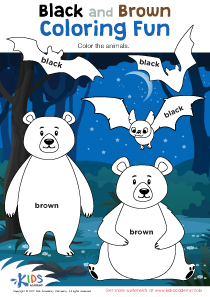
Letter tracing skills English for Beginners Worksheets for 3-Year-Olds
3 filtered results
-
From - To
Welcome to our engaging "Letter Tracing Skills for Beginners" worksheets, designed specifically for 3-year-olds learning English! These fun and interactive worksheets provide pre-schoolers with the perfect introduction to letter formation. Each activity encourages fine motor skills development while practicing uppercase and lowercase letters. Kids will enjoy tracing, coloring, and completing simple tasks that promote early literacy. With vibrant illustrations and easy-to-follow instructions, these worksheets make letter learning enjoyable for young learners. Perfect for at-home or classroom use, these resources will help your little ones build confidence in their writing abilities while fostering a love for learning English!
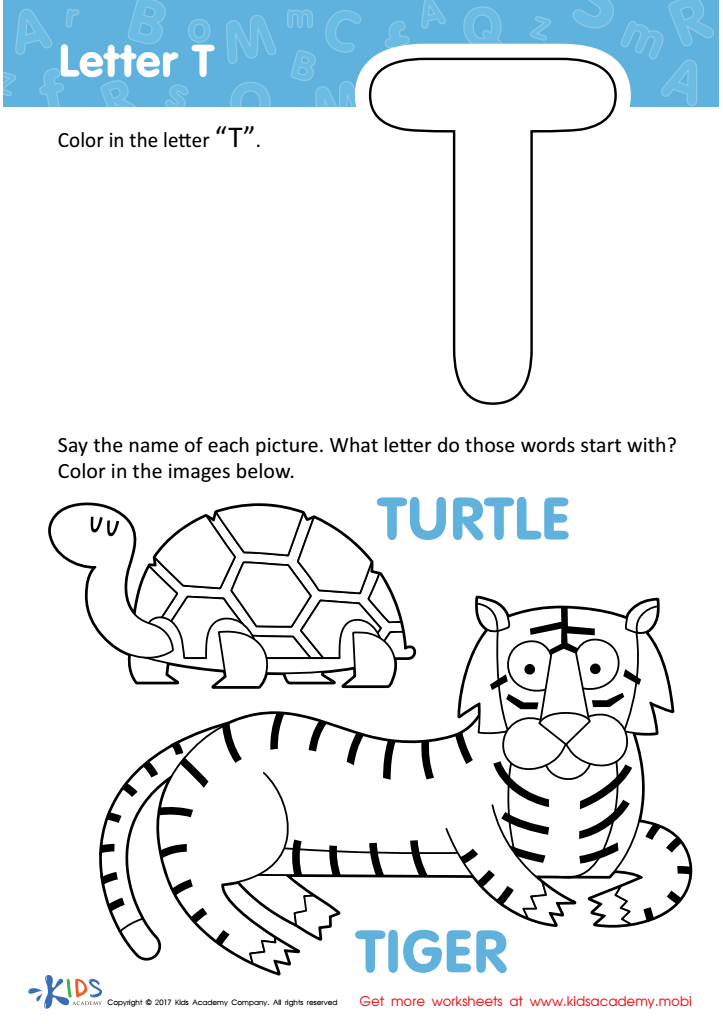
Letter T Coloring Sheet
 Assign to My Students
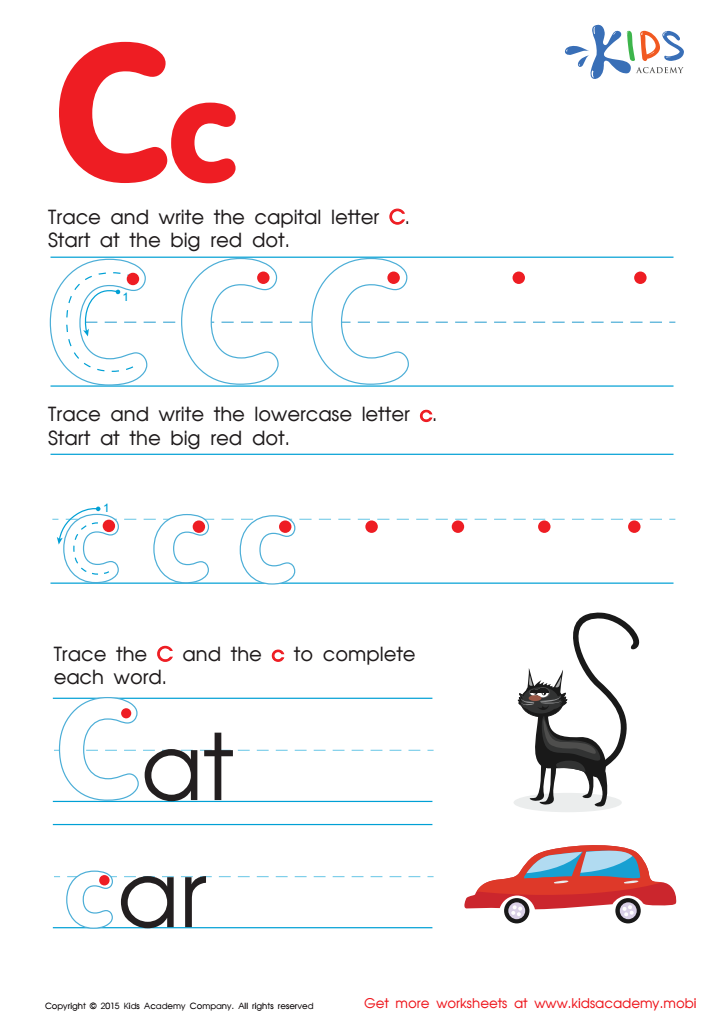
Letter C Tracing Page
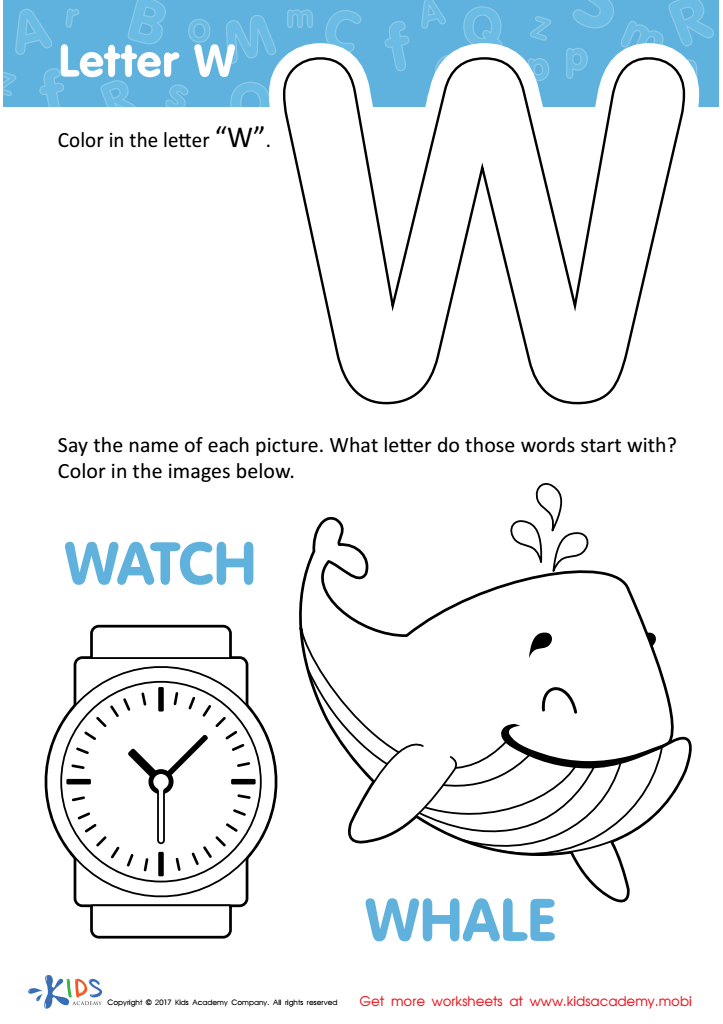
Letter W Coloring Sheet
Assign to My Students





Letter tracing skills are fundamental for 3-year-olds as they lay the groundwork for literacy and cognitive development. At this age, children learn through play, exploration, and hands-on activities, making letter tracing an engaging way to introduce the alphabet. Parents and teachers should care about this skill because it not only promotes fine motor skills but also enhances hand-eye coordination, which is essential for later writing and other academic tasks.
Moreover, tracing letters helps preschoolers familiarize themselves with letter shapes, names, and sounds, fostering phonemic awareness—crucial for reading readiness. By encouraging a positive attitude towards letters and writing, educators and parents can instill a sense of accomplishment and confidence in young learners.
As children trace letters, they begin to develop pre-writing skills, making the transition to independent writing smoother. These foundational skills contribute to better communication abilities and overall academic success in the future. Ultimately, focusing on letter tracing skills provides a fun and effective way to build essential language and communication skills, setting the stage for a lifelong love of learning. Investing in these skills at a young age benefits not just literacy but overall early childhood development.