Addition skills Worksheets for 3-Year-Olds - Page 5
98 filtered results
-
From - To
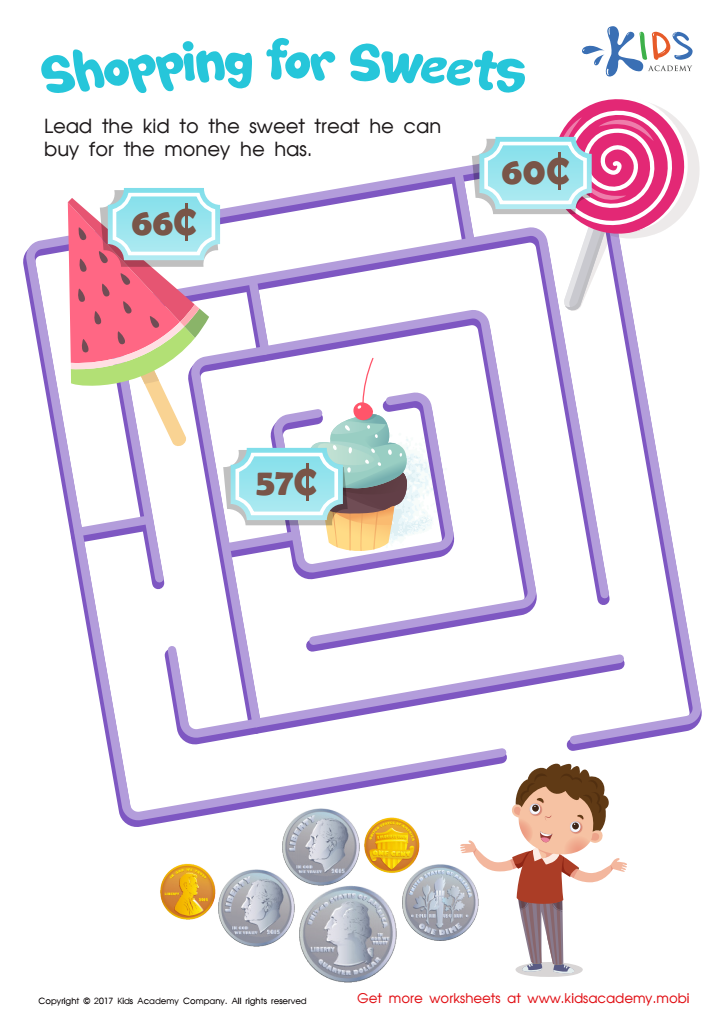
Shopping for Sweets Worksheet
 Assign to My Students
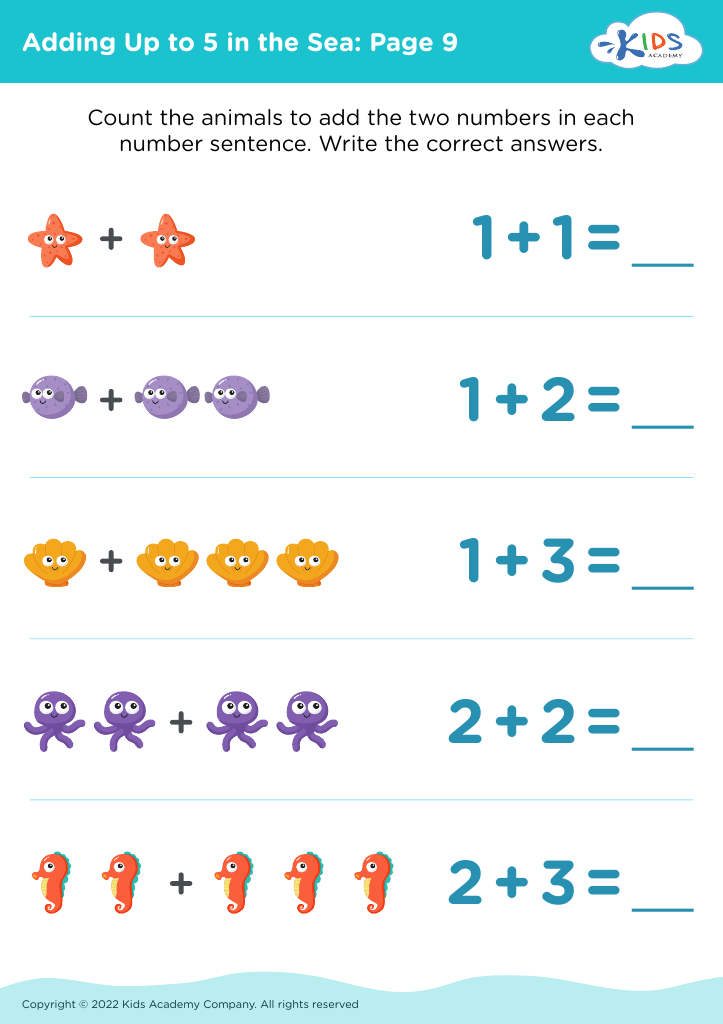








Parents and teachers should pay close attention to the development of addition skills in 3-year-olds for several reasons. First, foundational math skills are critical for cognitive development. Introducing basic addition through playful activities and engaging games fosters a child's ability to recognize patterns, compare quantities, and solve problems. This early exposure helps lay the groundwork for more complex mathematical concepts later in school.
Additionally, addition skills reinforce important social and emotional learning. Children often learn to share and cooperate during activities that involve numbers, promoting teamwork and communication. Furthermore, use of everyday situations, like counting toys or snacks, makes math relevant and relatable, enhancing their understanding through real-world contexts.
Developing addition skills also contributes to overall confidence. When children master simple concepts such as combining two sets of objects, they build self-esteem, encouraging a positive attitude toward learning and exploration.
Lastly, research shows that children who enter school with basic math skills tend to perform better academically, reinforcing the need for early math education. Thus, nurturing addition skills in young children is crucial for their emergent learning, social interaction, and long-term academic success.








