Comparing objects Worksheets for 3-Year-Olds
3 filtered results
-
From - To
Welcome to our "Comparing Objects Worksheets for 3-Year-Olds" page! Designed to engage young learners, our worksheets offer fun activities that help toddlers develop essential comparative skills. Through interactive exercises, children will learn to identify similarities and differences in size, shape, and color, fostering critical thinking and observational abilities. Each worksheet is crafted to ensure age-appropriate learning, incorporating vibrant illustrations to keep your little ones entertained. Perfect for home or classroom use, these worksheets encourage hands-on learning while building a strong foundation for pre-math skills. Explore our collection and support your child’s educational journey today!
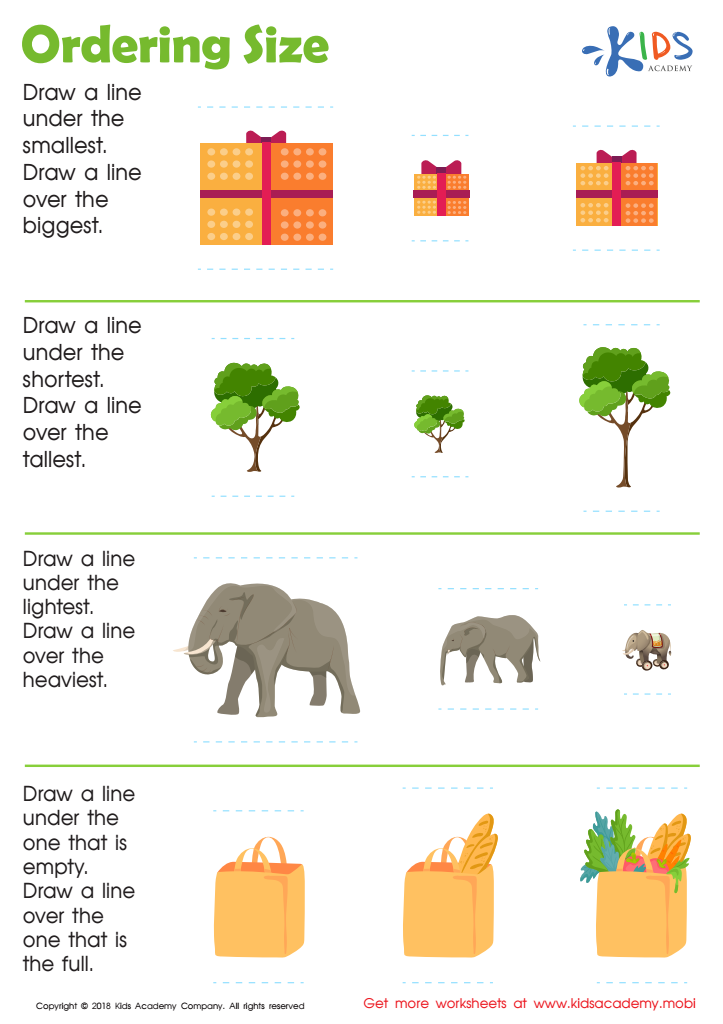
Ordering Size Worksheet
 Assign to My Students
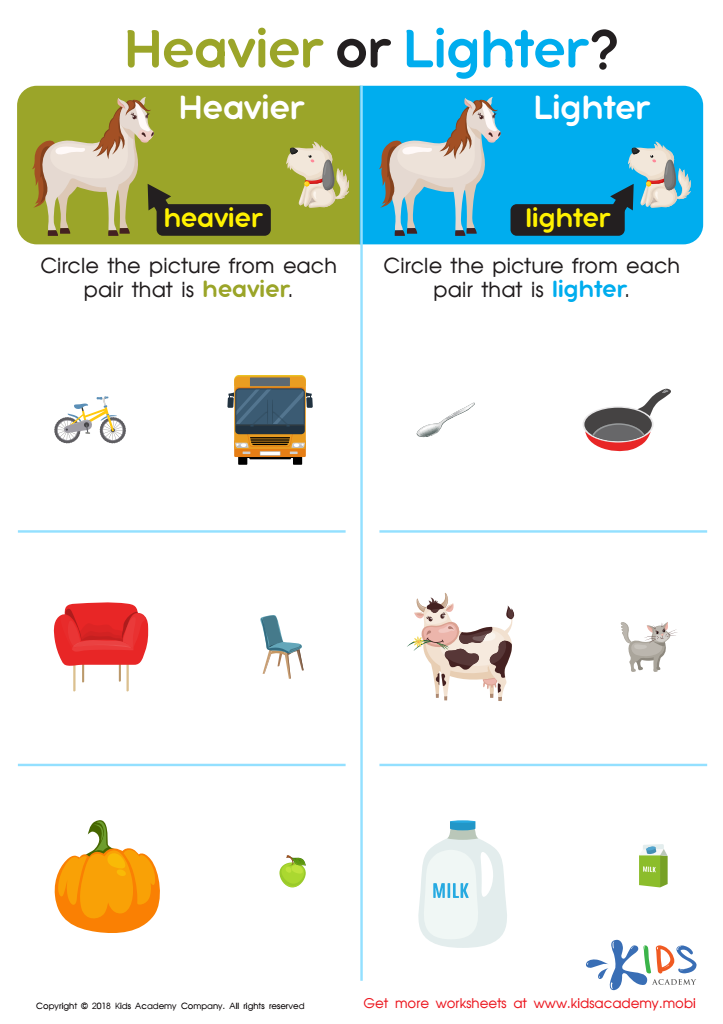
Heavier or Lighter? Worksheet
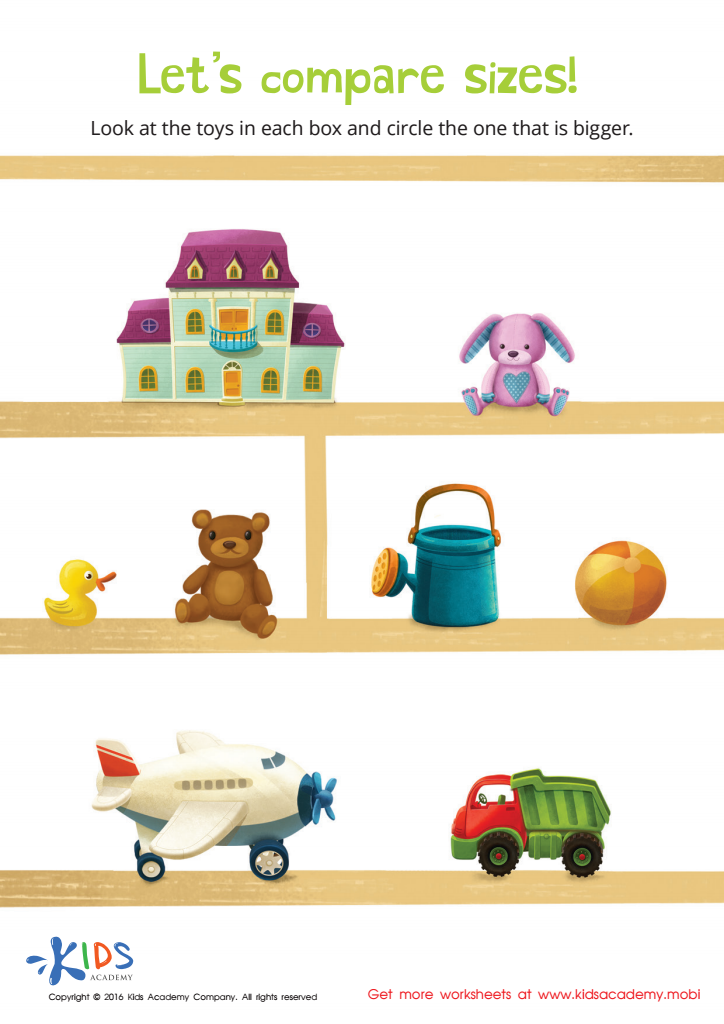
Classifying by Size Sorting Worksheet







Understanding the concept of comparing objects is a fundamental skill for 3-year-olds, serving as a building block for later math and critical thinking abilities. Parents and teachers should care about this developmental milestone because it lays the groundwork for children to make sense of the world around them. When children learn to compare objects based on attributes such as size, color, shape, or quantity, they develop skills in observation, classification, and logical reasoning.
Engaging in comparison activities, like sorting toys by size or color or discussing which fruit is heavier, fosters language development as children learn new vocabulary related to properties and categories. Moreover, these activities enhance cognitive skills, encouraging problem-solving and analytical thinking. By providing opportunities for comparison, parents and teachers can stimulate curiosity and encourage children to engage in meaningful conversations about their observations.
Furthermore, comparing objects supports social interaction, as children learn to express their ideas and listen to perspectives from others. This integrates learning into a collaborative environment, enhancing their emotional intelligence. In summary, prioritizing the development of comparison skills for 3-year-olds not only enriches their educational journey but also cultivates a holistic growth, setting the stage for lifelong learning.








