
Fine Motor Skills (coloring) Worksheets for 3-Year-Olds
4 filtered results
Difficulty Level
Grade
Age
-
From - To
Subject
Activity
Standards
Absolutely! Here's a concise, 100-word description for your webpage about "Fine Motor Skills (coloring) Worksheets for 3-Year-Olds":
Discover a collection of engaging Fine Motor Skills coloring worksheets designed specifically for 3-year-olds at Kids Academy! These printable activities are tailored to help young children develop crucial fine motor skills, including hand-eye coordination and grip strength, while having fun with colors. Each worksheet features age-appropriate designs with simple shapes and illustrations that captivate little minds. Perfect for at-home learning or preschool settings, these resources prepare kids for writing and other essential tasks. Foster your child's development through creative expression and joyful learning with our expertly designed coloring worksheets!
Favorites
With answer key
Interactive
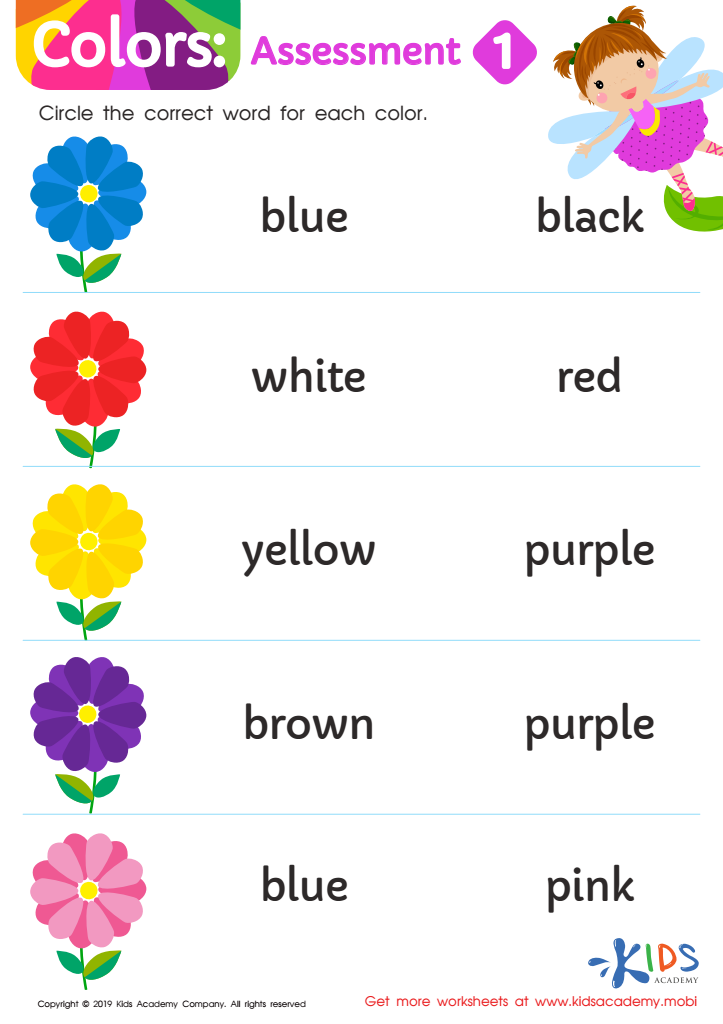
Colors: Assessment 1 Worksheet
Children can decode unfamiliar words by sounding them out or by recognizing sight words. Color words are an important part of sight word knowledge, so add them to your child's list! This color word worksheet is an effective assessment tool for teachers to use with preschool and kindergarten students. It checks their knowledge of five color words - they simply look at the flower and circle the appropriate color word!
 Assign to My Students
Colors: Assessment 1 Worksheet
Worksheet
Join Kids Academy for Free
Who is primarily going to use this learning content?





Fine motor skills are crucial for the holistic development of 3-year-olds, and coloring provides an excellent avenue for developing these abilities. Fine motor skills involve the coordination of small muscles in the hands and fingers, essential for tasks such as writing, buttoning clothes, and tying shoelaces. When children engage in coloring, they practice gripping a crayon, manipulating it with control, and enhancing hand-eye coordination.
This seemingly simple activity lays the foundation for future academic tasks. For example, improved fine motor skills lead to better handwriting, as kids gain greater control over pencils and pens. Moreover, coloring within the lines helps refine attention to detail and patience, as children learn to plan and execute small, precise movements.
Beyond academic readiness, these skills deepen children's independence and self-esteem. Being able to independently dress themselves or manage cutlery during meals fosters a sense of achievement. Practicing coloring can also be a way to calm children, helping develop concentration and focus.
In essence, activities that develop fine motor skills like coloring do more than keep children occupied; they build foundational abilities crucial for everyday tasks, academic success, and emotional development. Parents and teachers should prioritize activities that support the growth of these skills as part of a comprehensive early childhood education strategy.








