Math fluency Worksheets for 3-Year-Olds
3 filtered results
-
From - To
Our Math Fluency Worksheets for 3-Year-Olds provide young learners with a fun and engaging way to develop essential math skills. These carefully designed printable activities focus on building a strong foundation in number recognition, counting, and basic arithmetic. By introducing mathematical concepts early, children can improve their confidence and fluency in a supportive environment. Perfect for both parents and educators, our worksheets combine colorful graphics with age-appropriate challenges to keep little ones excited about learning. Explore our collection to give your child a head start in math, fostering a lifelong love for numbers and problem-solving.
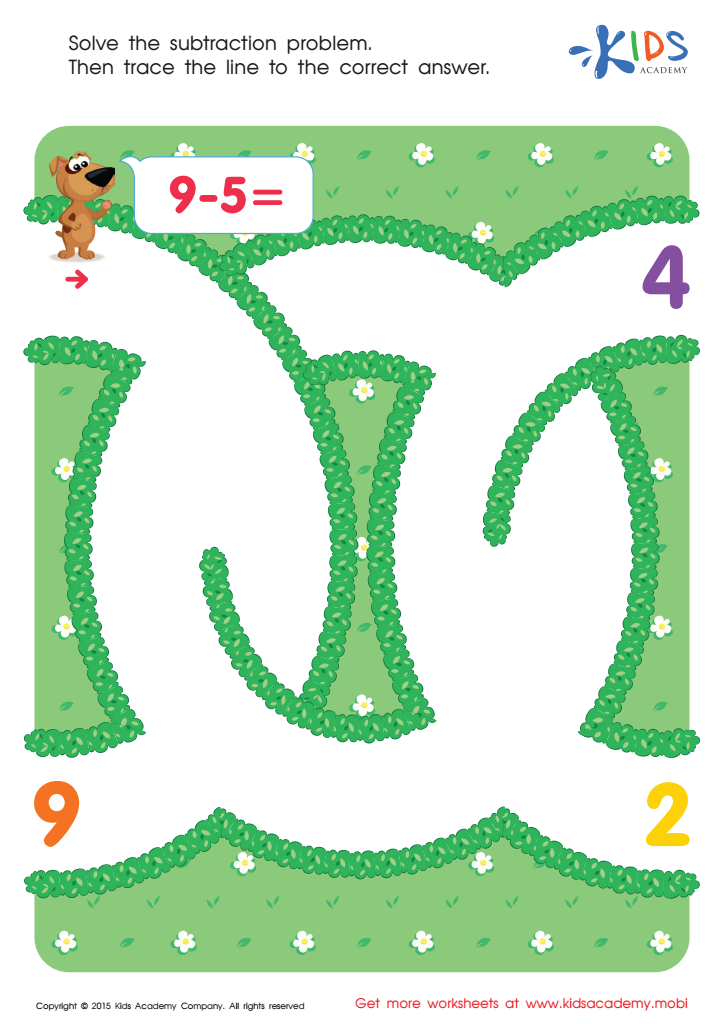
Subtraction Nine And Five Worksheet
 Assign to My Students
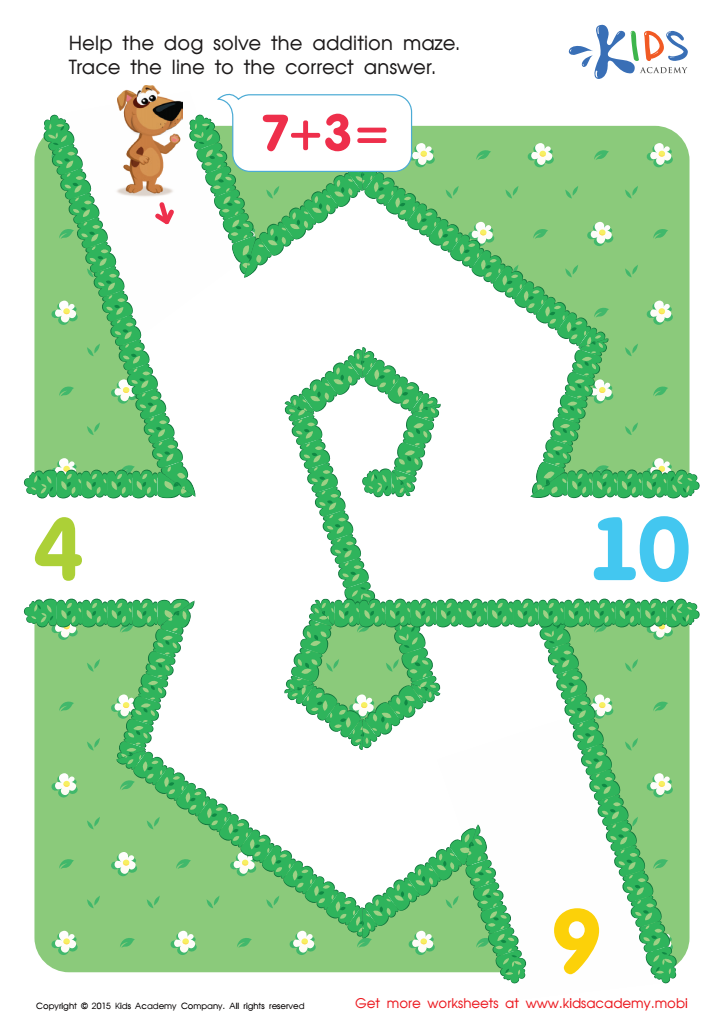
Seven Plus Three Worksheet
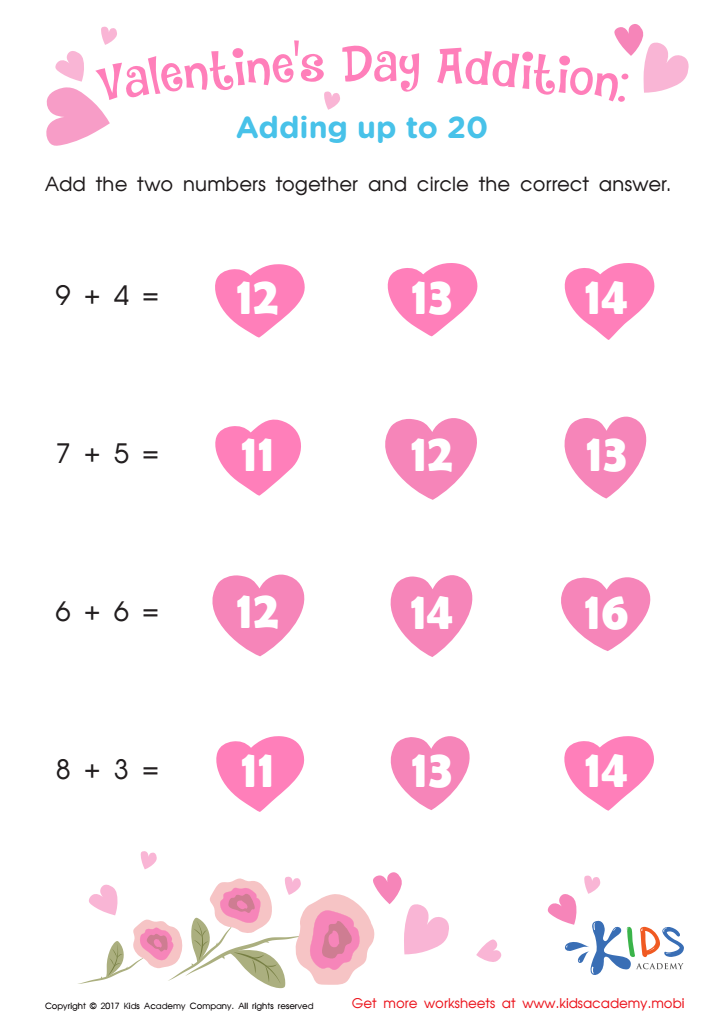
Valentine's Day Addition Worksheet








Math fluency for 3-year-olds is crucial, laying the foundation for future academic success and cognitive development. At this tender age, children are like sponges, absorbing information rapidly. Early math experiences enhance their numerical awareness, pattern recognition, and problem-solving skills, which are essential for higher-order thinking in later years. Ensuring young children develop math fluency fosters a positive attitude toward the subject, preventing math anxiety in the future.
Parents and teachers play a pivotal role in nurturing an environment rich in mathematical language and concepts. Simple activities like counting objects, recognizing shapes, or sorting items can seamlessly integrate math into a child’s daily routine, making it part of their natural thought process. These skills are not just academic; they translate to day-to-day tasks such as measuring ingredients during cooking or understanding time.
Moreover, early math fluency is linked to overall academic achievement. Research indicates that early math skills are strong predictors of later academic success, even more so than early reading skills. In supporting a child's early math learning, parents and teachers are investing in the child's ability to think logically, develop resilience in problem-solving, and approach learning with curiosity and confidence, positively impacting the child's entire educational journey.








