Problem-solving abilities Worksheets for 3-Year-Olds
24 filtered results
-
From - To
Nurture your child's critical thinking skills with our engaging and educational problem-solving abilities worksheets designed for 3-year-olds! Crafted to enhance early cognitive development, these fun and interactive sheets introduce young learners to essential concepts like sorting, matching, and sequencing through playful activities. Perfect for both at-home practice and classroom settings, our printable worksheets help foster a love for learning while building foundational skills. Through engaging puzzles and tasks, children will boost their confidence and creativity, setting the stage for future academic success. Discover the joy of problem-solving with our expertly designed resources at Kids Academy.
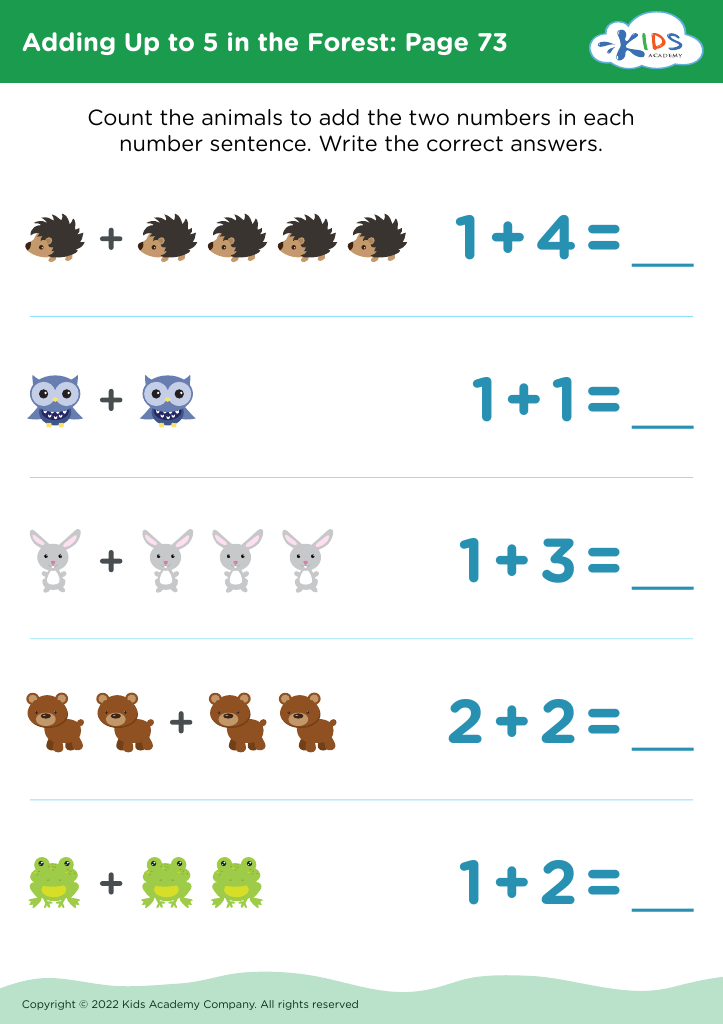
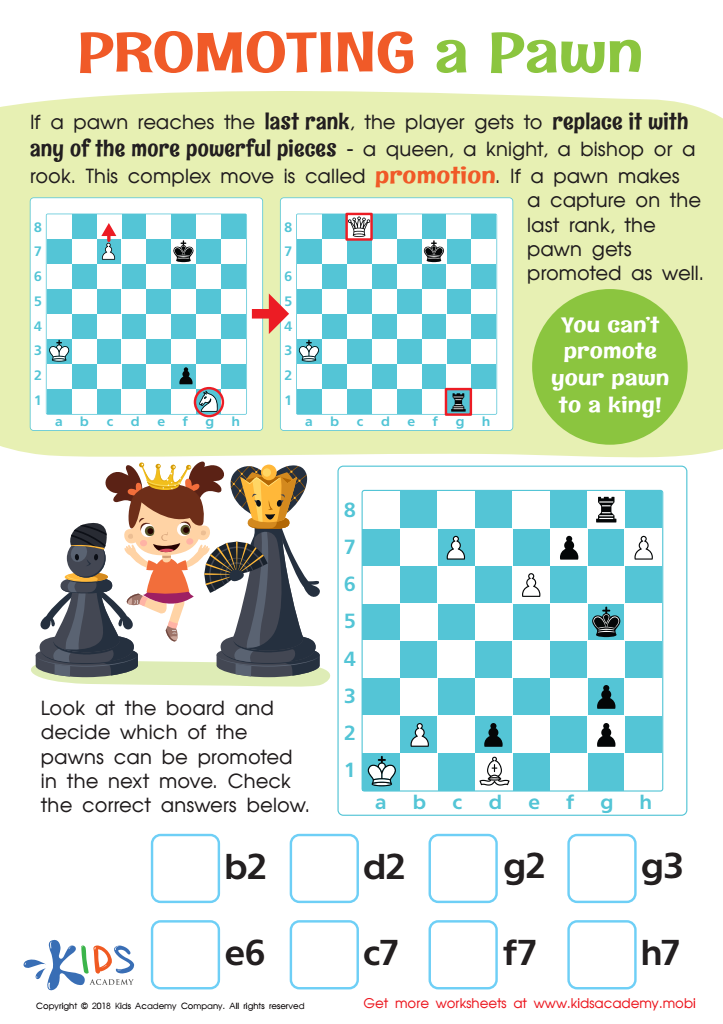
Promoting a Pawn Worksheet
 Assign to My Students
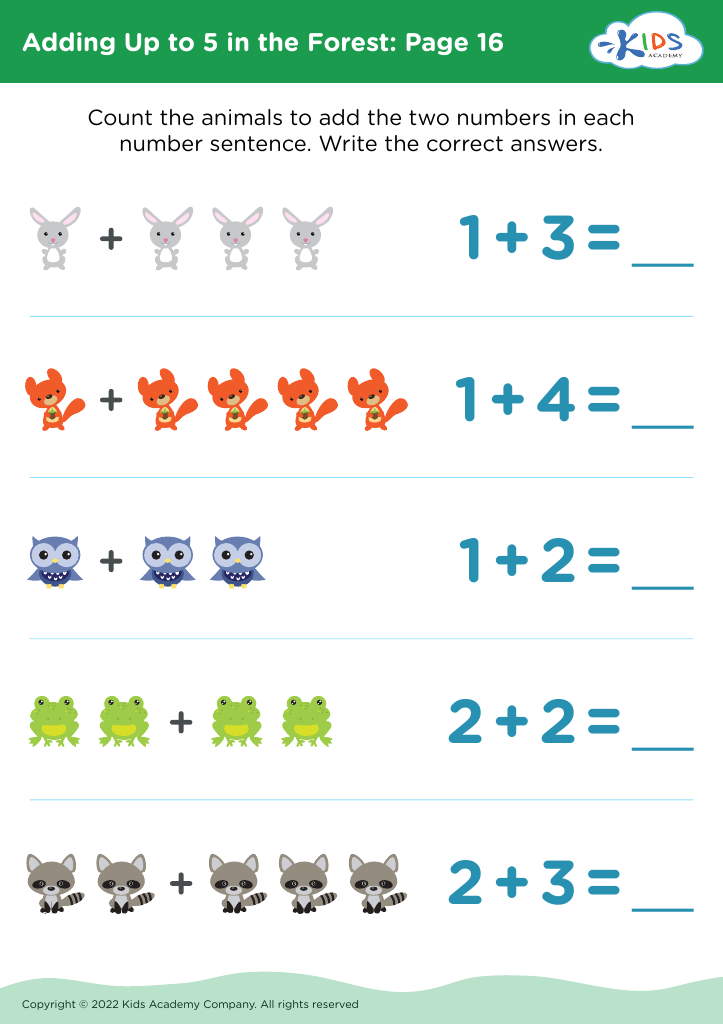
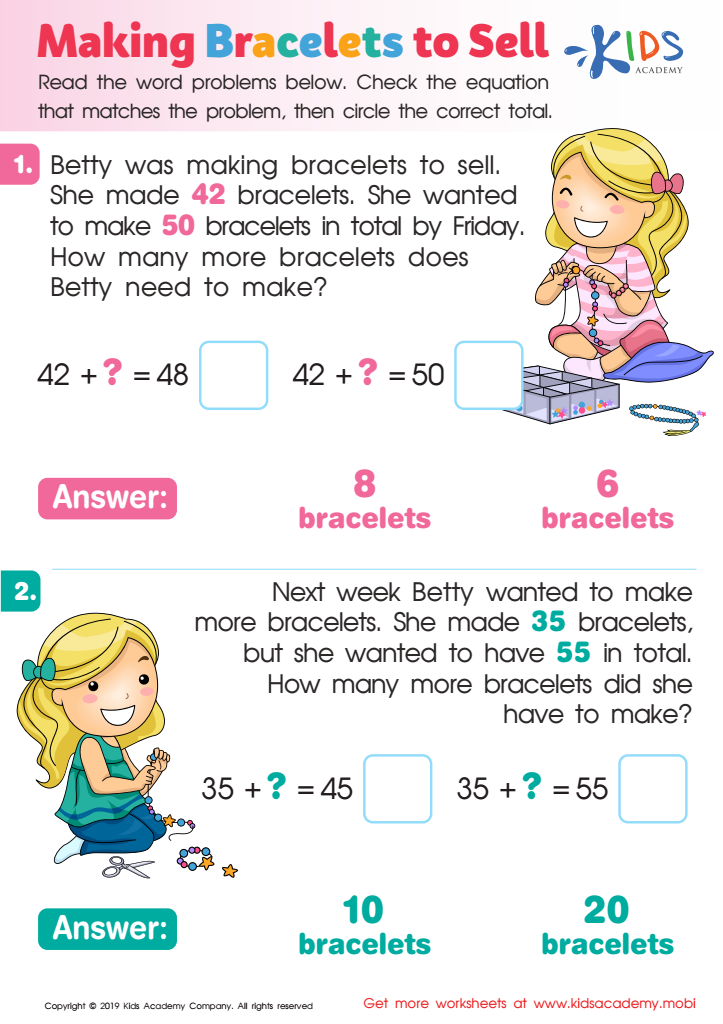
Making Bracelets to Sell Worksheet
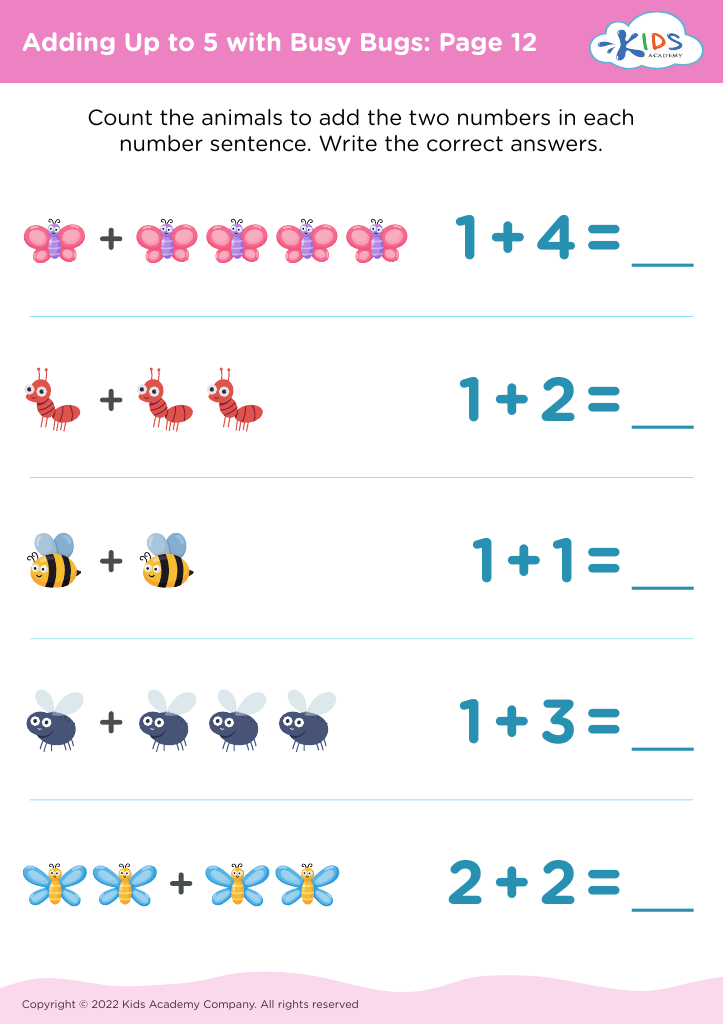
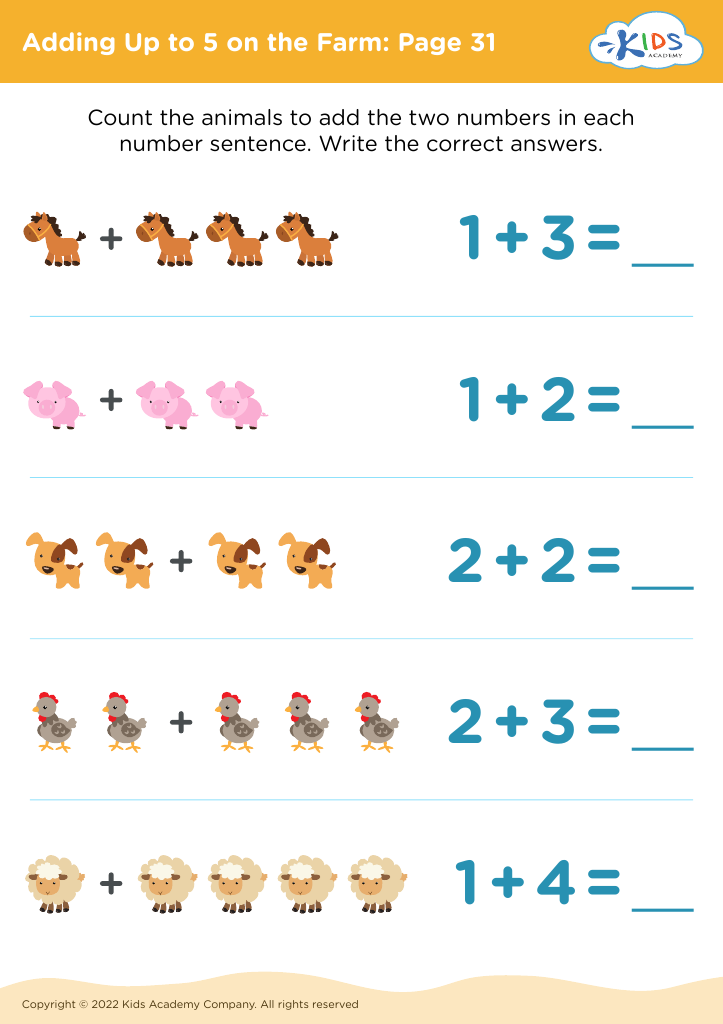
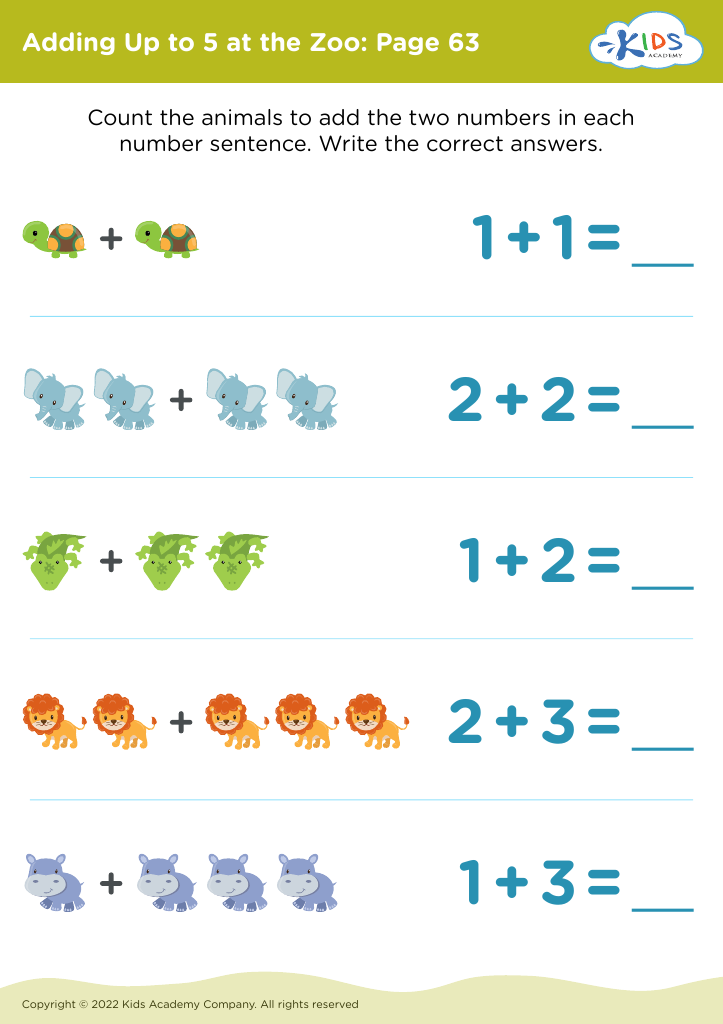
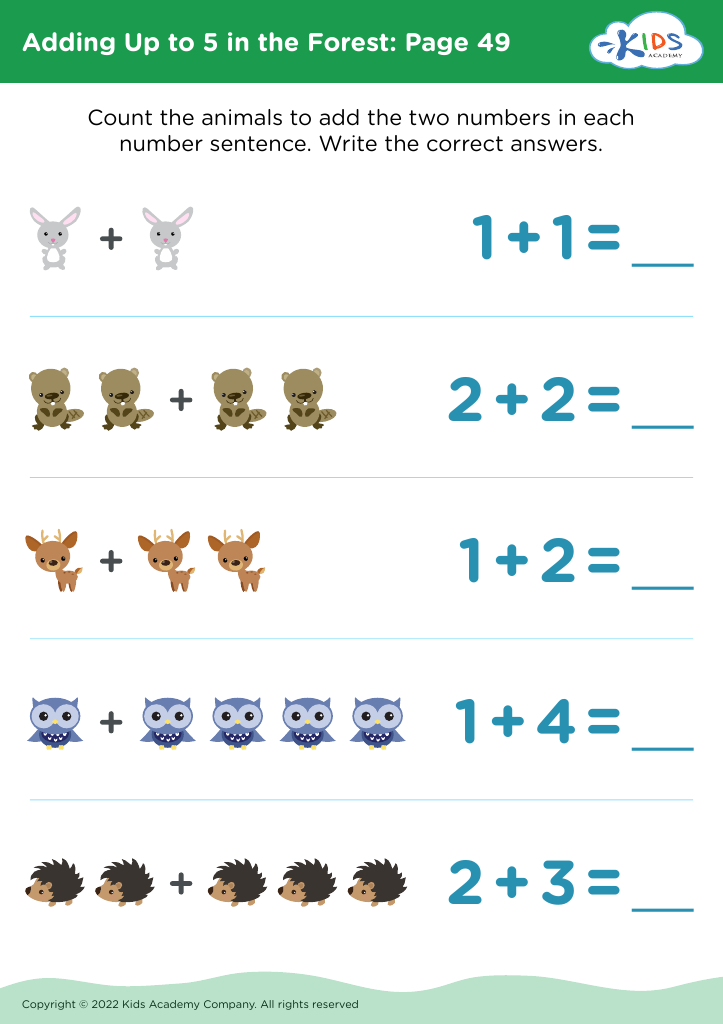

Adding at the Hospital Worksheet
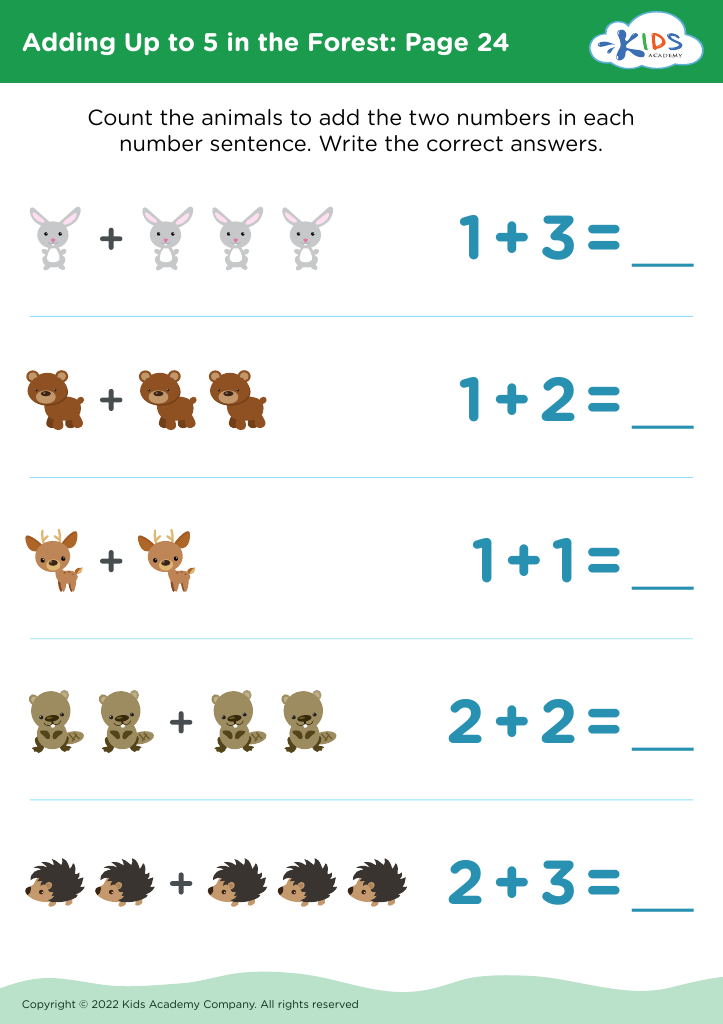
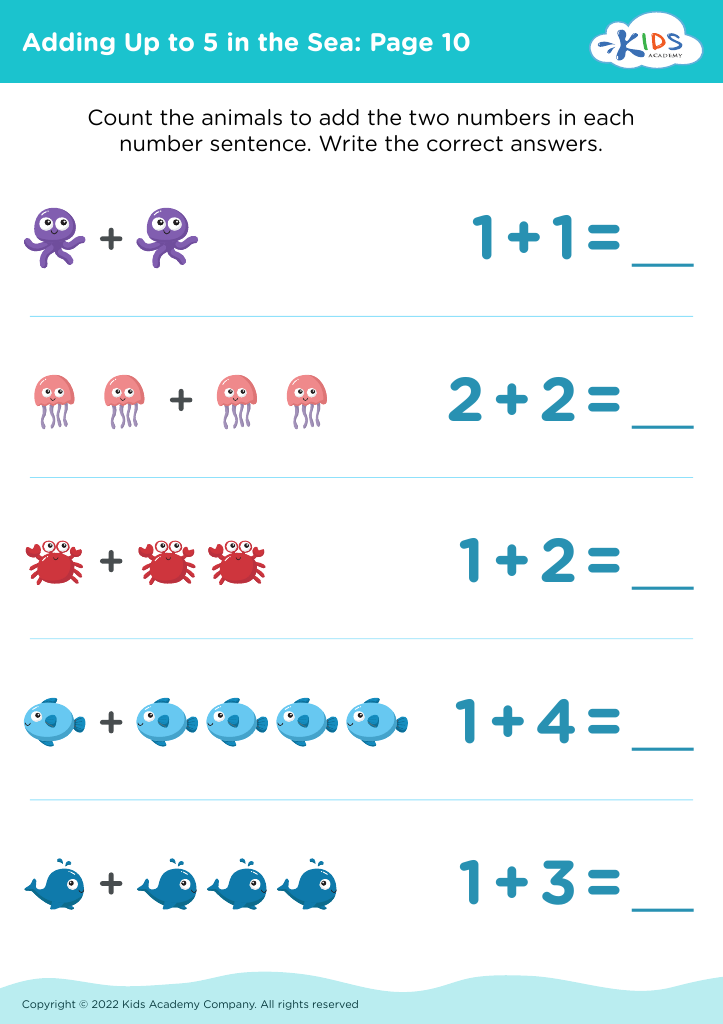
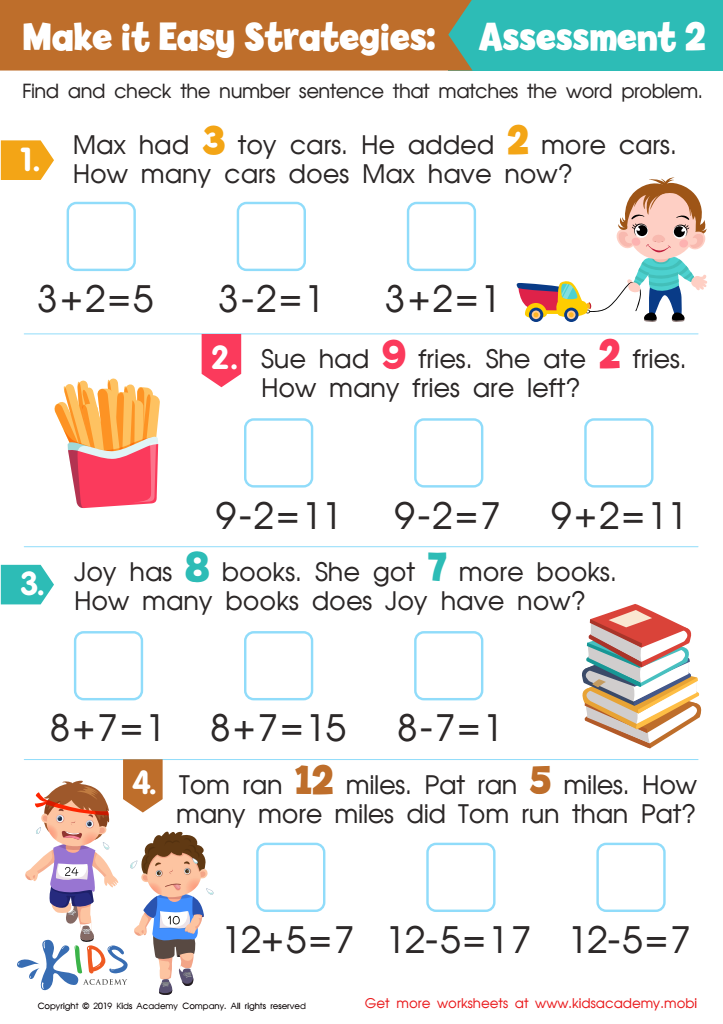
Make it Easy Strategies: Assessment 2 Worksheet
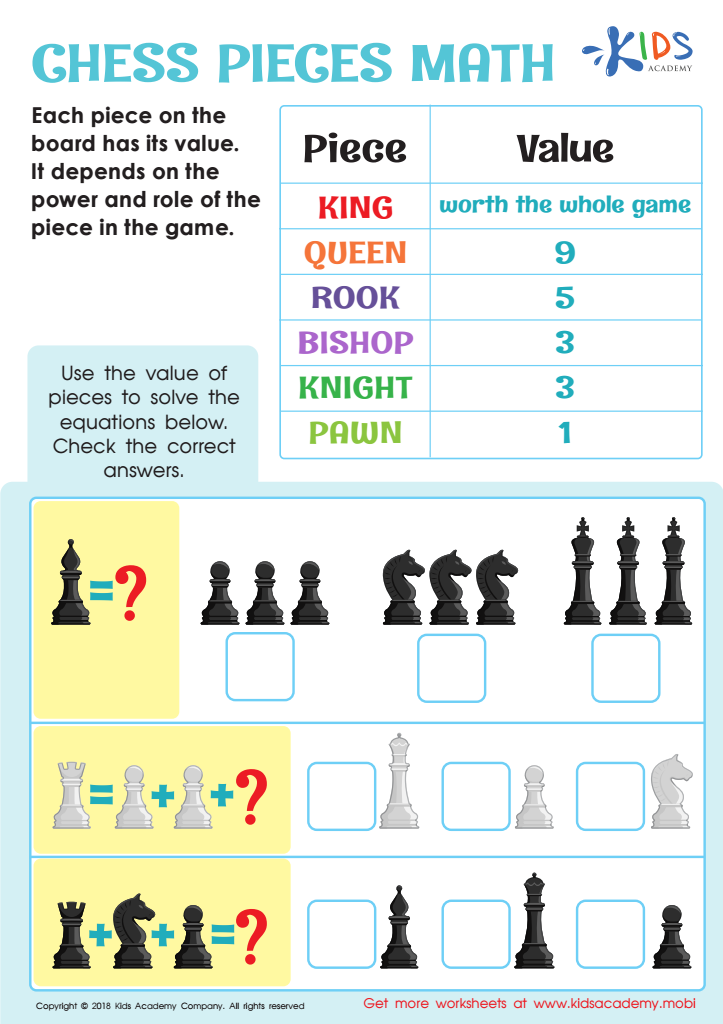
Chess Pieces Math Worksheet
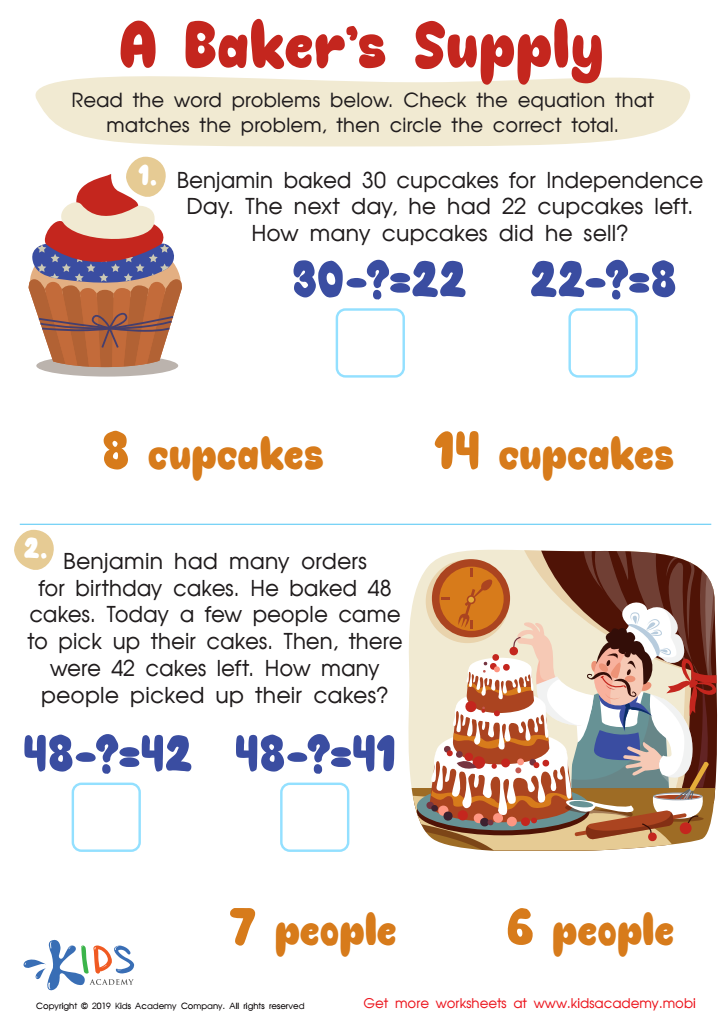
A Baker's Supply Worksheet
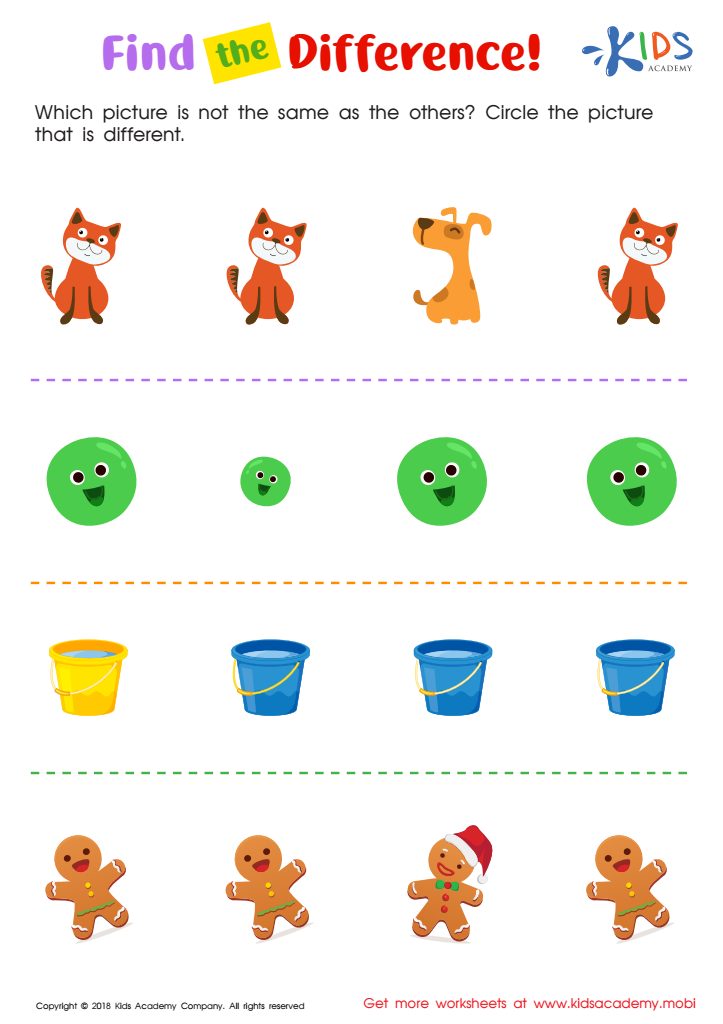
Find the Difference Worksheet
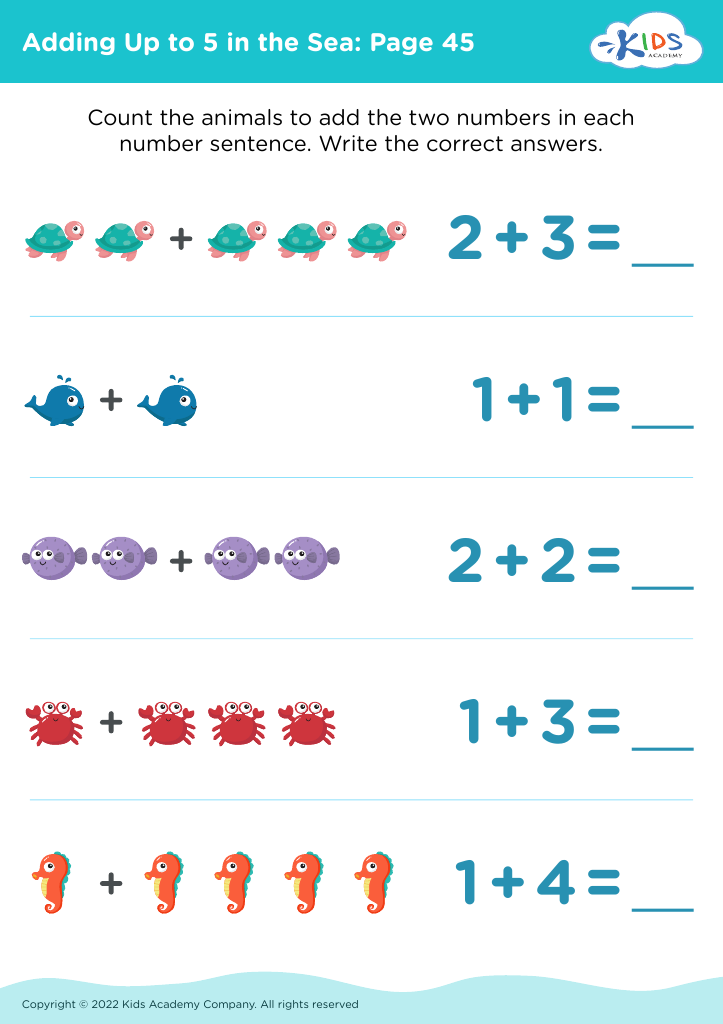
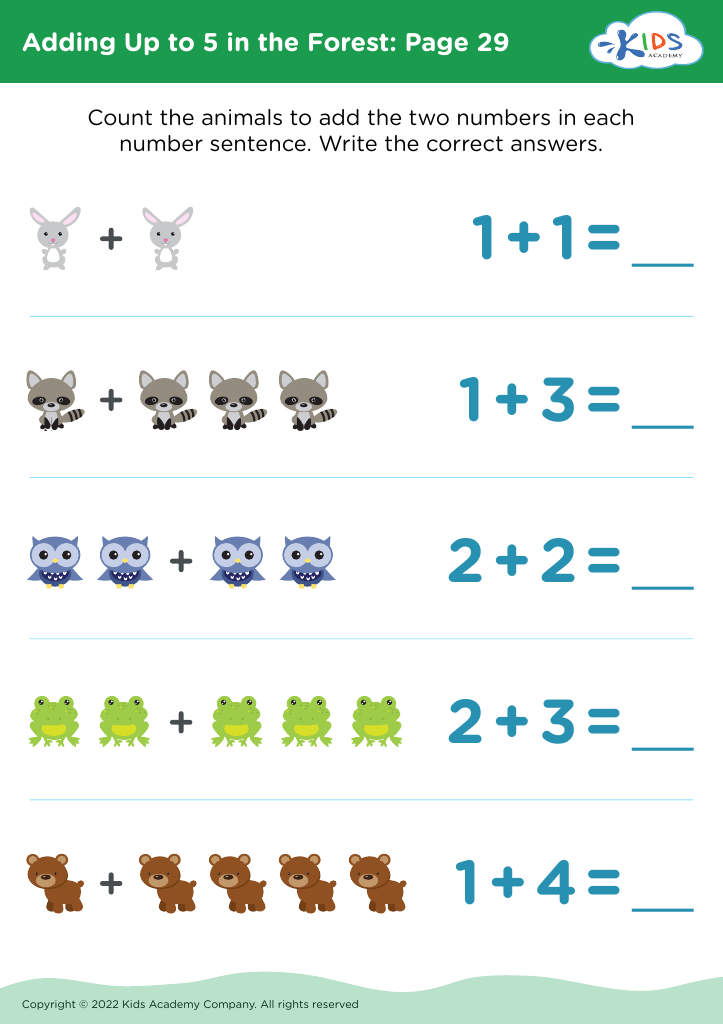
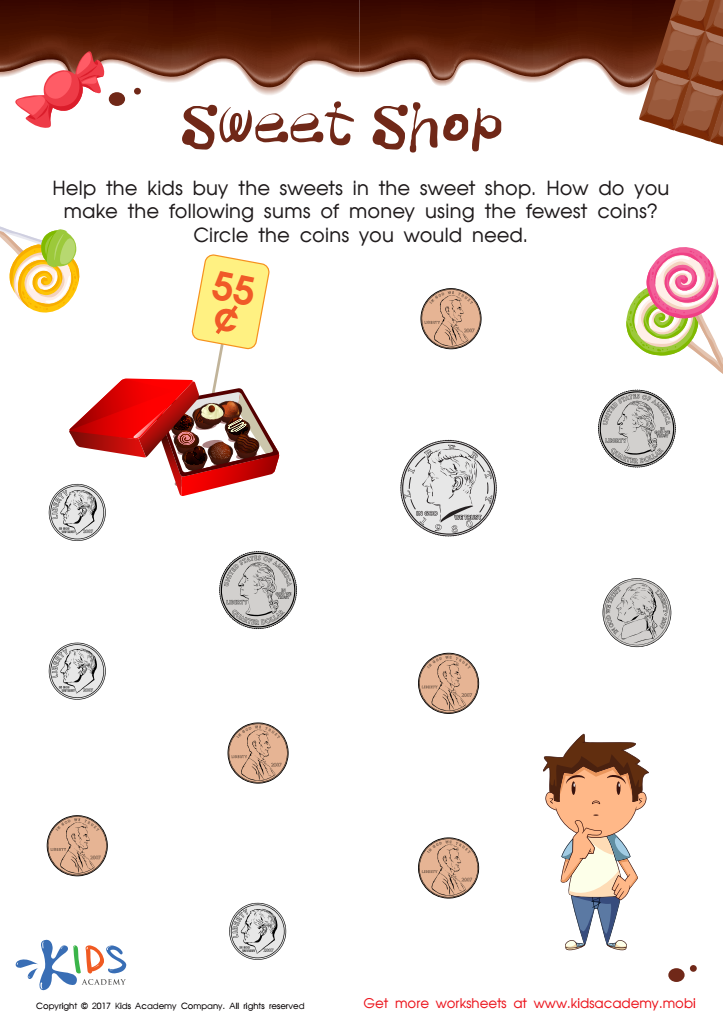
Sweet Shop – Counting Coins Worksheet
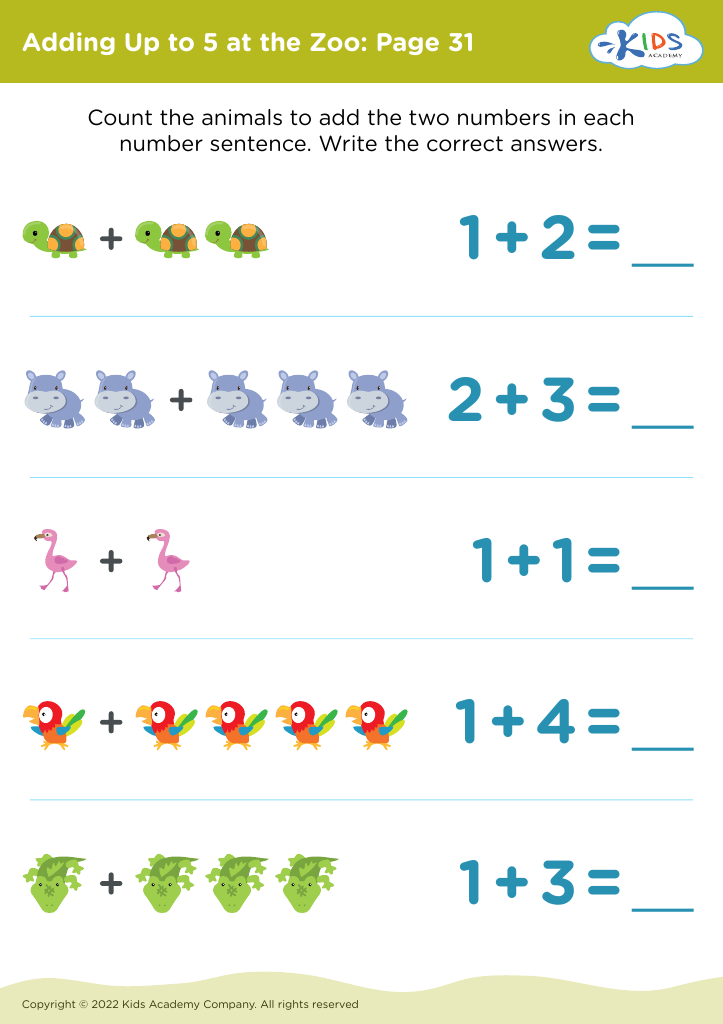
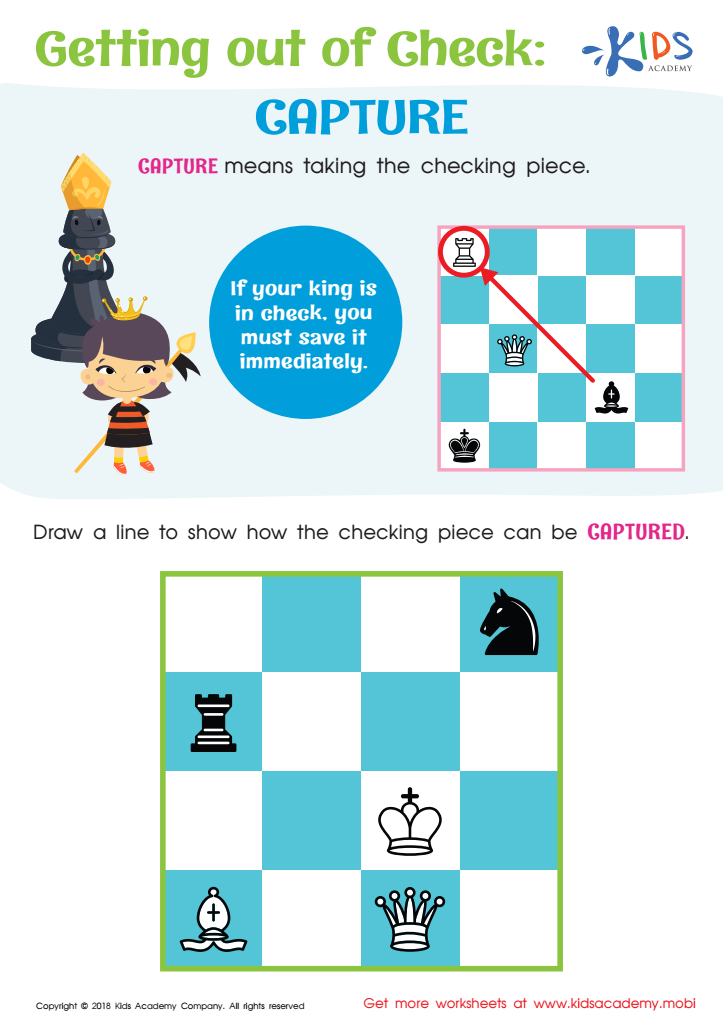
Getting out of Check: Capture
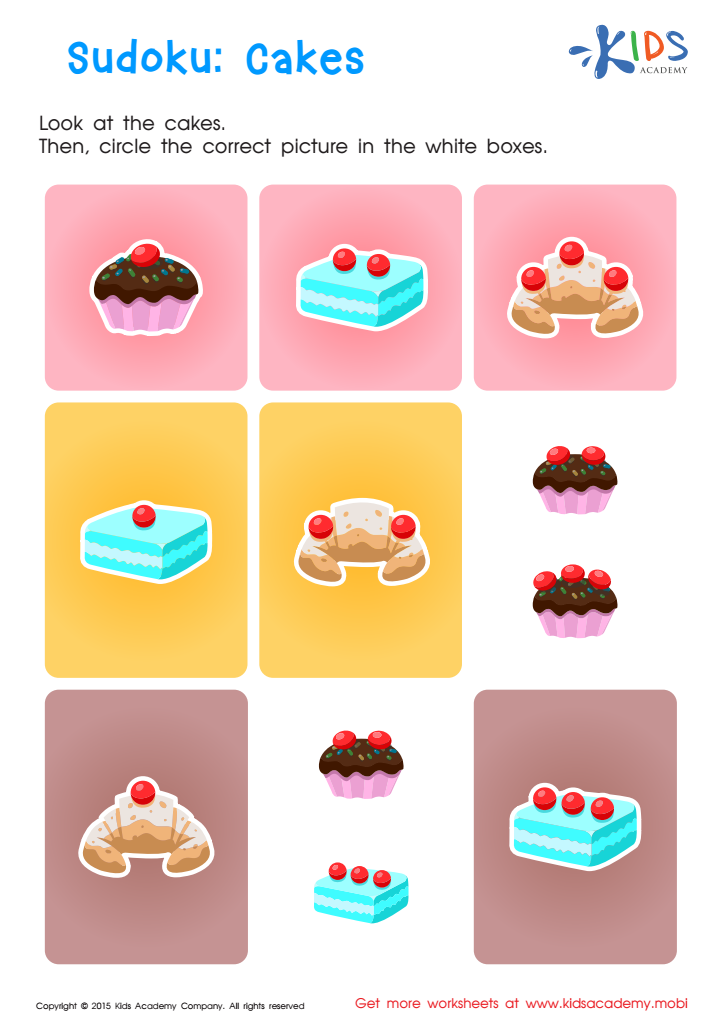
Sudoku Worksheet
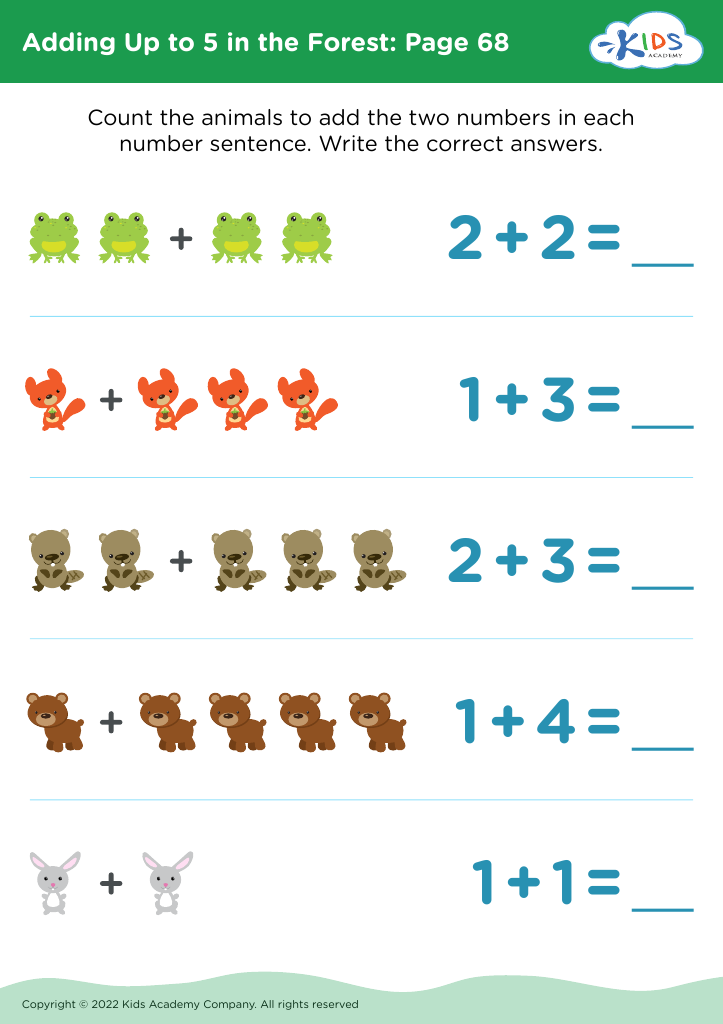
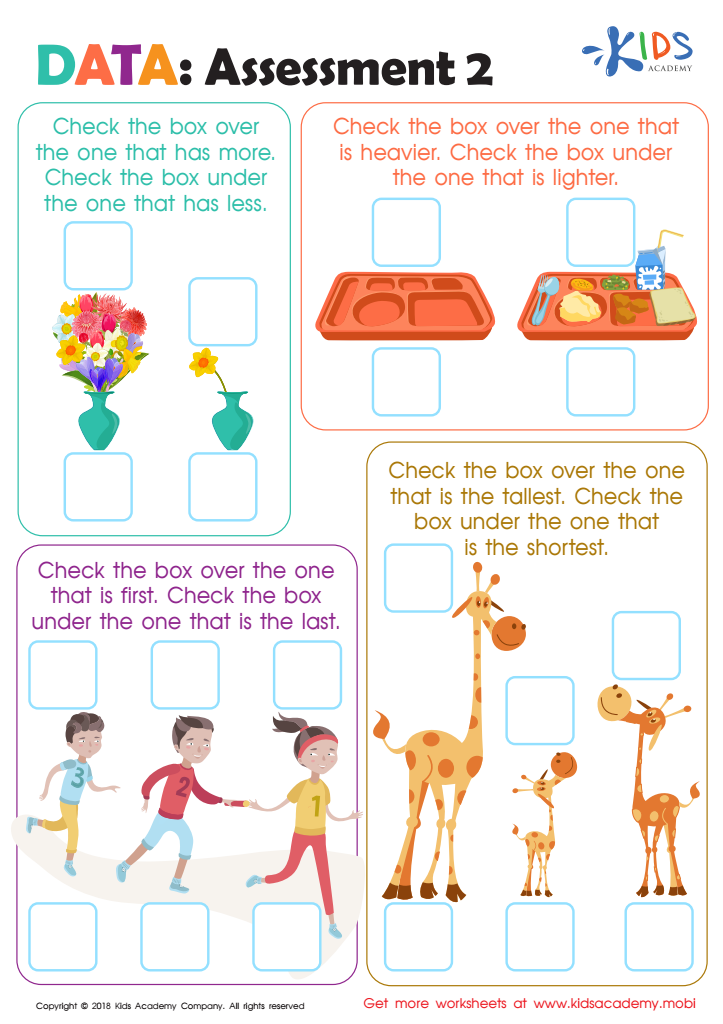
Data: Assessment 2 Worksheet
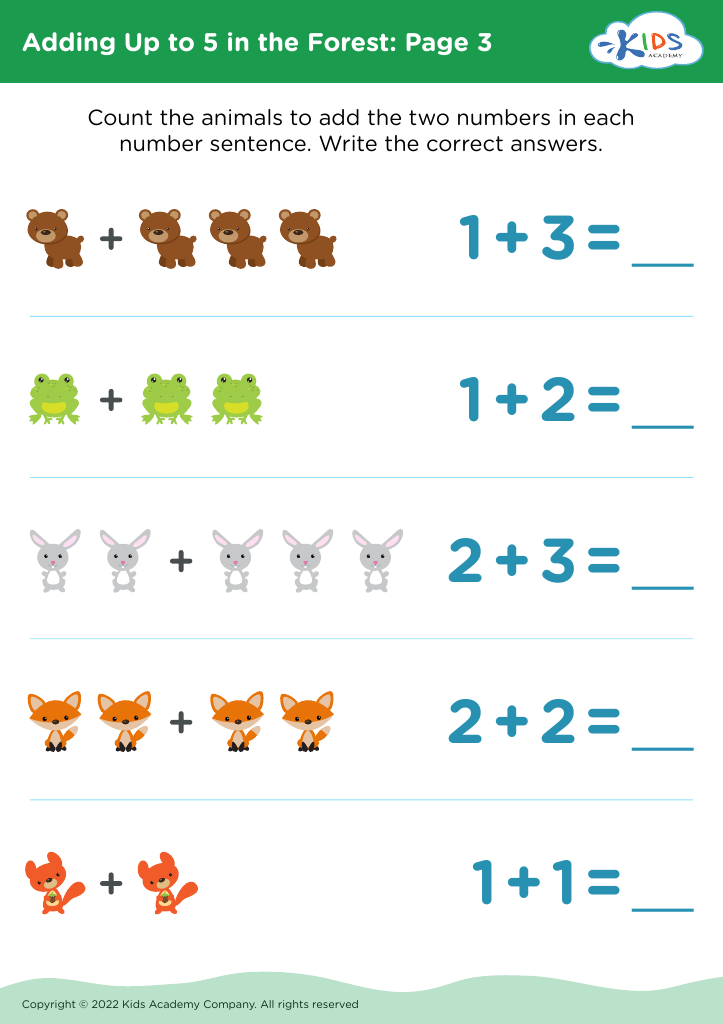








Problem-solving abilities in 3-year-olds are crucial as they lay the foundation for critical thinking and independent learning later in life. During these formative years, children's brains are especially malleable, making it an ideal time to nurture their cognitive and emotional development. Parents and teachers should care about fostering these abilities because it helps children navigate social interactions, manage emotions, and develop resilience.
When children solve problems, they learn how to think creatively and flexibly. This can improve their ability to adapt to new situations and face challenges confidently. Whether it's figuring out how to stack blocks or sharing toys with friends, these scenarios teach them important life skills such as patience, perseverance, and collaboration.
Additionally, engaging in problem-solving activities can enhance language development. Describing their thought process or asking for help boosts their vocabulary and communication skills. Emotional intelligence is another benefit; children learn to handle frustration, which can lead to better emotional regulation and empathy towards others.
Teachers and parents play a significant role by providing supportive environments rich in stimulating activities. Encouraging exploration, asking open-ended questions, and allowing some degree of trial and error helps children understand that mistakes are part of the learning process. This nurturing approach helps build a strong foundation for lifelong learning and personal growth.








