
Rhyming skills development Worksheets for 3-Year-Olds
4 filtered results
Difficulty Level
Grade
Age
-
From - To
Subject
Activity
Standards
Help your 3-year-old master the art of rhyming with our engaging Rhyming Skills Development Worksheets. These age-appropriate worksheets are crafted to enhance your child's phonological awareness, making the first steps towards reading both fun and educational. Featuring colorful illustrations and playful prompts, our worksheets are designed to stimulate curiosity and encourage active participation. Whether distinguishing between rhyming and non-rhyming words or exploring new sound patterns, your little one will enjoy hours of interactive learning. Start building a strong foundation for literacy with our expert-designed rhyming worksheets today! Perfect for parents and educators alike.
Favorites
With answer key
Interactive
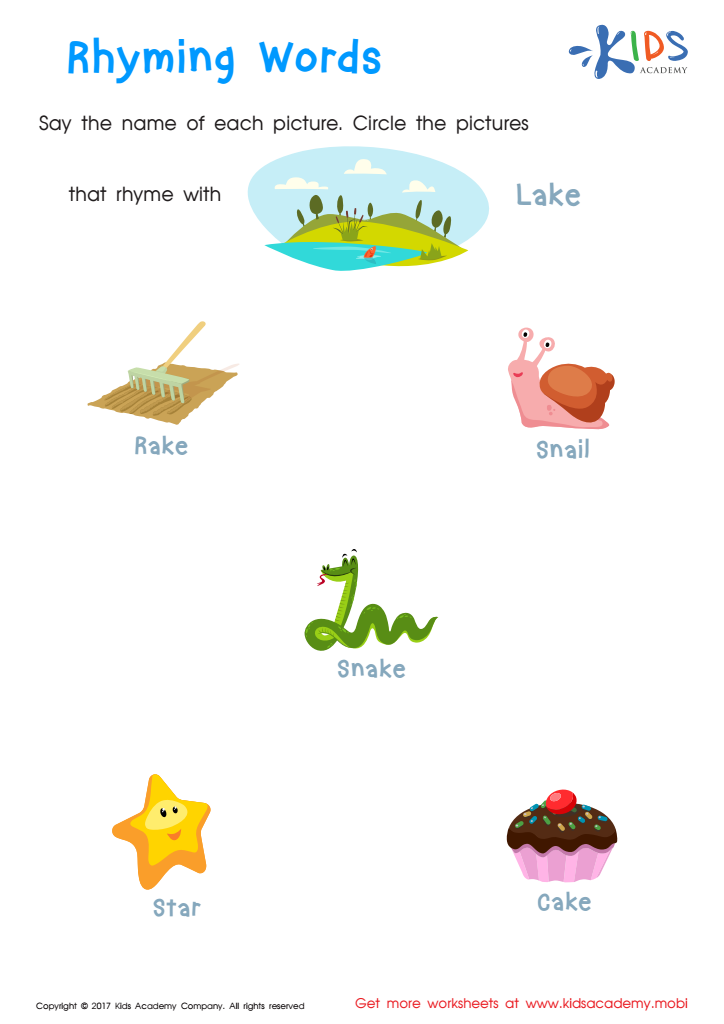
Rhyming Words Rhyming Worksheet
This worksheet is great for honing pre-reading skills. It helps kids make connections between pictures and written words, use problem-solving, and recognize sounds and words that rhyme. Have fun exploring rhyming words with your child, and they'll be rhyming in no time!
 Assign to My Students
Rhyming Words Rhyming Worksheet
Worksheet
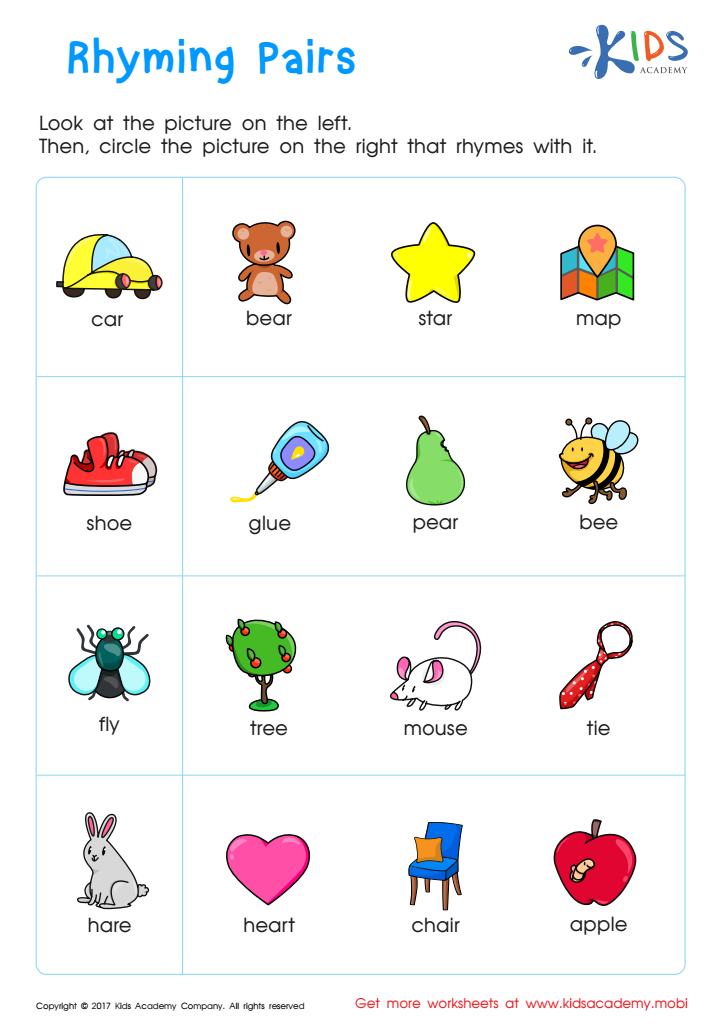
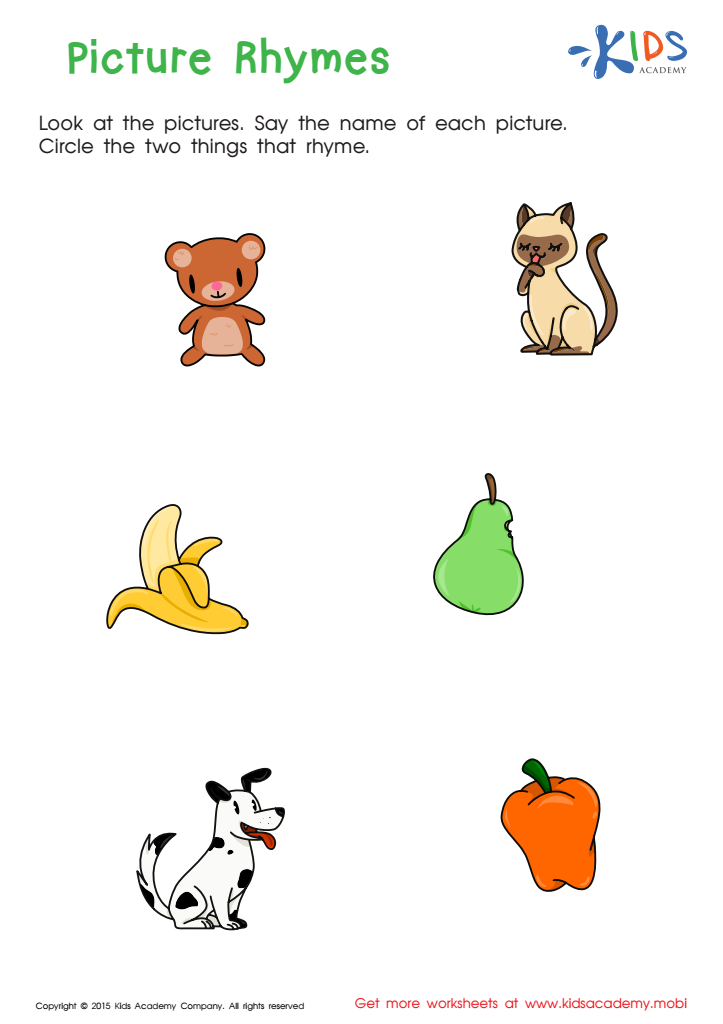
First Words: Picture Rhymes Worksheet
Rhyming helps kids understand language, read and write better. This printable worksheet boosts problem-solving and cognitive skills with vibrant pictures. It teaches kids to identify words, recognize rhymes, complete mental tasks and write words. An extra activity: show them how rhyming words share some of the same letters.
First Words: Picture Rhymes Worksheet
Worksheet
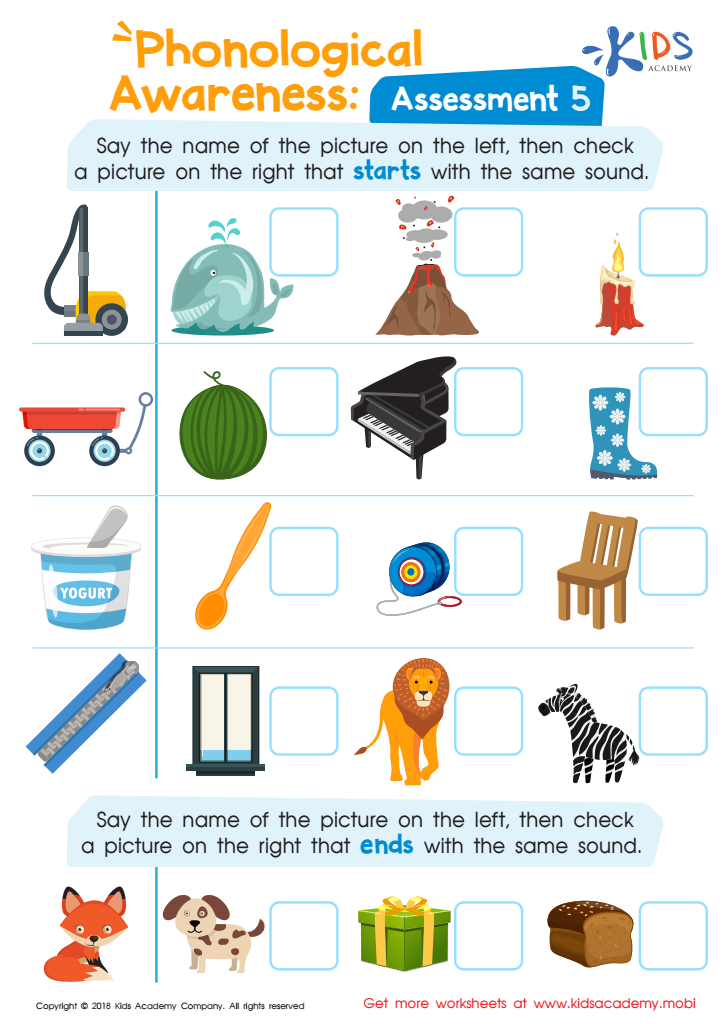
Phonological Awareness: Assessment 5 Worksheet
Repetition is key to success! This worksheet tests kids' ability to match beginning and ending sounds in words. Instruct them to say each word and listen closely to the sounds they make. Focus on the starting sounds for the first four pics, then the last one to hear ending sounds and find the right match!
Phonological Awareness: Assessment 5 Worksheet
Worksheet
Join Kids Academy for Free
Who is primarily going to use this learning content?







.jpg)
Rhyming is a fundamental pre-literacy skill that plays a vital role in a child's language development. For parents and teachers working with 3-year-olds, focusing on rhyming skills can provide several key benefits. First, recognizing and producing rhymes enhances phonemic awareness, which is the ability to hear, identify, and manipulate individual sounds in words. This awareness is crucial for learning to read; children who can recognize rhyming patterns can more easily decipher how words are constructed.
Second, engaging in rhyming activities expands a child's vocabulary. Hearing and practicing new sounds and words in a fun, rhythmic context makes them more likely to remember and use them. Additionally, rhyming can improve listening skills, as children learn to distinguish between different sounds and patterns. These auditory discrimination skills lay the groundwork for effective communication.
Rhyming activities can be integrated into play, making learning engaging and interactive. Songs, poems, and nursery rhymes capture children’s interest and can be soothing and enjoyable, creating a positive association with words and sounds.
Lastly, rhyming fosters imagination and storytelling abilities, encouraging creative expression. By boosting these foundational skills, parents and teachers set the stage for successful reading and writing, promoting a lifelong love of language and learning.








