Shape comparison Worksheets for 3-Year-Olds
3 filtered results
-
From - To
Introduce your little learner to the world of shapes with our Shape Comparison Worksheets for 3-Year-Olds. Designed to captivate young minds, these engaging printable worksheets from Kids Academy help children distinguish between different shapes and sizes, enhancing their early math and critical thinking skills. Through fun activities and delightful illustrations, kids will compare circles, squares, triangles, and other shapes, laying a strong foundation for further geometric learning. Perfect for preschoolers, our worksheets make learning enjoyable and interactive, ensuring your child’s first steps into math are exciting and meaningful. Download today and start the educational adventure!
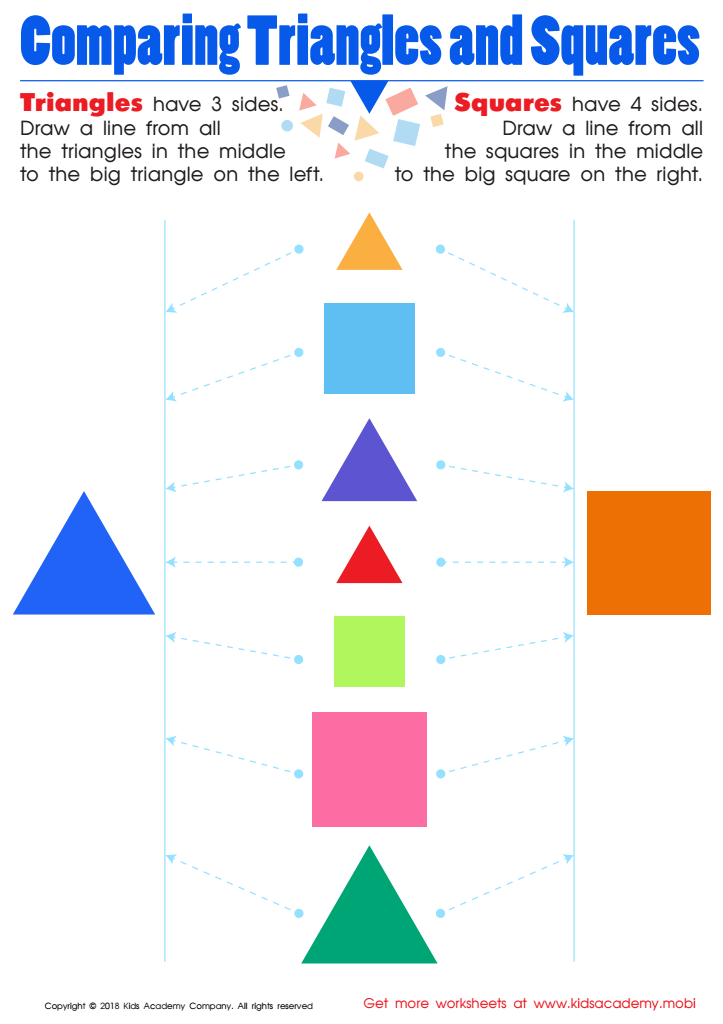
Comparing Triangles Squares Worksheet
 Assign to My Students
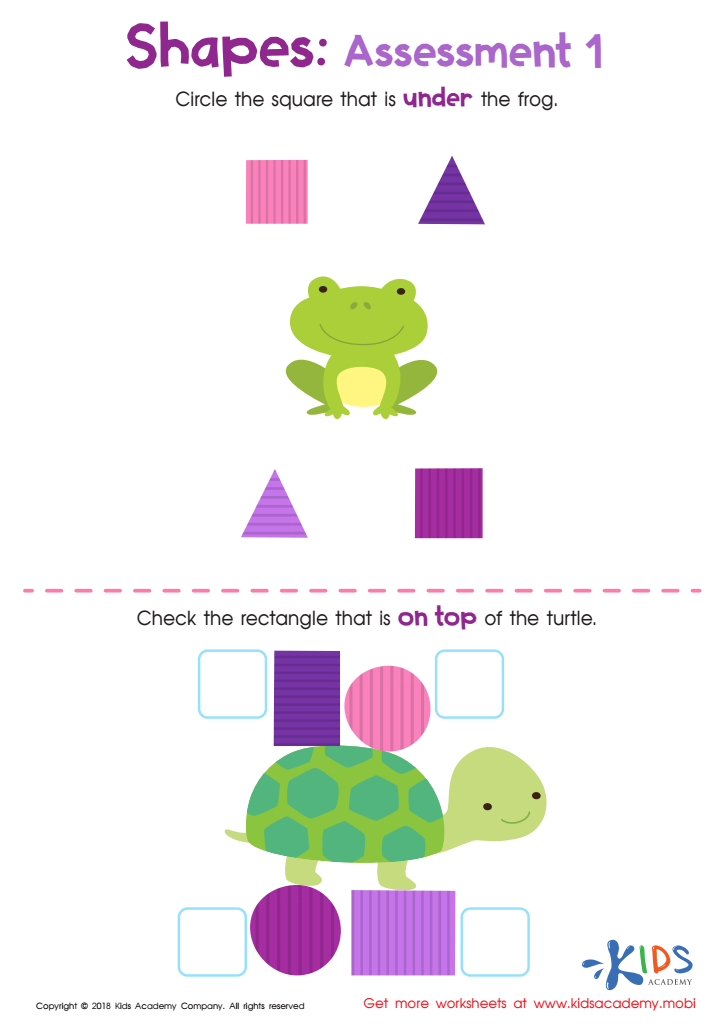
Geometry – Assessment 1 Worksheet
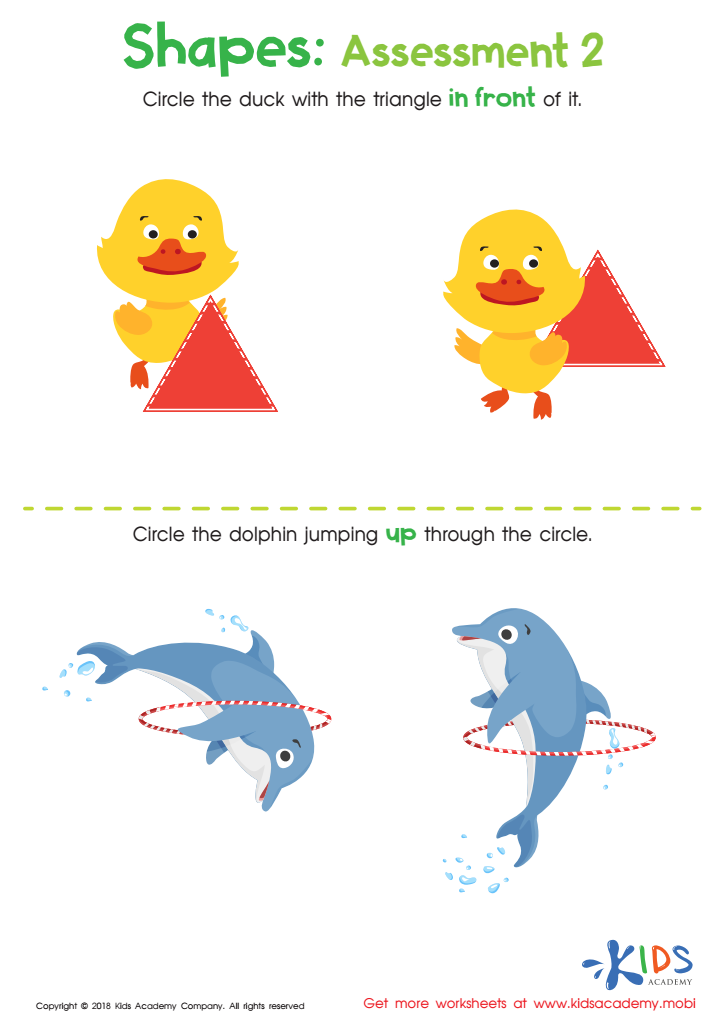
Geometry – Assessment 2 Worksheet







Shape comparison for 3-year-olds is crucial as it plays a foundational role in their cognitive and developmental growth. At this tender age, children are beginning to make sense of the world around them, and recognizing and comparing shapes enhances several important skills. First, it encourages visual discrimination, allowing children to observe and differentiate between objects based on their properties. This skill is essential for reading, writing, and solving mathematical problems later in life.
Moreover, comparing shapes reinforces the concept of geometry, a foundational mathematical principle. Understanding shapes helps children grasp more complex geometry in the future, promoting spatial awareness that is key in everyday activities like setting a table or packing a bag. When children compare shapes, they also build their vocabulary as they learn terms like "bigger," "smaller," "same," and "different," contributing to their language development.
Shape comparison activities, such as sorting and matching, foster critical thinking and problem-solving skills. It also encourages patience, attention to detail, and collaboration if done in group settings. Additionally, recognizing and comparing shapes in their environment can boost a child's confidence and curiosity, making learning an enjoyable experience. Thus, parents and teachers should emphasize shape comparison as part of early childhood education to provide a solid foundation for future learning.








