Understanding measurements Worksheets for 3-Year-Olds
4 filtered results
-
From - To
Discover our fun and engaging "Understanding Measurements Worksheets for 3-Year-Olds," designed to introduce young learners to the world of measurements. These age-appropriate activities help preschoolers grasp basic concepts of length, weight, and volume through playful, hands-on exercises. Featuring colorful visuals and simple instructions, our worksheets make learning enjoyable and effective. Enhance your child’s early math skills and boost their confidence with tools that promote curiosity and critical thinking. Perfect for at-home practice, our free, printable worksheets support a strong educational foundation, ensuring your little one is well-prepared for future academic success. Explore more today!
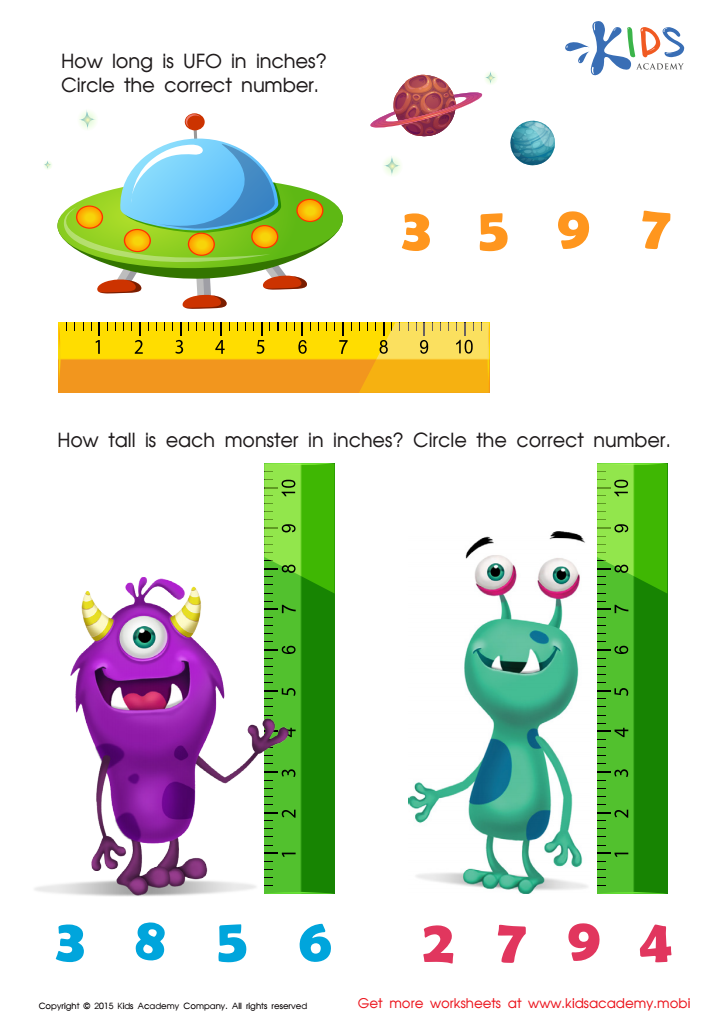
Measuring in Inches Worksheet
 Assign to My Students
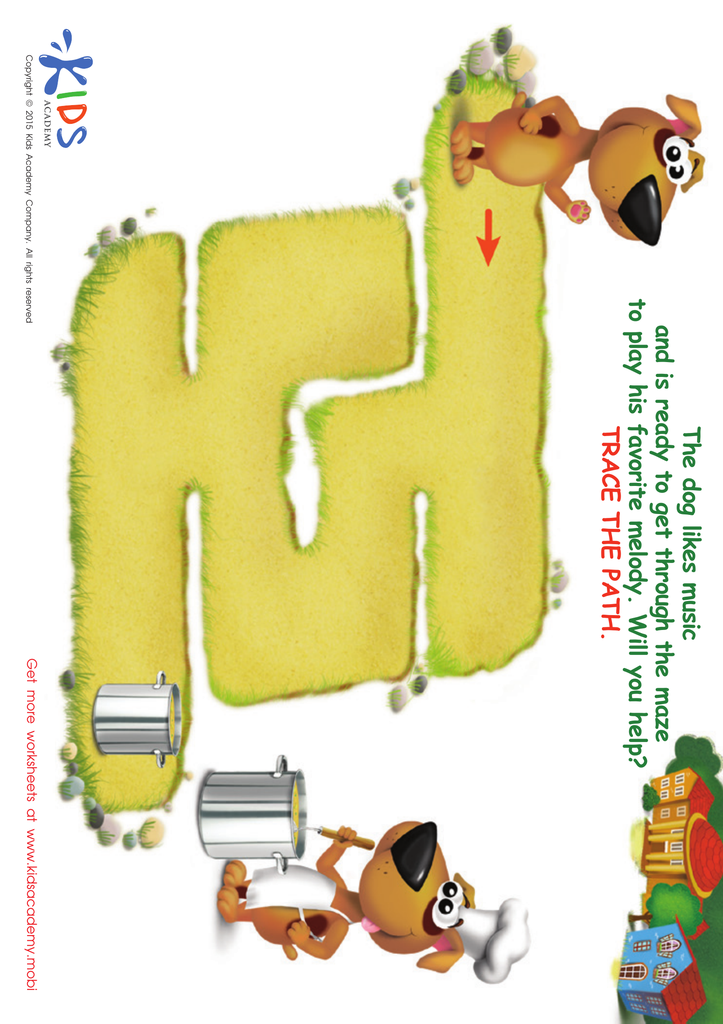
Cook Maze Worksheet
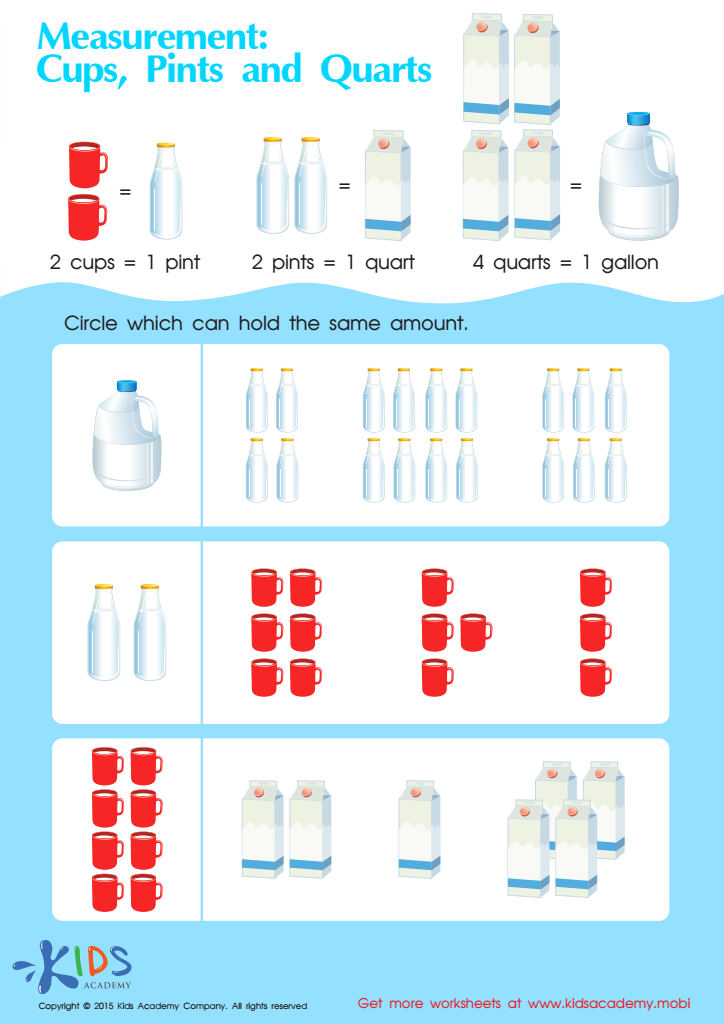
Cups, Pints and Quarts 2 Worksheet
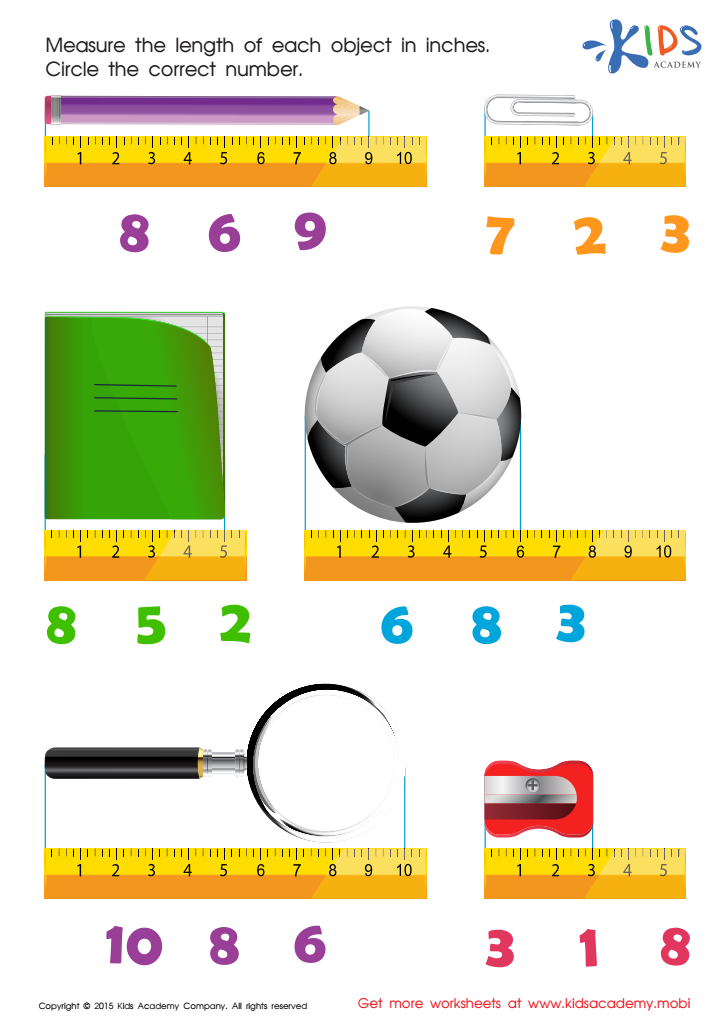
Learning measuring objects in inches Worksheet



.jpg)



Understanding measurements for 3-year-olds is crucial because it lays the foundation for essential life skills and cognitive development. At this age, children are naturally curious and eager to explore their surroundings. Introducing them to basic measurement concepts such as length, height, weight, and volume helps foster their mathematical thinking and problem-solving abilities from an early stage.
For parents and teachers, incorporating measurement activities can enhance a child's language skills by expanding their vocabulary with terms like "tall," "short," "heavy," and "light." These activities also promote hands-on learning and fine motor skills through the use of tools like measuring tapes, balance scales, and measuring cups.
Understanding measurements helps children make sense of the world around them, allowing them to compare objects and understand concepts of order and sequence. This foundational knowledge is directly linked to later academic success, particularly in math and science subjects. Additionally, learning measurements within a familiar context, such as cooking with parents or determining heights using everyday objects, can make learning both engaging and practical.
Integrating measurement concepts early on supports a holistic educational experience that nurtures curiosity, promotes intellectual growth, and equips children with skills that are applicable in everyday life. Parents and teachers should view learning about measurements not just as an academic milestone but as a critical component of childhood development.








