Animal identification Adding at the Zoo Worksheets for 3-Year-Olds
8 filtered results
-
From - To
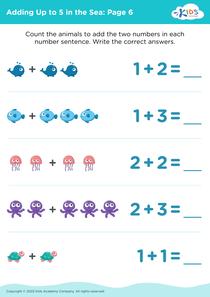
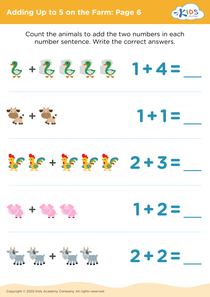
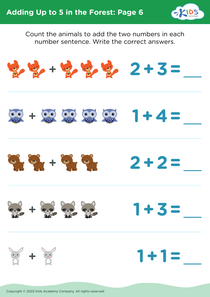
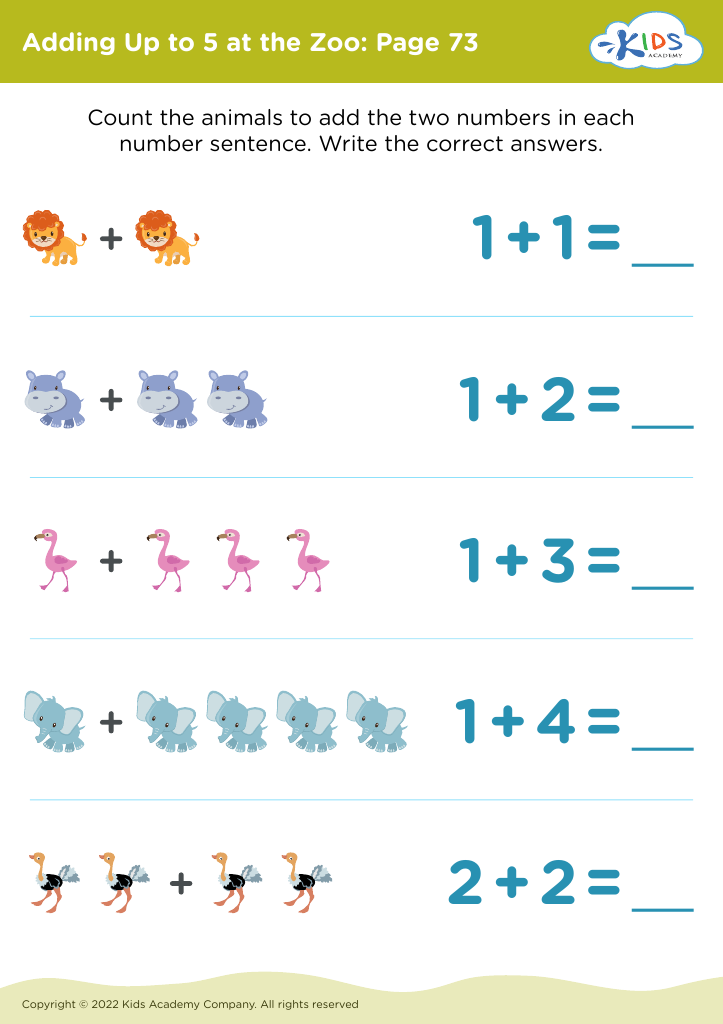
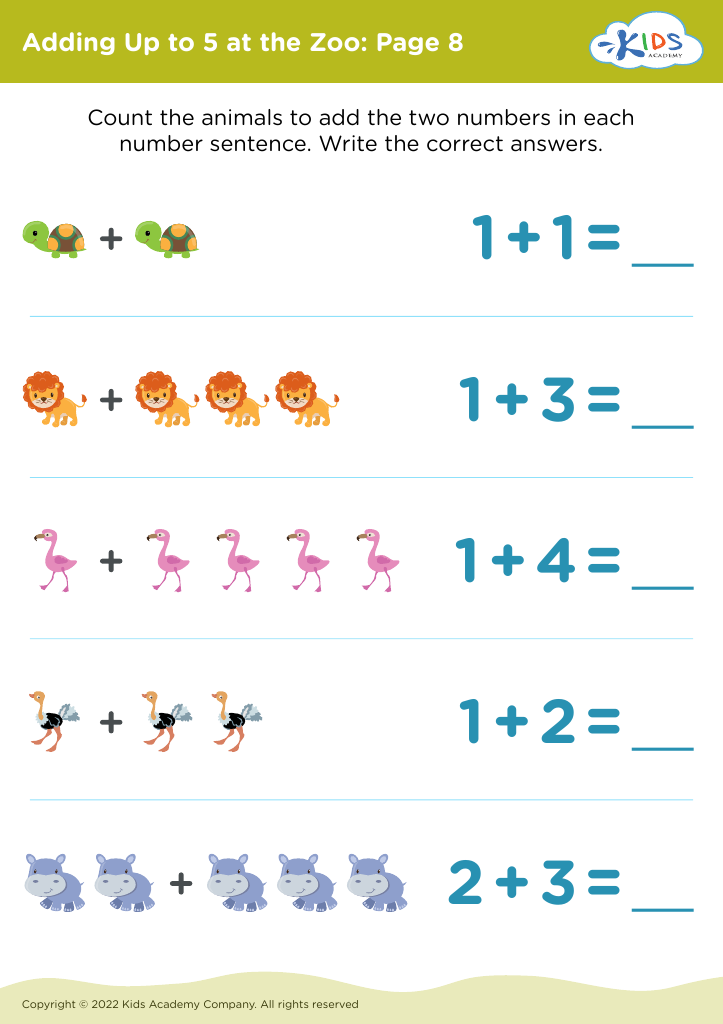
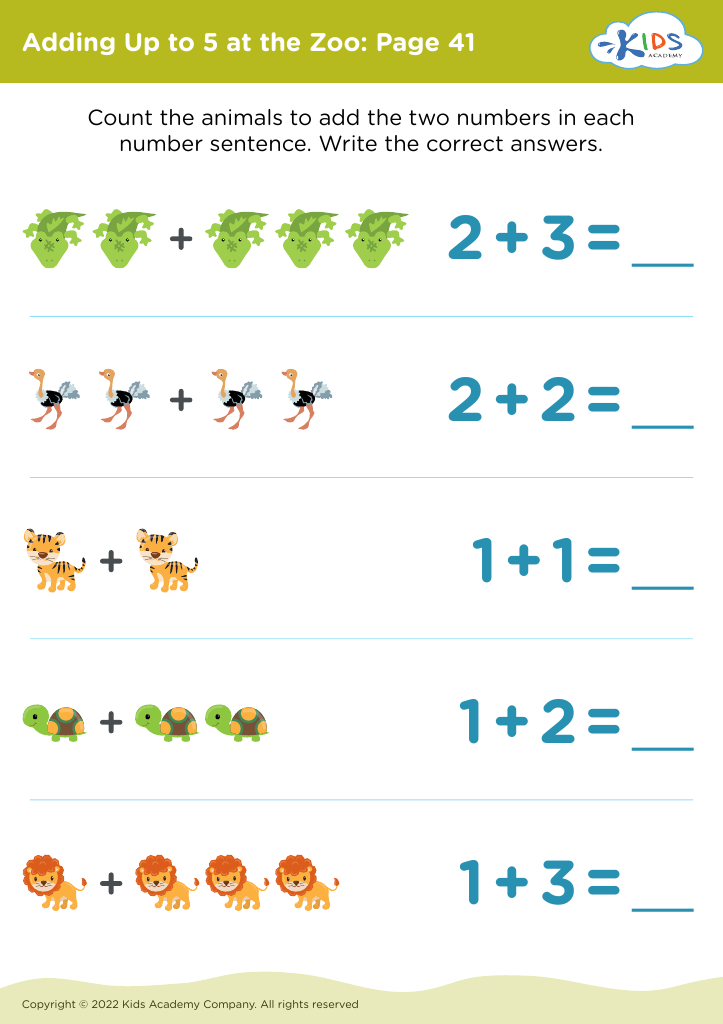
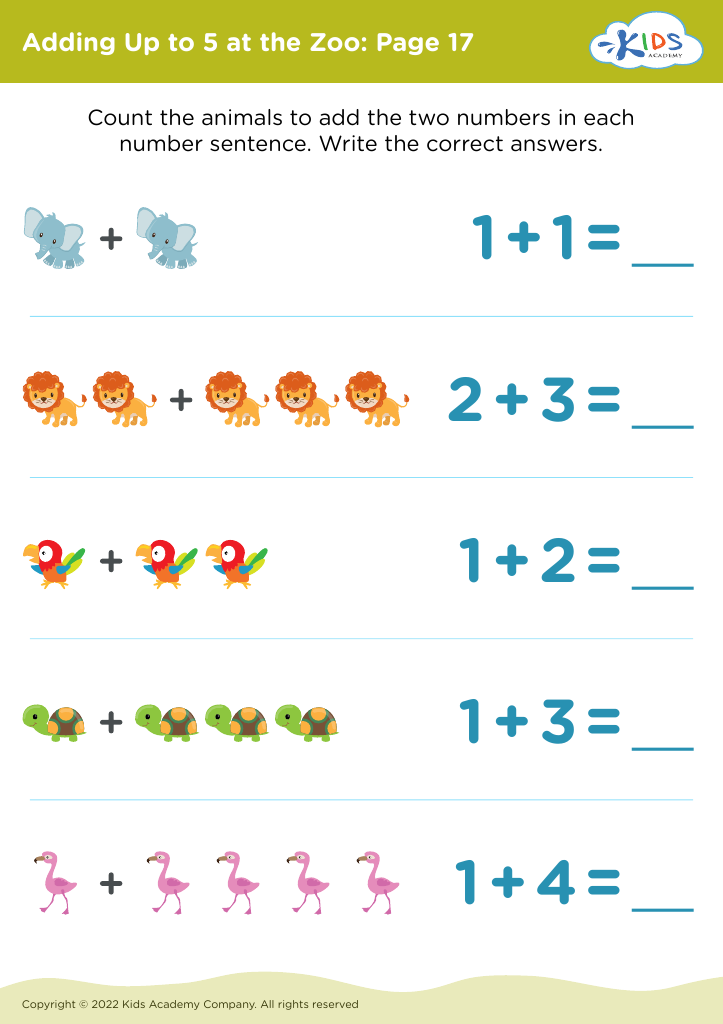
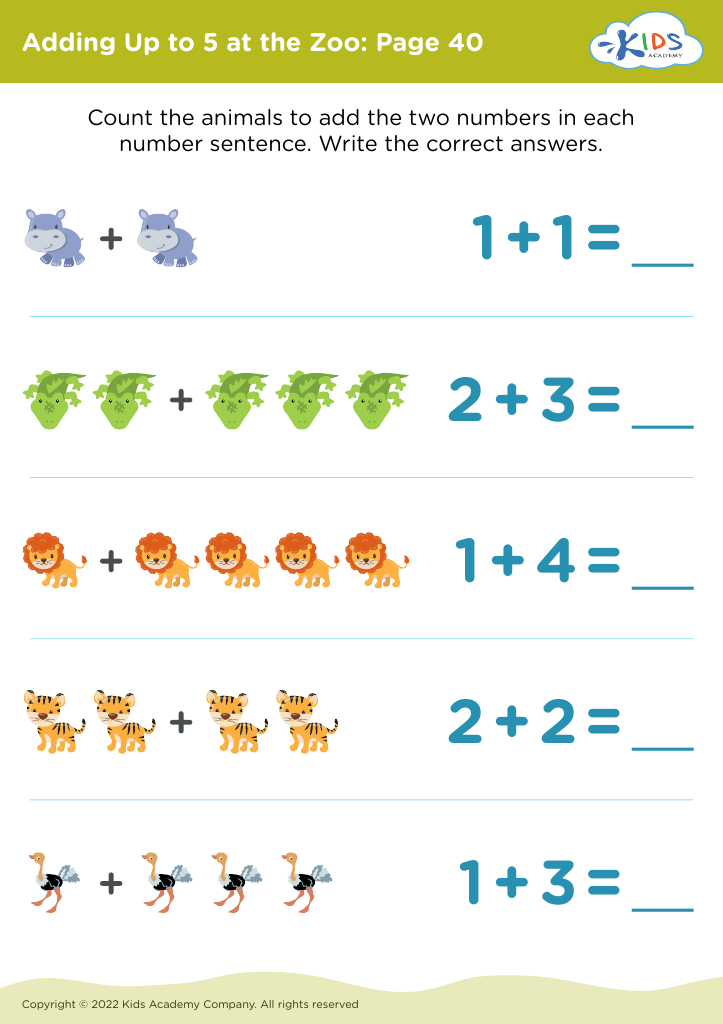
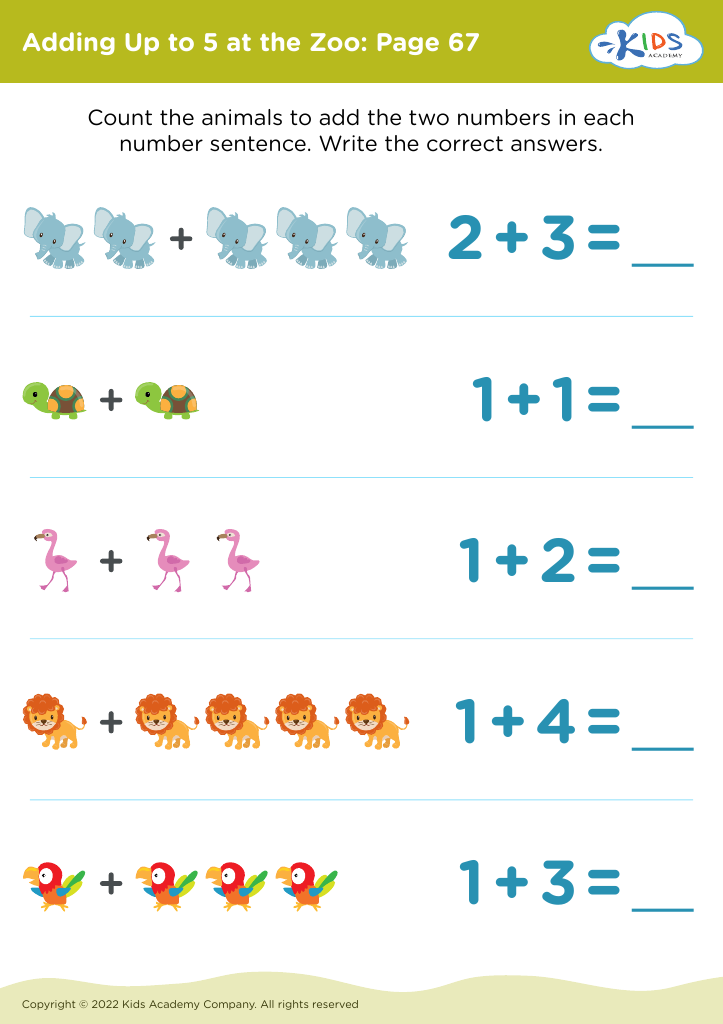
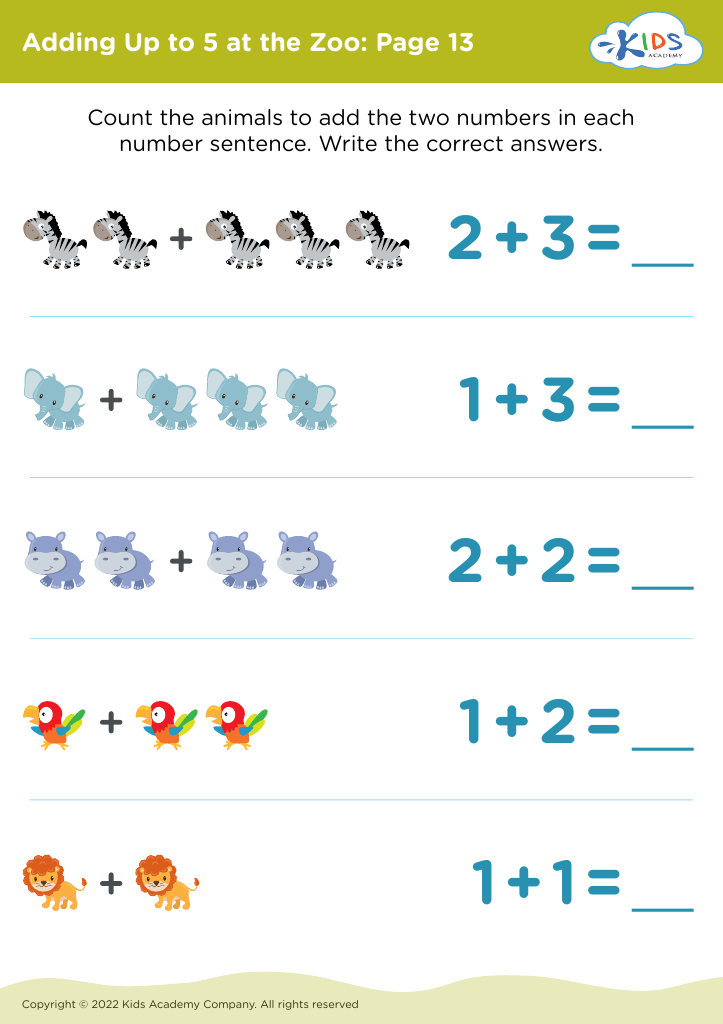
Welcome to our "Animal Identification Adding at the Zoo Worksheets" designed specifically for 3-year-olds! Engaging young learners, these interactive worksheets combine basic math skills with fun animal recognition activities. Children will enjoy counting and adding animals found in a zoo setting, promoting early numeracy while fostering a love for wildlife. Our easy-to-follow illustrations and vibrant designs ensure a captivating learning experience. Perfect for parents and educators looking to enhance vocabulary and mathematical understanding, these worksheets support developmental milestones in a playful and educational environment. Dive into the world of numbers and animals with our engaging resources today!
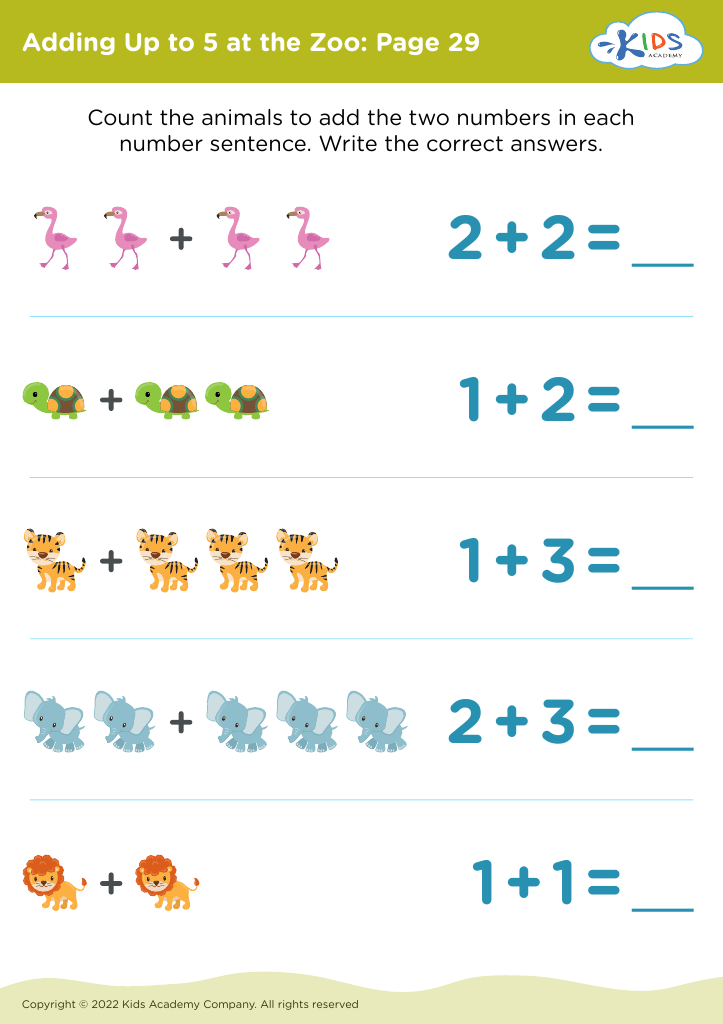



Animal identification at the zoo is important for 3-year-olds as it promotes early learning and fosters a connection to the natural world. Engaging young children in identifying animals encourages curiosity and supports cognitive development. As they learn the names and characteristics of different animals, they enhance their language skills and vocabulary.
Moreover, this activity can cultivate empathy and compassion. When children can recognize and name animals, they are more likely to develop an appreciation for wildlife and an understanding of their habitats. This early awareness can spark a lifelong interest in animals and conservation.
Additionally, integrating animal identification into zoo visits provides a hands-on learning experience that keeps children engaged and excited. Simple activities like matching animal names to images or sounds can transform a zoo trip into an educational adventure, reinforcing learning through play.
Finally, visiting the zoo together fosters bonding time between parents or teachers and children, creating cherished memories while nurturing a love for learning about the environment. By caring about animal identification, parents and teachers play a vital role in shaping well-rounded, informed individuals who will potentially advocate for nature and wildlife preservation in the future.