Filters

18 filtered results

Clear all filters
Favorites
With answer key
Interactive

18 filtered results

Difficulty Level

Grade


Discover the perfect way to enhance your 3-year-old's cognitive development with our "Adding at the Zoo" worksheets. Designed exclusively for young learners, these fun and engaging activities help little ones practice basic addition using cute zoo animals. Our worksheets foster critical thinking, number recognition, and early math skills while keeping kids entertained with colorful illustrations. As children count and add, they improve memory, concentration, and problem-solving abilities. Ideal for preschoolers, these worksheets support learning at home or in the classroom, making math fun and accessible. Explore today and watch your child's cognitive skills soar!
Check out this FREE Trial Lesson on Adding at the Zoo for age 3!

Match Exactly the Same

Favorites
With answer key
Interactive
  • 3
  • Cognitive Development
  • Adding at the Zoo
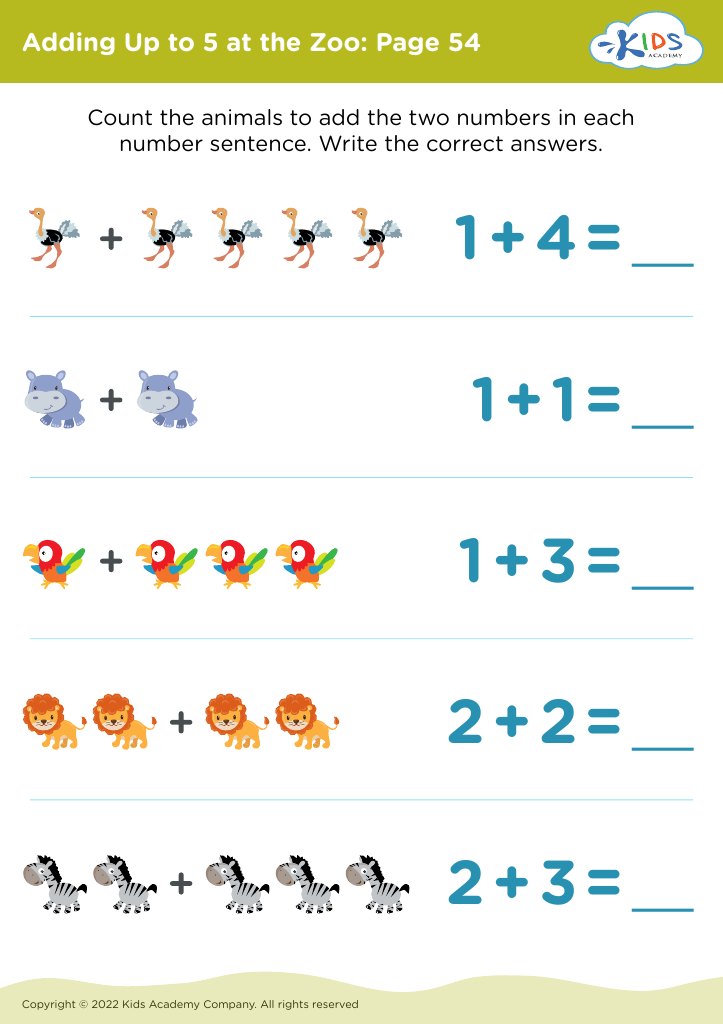
Adding Up to 5 at the Zoo: Page 54
Worksheet
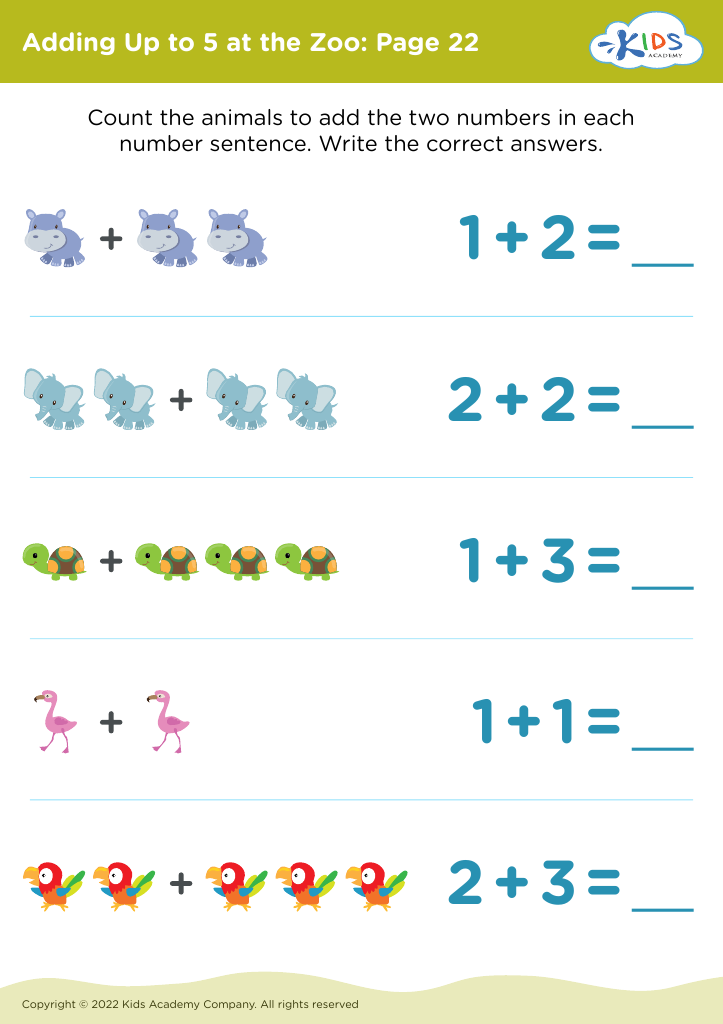
Adding Up to 5 at the Zoo: Page 22
Worksheet
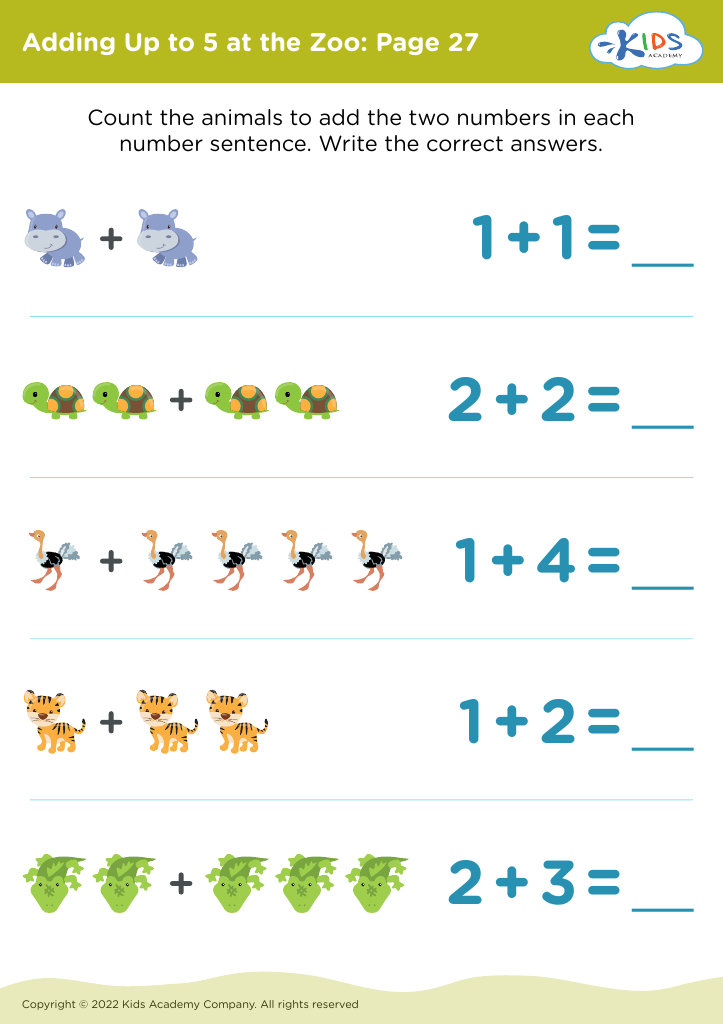
Adding Up to 5 at the Zoo: Page 27
Worksheet
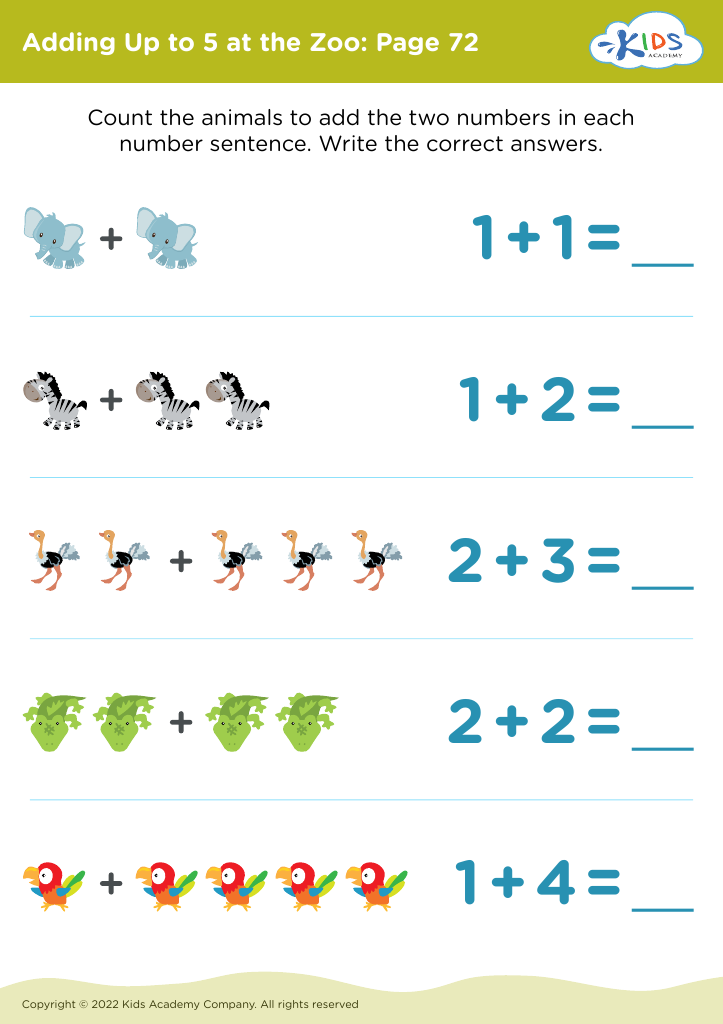
Adding Up to 5 at the Zoo: Page 72
Worksheet
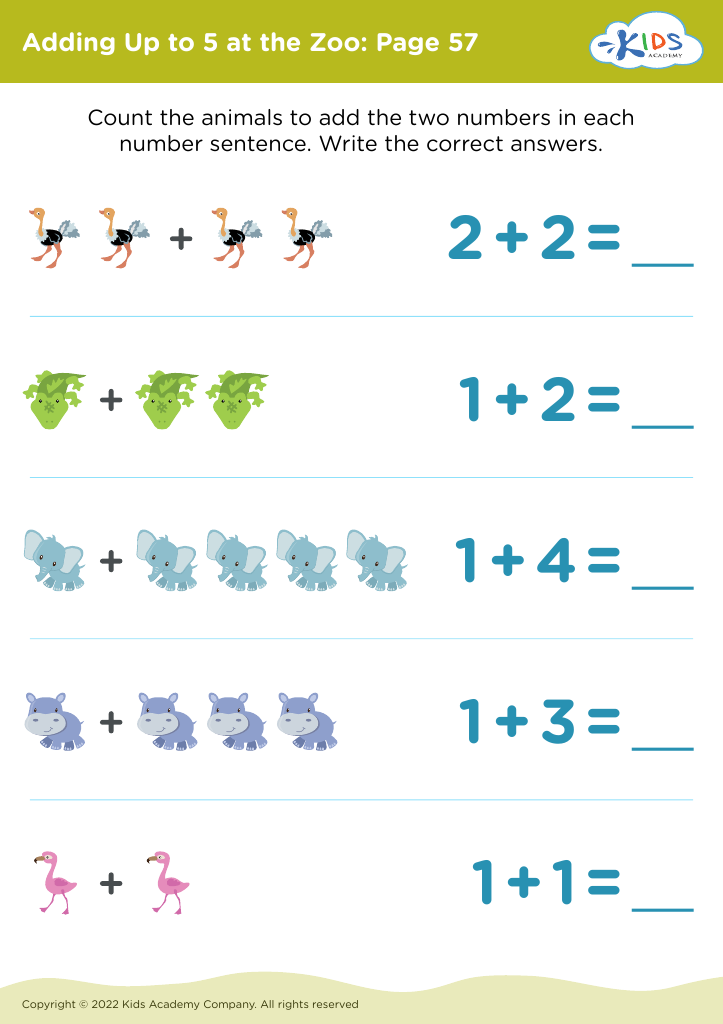
Adding Up to 5 at the Zoo: Page 57
Worksheet
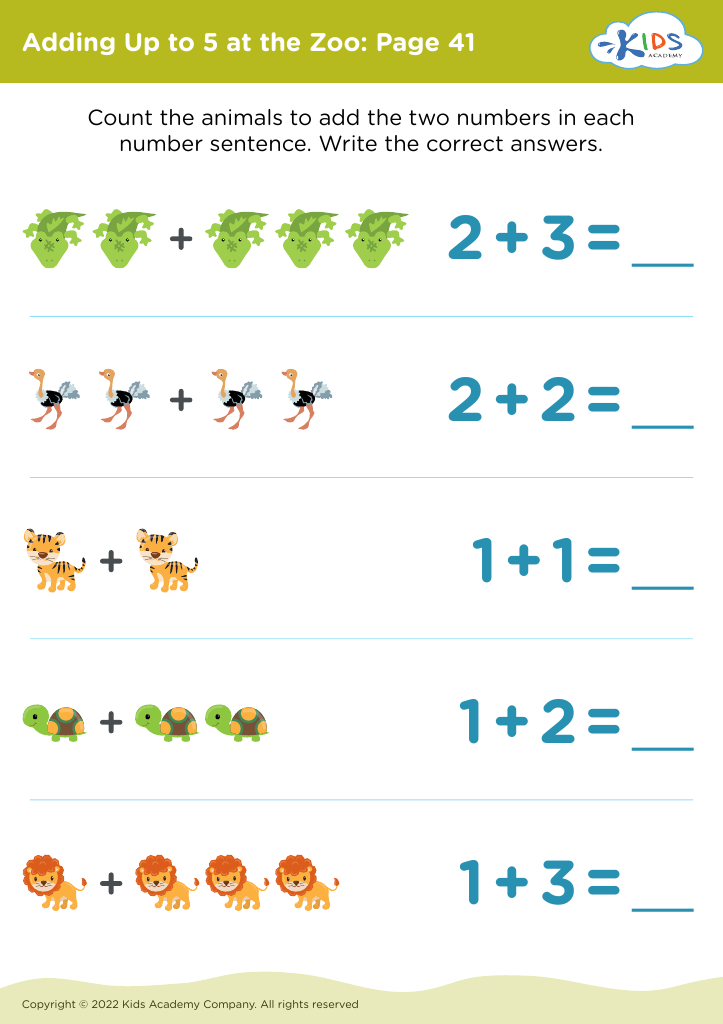
Adding Up to 5 at the Zoo: Page 41
Worksheet
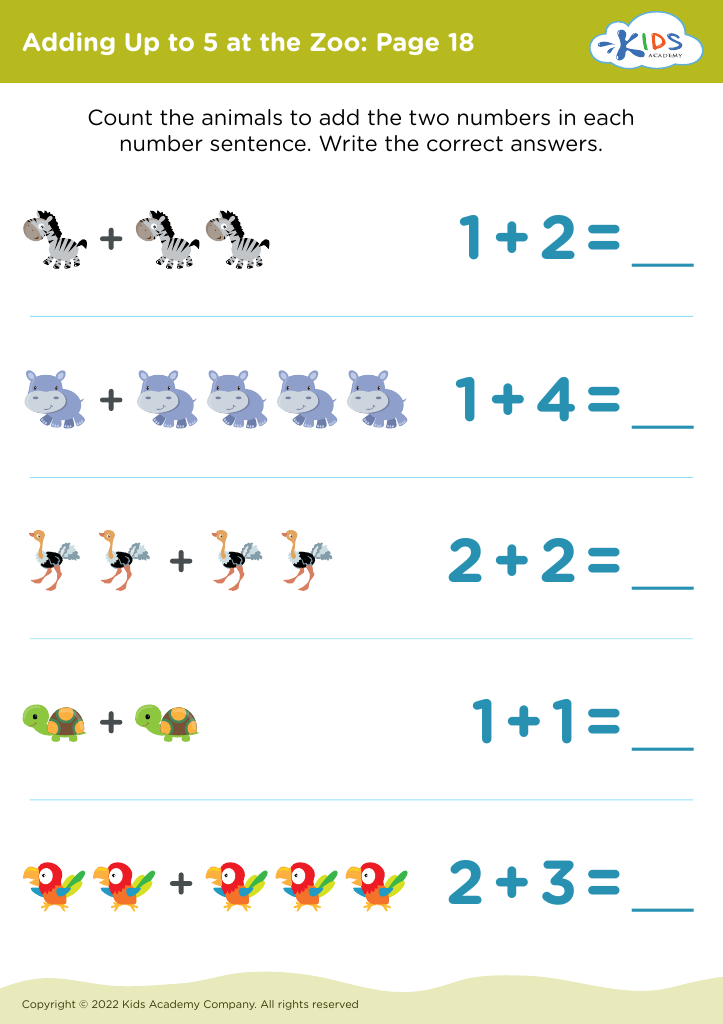
Adding Up to 5 at the Zoo: Page 18
Worksheet
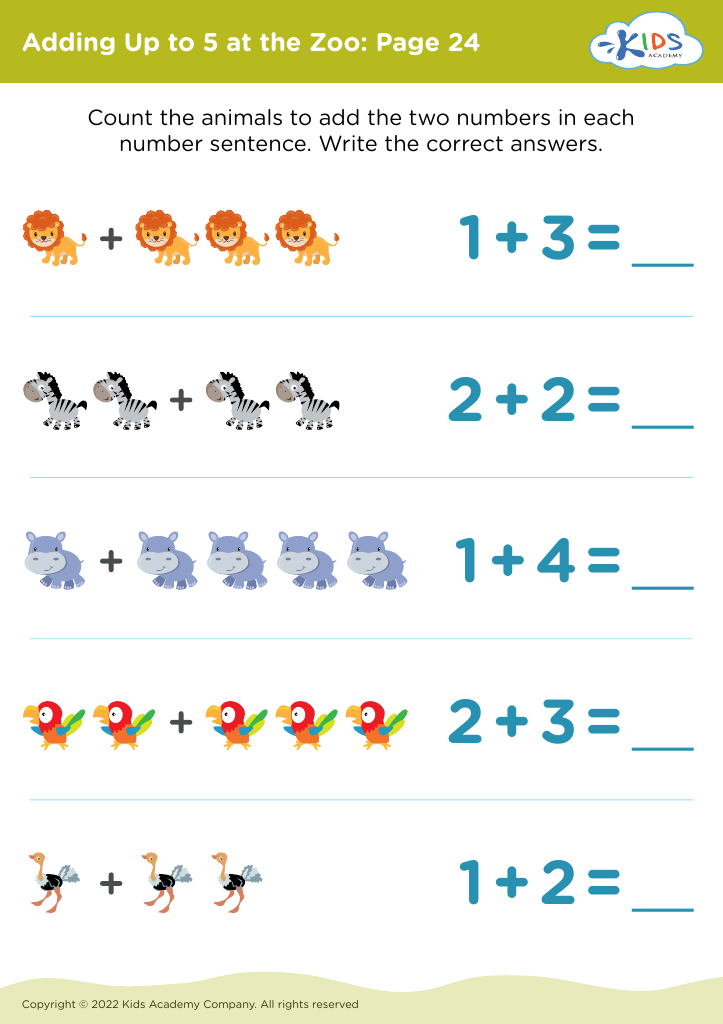
Adding Up to 5 at the Zoo: Page 24
Worksheet
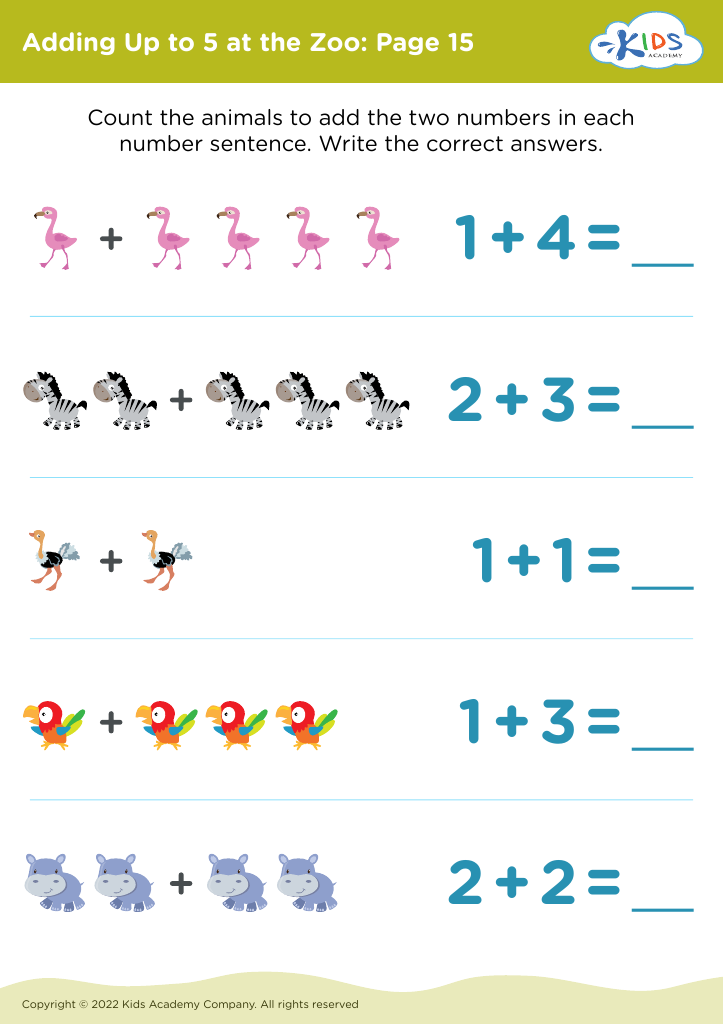
Adding Up to 5 at the Zoo: Page 15
Worksheet
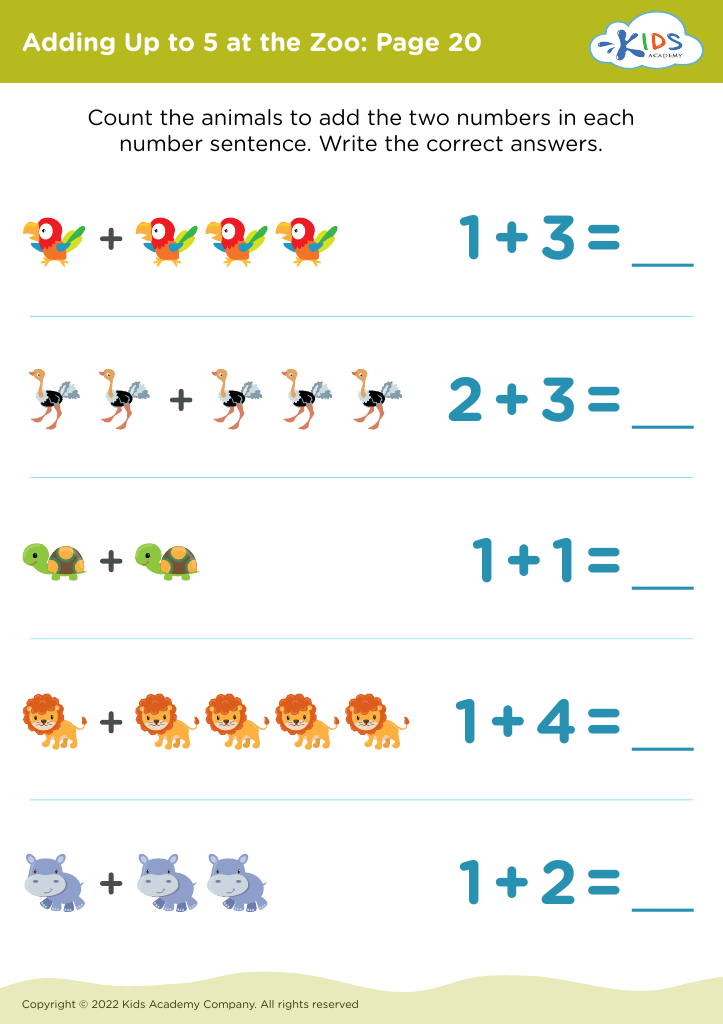
Adding Up to 5 at the Zoo: Page 20
Worksheet
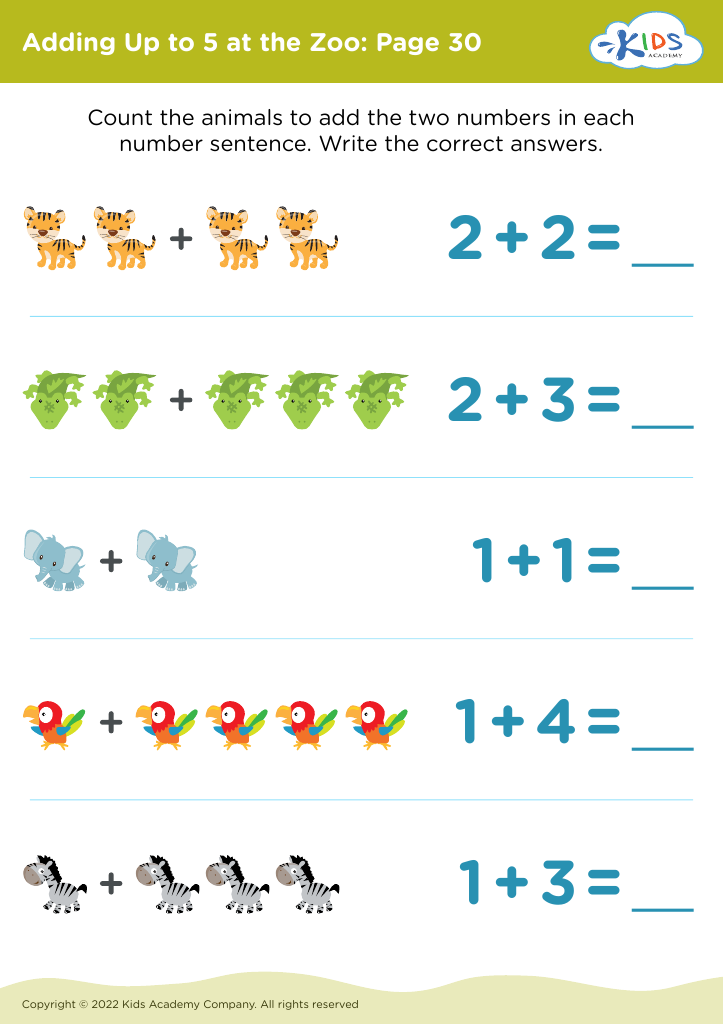
Adding Up to 5 at the Zoo: Page 30
Worksheet
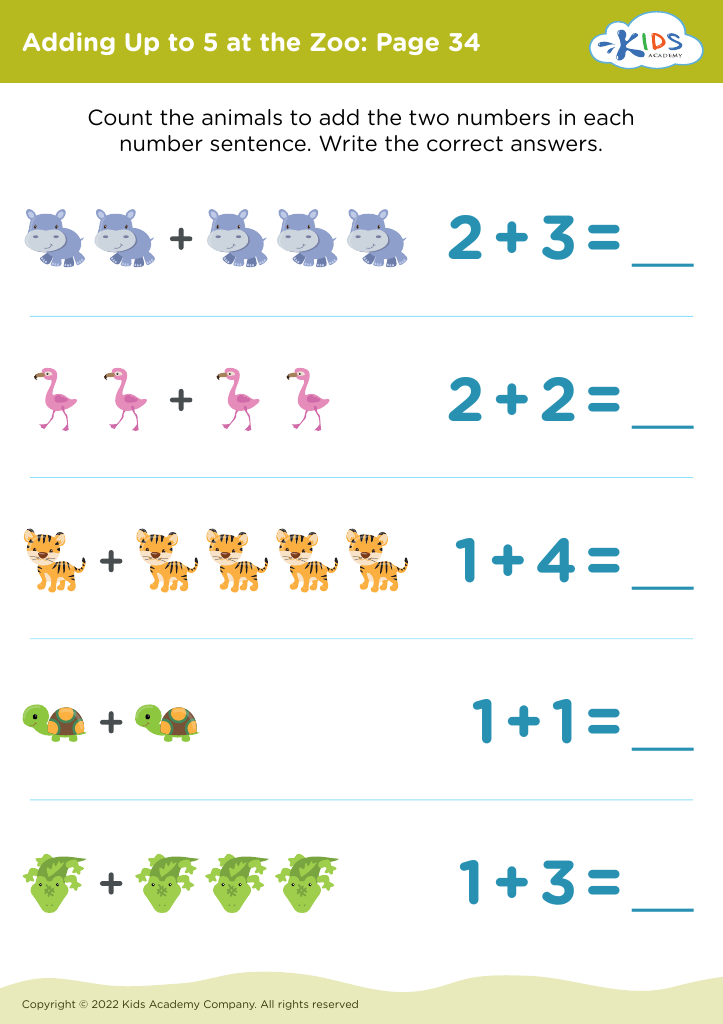
Adding Up to 5 at the Zoo: Page 34
Worksheet
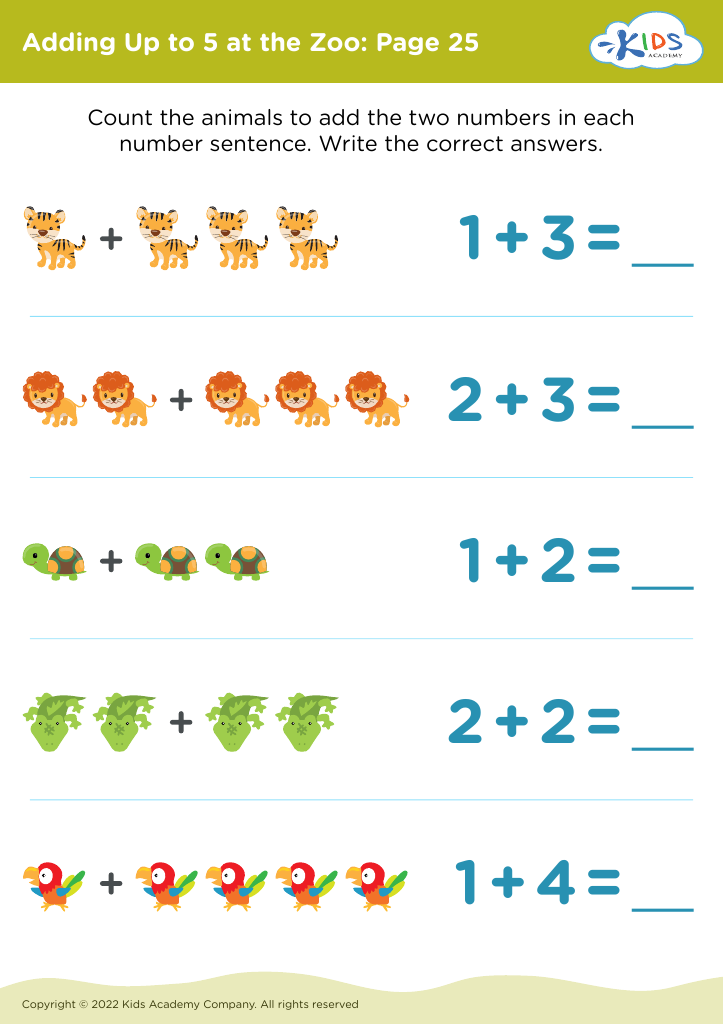
Adding Up to 5 at the Zoo: Page 25
Worksheet
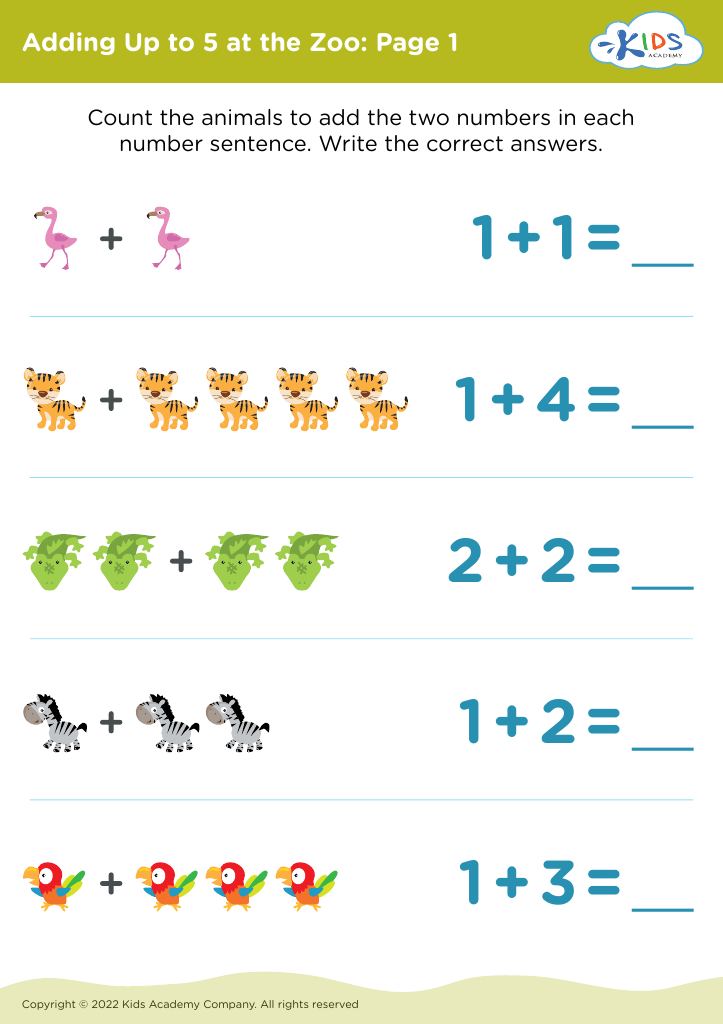
Adding Up to 5 at the Zoo: Page 1

Adding Up to 5 at the Zoo: Page 1

Adding Up to 5 at the Zoo: Page 1
Worksheet
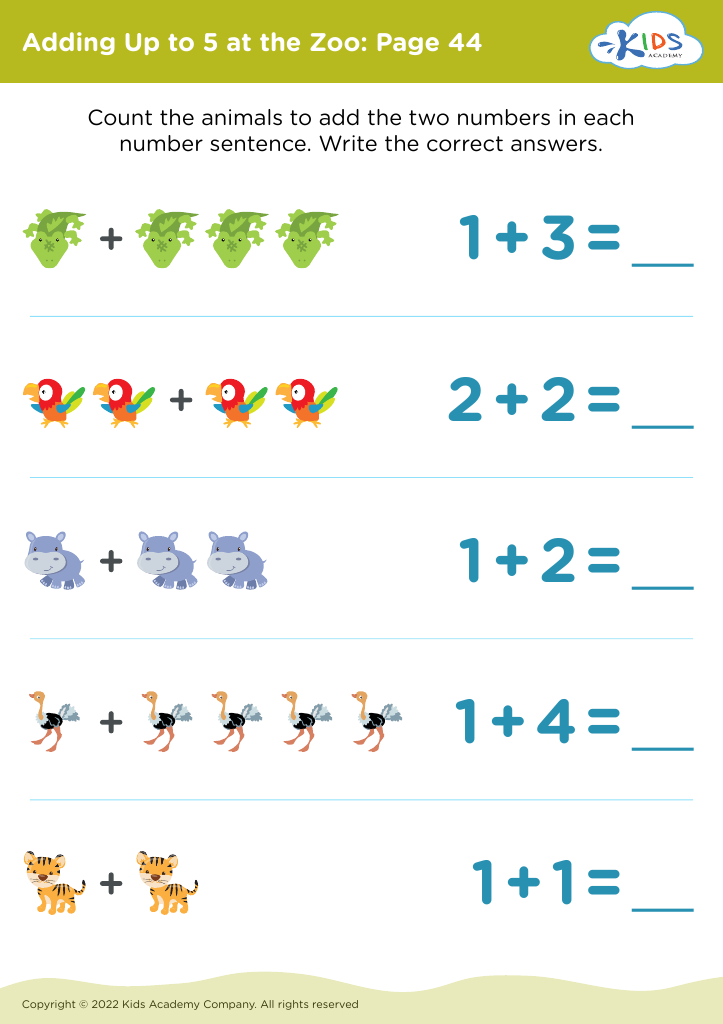
Adding Up to 5 at the Zoo: Page 44
Worksheet
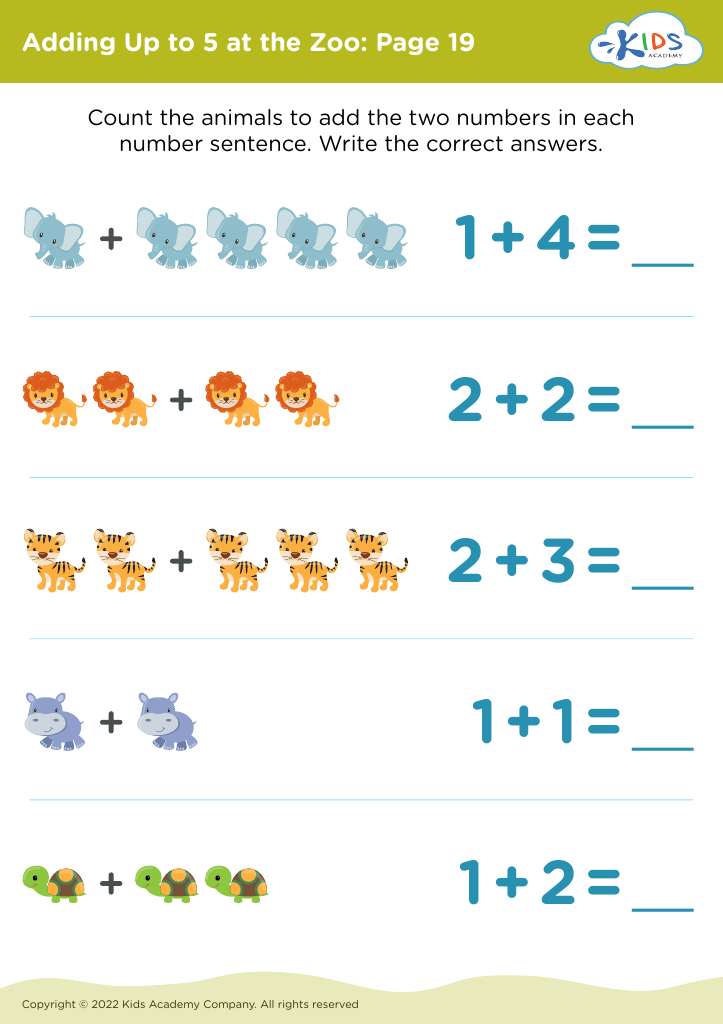
Adding Up to 5 at the Zoo: Page 19
Worksheet
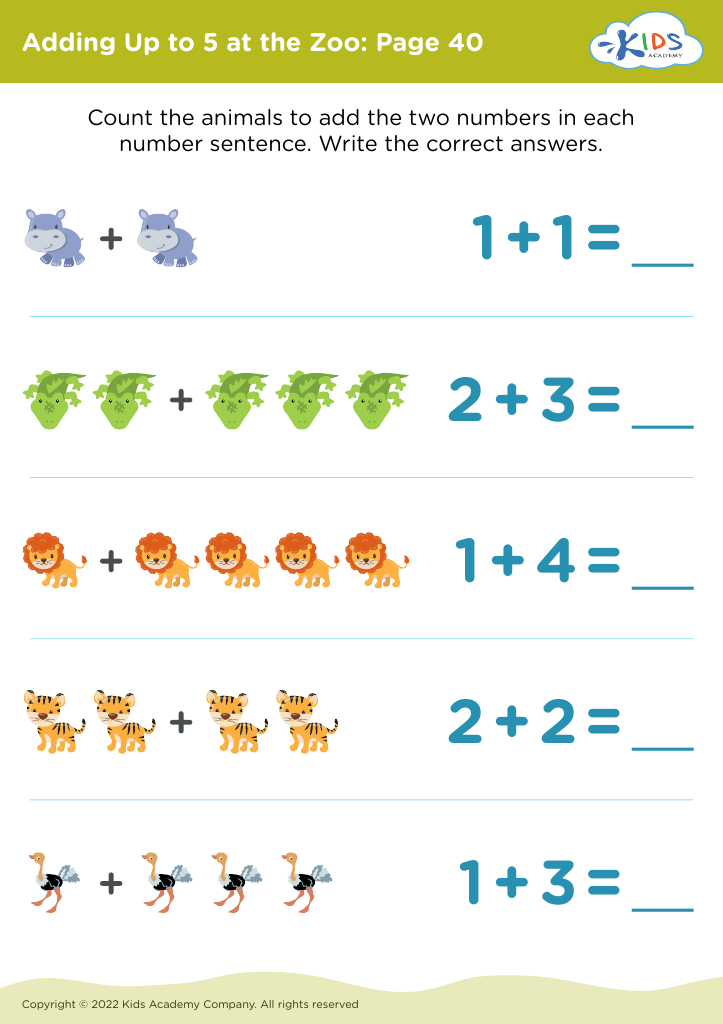
Adding Up to 5 at the Zoo: Page 40
Worksheet
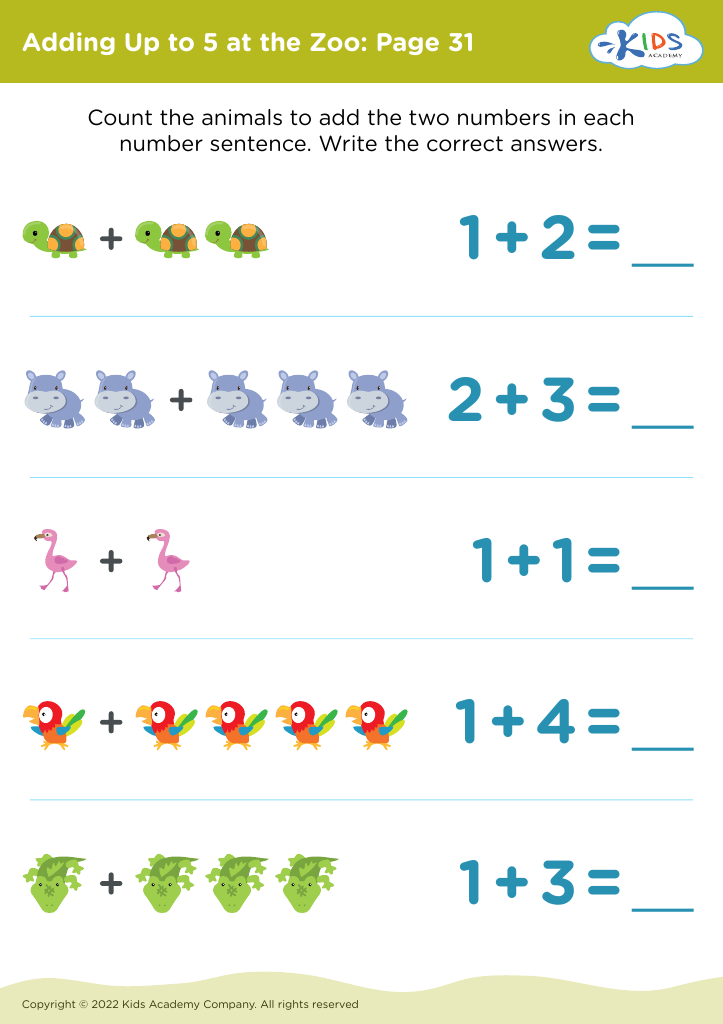
Adding Up to 5 at the Zoo: Page 31
Worksheet


Parents and teachers should care about cognitive development, especially through activities like "Adding at the Zoo" for 3-year-olds, because this foundational period shapes a child's future learning and thinking abilities. Engaging in cognitive development activities with young children is crucial for several reasons. It builds critical thinking and problem-solving skills, which are essential for everyday life. Activities like "Adding at the Zoo" introduce basic math concepts in a fun, relatable context, fostering early numeracy skills.

This kind of engagement enhances a child's ability to focus and pay attention, crucial for later academic success. Moreover, incorporating a zoo theme sparks curiosity about the natural world, increasing their knowledge and vocabulary, which benefits language development. It encourages physical movement and fine motor skills as the child may interact with manipulatives or visual aids.

Parents and teachers playing an active role in these learning experiences provide emotional support and positive reinforcement, fostering a love for learning. Young children who enjoy such cognitive challenges often grow up to be inquisitive, confident learners. Therefore, integrating fun and educational activities like "Adding at the Zoo" into a preschooler's routine has far-reaching benefits, laying down the bricks of a solid educational foundation.