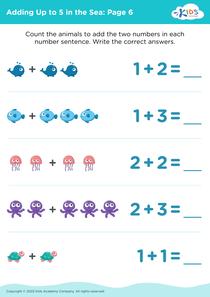
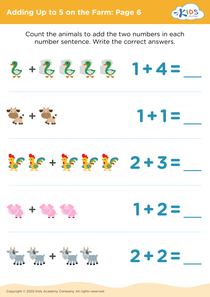
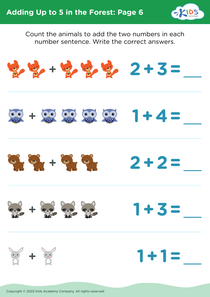
Counting skills Adding at the Zoo Worksheets for 3-Year-Olds - Page 2
27 filtered results
-
From - To
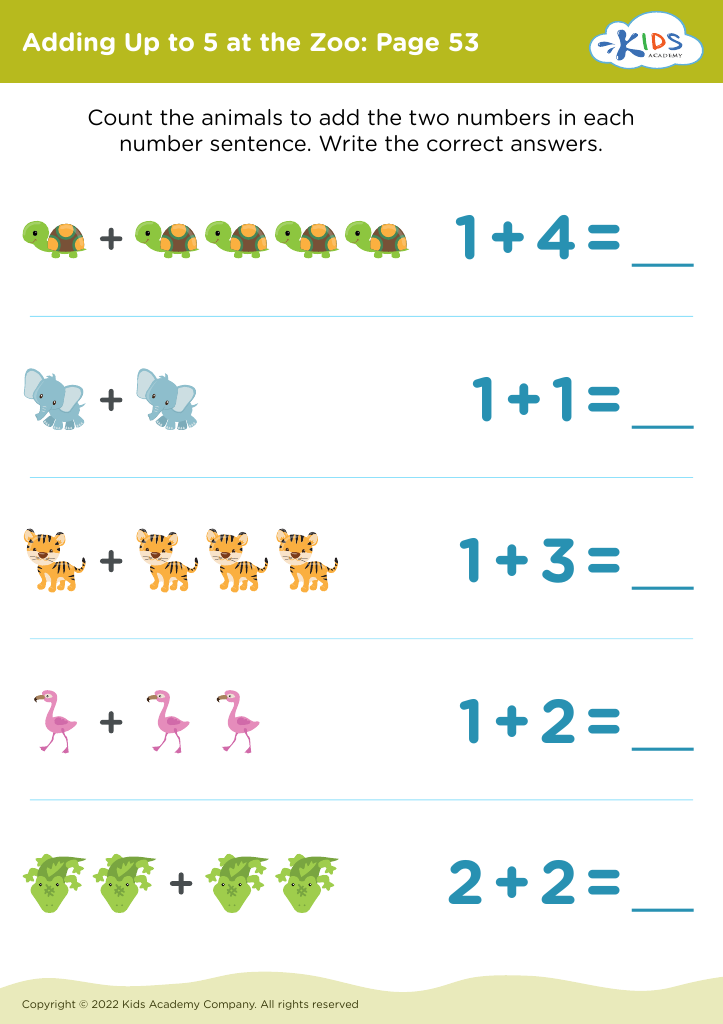
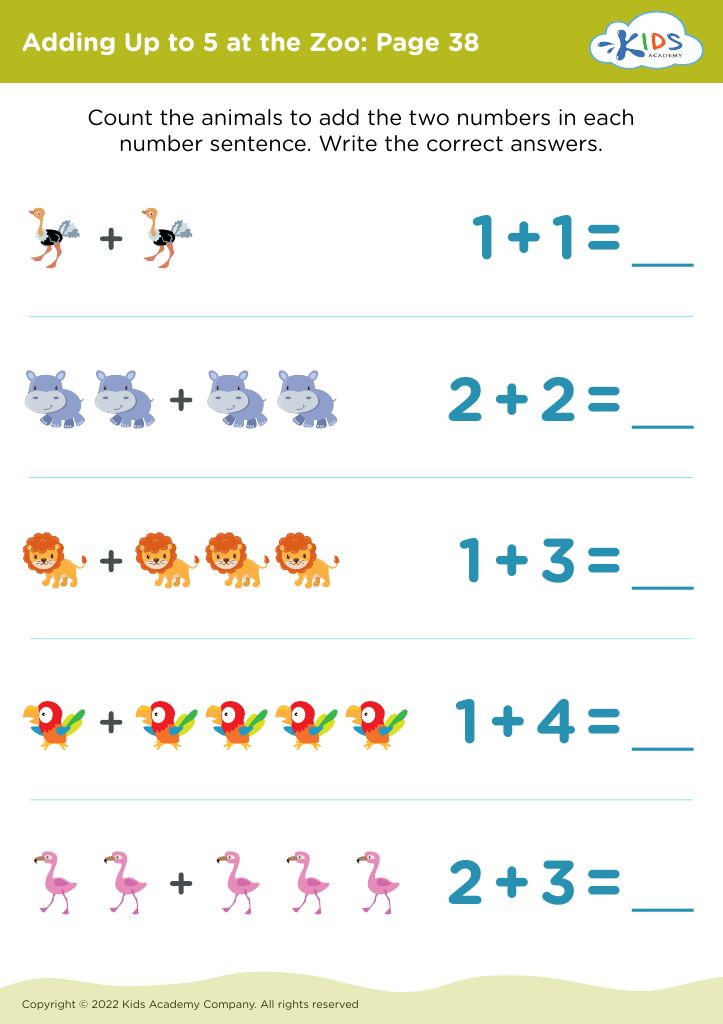
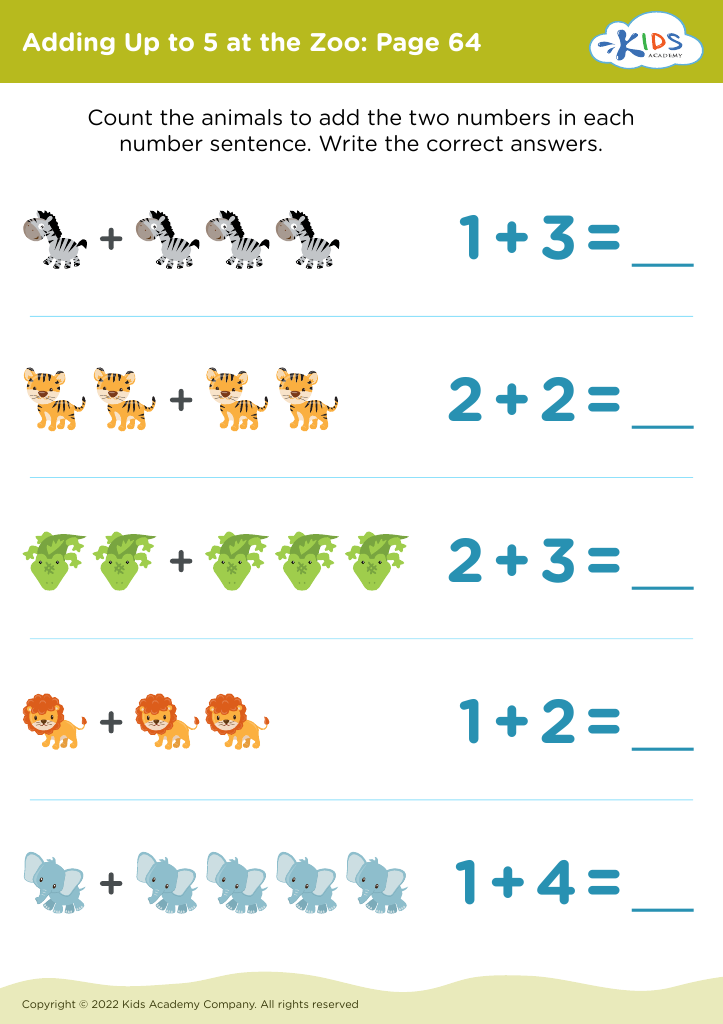



Counting skills are fundamental to early childhood development, and activities like "Counting Skills Adding at the Zoo" can significantly benefit 3-year-olds. During this age, children are naturally curious and eager to explore their surroundings, making it an excellent opportunity for hands-on learning. Engaging with counting in a playful context, such as visiting a zoo, helps make abstract concepts more tangible.
Counting activities at the zoo allow children to associate numbers with real-world objects. For example, counting animals, observing their characteristics, and relating numbers to quantities enhances cognitive skills. These experiences not only boost their counting abilities but also promote critical thinking and problem-solving. Moreover, zoo visits can spark curiosity about nature and animals, encouraging a love for learning.
Parents and teachers should care about fostering these skills as they lay the groundwork for more advanced mathematical concepts later in life. Developing counting skills early nurtures confidence and competency in mathematics, ultimately influencing a child's academic success. Additionally, such playful learning environments strengthen parent-child and teacher-student connections, creating supportive networks that enrich a child's educational journey. In essence, counting skills are vital for a child's cognitive and emotional development, setting the stage for lifelong learning.