Hand-eye Coordination Adding at the Zoo Worksheets for 3-Year-Olds
3 filtered results
-
From - To
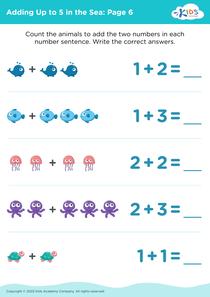
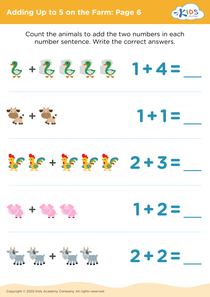
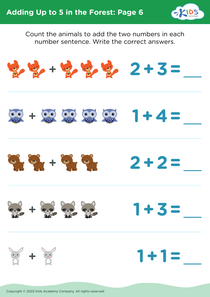
Engage your 3-year-old in a fun and educational adventure with our "Hand-eye Coordination Adding at the Zoo Worksheets." These printable activities are designed to boost early math skills while improving hand-eye coordination. With vibrant zoo-themed illustrations, your little one will enjoy adding adorable animals and enhancing their ability to control hand movements as they count and write. Perfect for early learners, these worksheets make adding up entertaining and effective. Watch as your child's cognitive skills and coordination thrive through playful learning. Ideal for home or classroom settings, our worksheets offer a joyful way to master essential early education milestones.
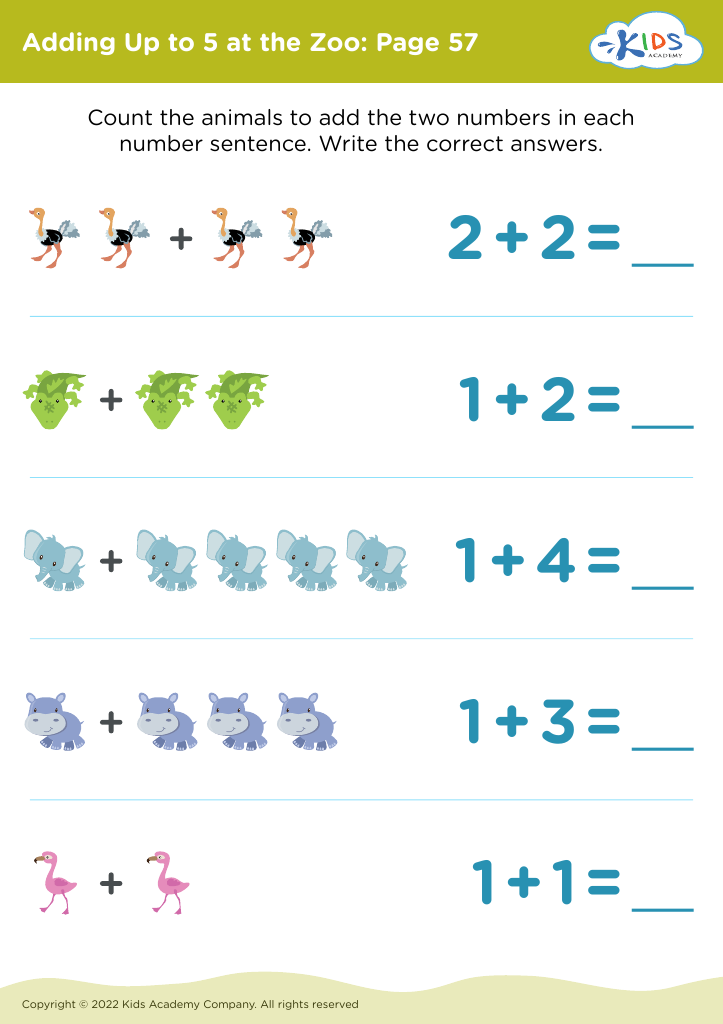
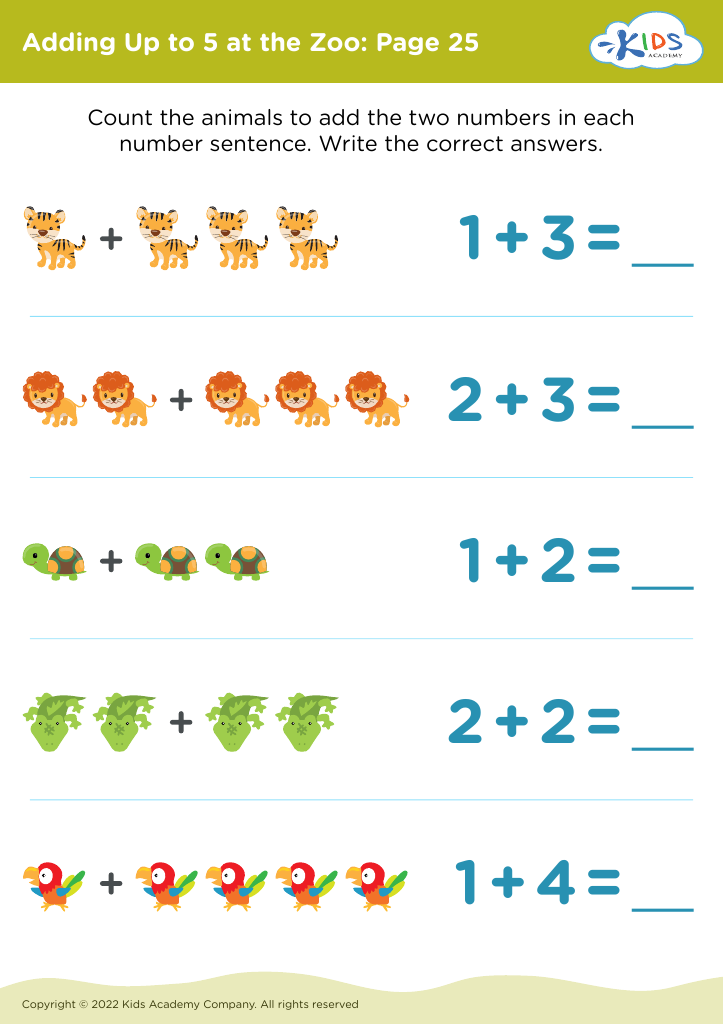
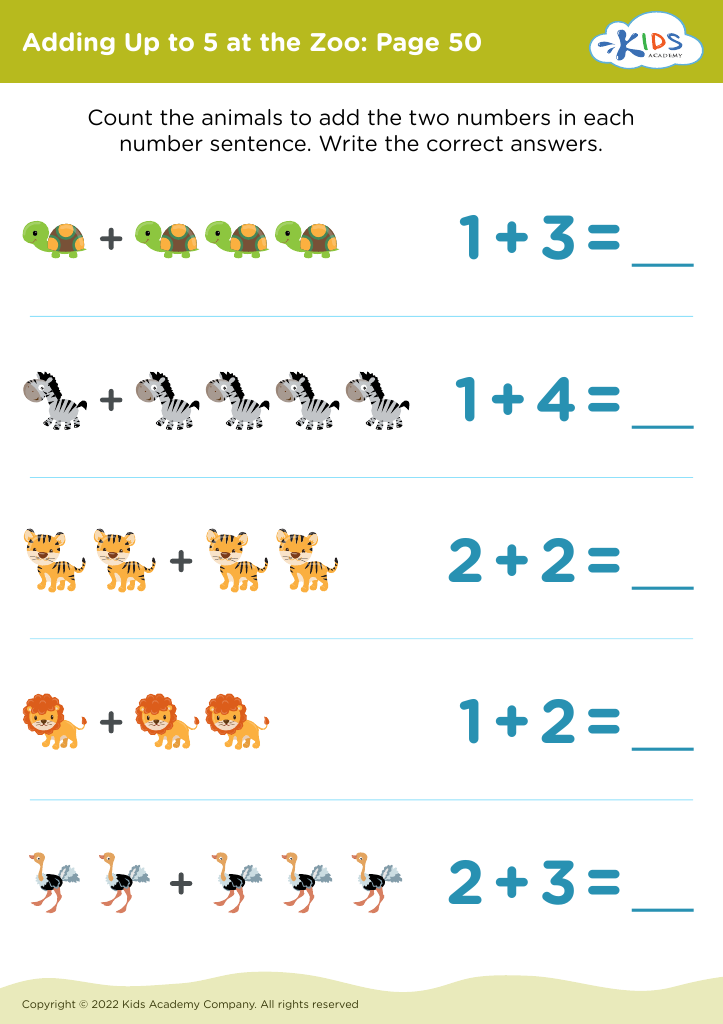



Hand-eye coordination is a fundamental skill that starts developing in early childhood, and engaging activities such as "Hand-eye Coordination Adding at the Zoo" can significantly enhance this development. For 3-year-olds, this skill is crucial because it lays the groundwork for more complex tasks they will encounter as they grow. By participating in activities at the zoo where they need to listen, observe, count animals, and perhaps record their answers, children practice the synchronization of their visual and motor skills.
This type of interactive learning nurtures cognitive development, spatial awareness, and fine motor skills simultaneously. For instance, while a child points to zoo animals and counts them, they practice control and precision, which can benefit future academic tasks like writing or using tools. Furthermore, visiting the zoo adds an element of fun and excitement, sparking curiosity and motivation. Emotional engagement improves memory retention as well.
For parents and teachers, fostering these skills in an enjoyable setting promotes a positive attitude towards learning, setting a strong foundation for future educational success. Moreover, shared activities like these strengthen bonds between adults and children, offering invaluable social and emotional benefits. Ultimately, focusing on hand-eye coordination through engaging methods prepares 3-year-olds for a smoother transition into more structured learning environments.