Problem-Solving Skills Adding at the Zoo Worksheets for 3-Year-Olds
4 filtered results
-
From - To
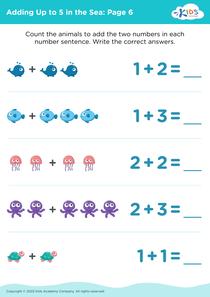
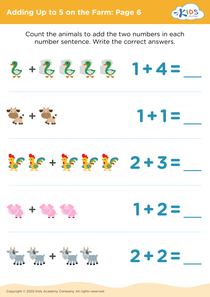
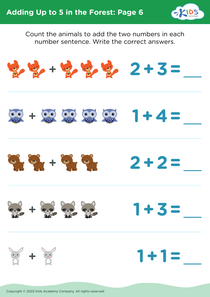
Enhance your 3-year-old's problem-solving abilities with our 'Adding at the Zoo' worksheets. Perfectly designed for little learners, these worksheets turn simple math exercises into a fun zoo adventure. By combining basic addition with engaging zoo-themed visuals, kids will develop numerical skills while solving whimsical problems featuring their favorite animals. Our worksheets encourage critical thinking, foster curiosity, and improve focus as children count, add, and tally playful zoo animals. Let your child discover the joy of learning math with these delightful and educational printables that make problem-solving as fun as a day at the zoo!
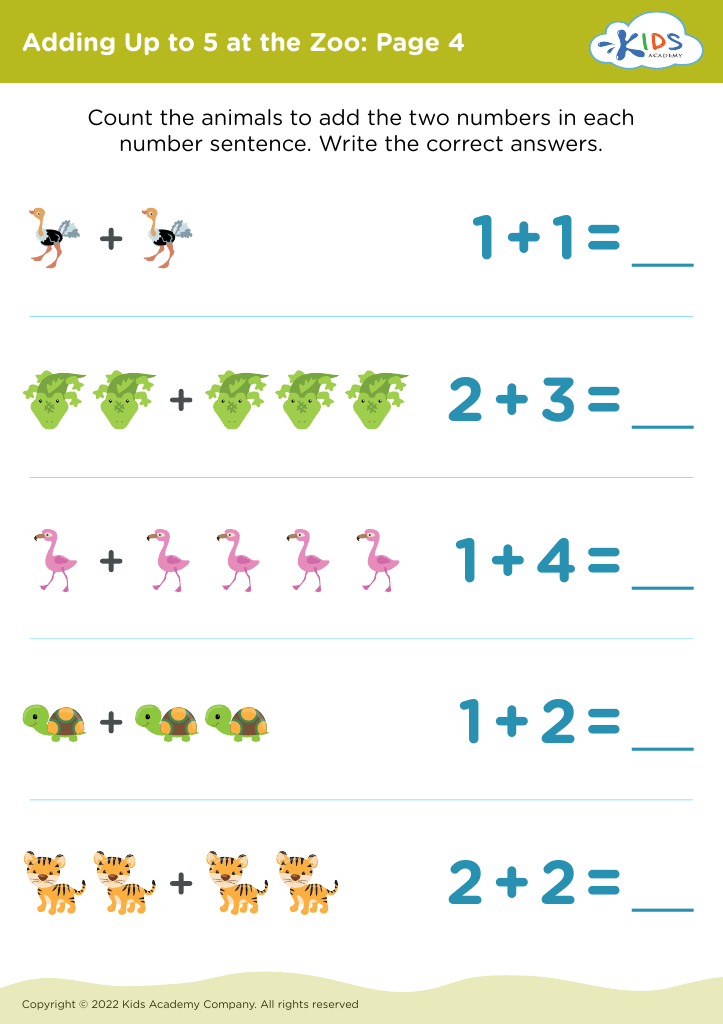
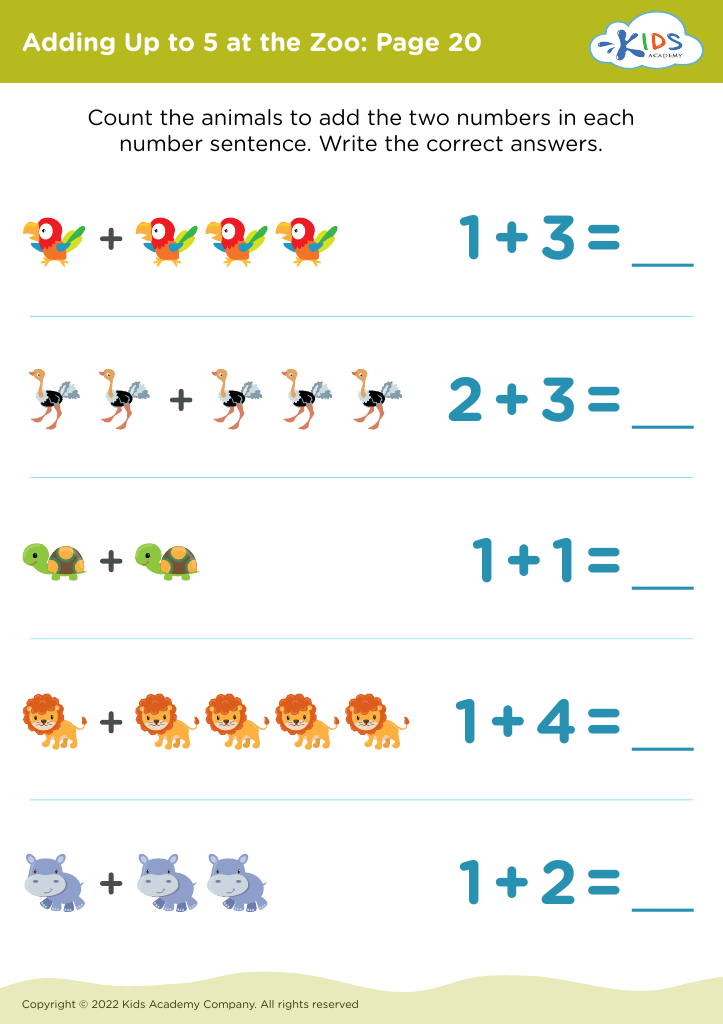
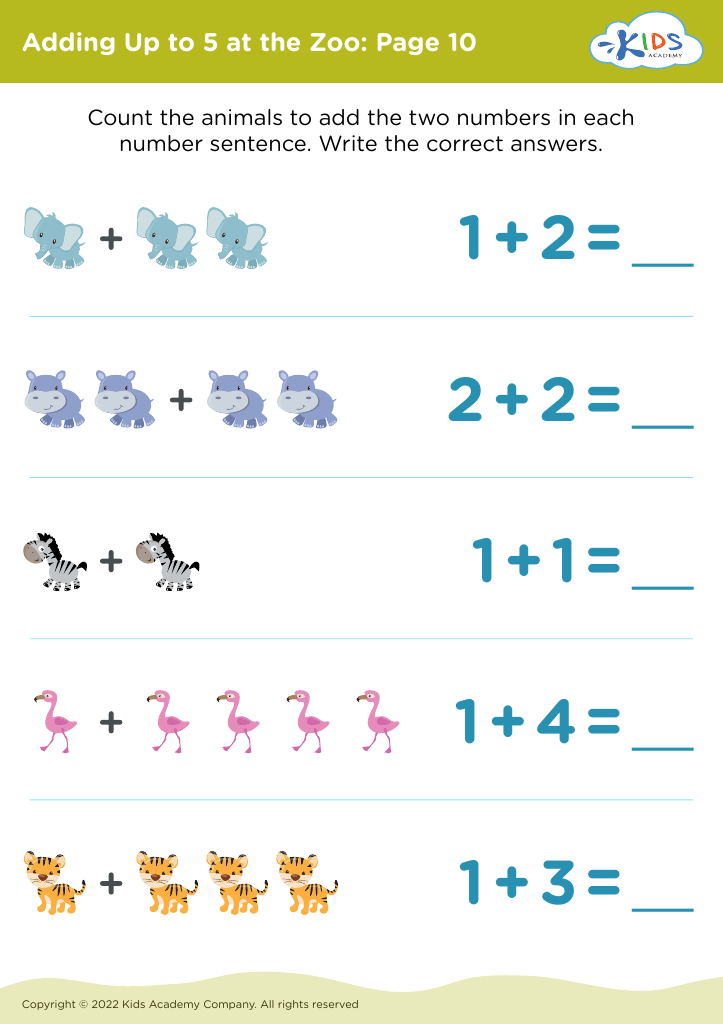
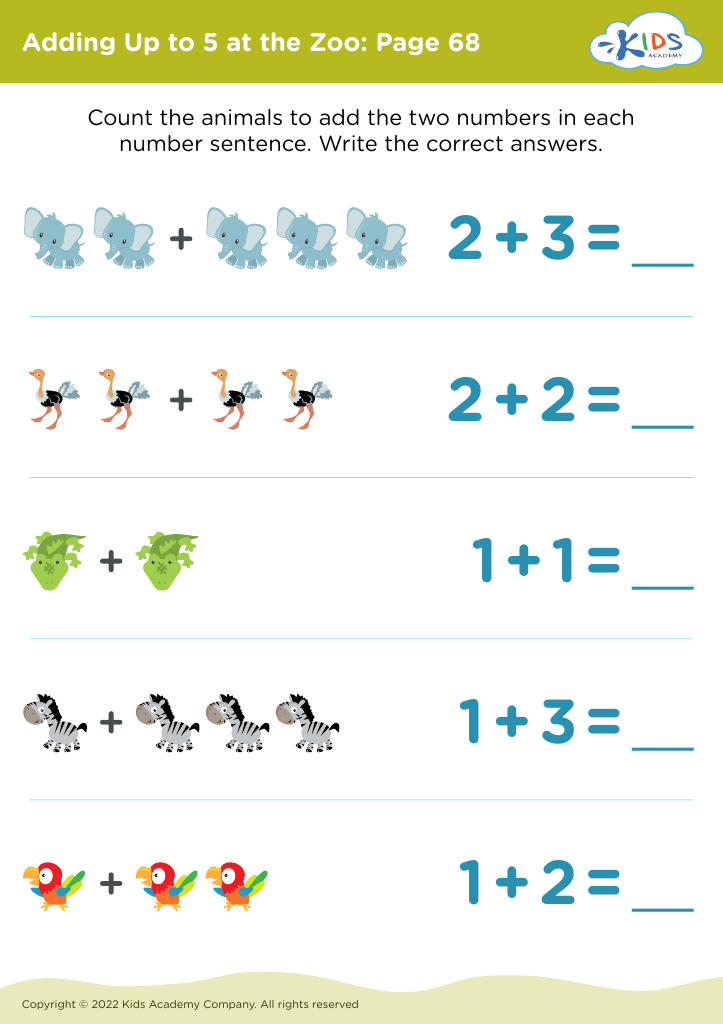



Developing problem-solving skills in 3-year-olds through activities like "Problem-Solving Skills Adding at the Zoo" has immense benefits that parents and teachers should enthusiastically embrace. At this tender age, children’s brains are remarkably pliable, forming neural connections that lay the foundation for future cognitive processes. Introducing them to problem-solving activities, specifically ones that are engaging and fun, nurtures their curiosity and enhances critical thinking.
A Zoo-themed activity, with animals and simple arithmetic, can captivate young minds while subtly introducing them to mathematics and logical reasoning. For instance, asking children to count how many lions and tigers they see, and then adding the numbers, transforms learning into an adventurous game. This practice not only strengthens their numerical skills but also teaches them to approach problems methodically, a fundamental life skill.
Additionally, problem-solving activities at a young age foster patience and perseverance, as children learn not to be discouraged by mistakes but to see them as steps toward a solution. These experiences build self-confidence and lay down a proactive, inquisitive mindset that is crucial for academic success and personal growth.
In summary, "Problem-Solving Skills Adding at the Zoo" combines education with entertainment, paving the way for heartfelt learning that will benefit children throughout their lives.