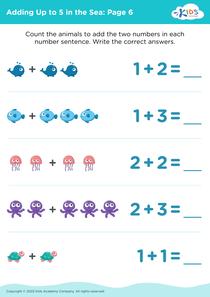
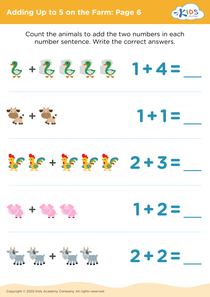
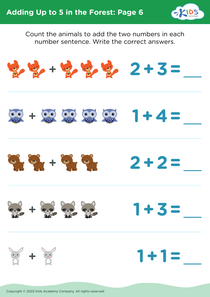
Understanding Quantities Adding at the Zoo Worksheets for 3-Year-Olds
6 filtered results
-
From - To
Discover our "Understanding Quantities: Adding at the Zoo" worksheets designed specifically for 3-year-olds. This engaging resource uses vibrant zoo-themed imagery to reinforce early math skills, focusing on recognizing and understanding quantities through fun, interactive activities. Children will love counting colorful animals, enhancing their number recognition and basic addition skills in a playful context. These worksheets promote cognitive development, critical thinking, and a love for learning, making math both enjoyable and accessible. Perfect for home or classroom use, our materials will provide young learners with the foundational skills necessary for future mathematical success. Explore the delights of learning math at the zoo!
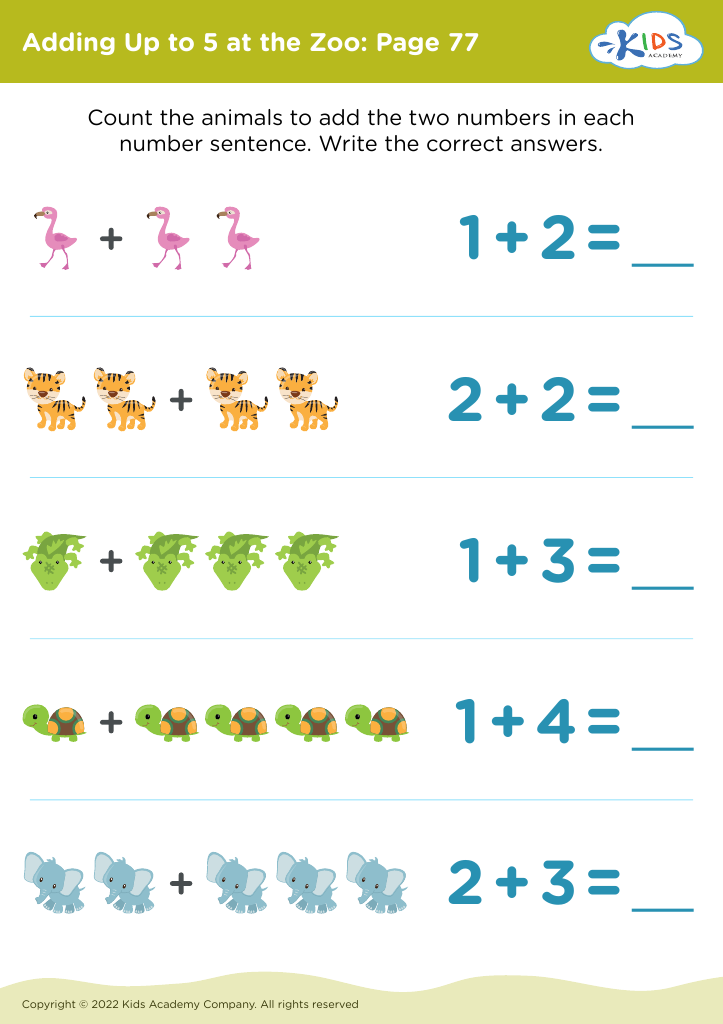
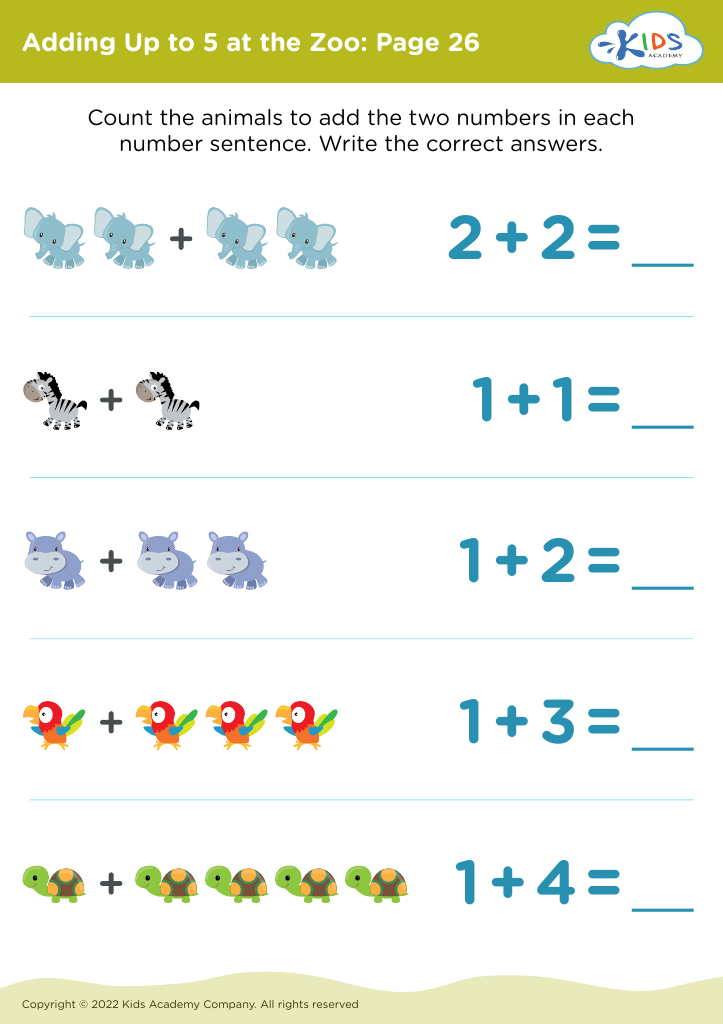
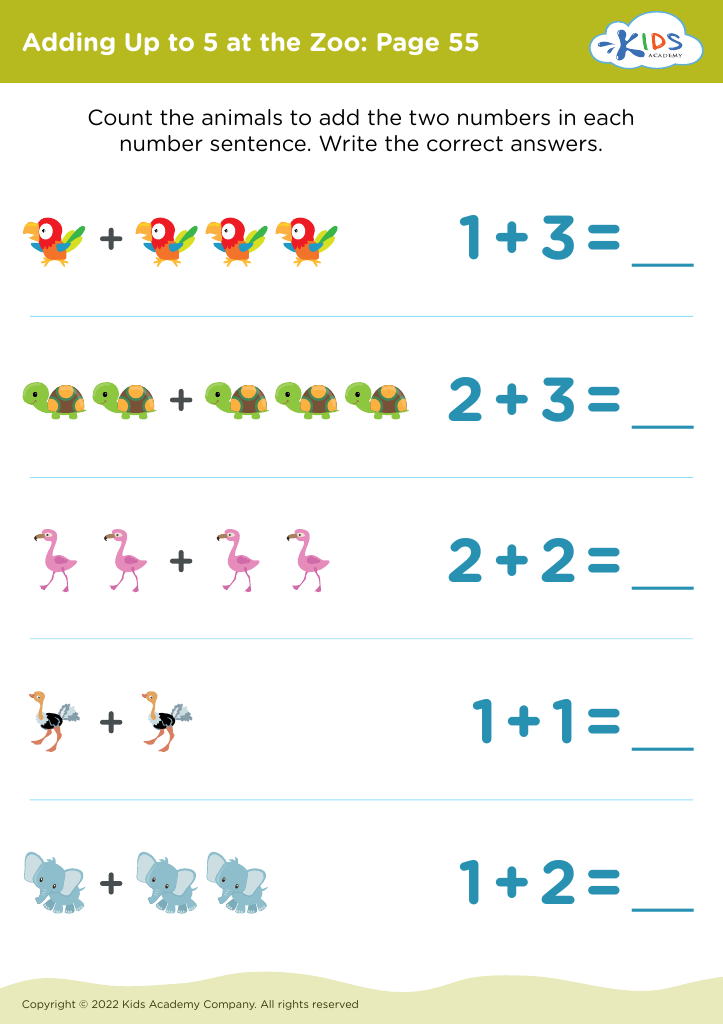
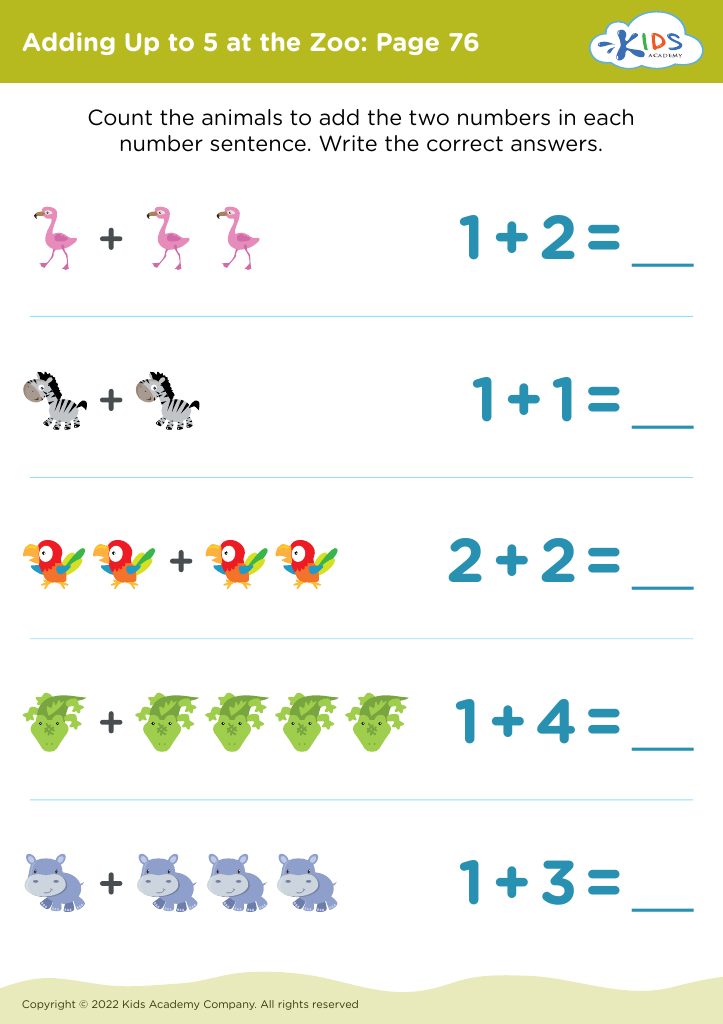
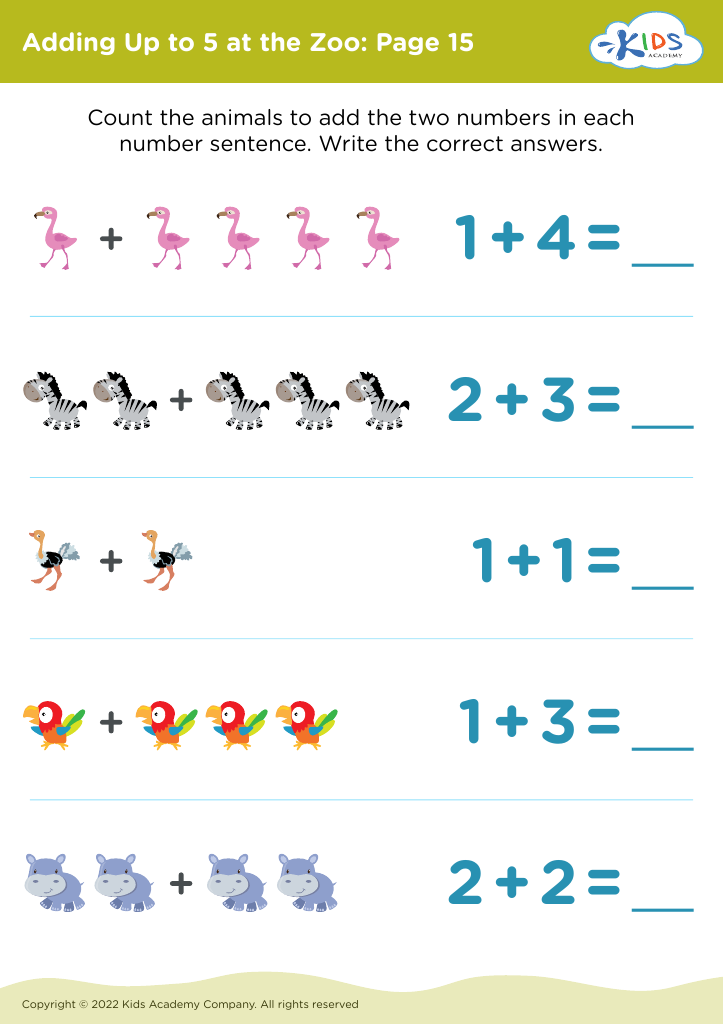
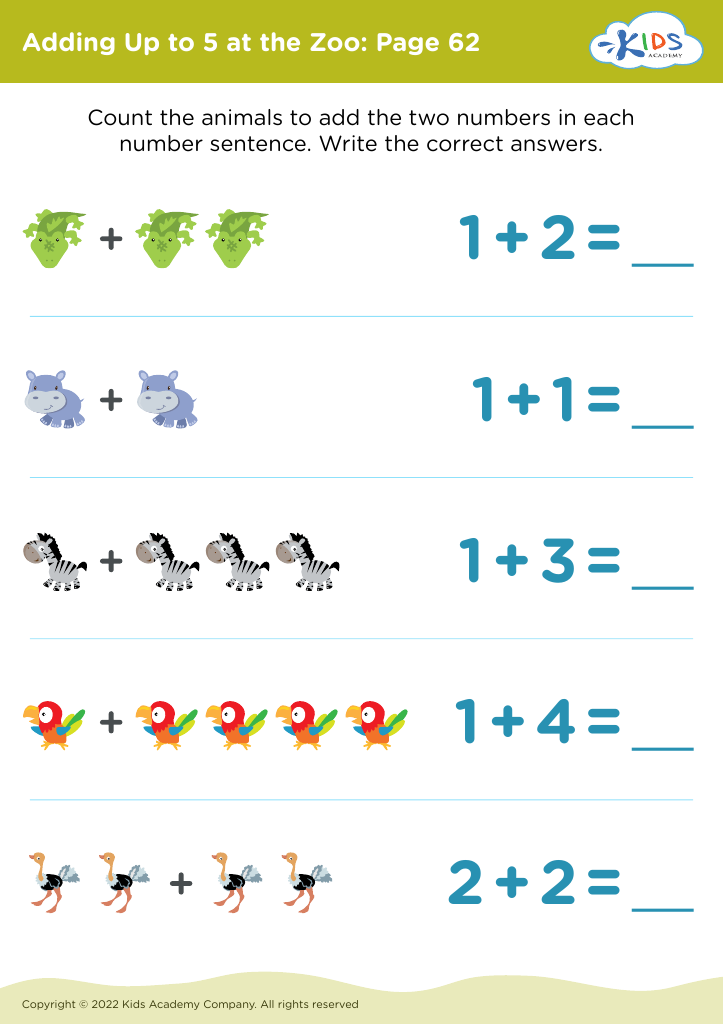



Understanding quantities and basic addition concepts, even at the age of 3, lays a crucial foundation for children's future mathematical skills. "Adding at the Zoo," a playful approach to teaching these concepts, engages young learners through familiar and enjoyable themes. As children explore quantities in a zoo setting, they naturally connect numbers to real-world contexts, making learning interactive and relatable.
Parents and teachers should care because early experiences with math foster confidence and curiosity. When 3-year-olds engage with fun scenarios like counting animals or adding their favorites, they develop a positive attitude towards math. This can help to dispel any anxiety surrounding the subject as they grow older.
Moreover, developing arithmetic skills at this age promotes cognitive growth and encourages critical thinking. It enhances their ability to categorize, compare, and sort—skills that are valuable beyond math. Not to mention, such interactive activities strengthen parent-child and teacher-student bonds, making learning a shared journey.
Finally, laying this groundwork prepares children for more complex mathematics later on, ultimately contributing to their academic success. Investing in early math education, therefore, is essential for holistic development, making programs like "Adding at the Zoo" beneficial for both parents and educators.