Check out this FREE Trial Lesson on Adding in the Forest for age 3!

Z

Favorites
With answer key
Interactive
  • 3
  • Basic Addition Skills
  • Adding in the Forest
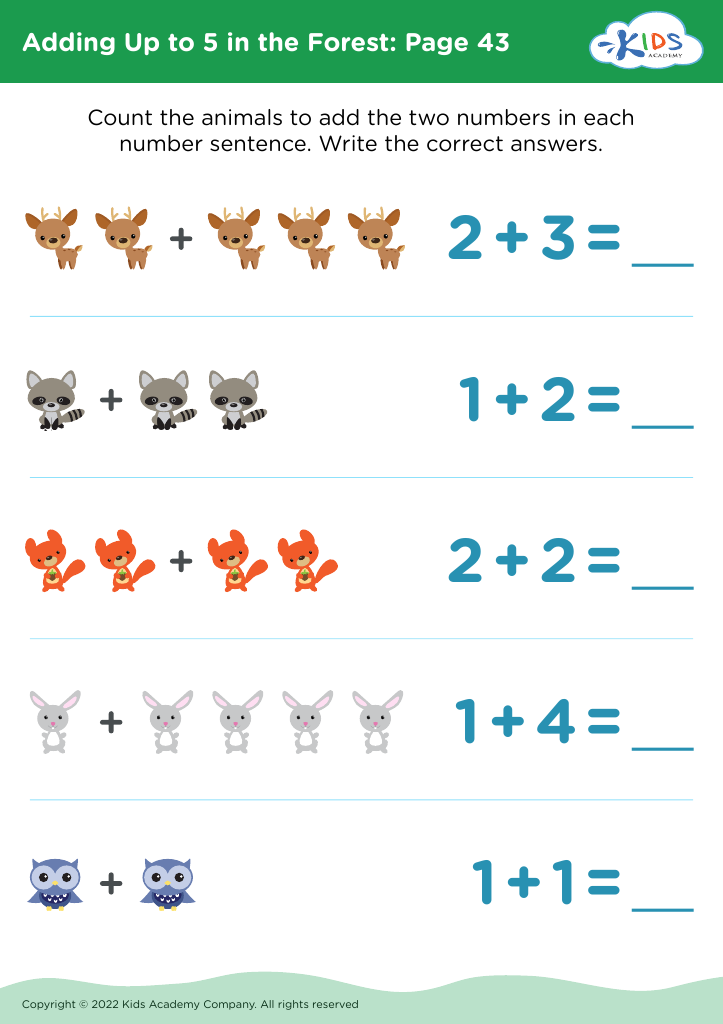
Adding Up to 5 in the Forest: Page 43
Worksheet
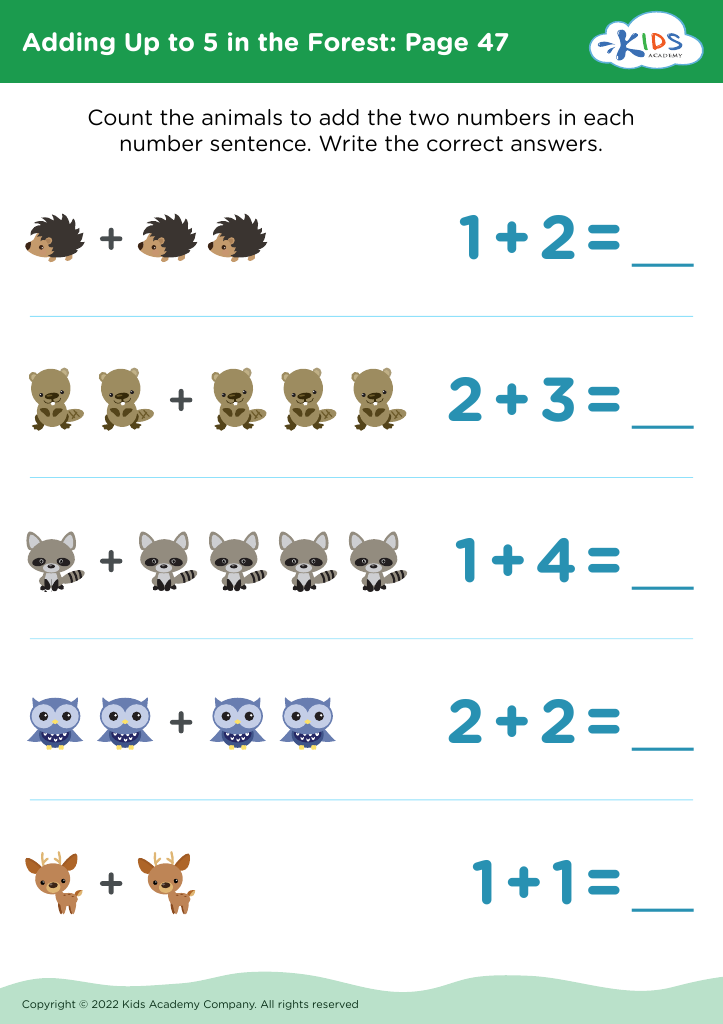
Adding Up to 5 in the Forest: Page 47
Worksheet
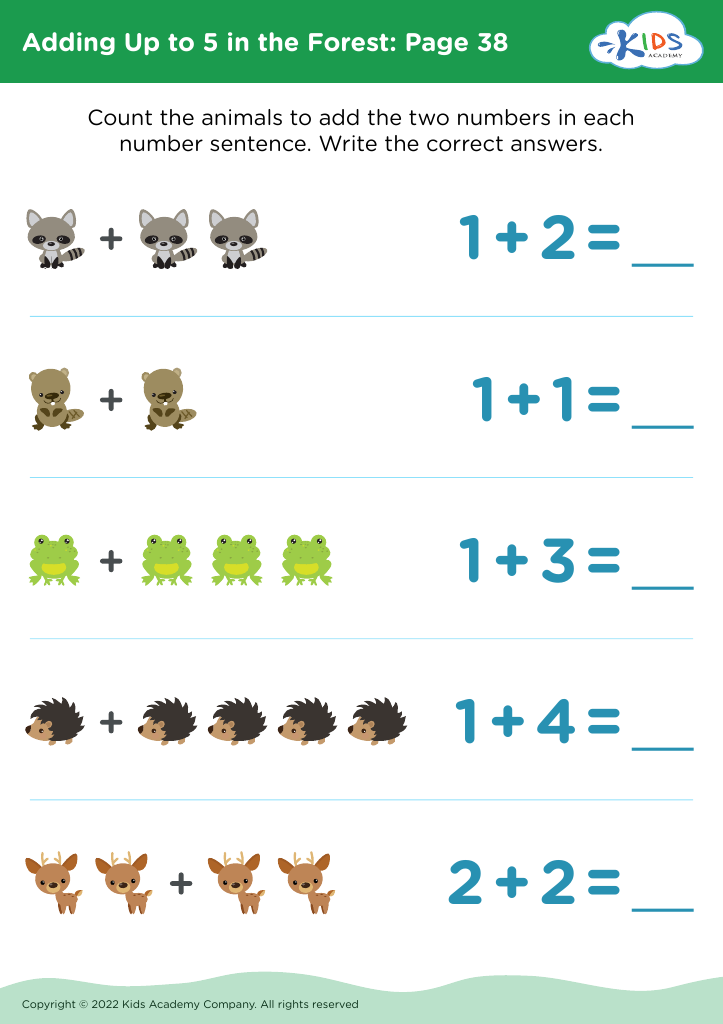
Adding Up to 5 in the Forest: Page 38
Worksheet
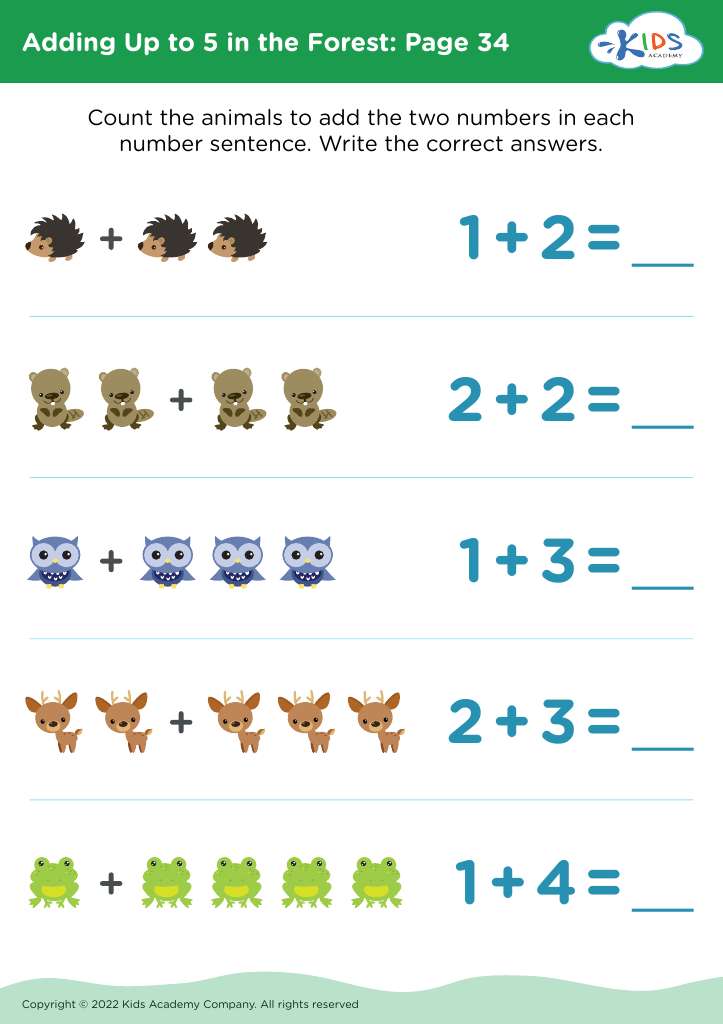
Adding Up to 5 in the Forest: Page 34
Worksheet
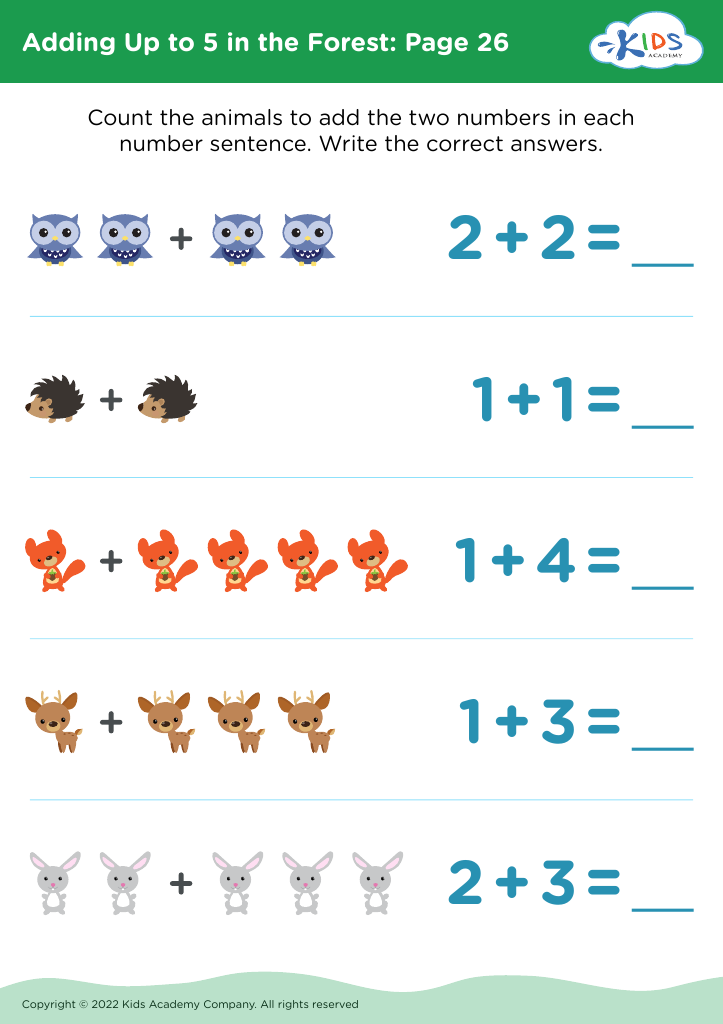
Adding Up to 5 in the Forest: Page 26
Worksheet
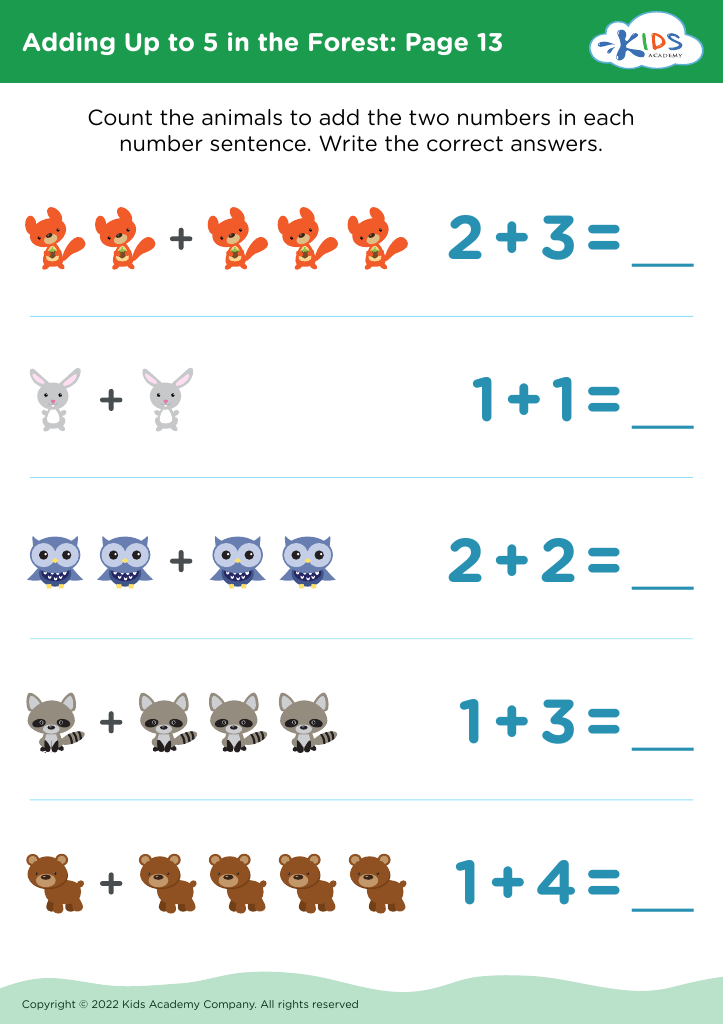
Adding Up to 5 in the Forest: Page 13
Worksheet
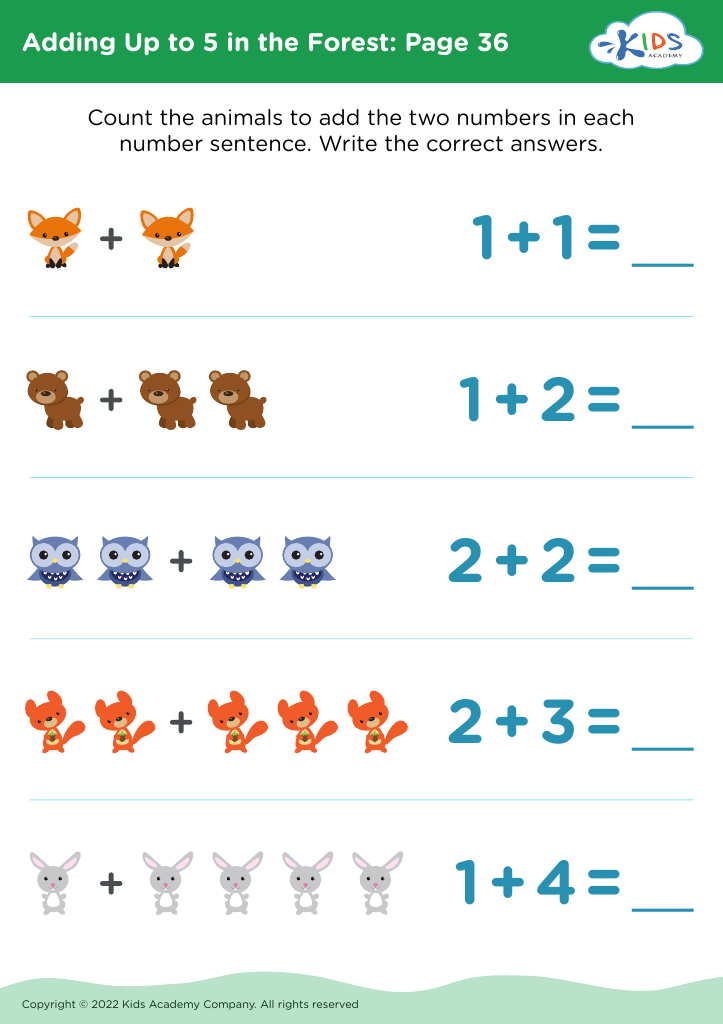
Adding Up to 5 in the Forest: Page 36
Worksheet
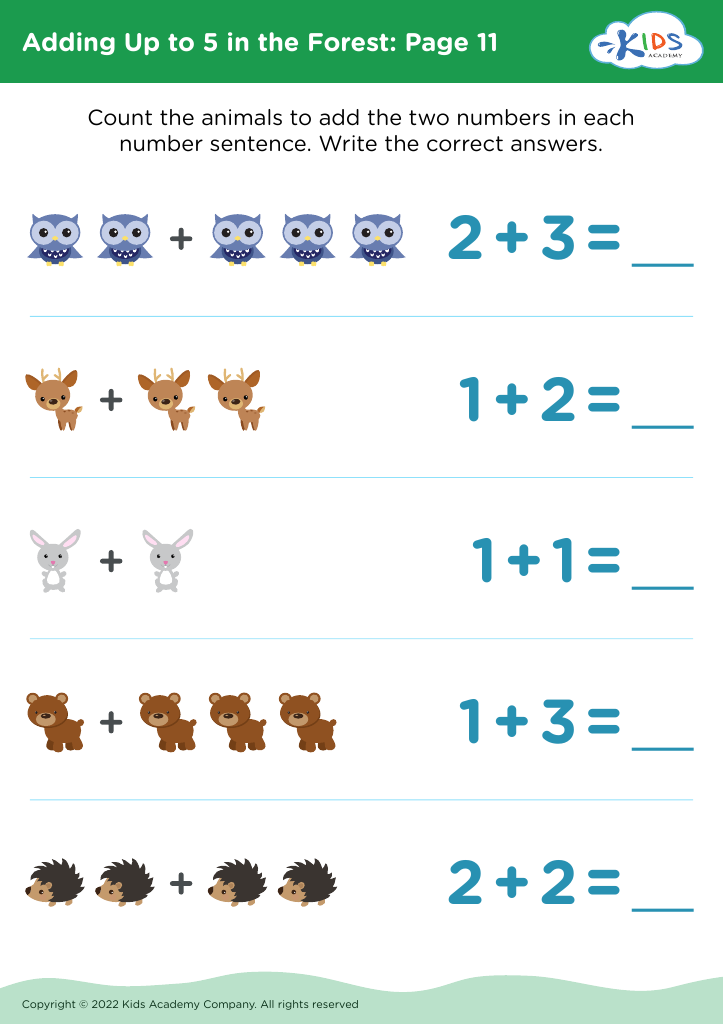
Adding Up to 5 in the Forest: Page 11
Worksheet
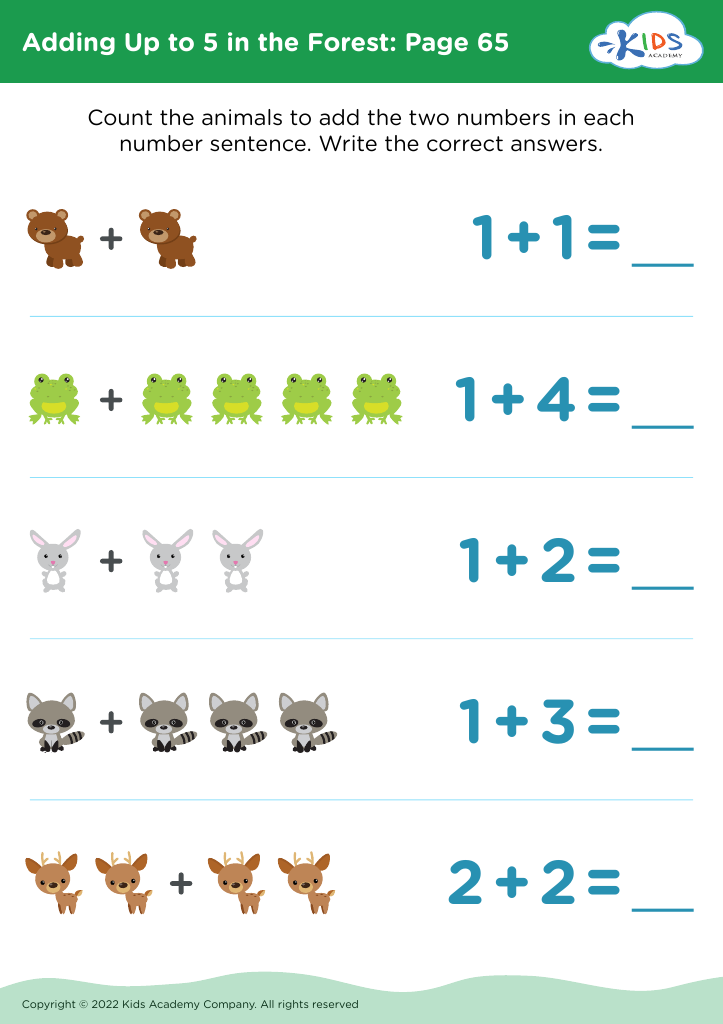
Adding Up to 5 in the Forest: Page 65
Worksheet
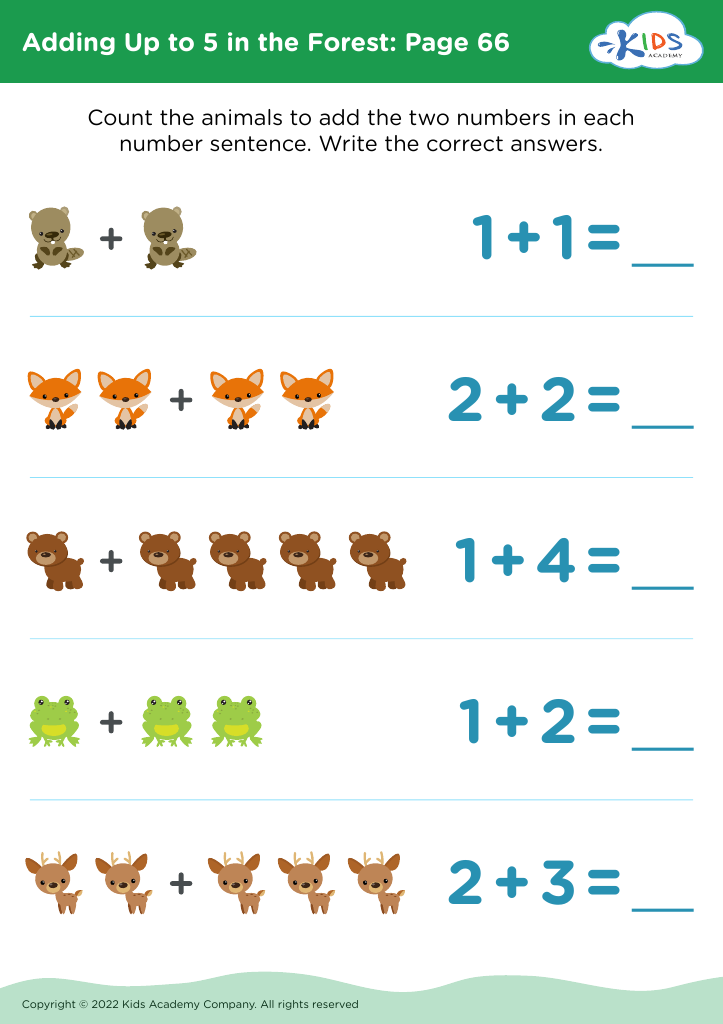
Adding Up to 5 in the Forest: Page 66
Worksheet
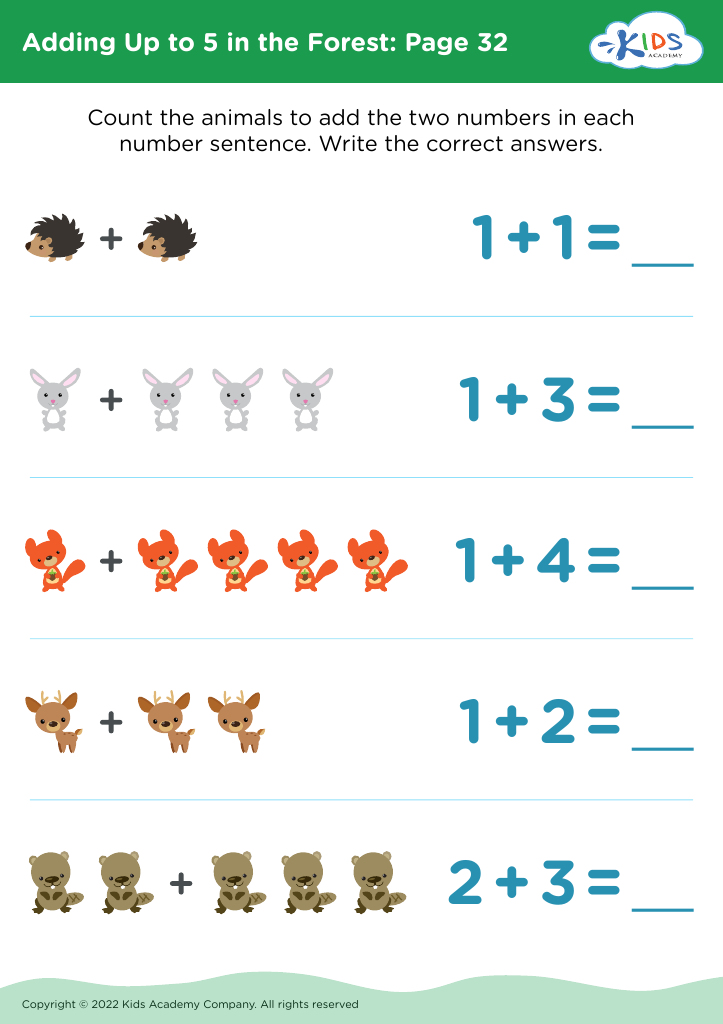
Adding Up to 5 in the Forest: Page 32
Worksheet
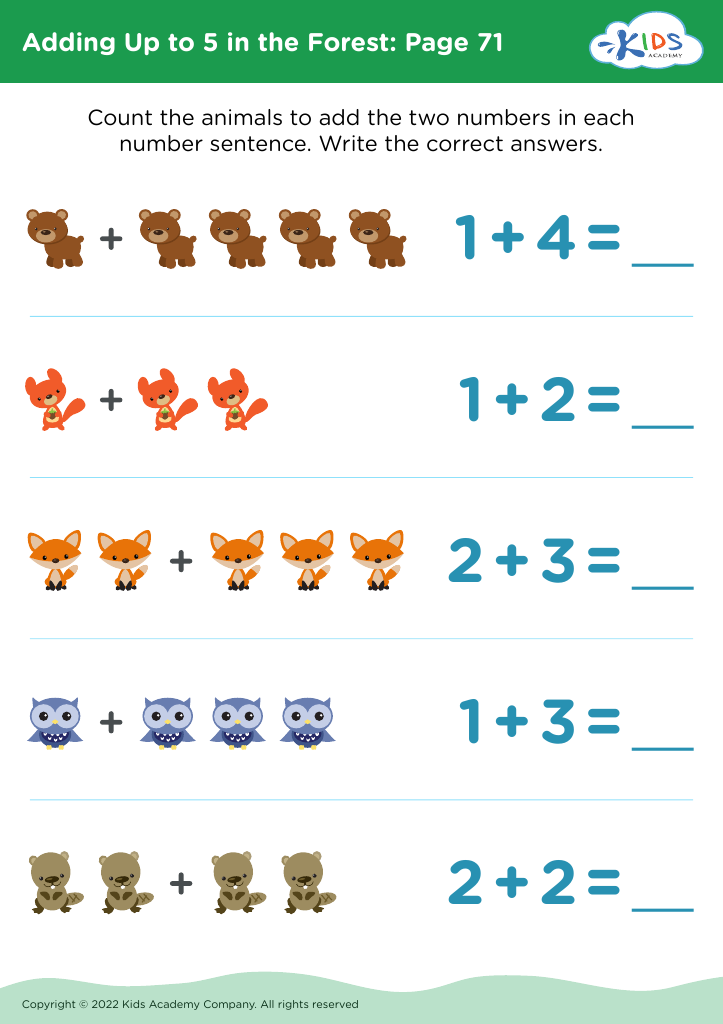
Adding Up to 5 in the Forest: Page 71
Worksheet
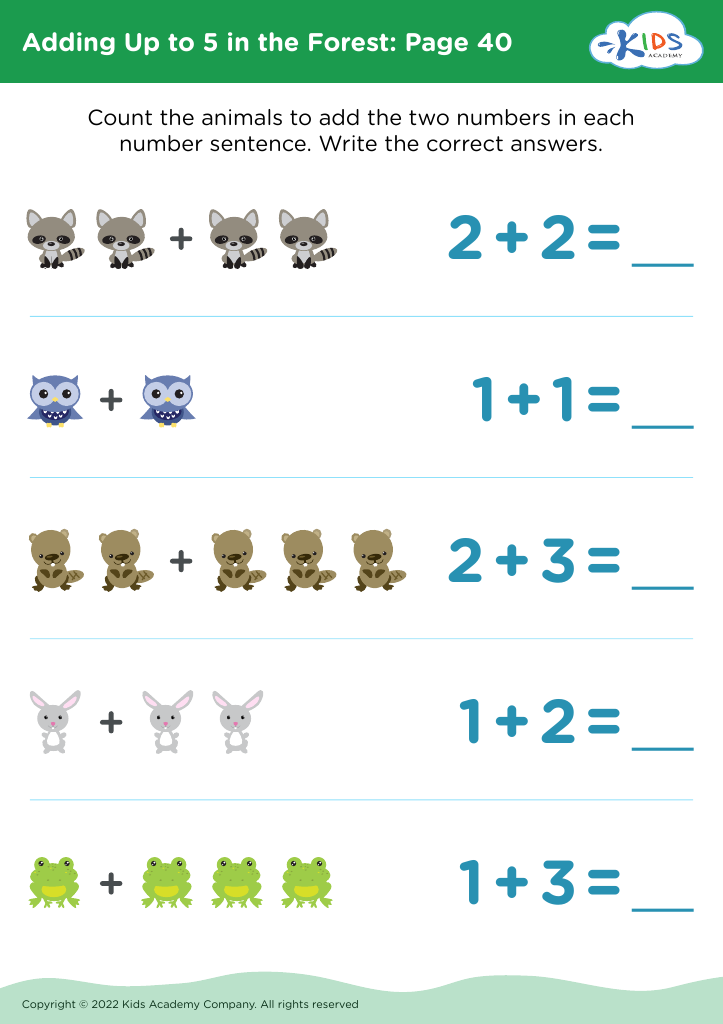
Adding Up to 5 in the Forest: Page 40
Worksheet
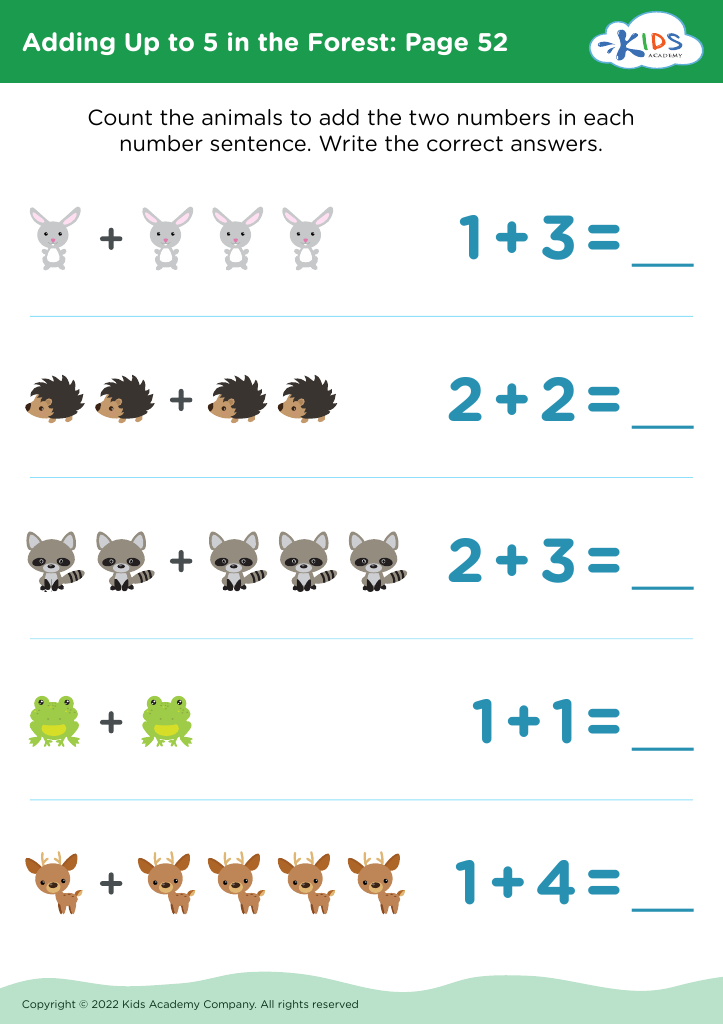
Adding Up to 5 in the Forest: Page 52
Worksheet
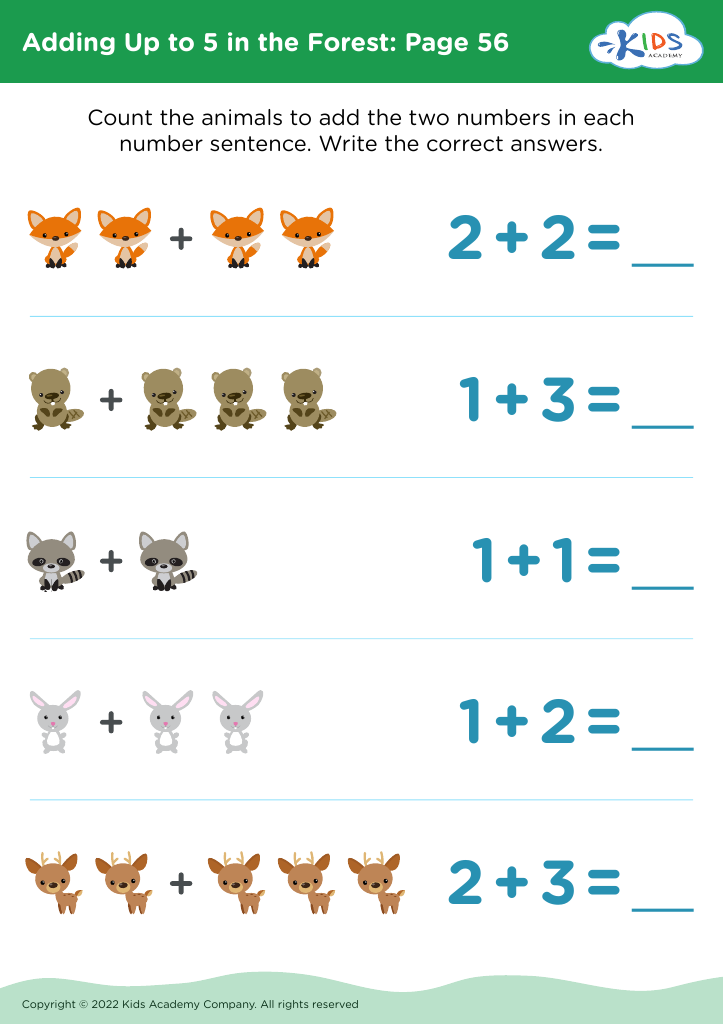
Adding Up to 5 in the Forest: Page 56
Worksheet
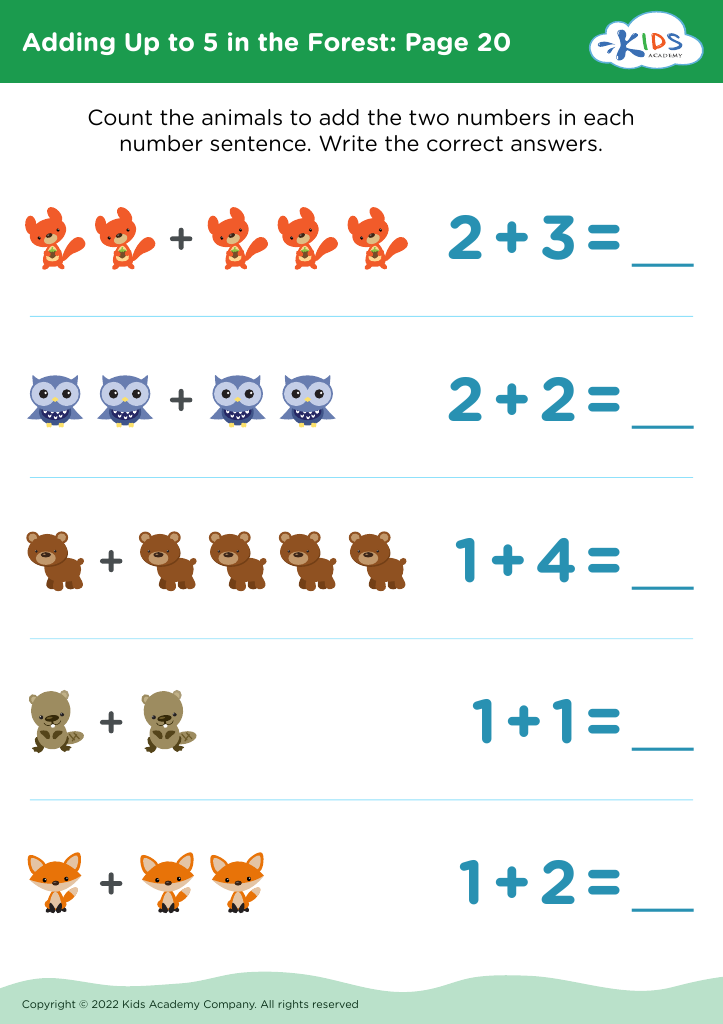
Adding Up to 5 in the Forest: Page 20
Worksheet
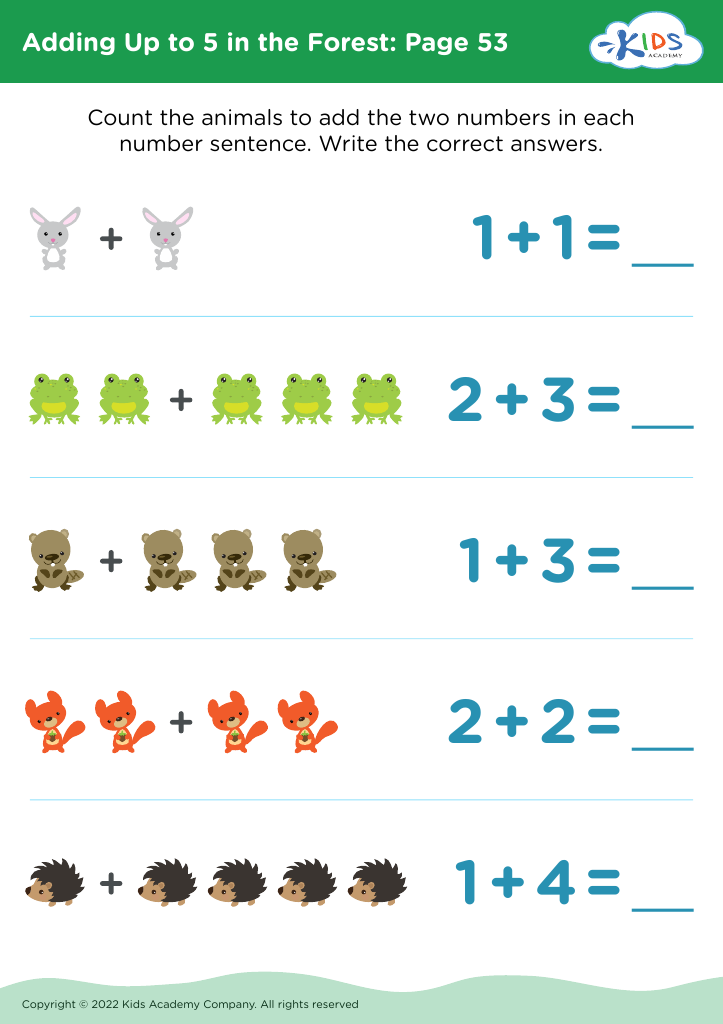
Adding Up to 5 in the Forest: Page 53
Worksheet
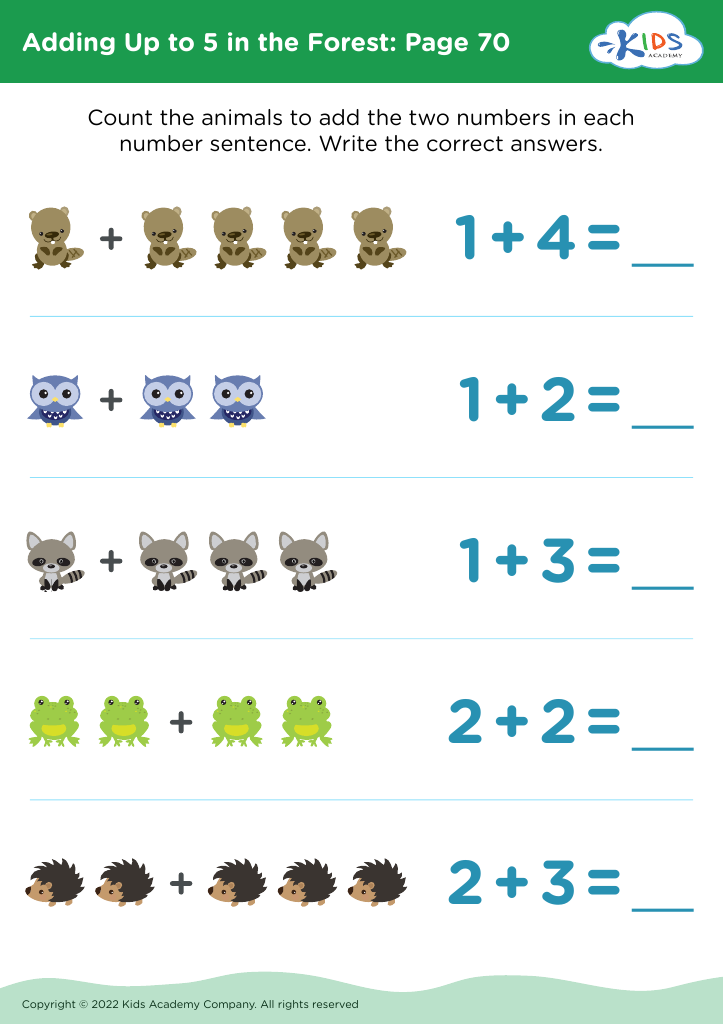
Adding Up to 5 in the Forest: Page 70
Worksheet
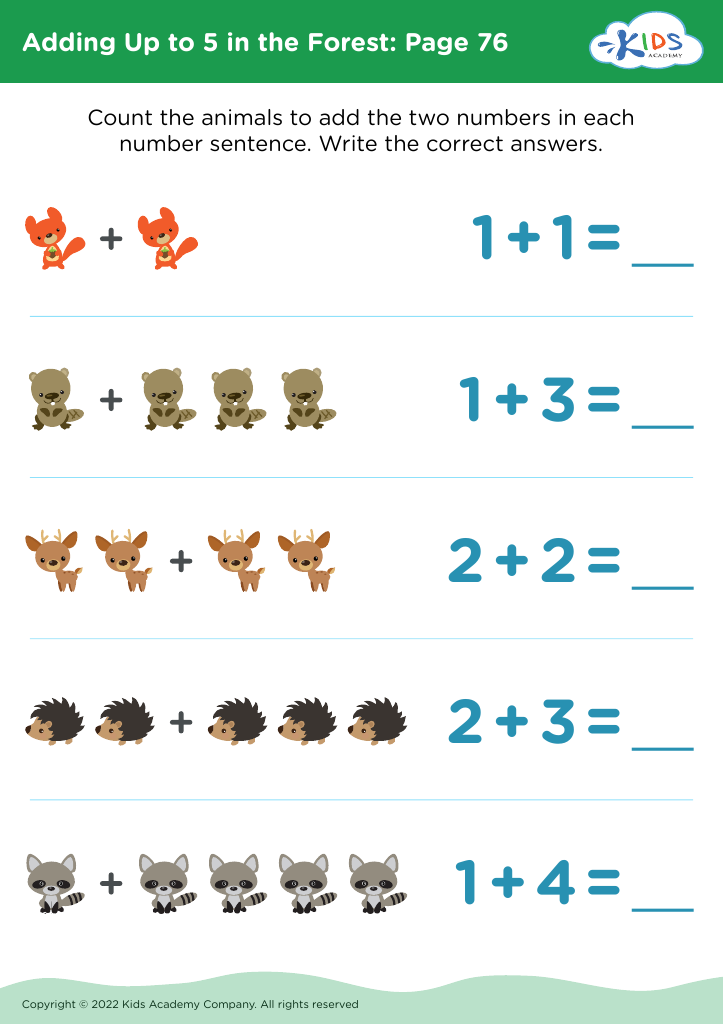
Adding Up to 5 in the Forest: Page 76
Worksheet
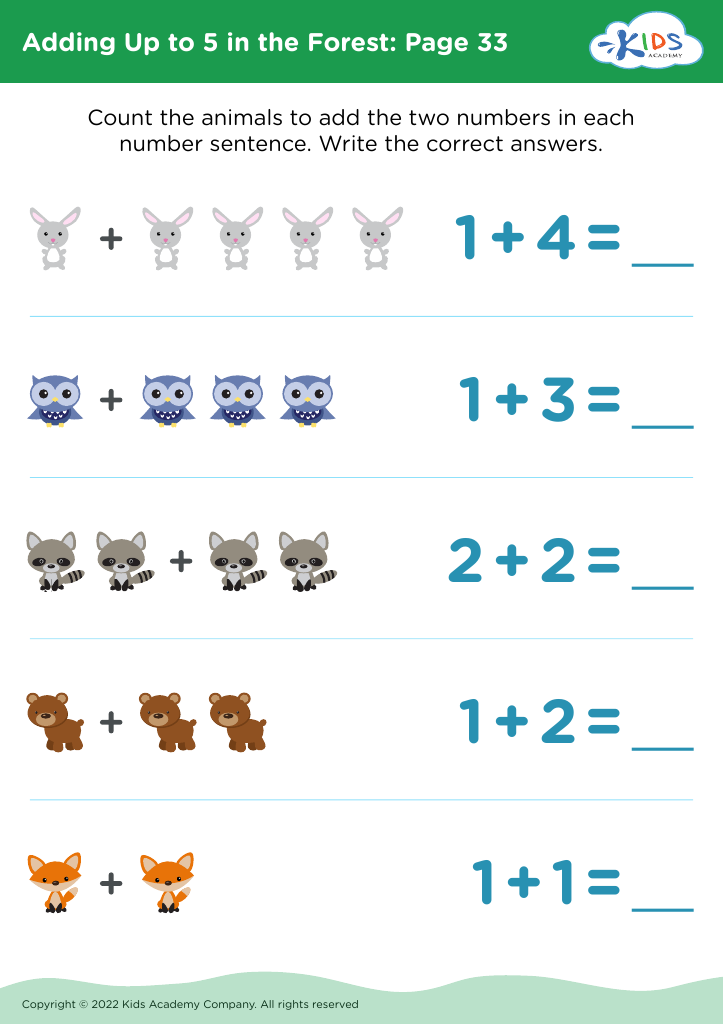
Adding Up to 5 in the Forest: Page 33
Worksheet
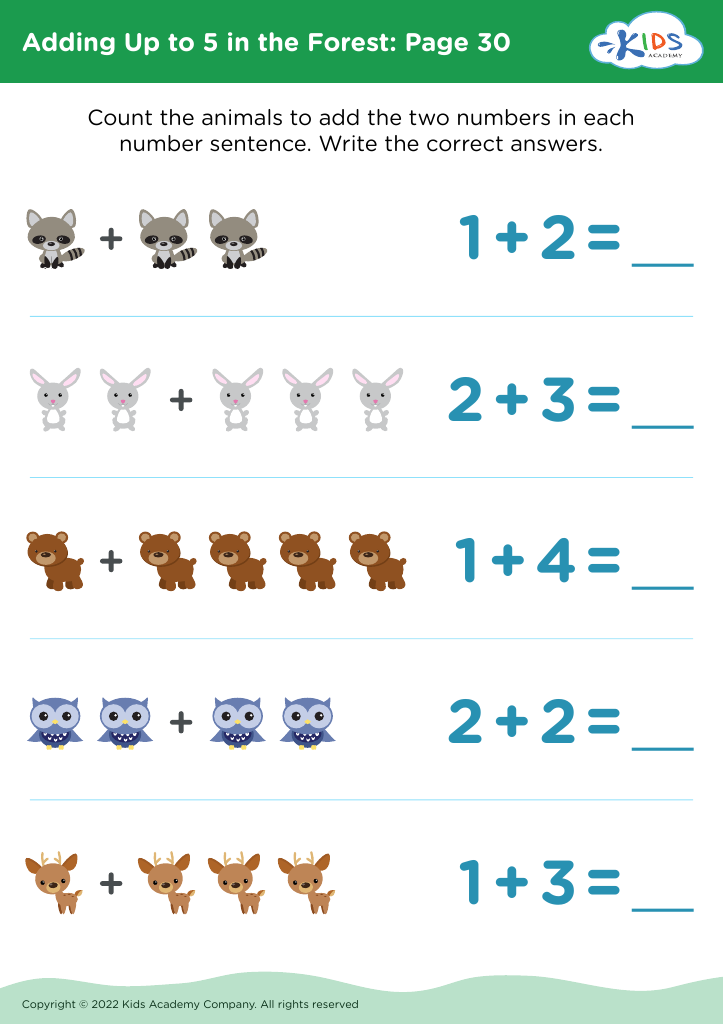
Adding Up to 5 in the Forest: Page 30
Worksheet
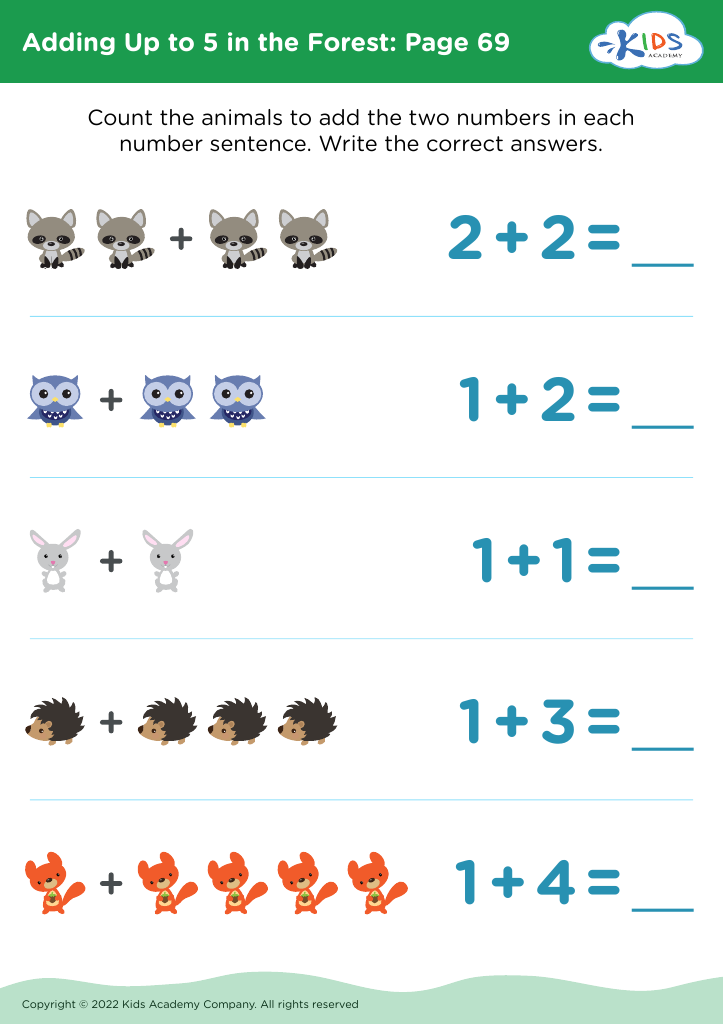
Adding Up to 5 in the Forest: Page 69
Worksheet
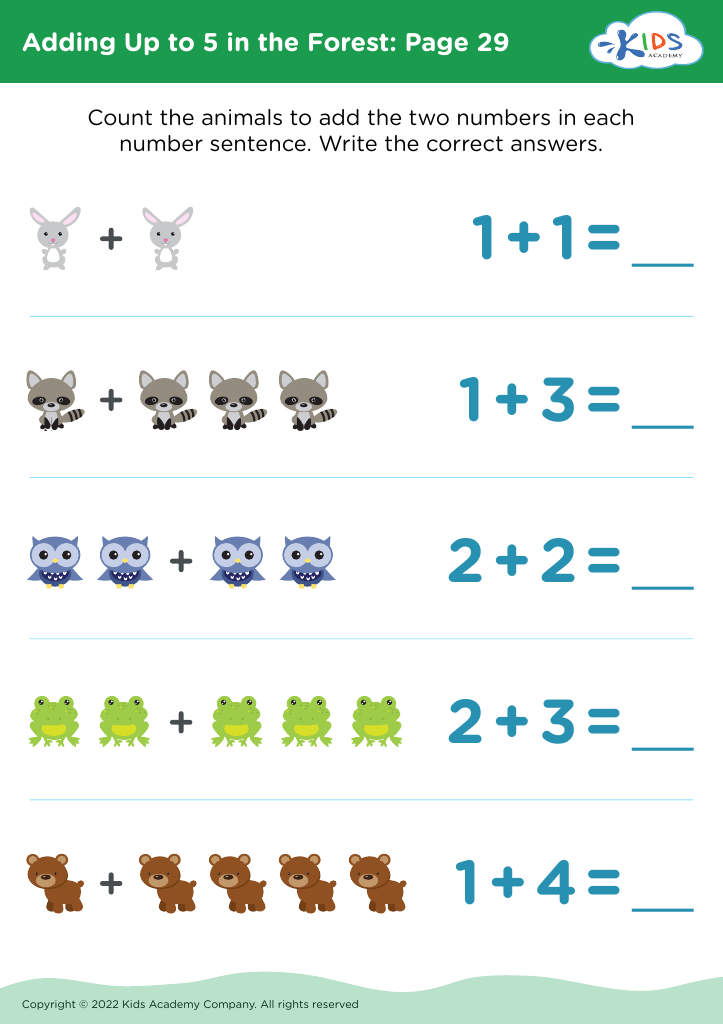
Adding Up to 5 in the Forest: Page 29
Worksheet
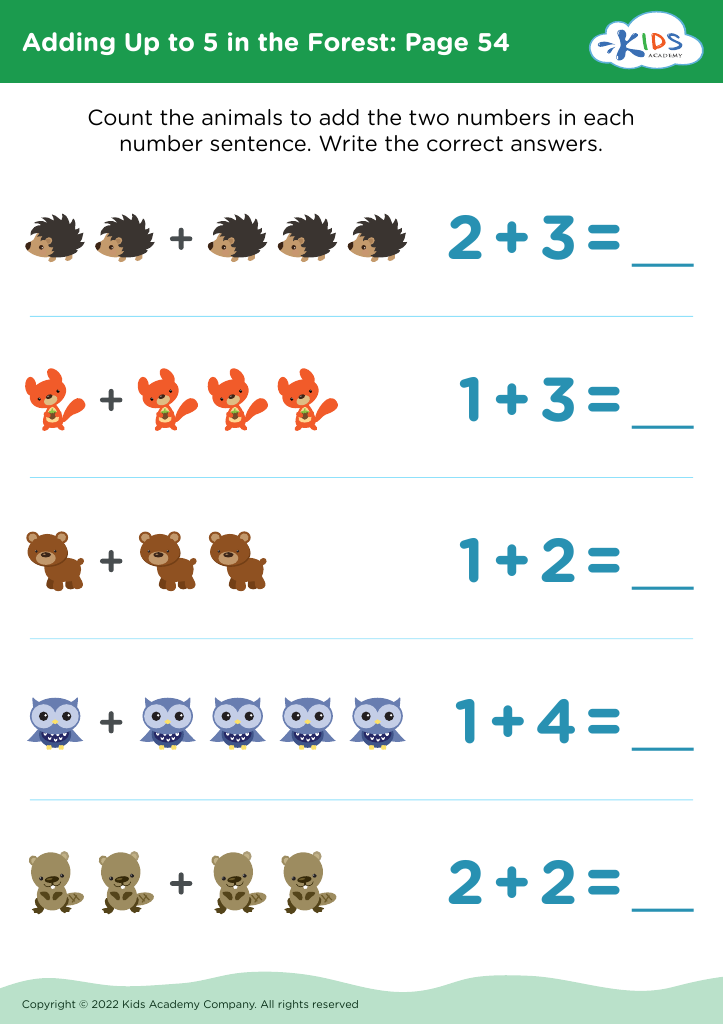
Adding Up to 5 in the Forest: Page 54
Worksheet


Parents and teachers should care about basic addition skills, like "Adding in the Forest," for 3-year-olds because these early mathematics foundations are crucial for cognitive development. At this age, children are naturally curious and learn best through play and hands-on experiences. Engaging in activities that introduce basic addition concepts helps to foster a positive attitude towards math, making it a fun and enjoyable pursuit rather than a chore.

"Adding in the Forest" provides an enriching context where children can learn through their environment. Incorporating nature enhances sensory experiences and makes learning more relatable and engaging. For instance, counting leaves, pine cones, or animals can create a real-world connection that aids in understanding numbers and values.

Moreover, developing early addition skills promotes critical thinking, problem-solving, and logical reasoning. Early math skills are strong predictors of later academic success, as they lay the groundwork for more complex mathematical concepts.

Lastly, instilling these skills at a young age encourages patience and persistence as children work through problems, helping to shape a growth mindset that will benefit them in all areas of learning. Empowering young learners with this knowledge nurtures their social and intellectual development in a holistic way.