Cognitive Development Adding in the Forest Worksheets for 3-Year-Olds
17 filtered results
-
From - To
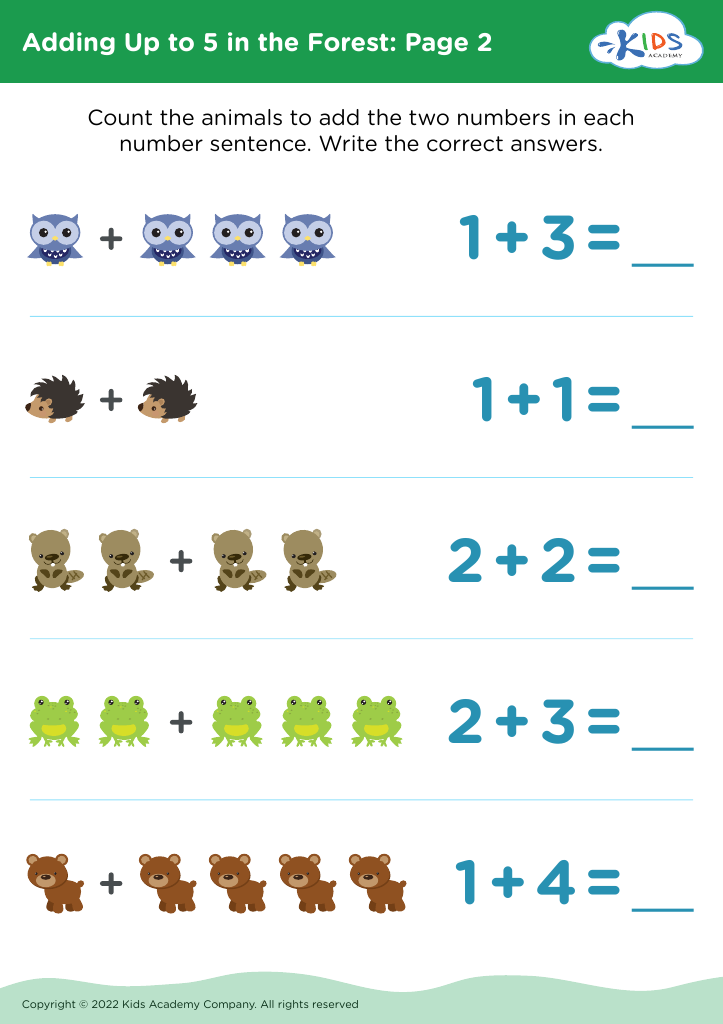
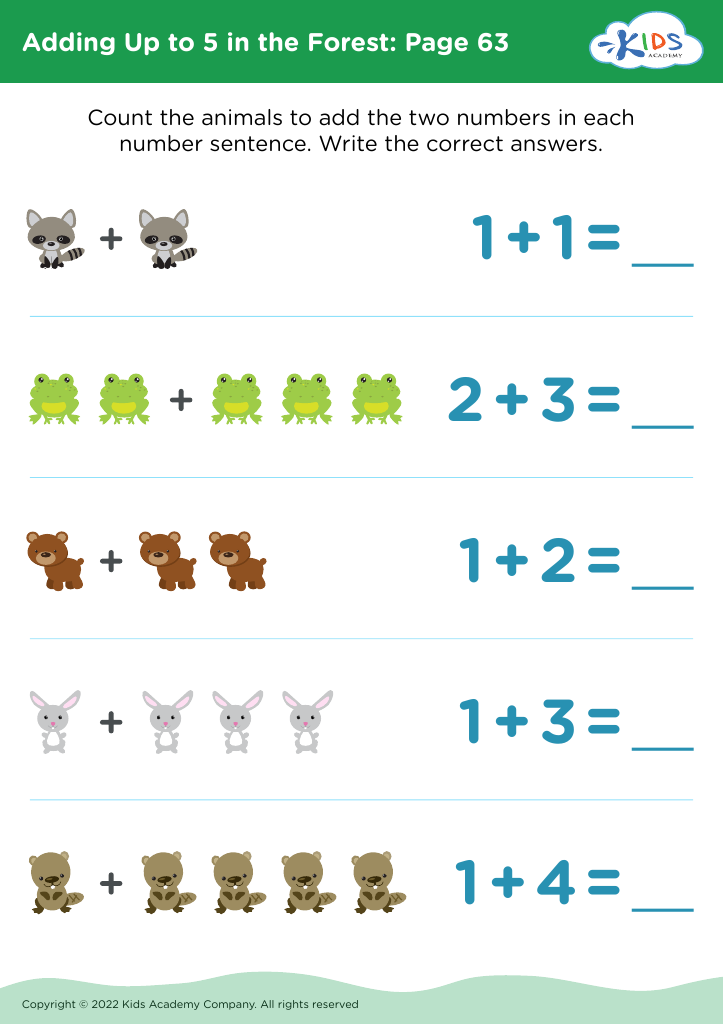
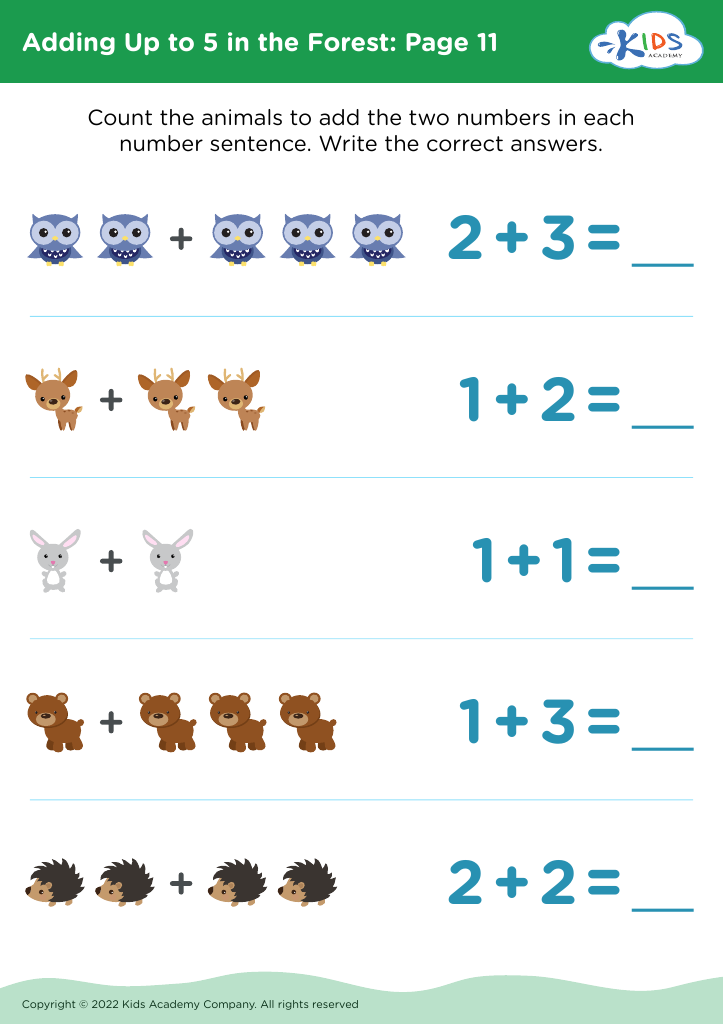
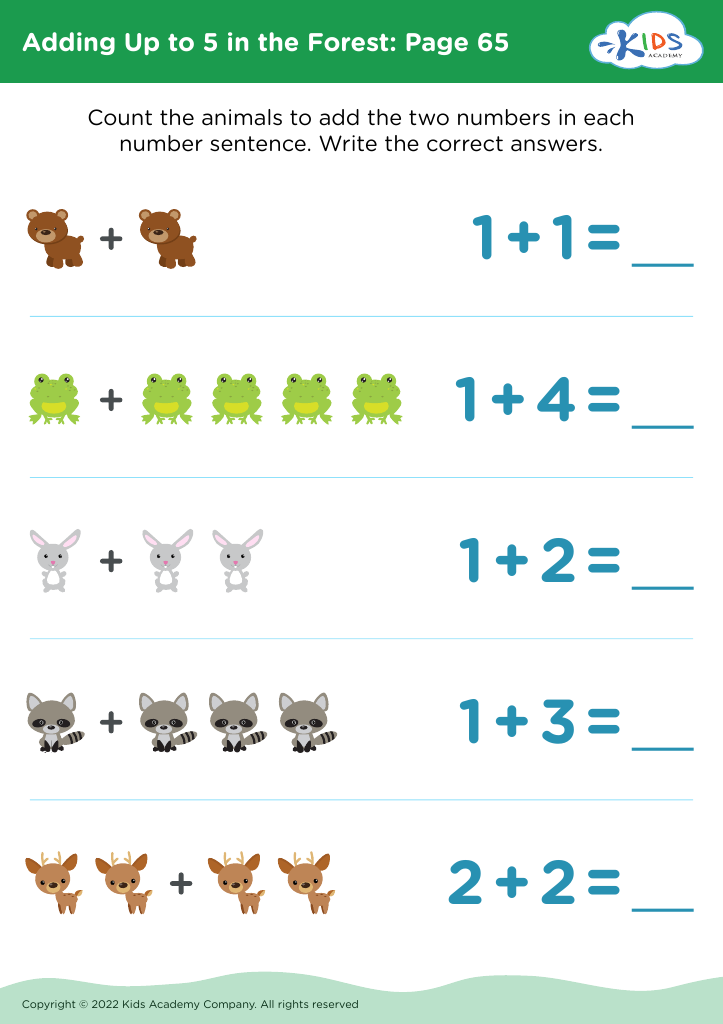
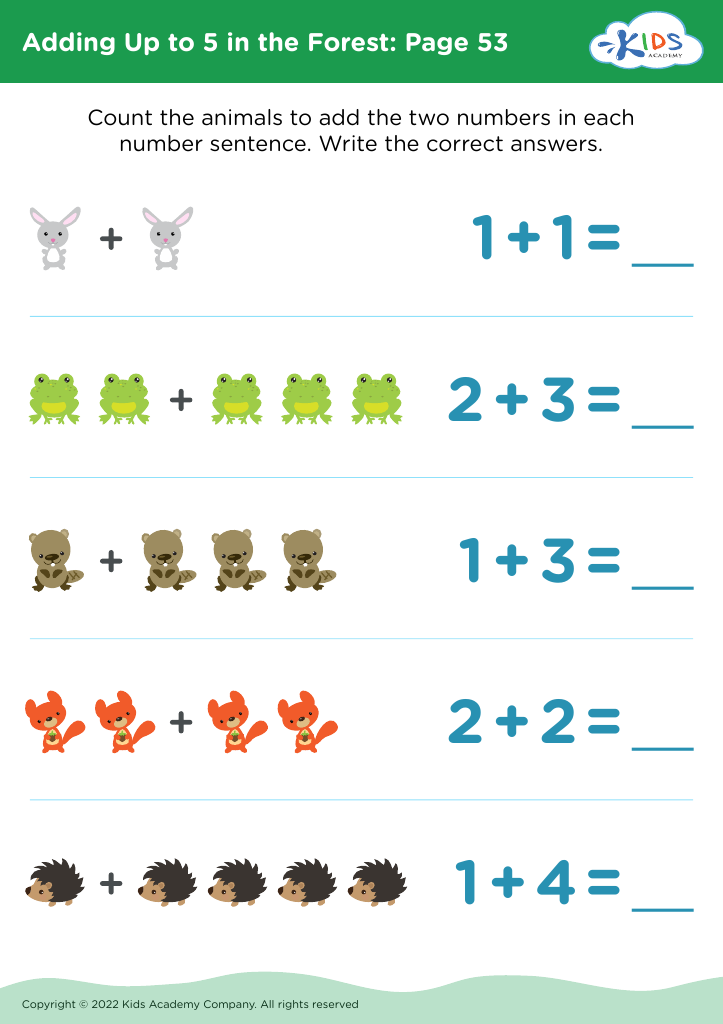
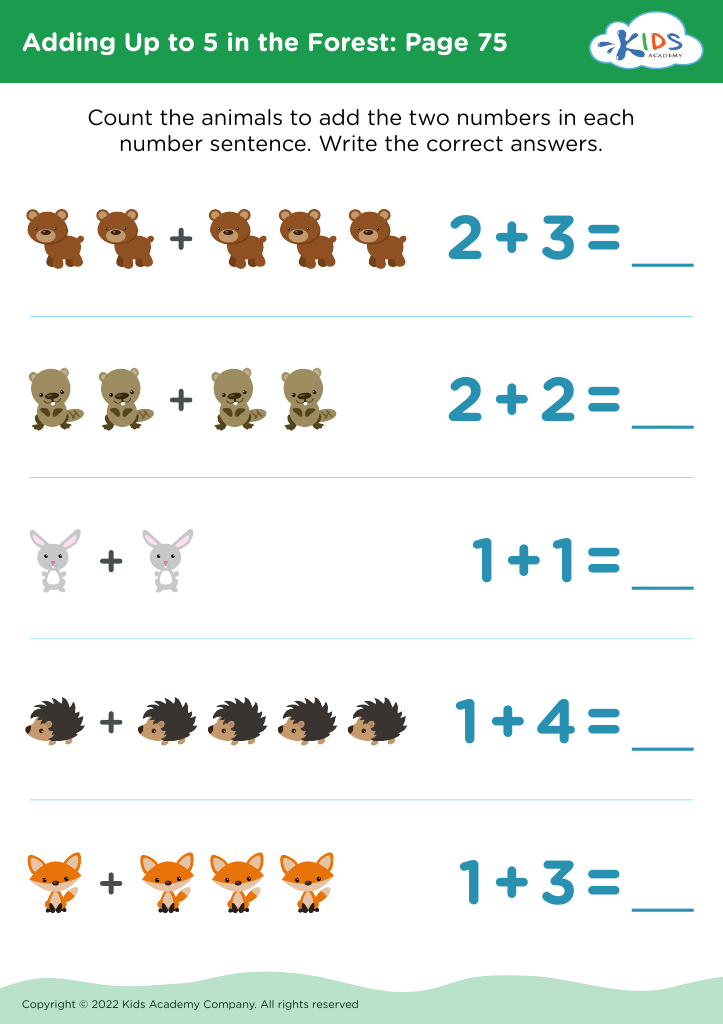
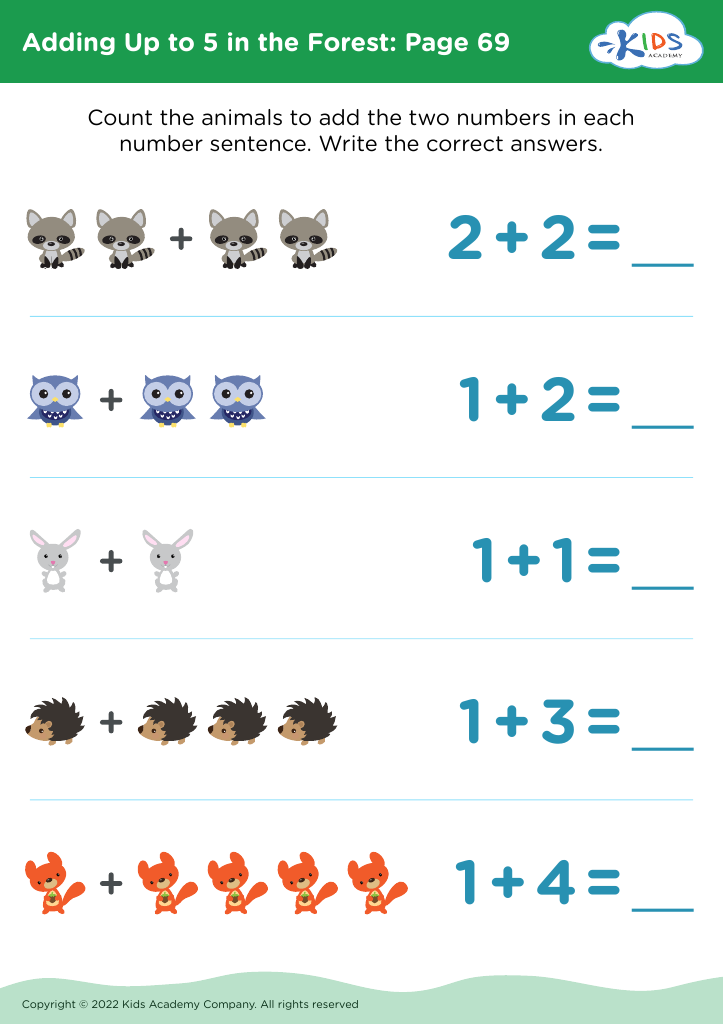
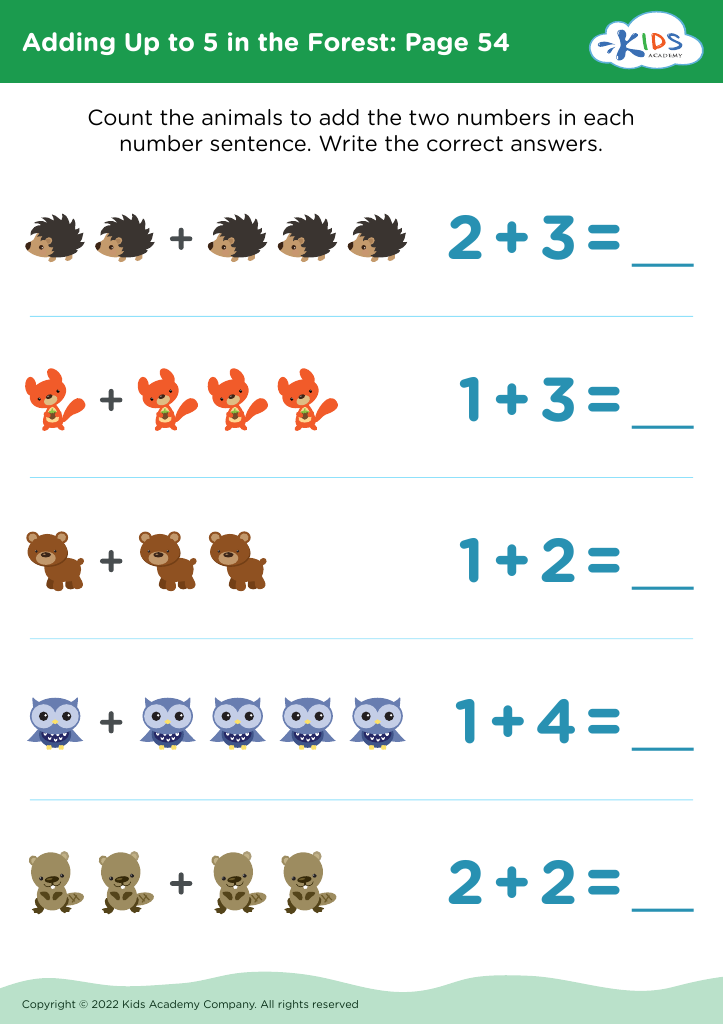
Enhance your child’s learning journey with our “Cognitive Development Adding in the Forest Worksheets for 3-Year-Olds.” These thoughtfully designed activities encourage young learners to explore basic math concepts in an engaging forest theme. Each worksheet combines colorful illustrations and simple addition tasks to foster cognitive growth, problem-solving skills, and number recognition. Guided by friendly forest animals, children will delight in improving their math abilities while developing focus and critical thinking. Perfect for parents and teachers, these worksheets provide a fun educational adventure, laying the foundation for lifelong love of learning and numeracy. Explore the magic of the forest with us today!
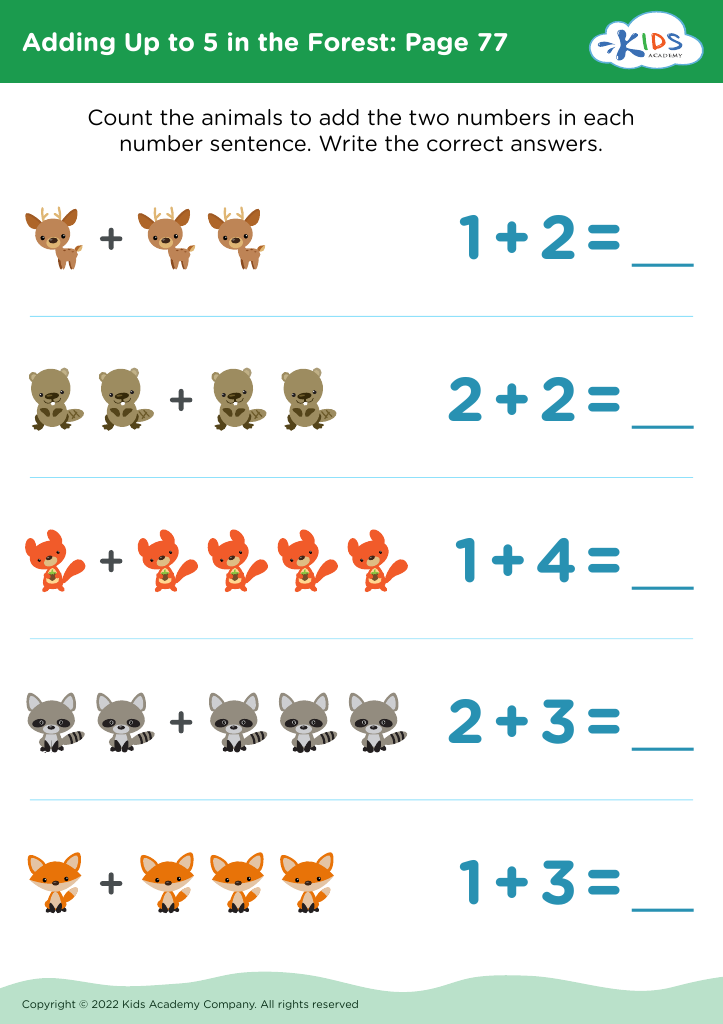
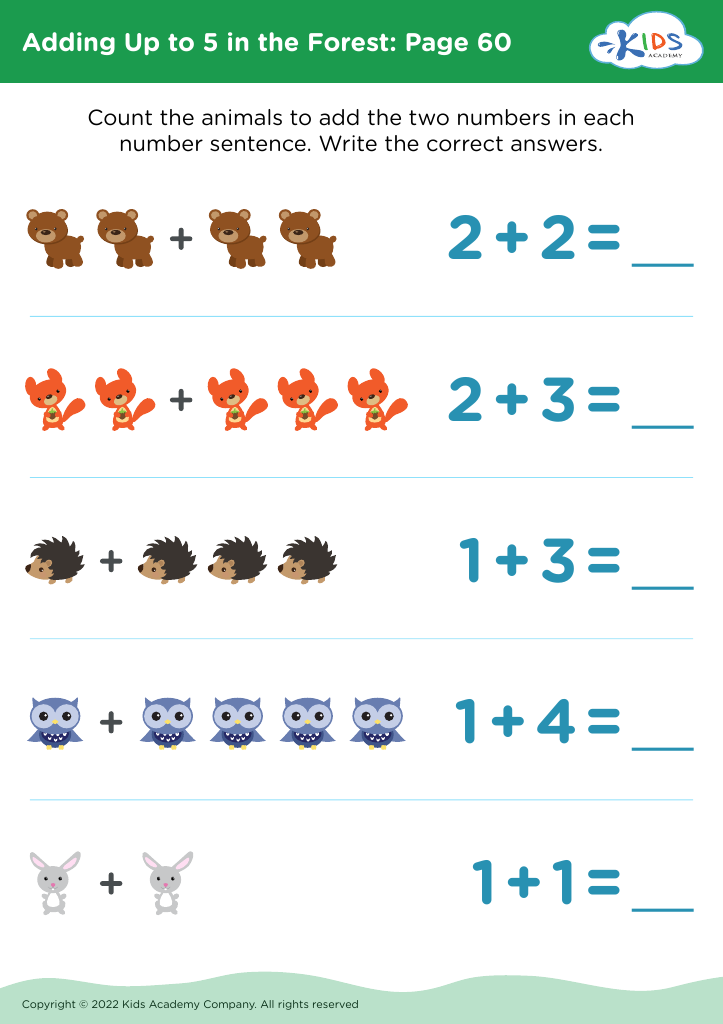
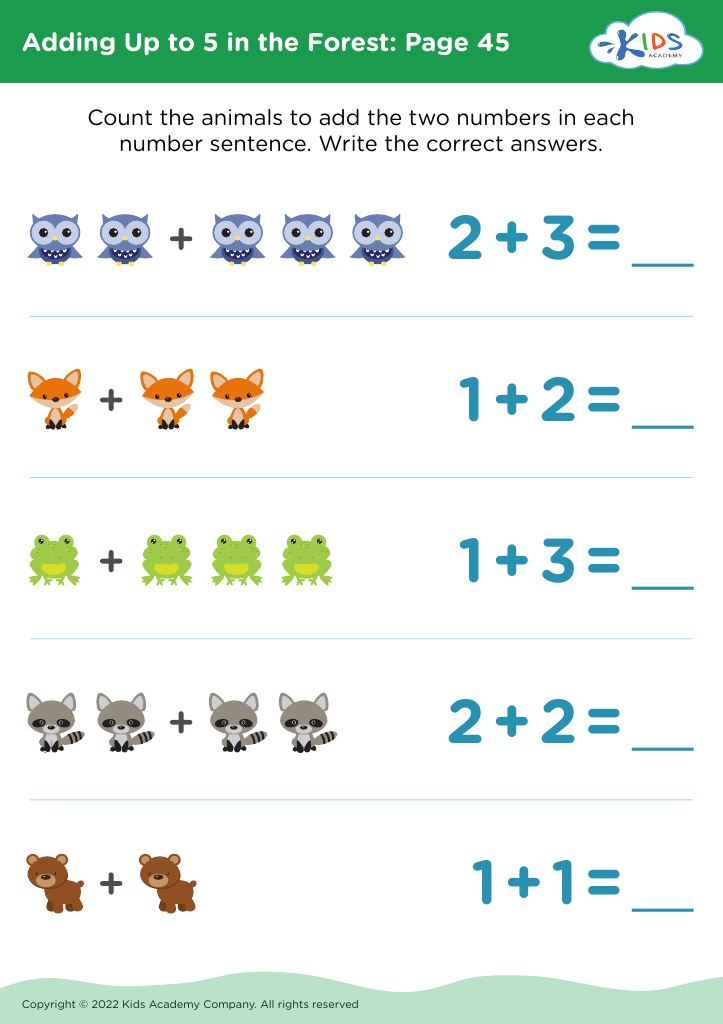
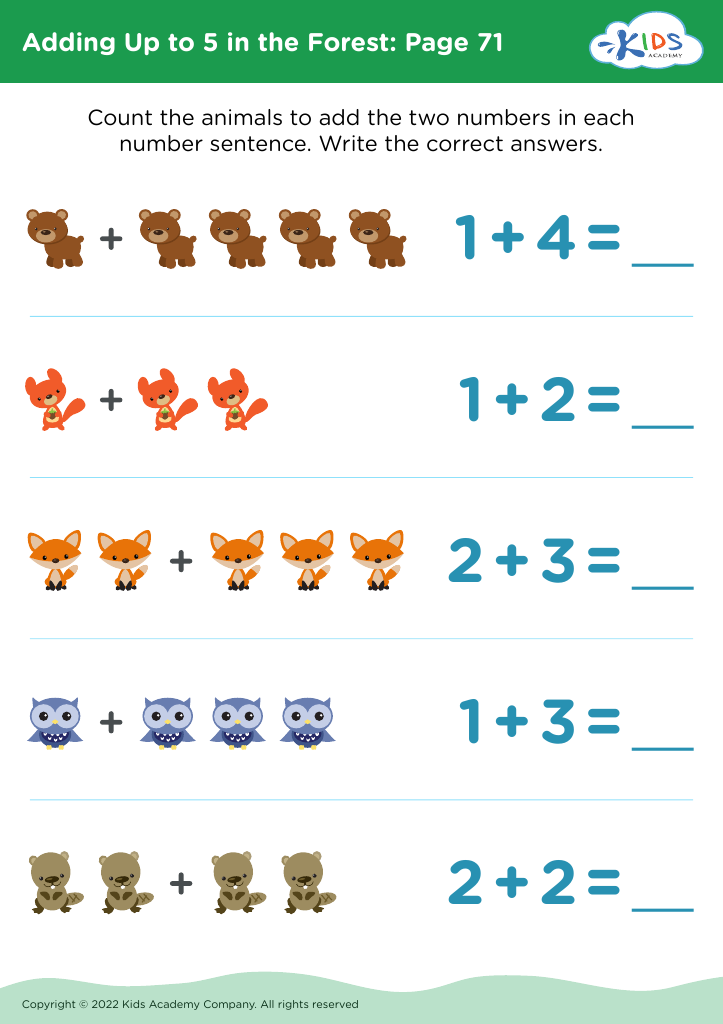
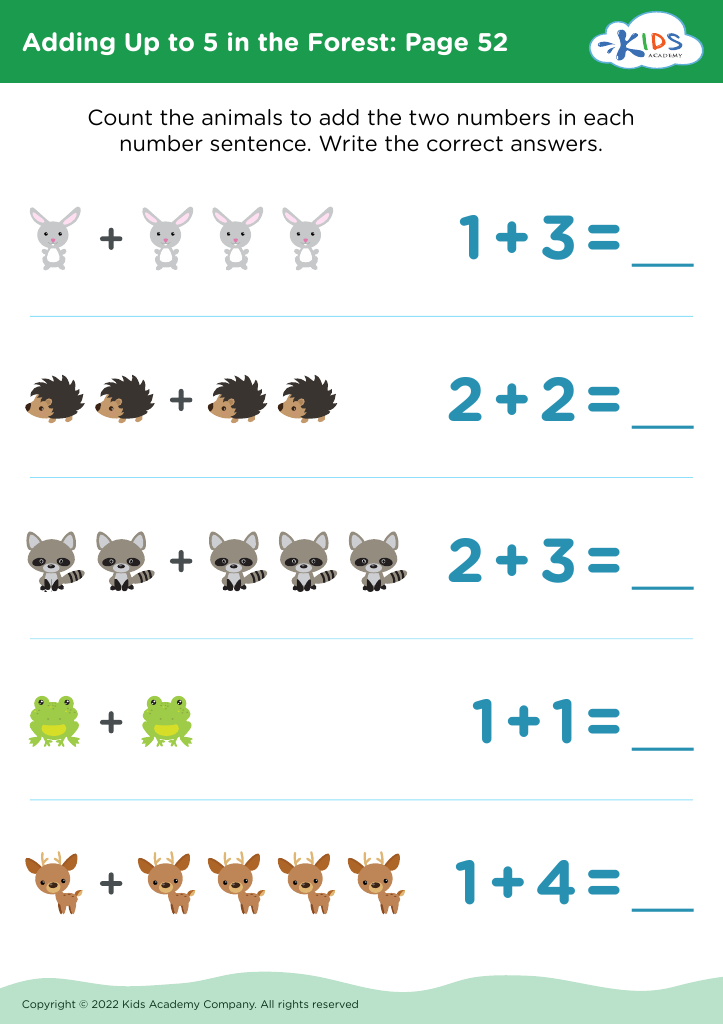
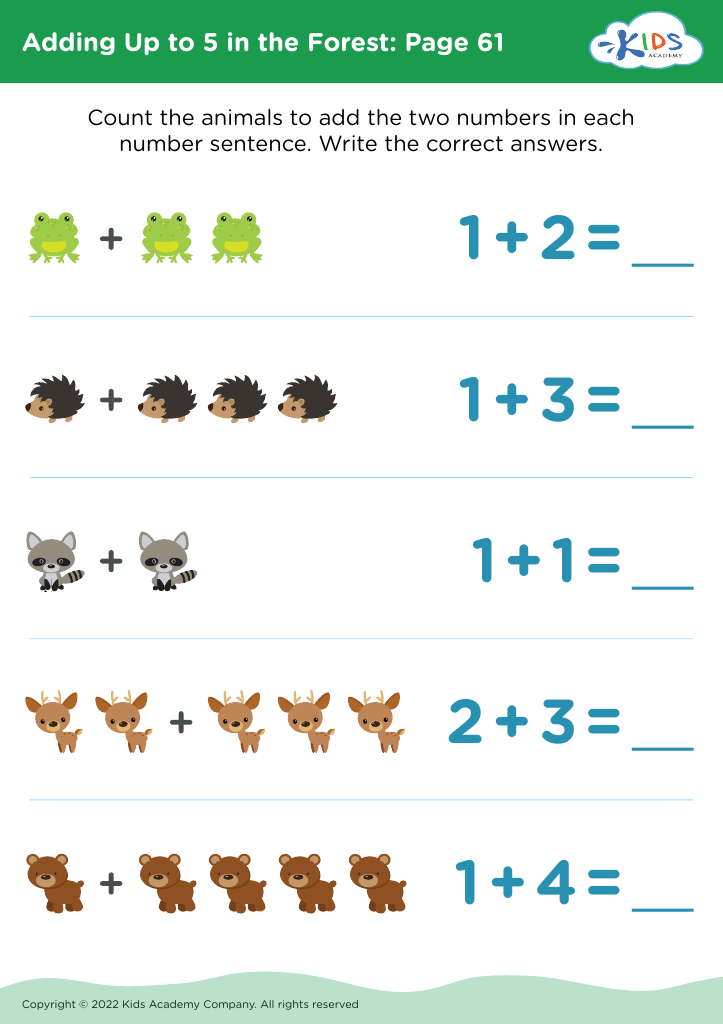
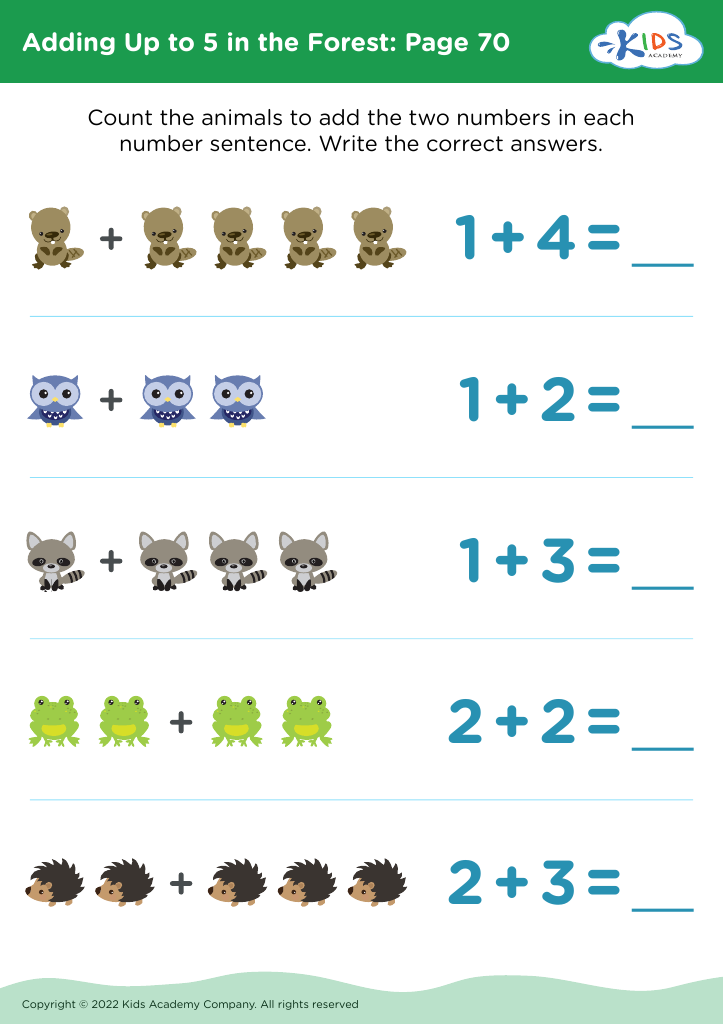
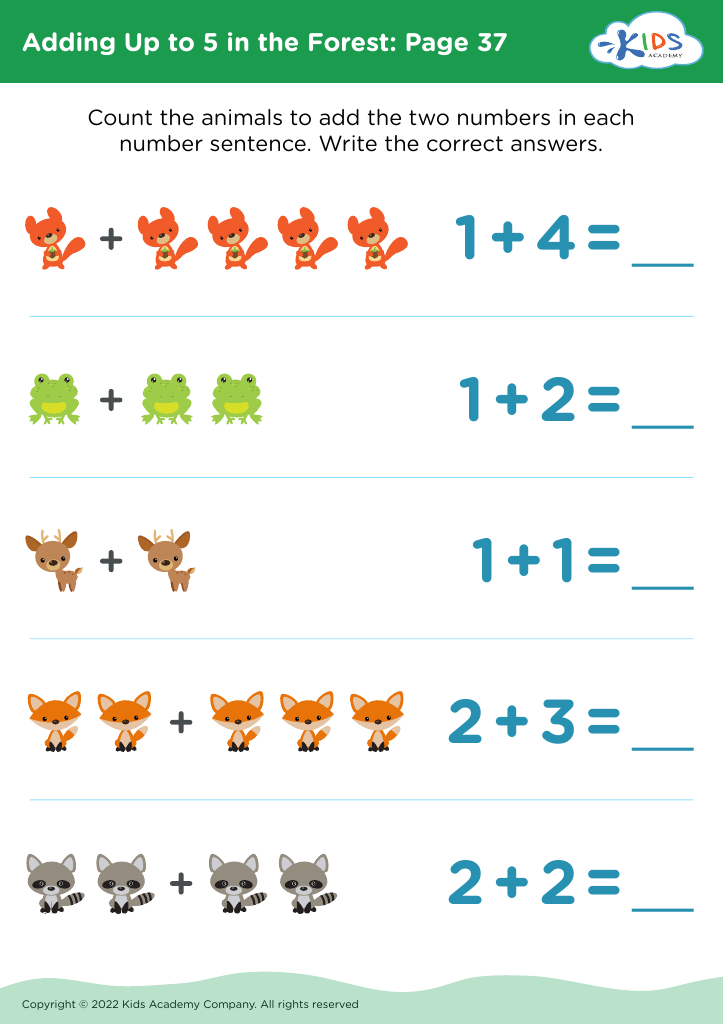
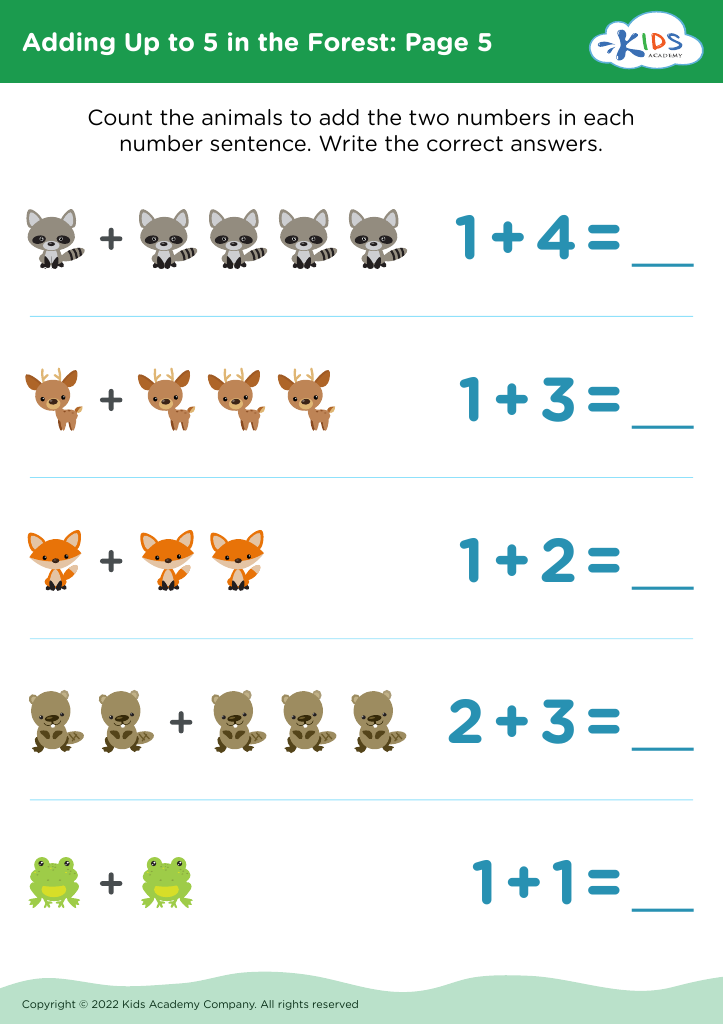



Parents and teachers should deeply care about cognitive development in the early years, particularly through activities like cognitive development adding in the forest, because these foundational experiences significantly shape a child's future learning and intellectual growth. At the age of three, children's brains are exceptionally pliable, meaning they absorb information quickly and develop new neural pathways. Engaging in math activities within the stimulating and natural environment of a forest, for instance, fosters not only cognitive growth but also a sense of curiosity and wonder.
When children participate in playful, hands-on math experiences, such as counting leaves or arranging stones, they are developing essential cognitive skills like problem-solving, critical thinking, and number sense. These skills are interconnected with other areas of development including language and motor skills. The forest environment offers rich, multi-sensory stimuli, enhancing children's observation, attention span, and memory through direct interaction with nature.
Moreover, incorporating mathematical learning in an enjoyable outdoor setting can instill a positive attitude toward learning and build a strong foundation for future academic achievement. By supporting and encouraging cognitive development in these formative years, parents and teachers are not only fostering a love for learning but also preparing children for the challenges and joys of lifelong education.