Basic Math understanding Adding in the Sea Worksheets for 3-Year-Olds
3 filtered results
-
From - To
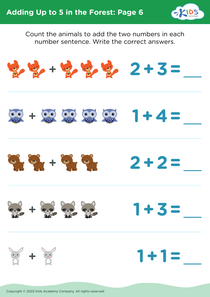
Dive into learning with our "Adding in the Sea Worksheets for 3-Year-Olds!" Tailored to foster basic math understanding, these engaging activities introduce young learners to the joy of addition through a vibrant underwater theme. Kids will love counting colorful sea creatures while building foundational skills in a fun and interactive way. Perfect for early math practice, these worksheets enhance counting abilities, encourage number recognition, and develop problem-solving skills. Whether at home or in the classroom, your little ones will embark on a marine adventure that makes learning addition exciting and accessible. Download now to begin the journey!
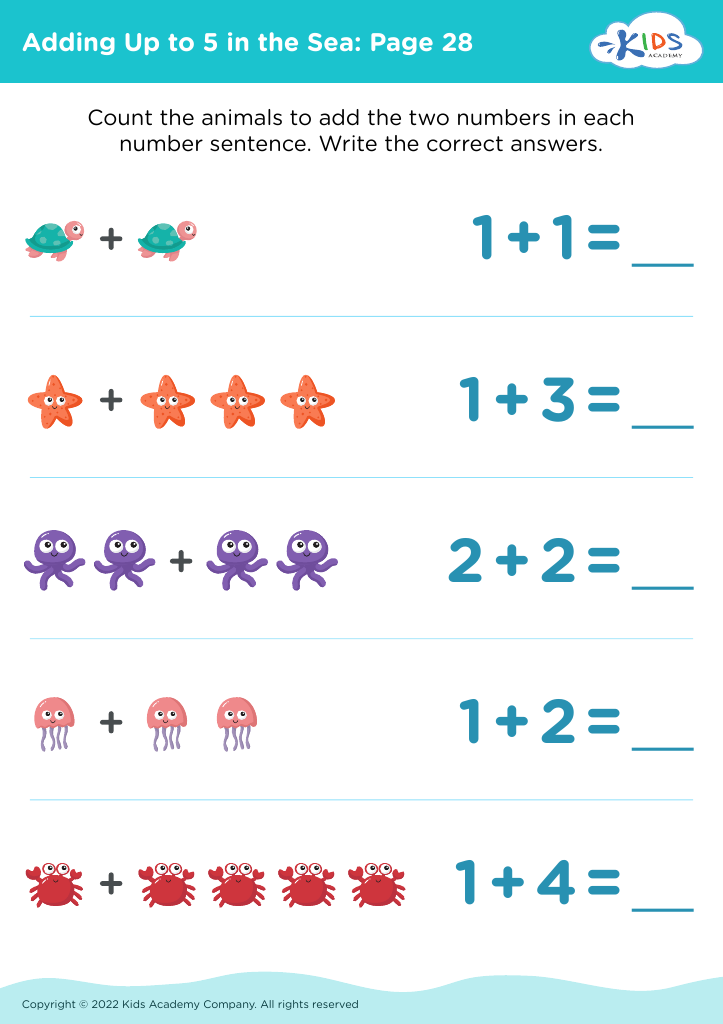
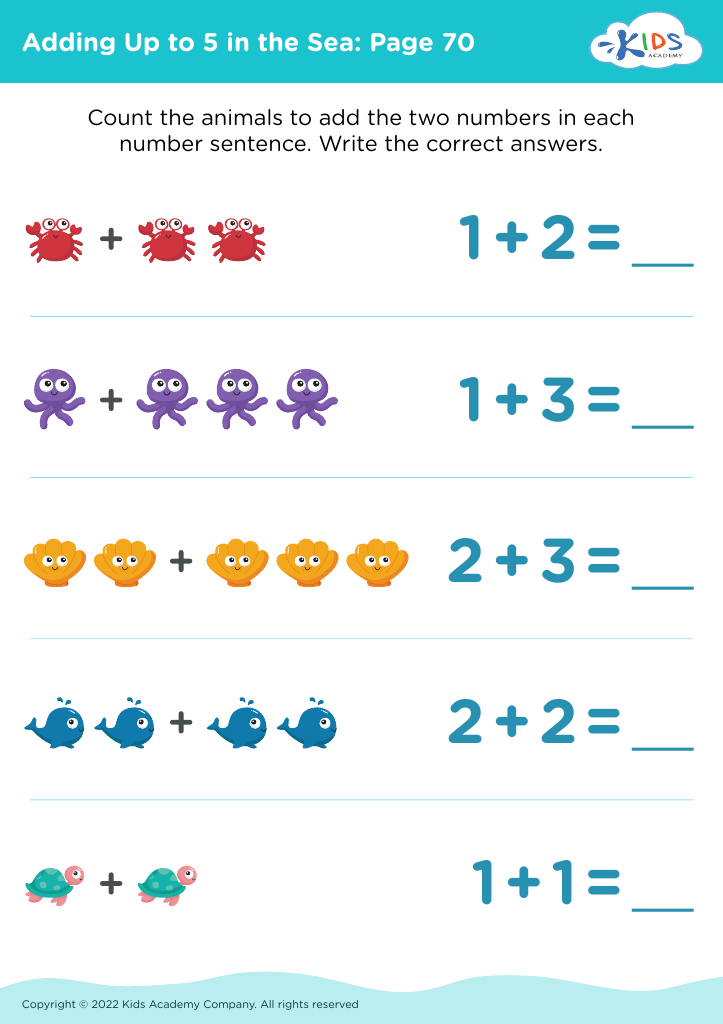
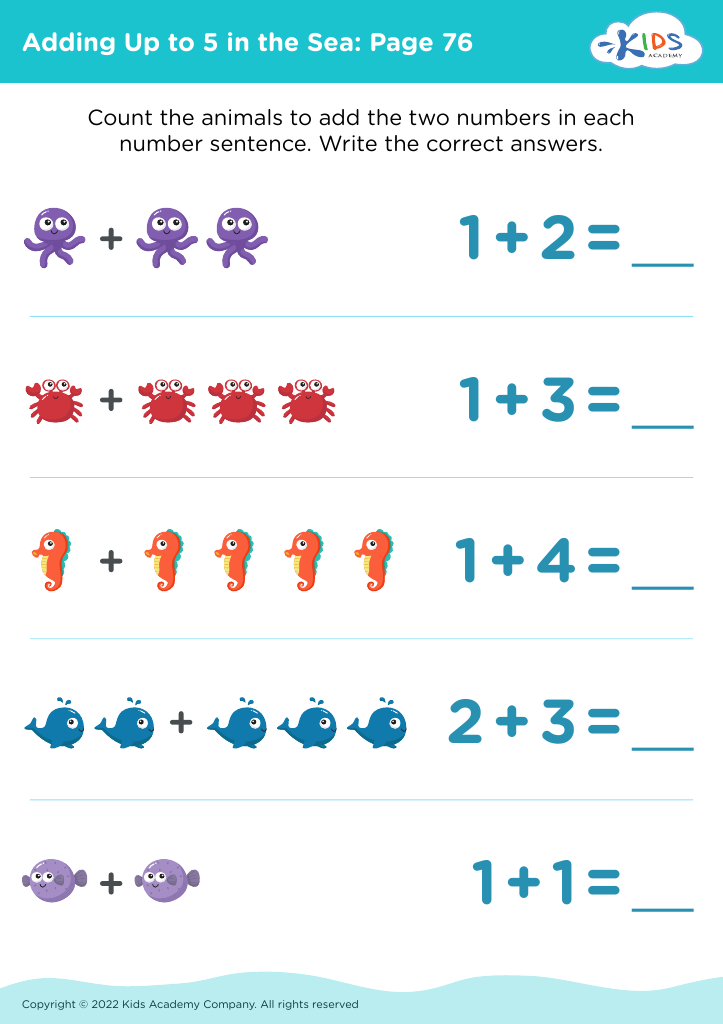



Parents and teachers should prioritize basic math understanding, such as simple addition, for 3-year-olds because it lays a critical foundation for future learning and cognitive development. Activities like "Adding in the Sea," where children count and add sea creatures, make these concepts accessible and engaging for young minds. Early exposure to math concepts promotes number sense, which is the ability to recognize, relate, and work with numbers, setting the stage for more complex math skills later on.
Furthermore, learning through playful interaction, like counting starfish or seashells, keeps children engaged and inquisitive, fostering a positive attitude towards math. This approach harnesses children's natural curiosity and anchors math in real-world contexts, helping them see its practical application. Integrating math into everyday activities also aids in the development of problem-solving skills and logical thinking, which are essential across all areas of life and learning.
Early math skills are linked to better academic performance in not just math but also other subjects like reading and science. Guided activities that make learning fun and interactive encourage young children’s growth in critical early learning milestones, establishing a confident, problem-solving mindset that benefits lifelong educational pursuits.