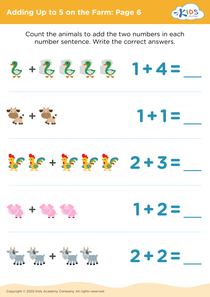
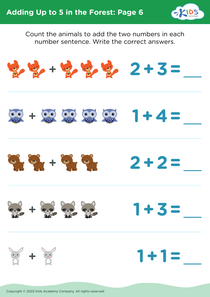
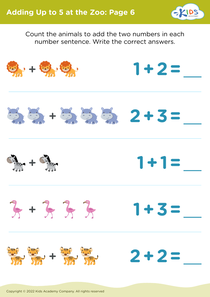
Fine motor skills (writing) Adding in the Sea Worksheets for 3-Year-Olds
13 filtered results
-
From - To
Enhance your child's fine motor skills with our "Adding in the Sea" worksheets, designed specifically for 3-year-olds. These engaging activities uniquely combine early math concepts with fun ocean-themed illustrations. As little learners trace, color, and complete various writing tasks, they'll improve their grip, coordination, and control—essential skills for writing! Through interactive exercises, children will enjoy counting and adding aquatic creatures, all while developing their handwriting abilities. Perfect for at-home learning or preschool activities, our worksheets not only encourage mathematical understanding but also foster creativity and a love for learning. Dive into a world of educational fun today!
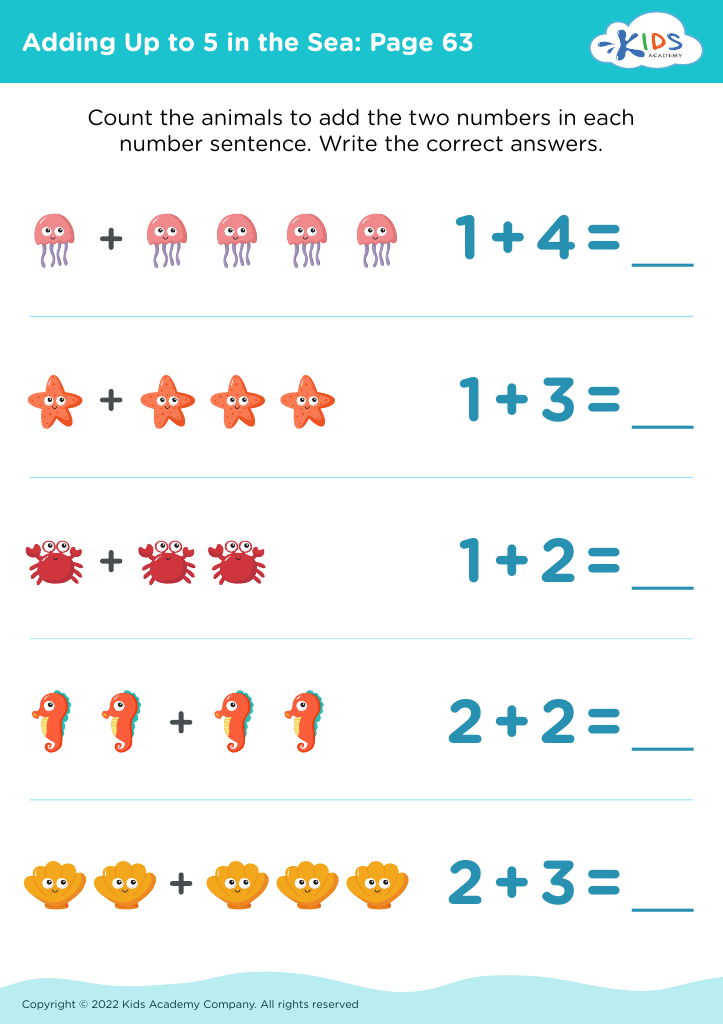
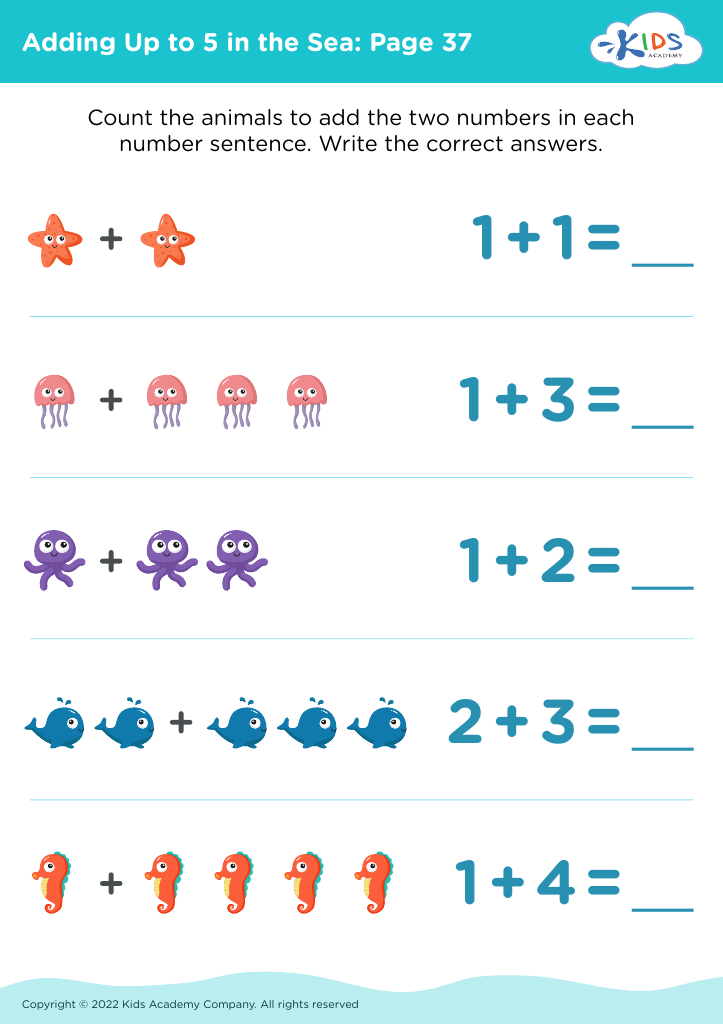
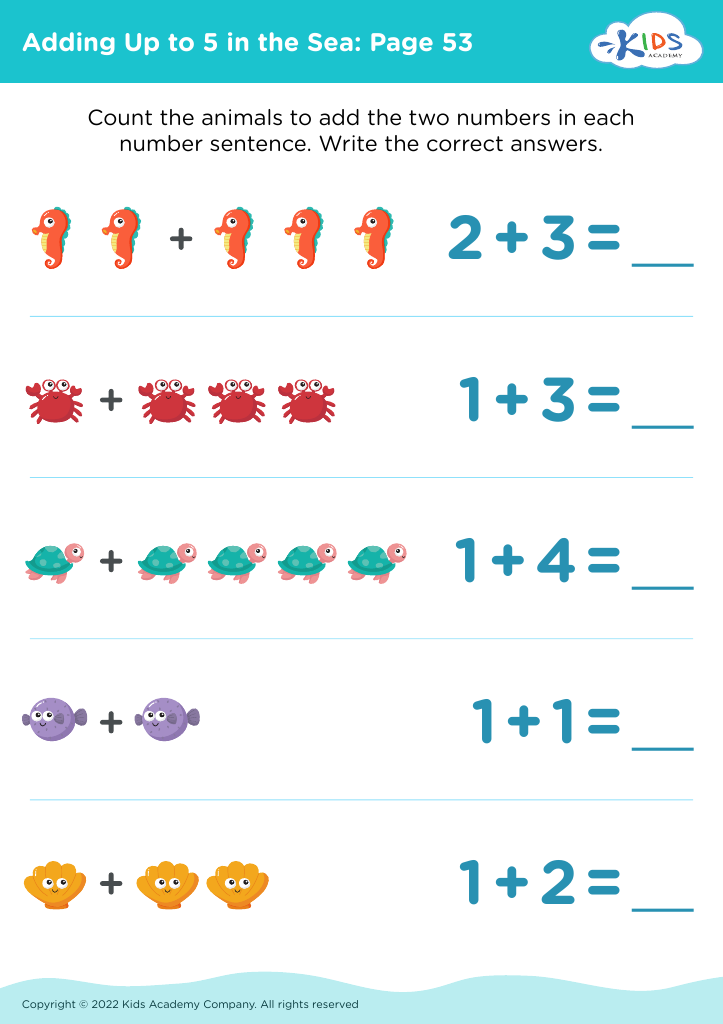
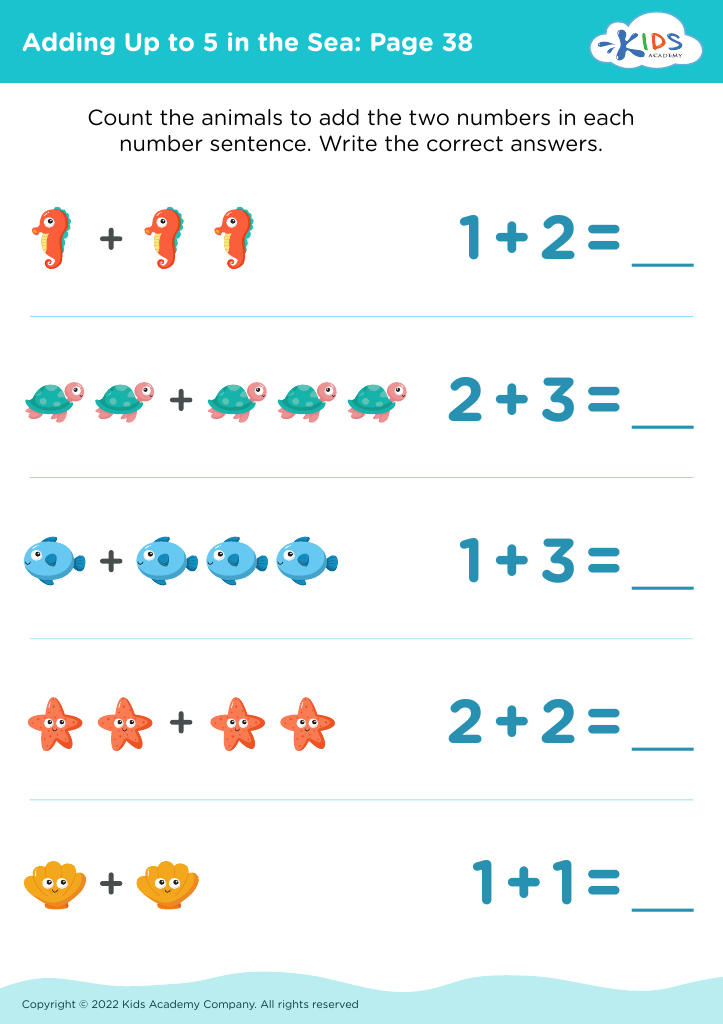
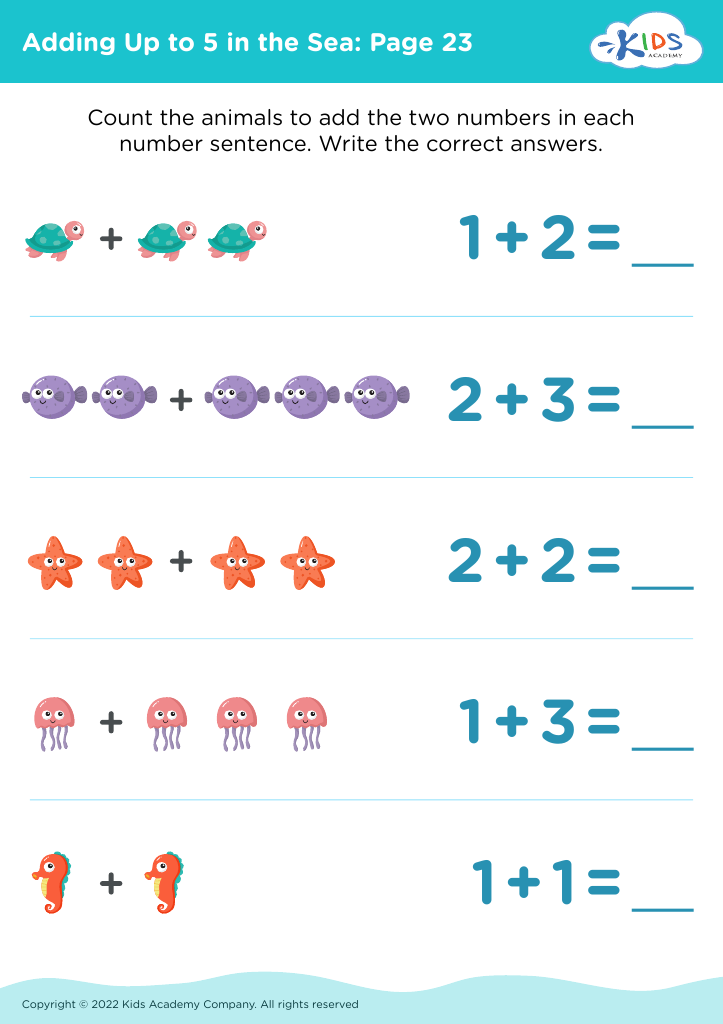
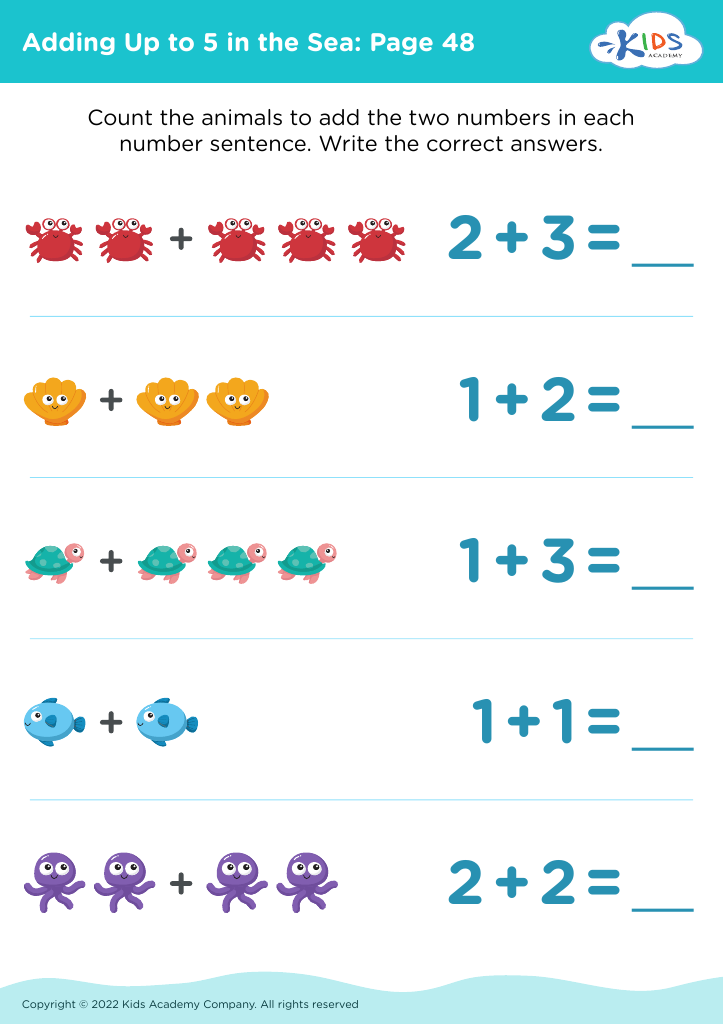
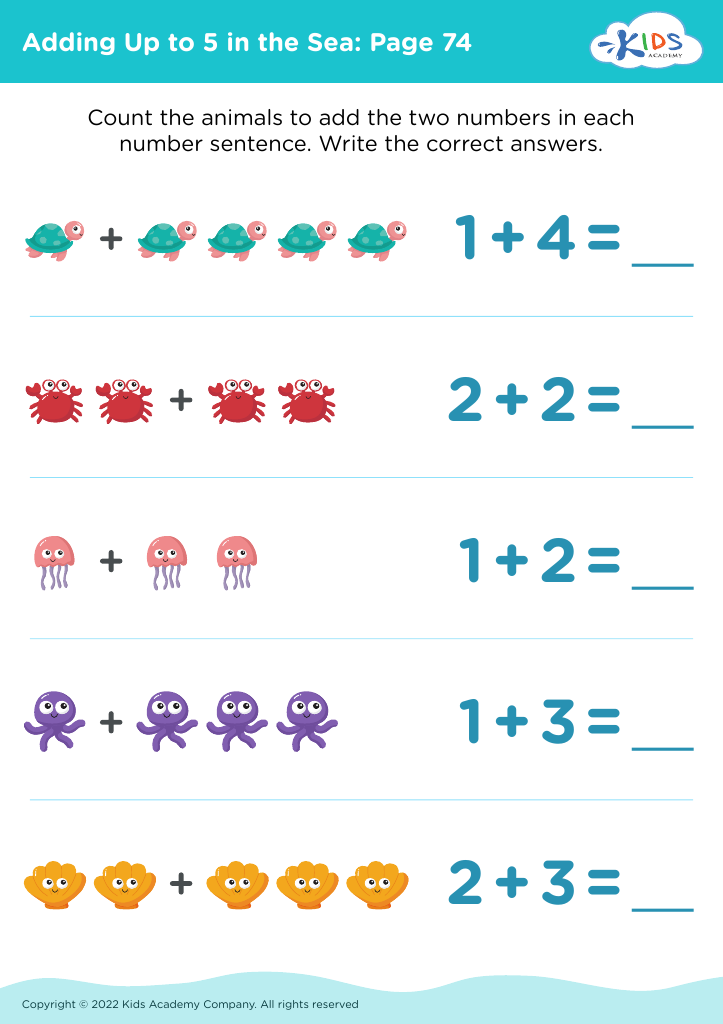
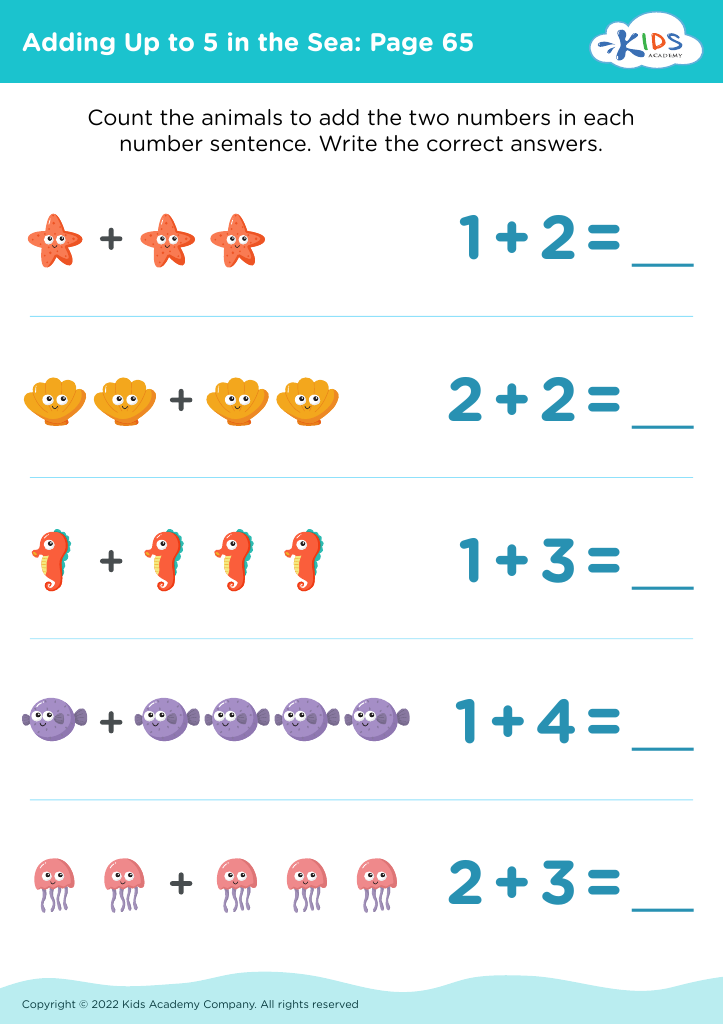
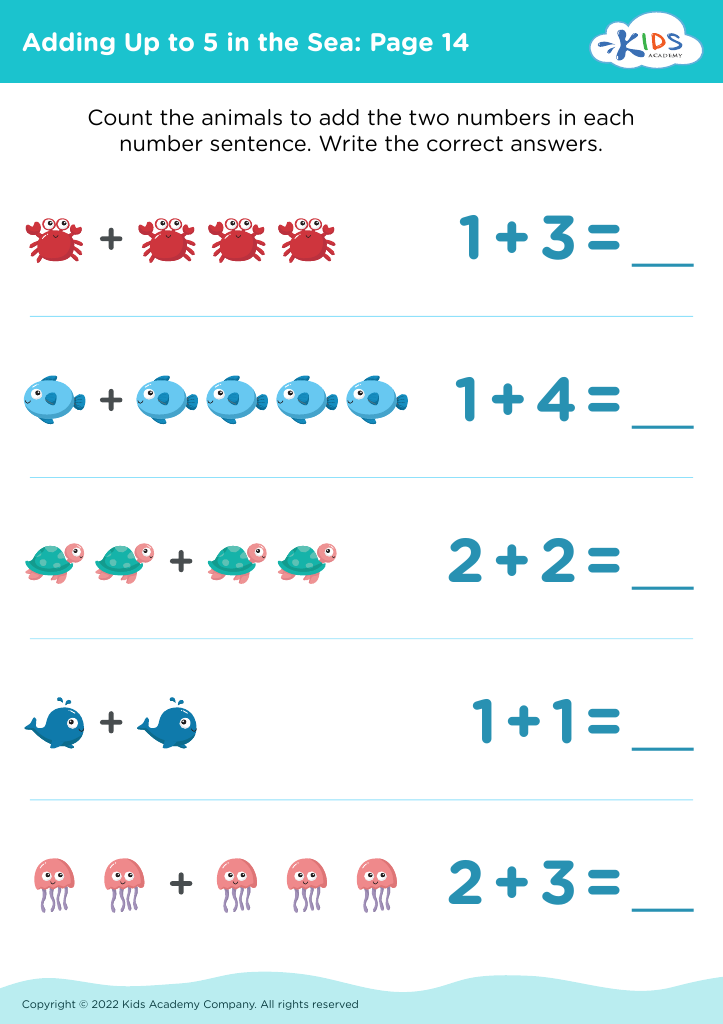
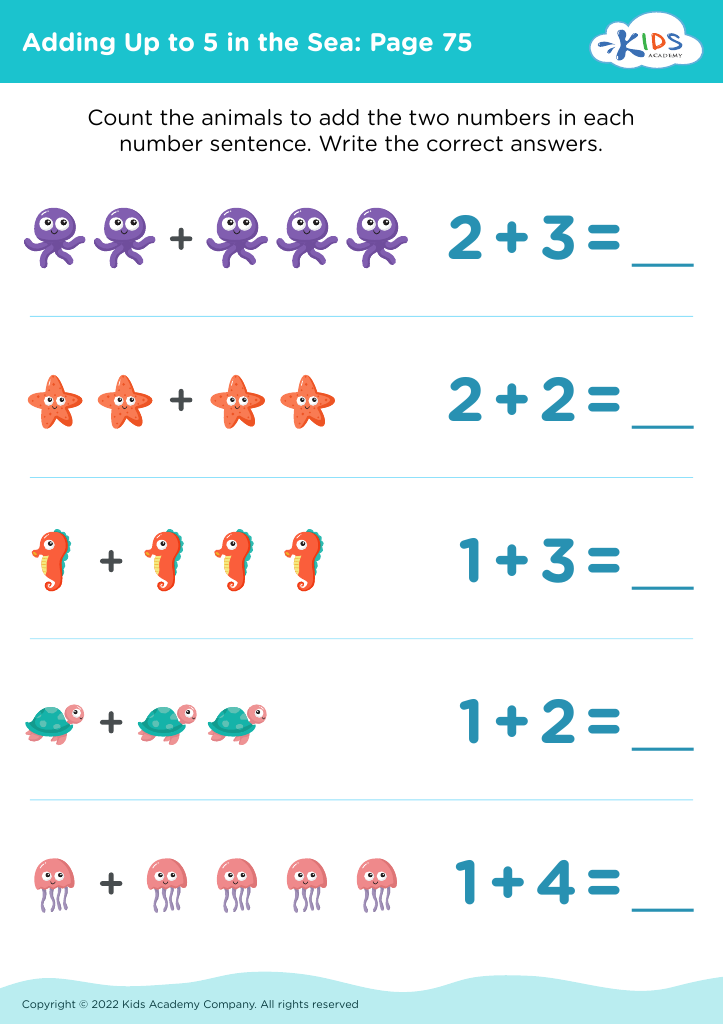
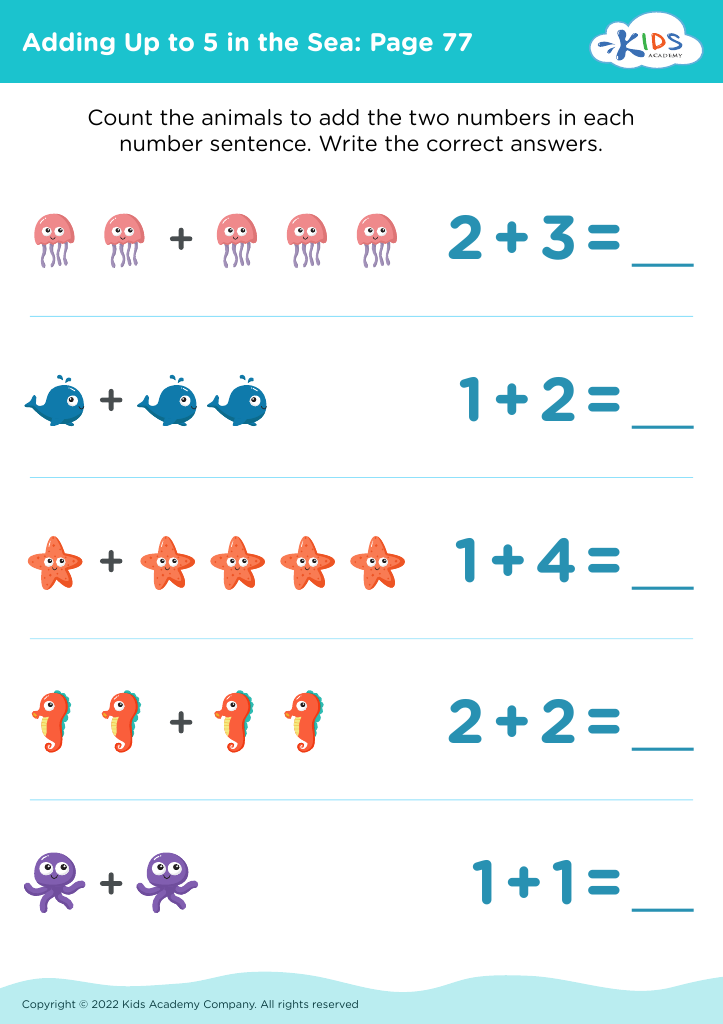
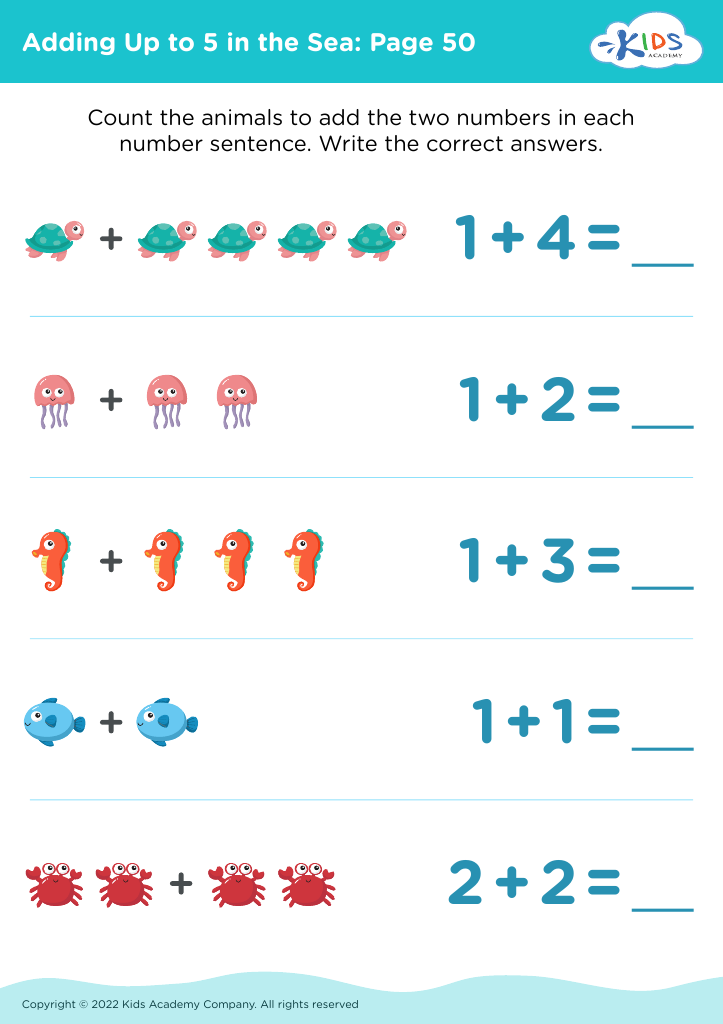
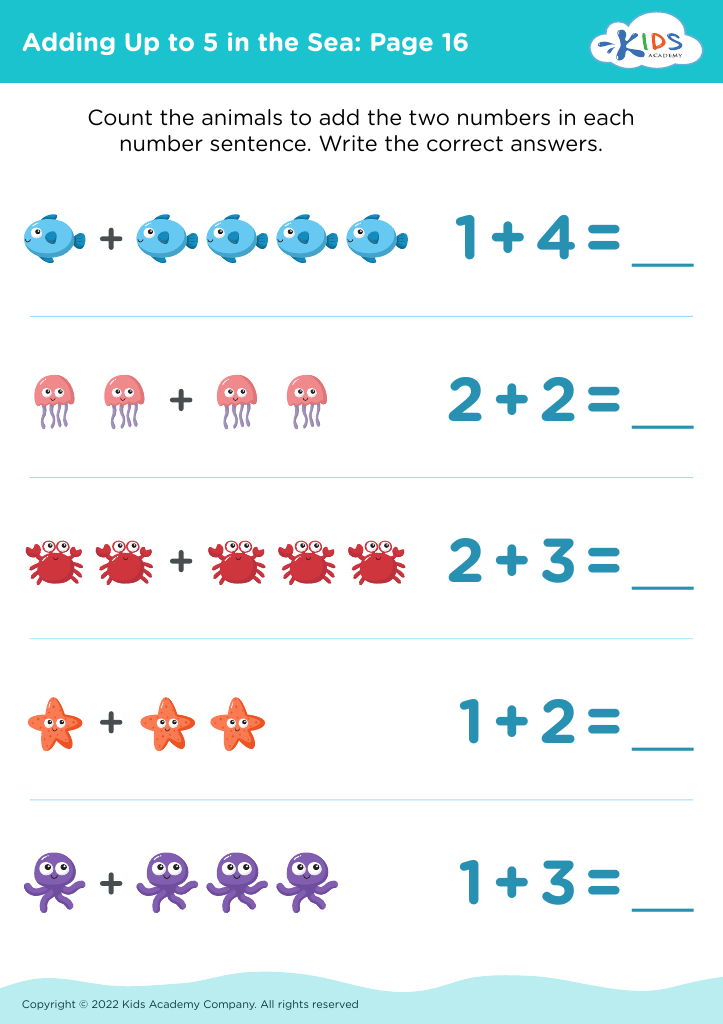



Fine motor skills are crucial for young children's development, particularly for tasks like writing, drawing, and self-care activities. For 3-year-olds, enhancing these skills through fun activities like adding in the sea can be deeply beneficial. Firstly, fine motor skills improve hand-eye coordination, allowing children to manipulate objects and control their movements with precision, essential for later handwriting.
Engaging in activities such as adding sea animals with tweezers or small manipulatives can make learning enjoyable and effective. It fosters concentration, patience, and persistence, all of which are key attributes not only in processing early math concepts but also in developing a growth mindset.
Moreover, these activities promote brain development. Fine motor skill activities stimulate neural circuits crucial for cognitive growth. These foundational skills serve long-term benefits as children progress through their education, impacting their ability to perform academically. Additionally, managed through guided play, it allows children to experience trial and error in a safe environment, encouraging explorative learning.
Parents and teachers should care about nurturing these skills because establishing a strong foundation in fine motor development will profoundly influence a child’s academic readiness, fostering creative expression and independent self-care as they grow. Promoting enjoyment in these activities sets a positive tone for continued learning.