Animal recognition Adding on the Farm Worksheets for 3-Year-Olds - Page 2
31 filtered results
-
From - To
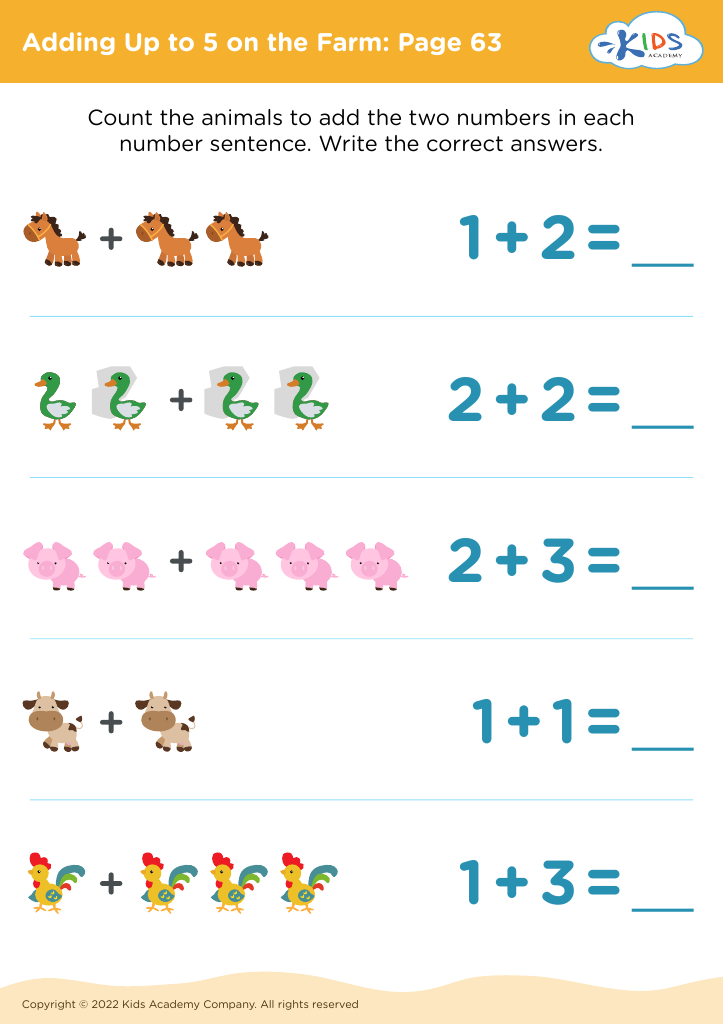
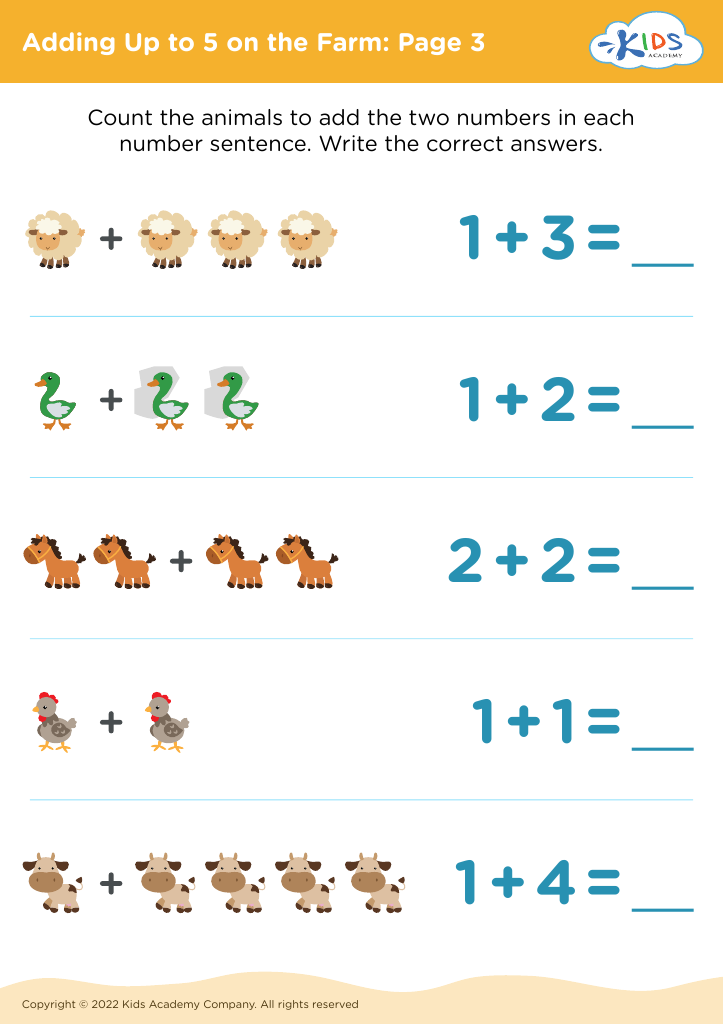
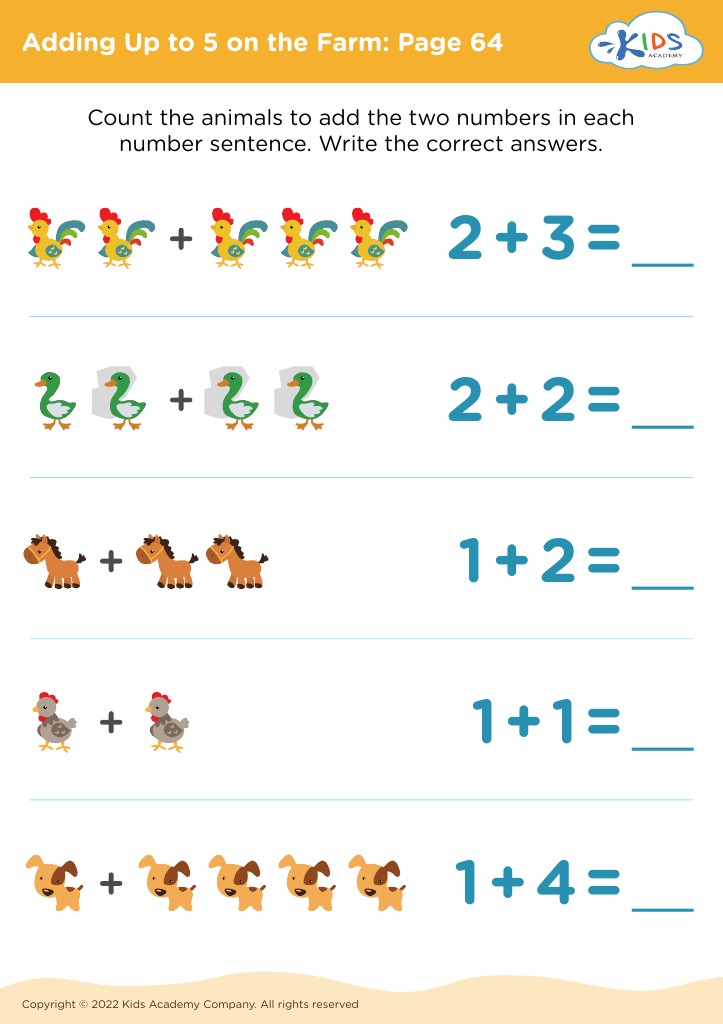
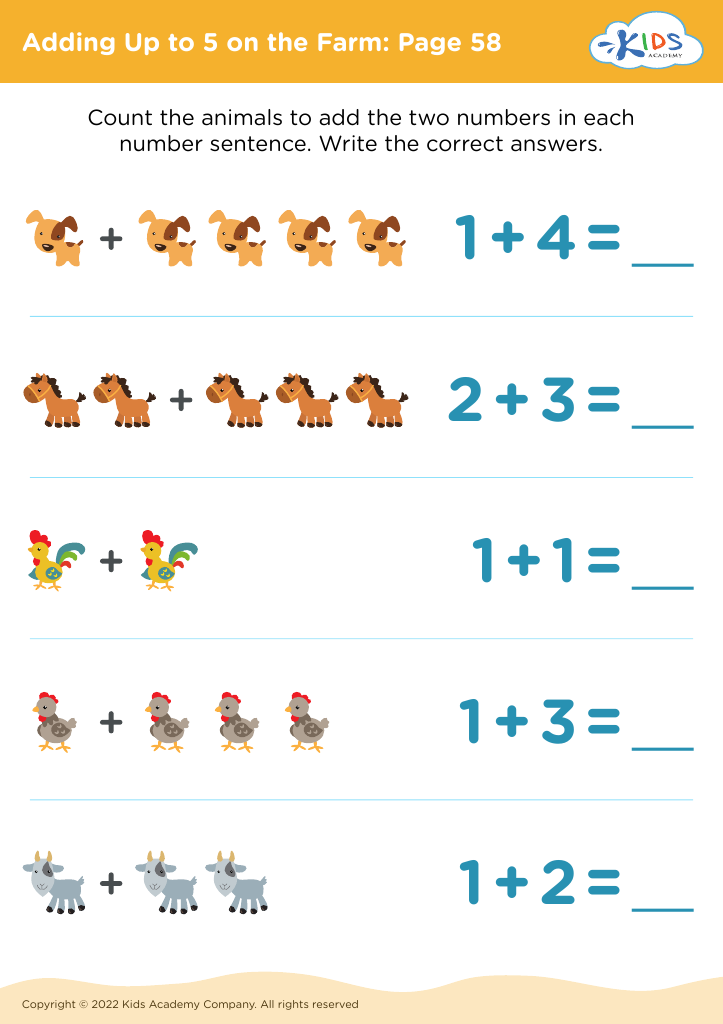
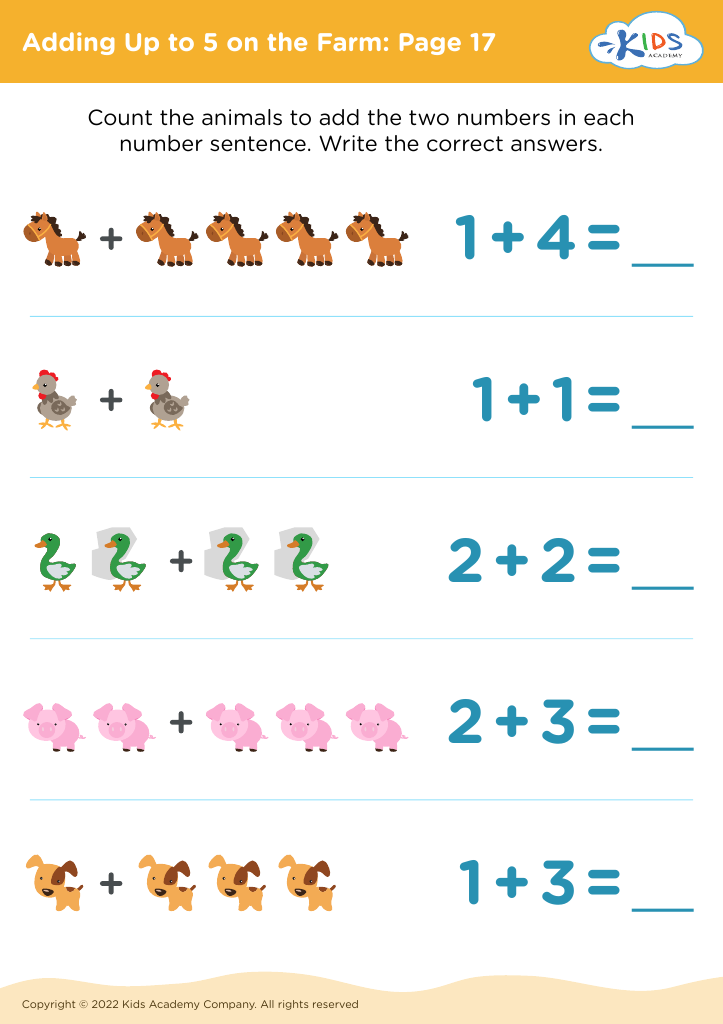
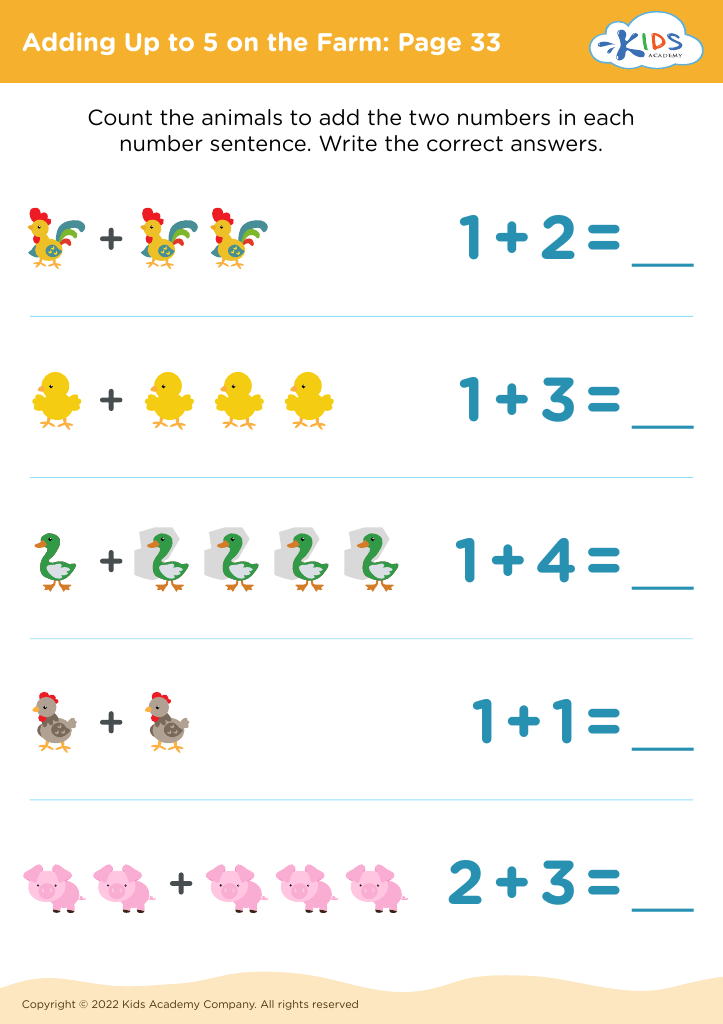
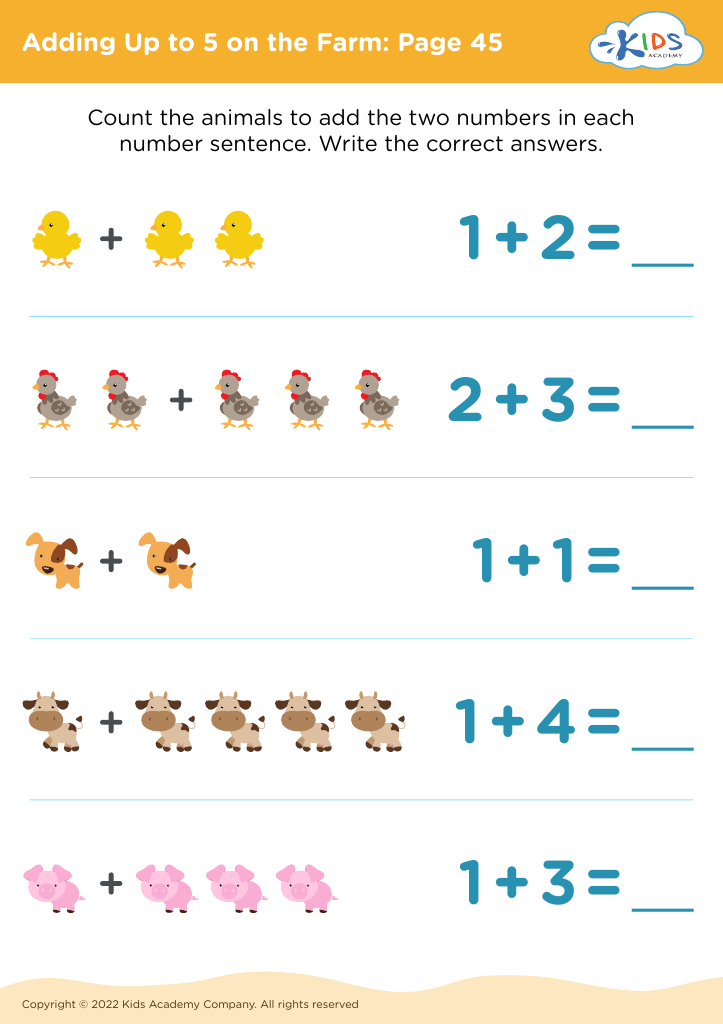



Introducing animal recognition and basic arithmetic on the farm to 3-year-olds offers numerous developmental benefits that parents and teachers should prioritize. Firstly, learning to identify animals enhances children's vocabulary and communication skills, as they learn new words and sounds associated with different animals. The farm setting, known for its variety of animals, supports the development of cognitive associations, enhancing their ability to categorize and recognize different animals.
Additionally, incorporating simple arithmetic, such as counting the number of cows or chickens, introduces basic math concepts in a fun and engaging way. Early exposure to numbers and counting builds a foundation for future mathematical learning, fostering critical thinking and problem-solving abilities.
Furthermore, interacting with farm animals, even through storybooks or toys, promotes empathy and understanding of living creatures. Children learn about animal needs and behavior, which can translate into compassion and responsibility.
Engaging in animal recognition activities on the farm can also boost fine motor skills through tactile activities like petting animals or picking up toy representations. Lastly, this multi-sensory learning approach, combining visual, auditory, and tactile experiences, caters to diverse learning styles, ultimately fostering a well-rounded developmental environment ideal for young, curious minds. Therefore, it is essential for parents and teachers to incorporate farm-themed animal recognition and arithmetic into early childhood learning.