Check out this FREE Trial Lesson on Adding Up to 5 for age 3!

A

Favorites
With answer key
Interactive
  • 3
  • Addition skills
  • Adding Up to 5
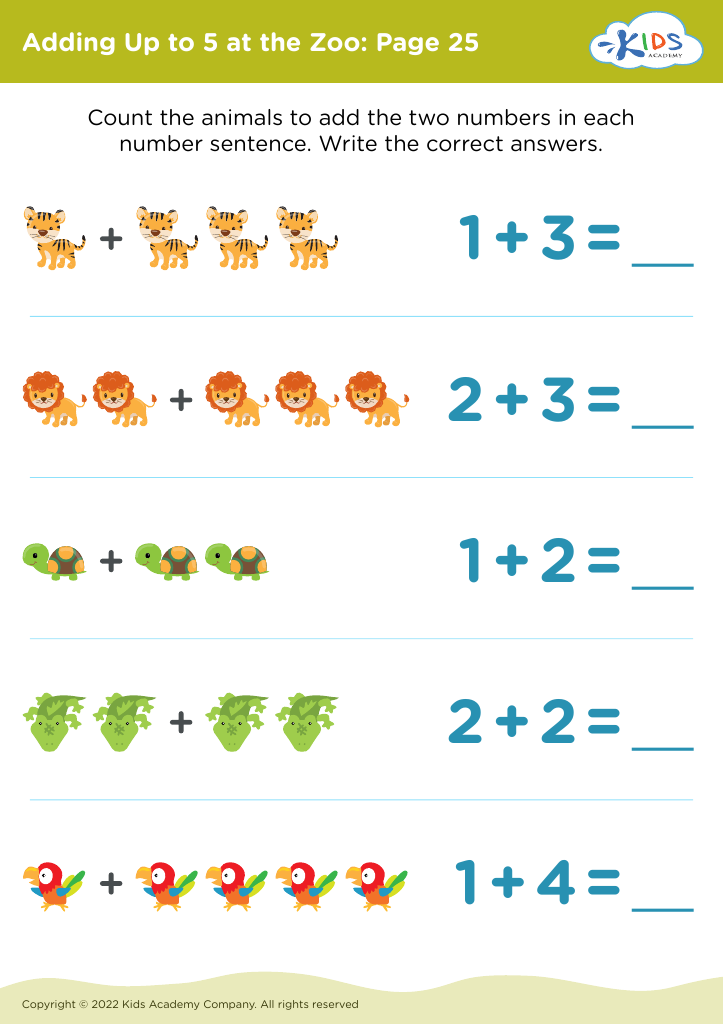
Adding Up to 5 at the Zoo: Page 25
Worksheet
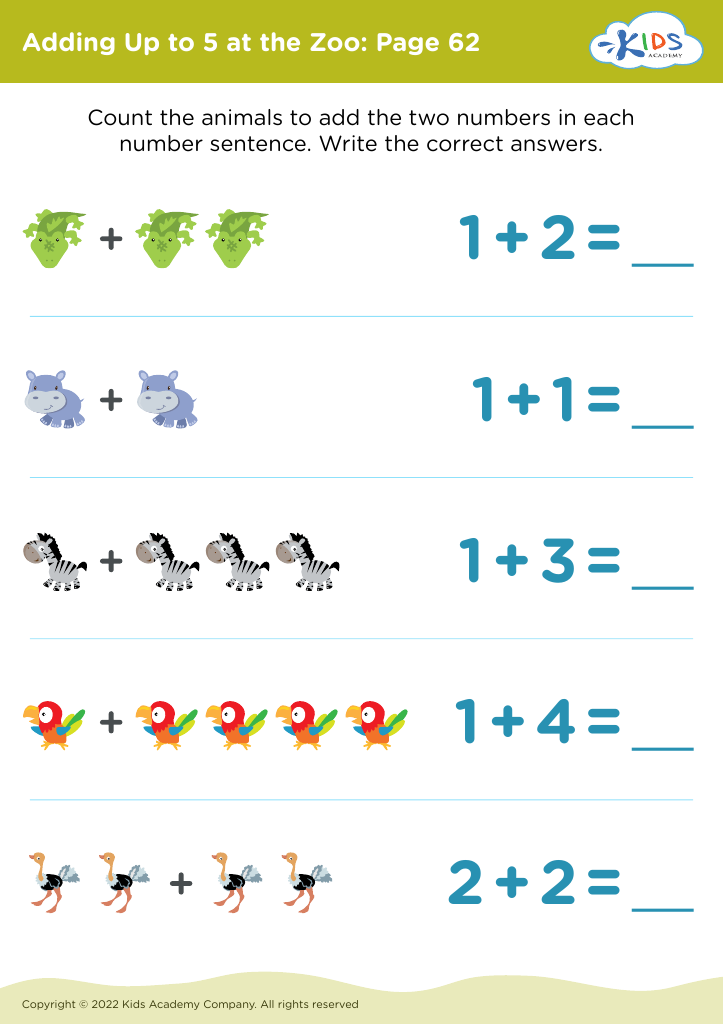
Adding Up to 5 at the Zoo: Page 62
Worksheet
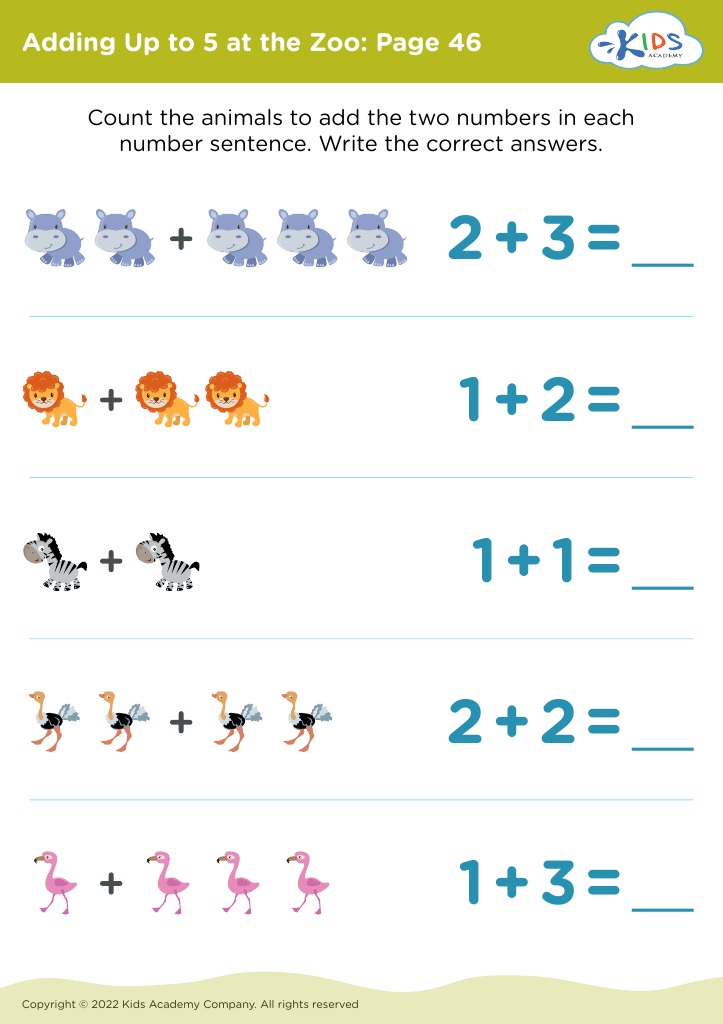
Adding Up to 5 at the Zoo: Page 46
Worksheet
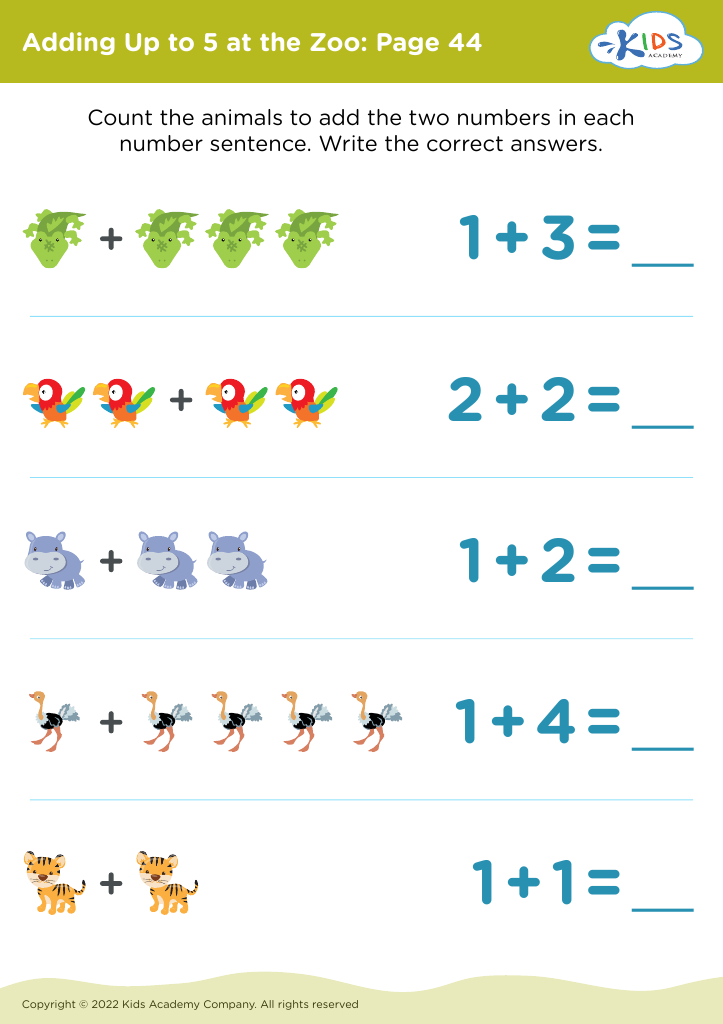
Adding Up to 5 at the Zoo: Page 44
Worksheet
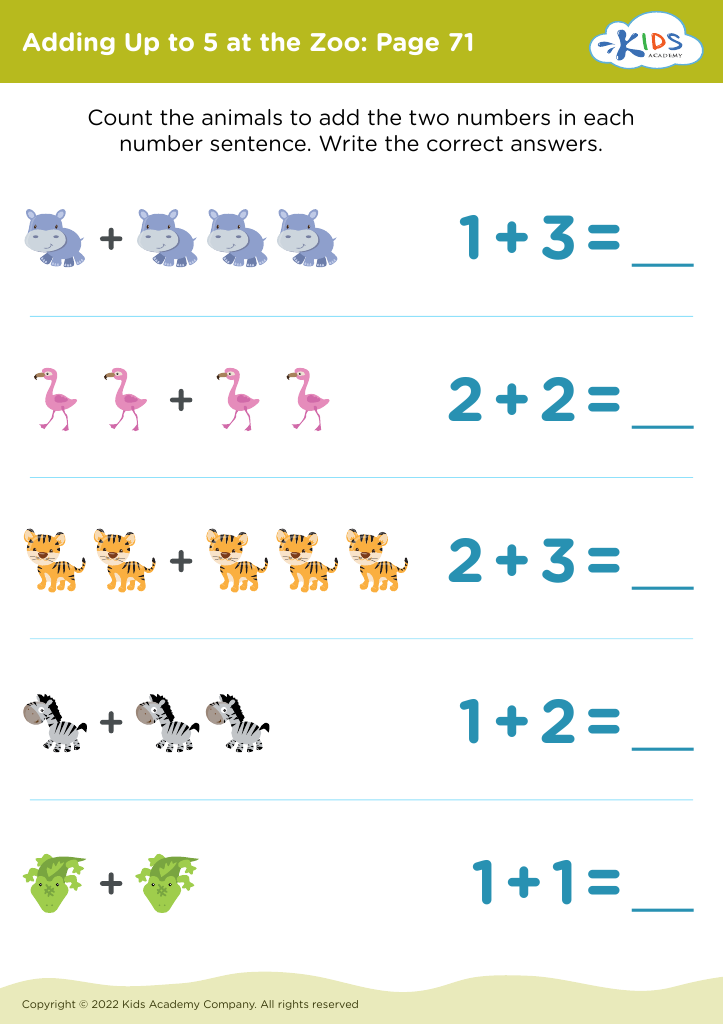
Adding Up to 5 at the Zoo: Page 71
Worksheet
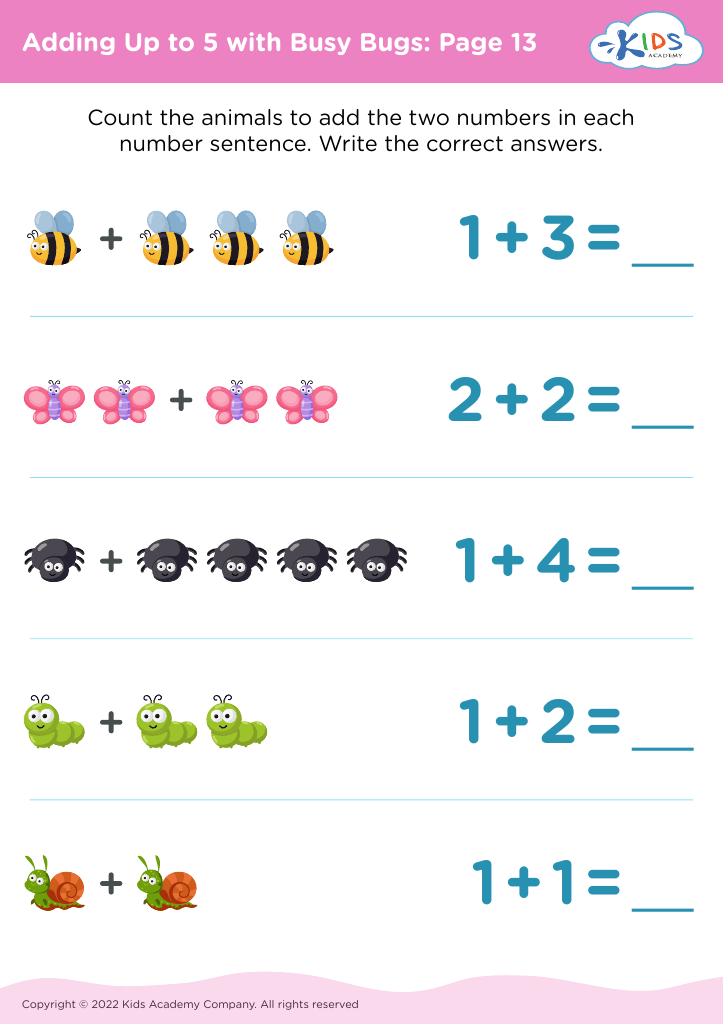
Adding Up to 5 with Busy Bugs: Page 13
Worksheet
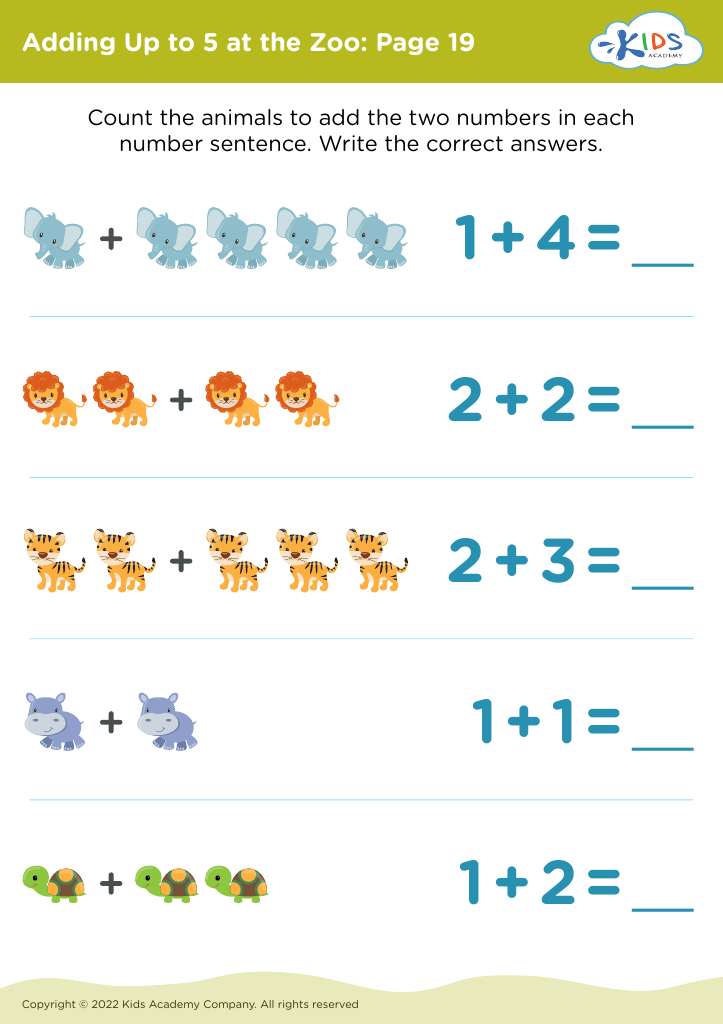
Adding Up to 5 at the Zoo: Page 19
Worksheet
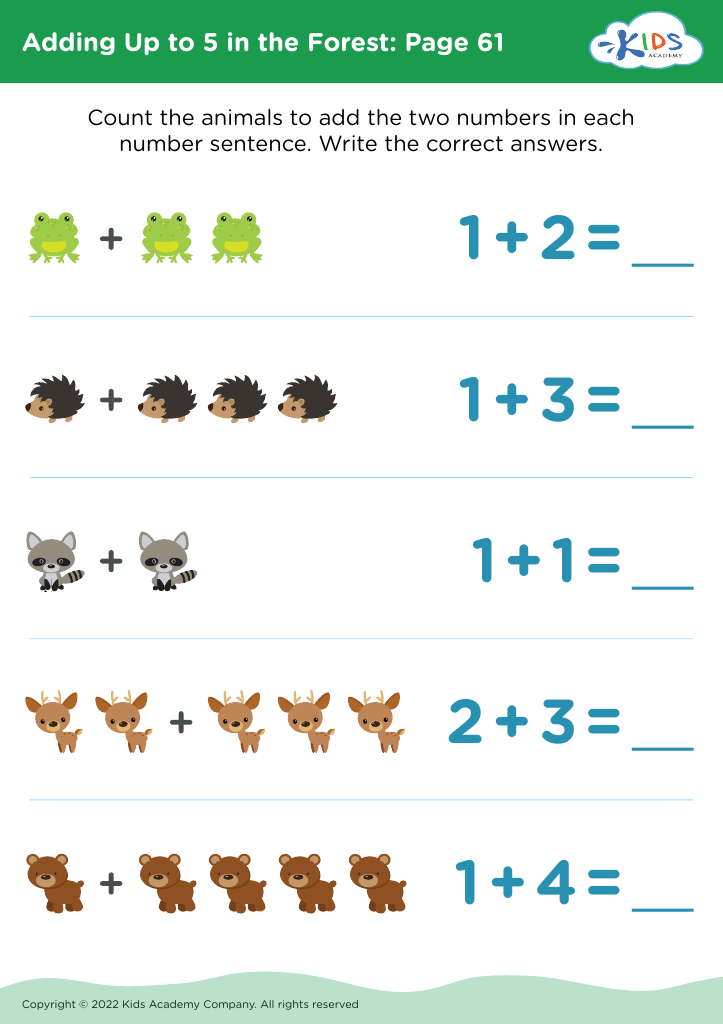
Adding Up to 5 in the Forest: Page 61
Worksheet
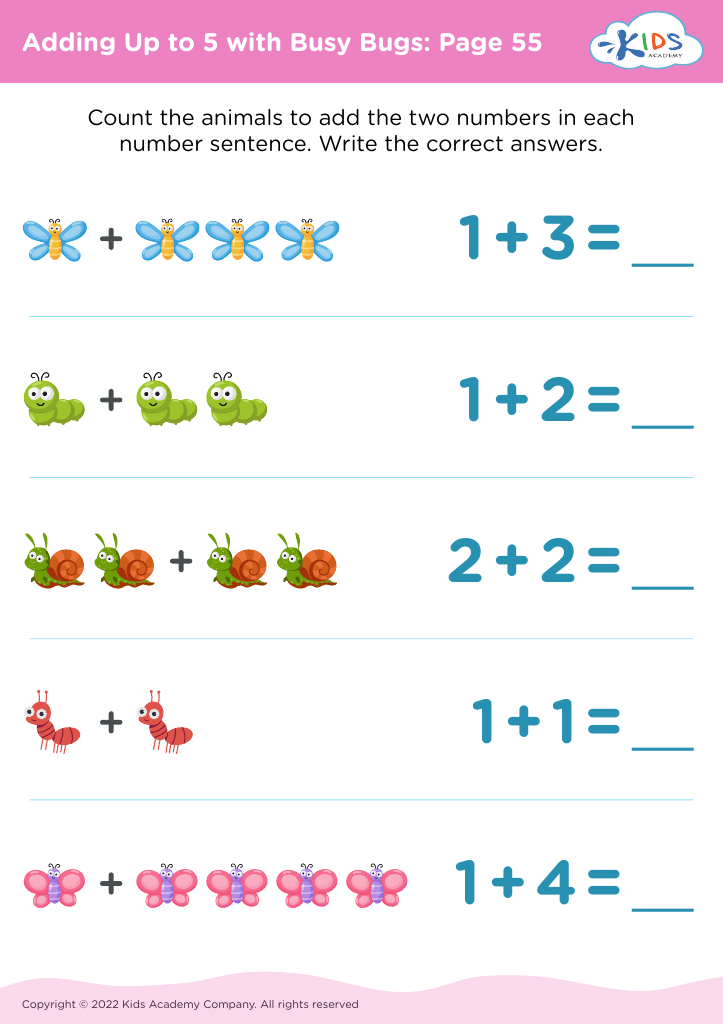
Adding Up to 5 with Busy Bugs: Page 55
Worksheet
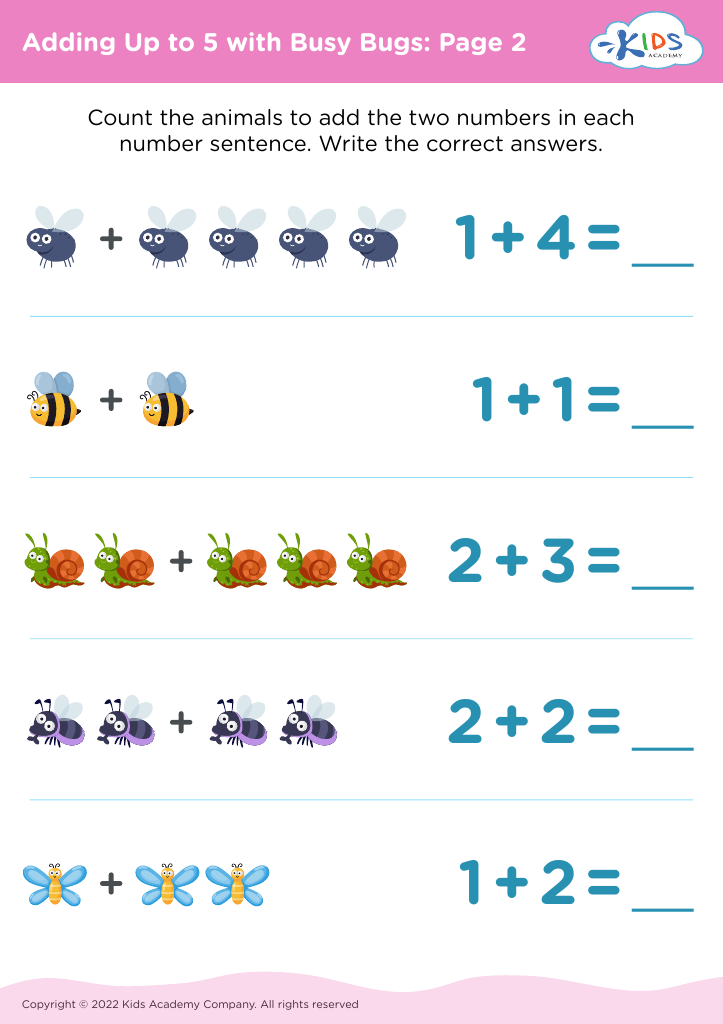
Adding Up to 5 with Busy Bugs: Page 2
Worksheet
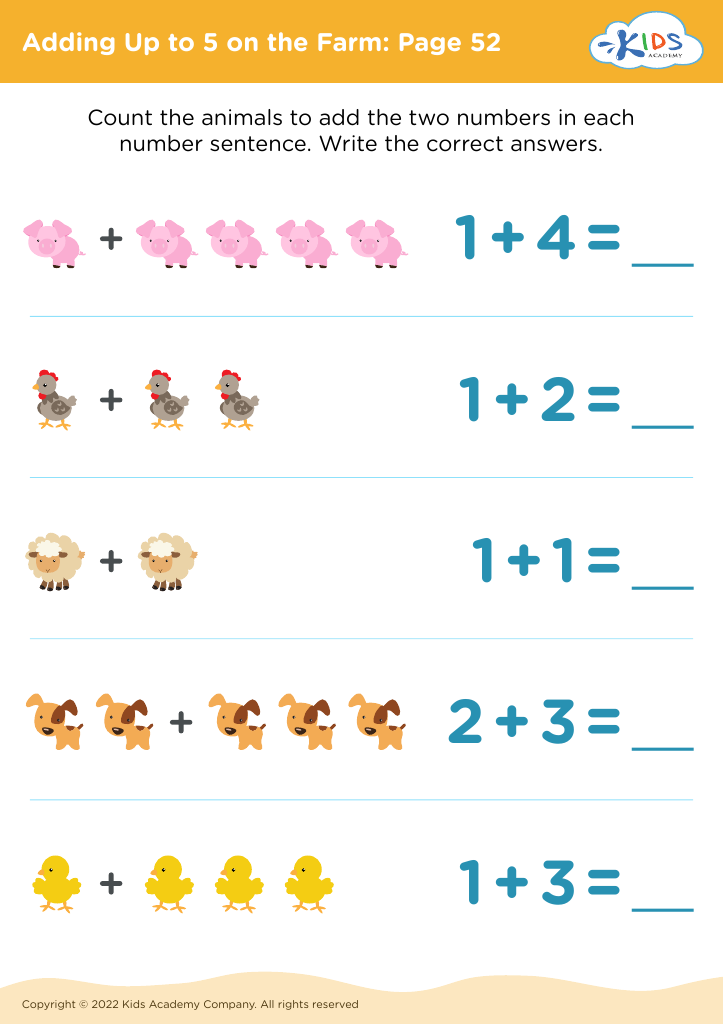
Adding Up to 5 on the Farm: Page 52
Worksheet
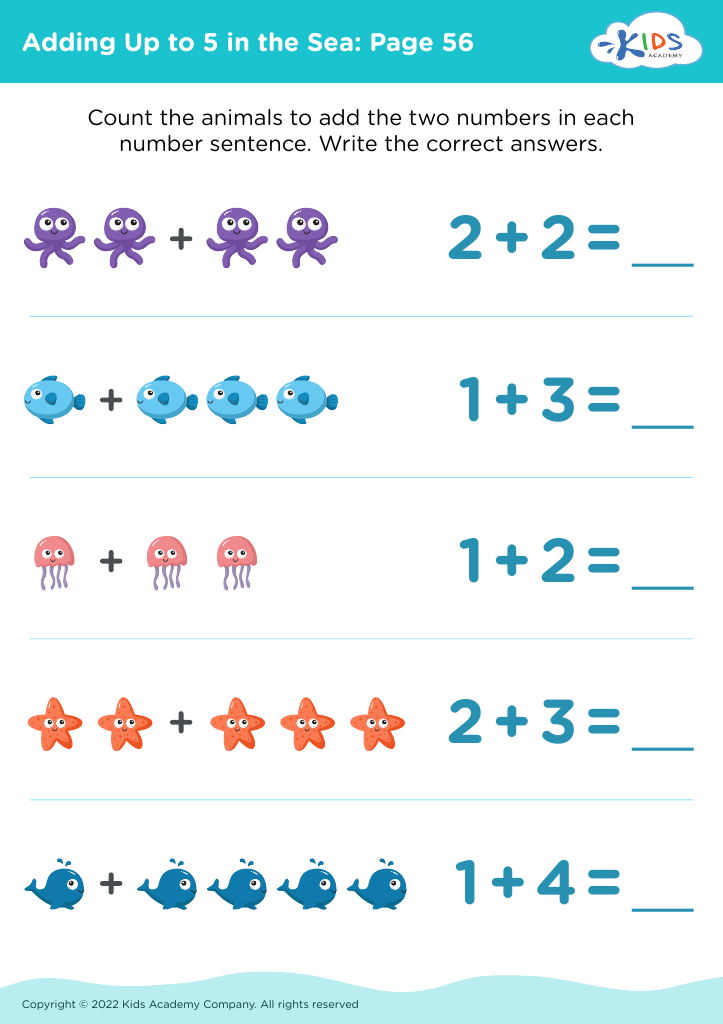
Adding Up to 5 in the Sea: Page 56
Worksheet
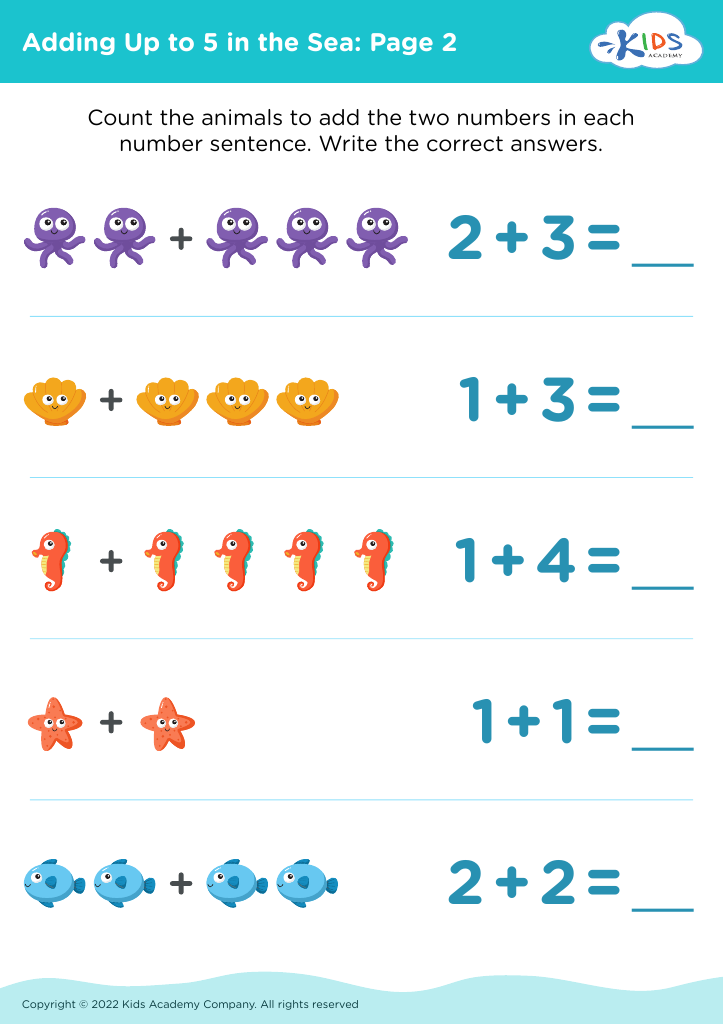
Adding Up to 5 in the Sea: Page 2

Adding Up to 5 in the Sea: Page 2

Adding Up to 5 in the Sea: Page 2
Worksheet
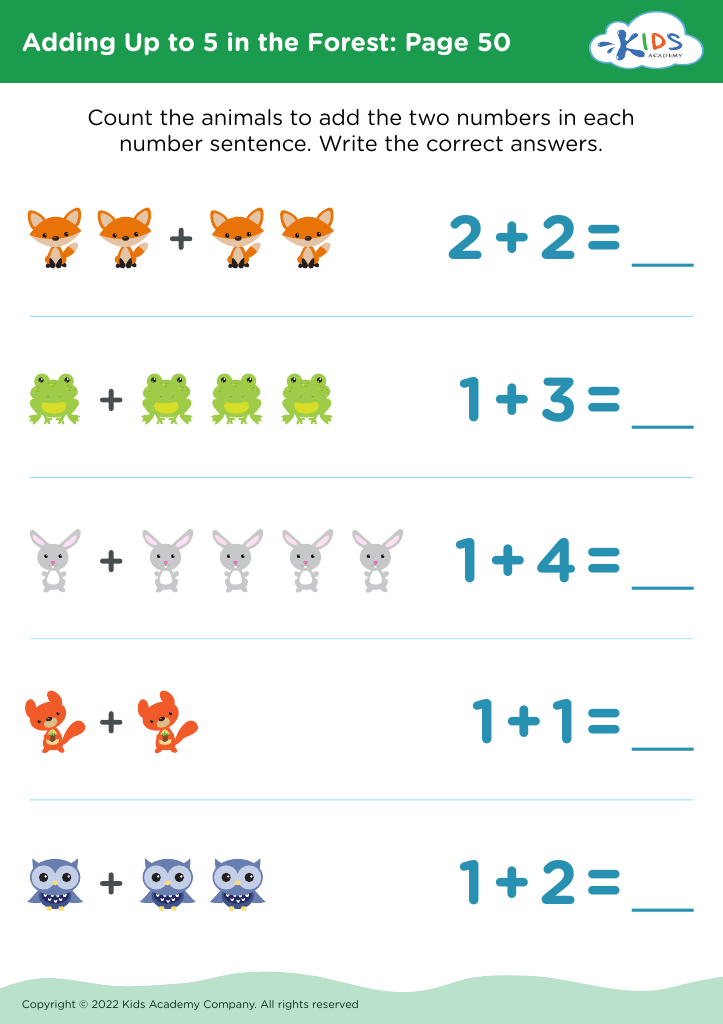
Adding Up to 5 in the Forest: Page 50
Worksheet
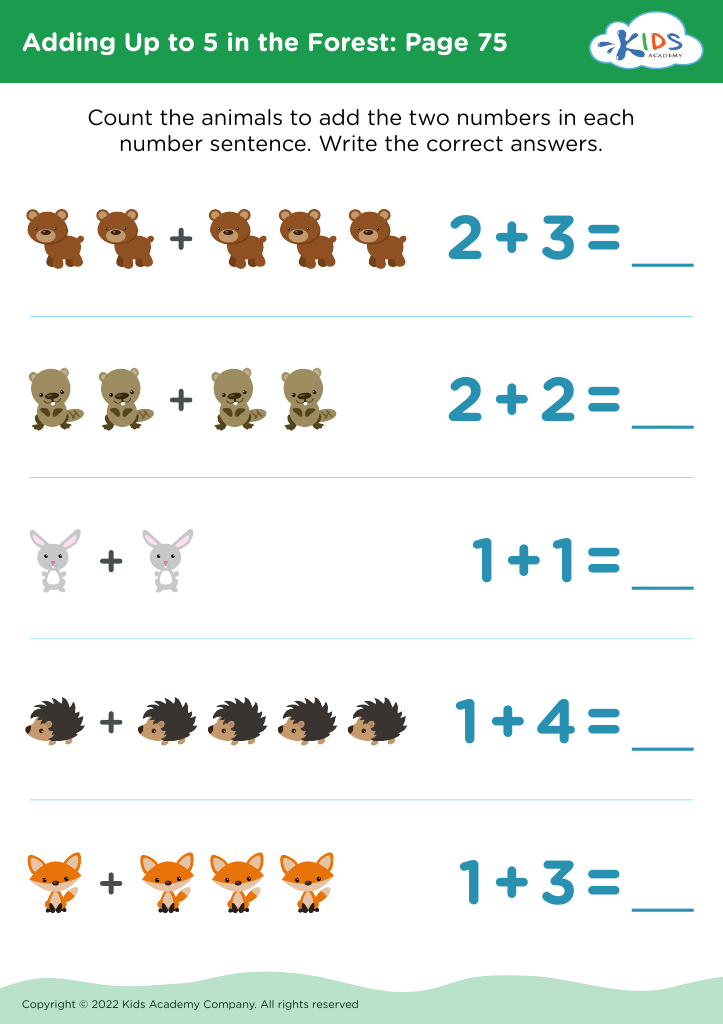
Adding Up to 5 in the Forest: Page 75
Worksheet
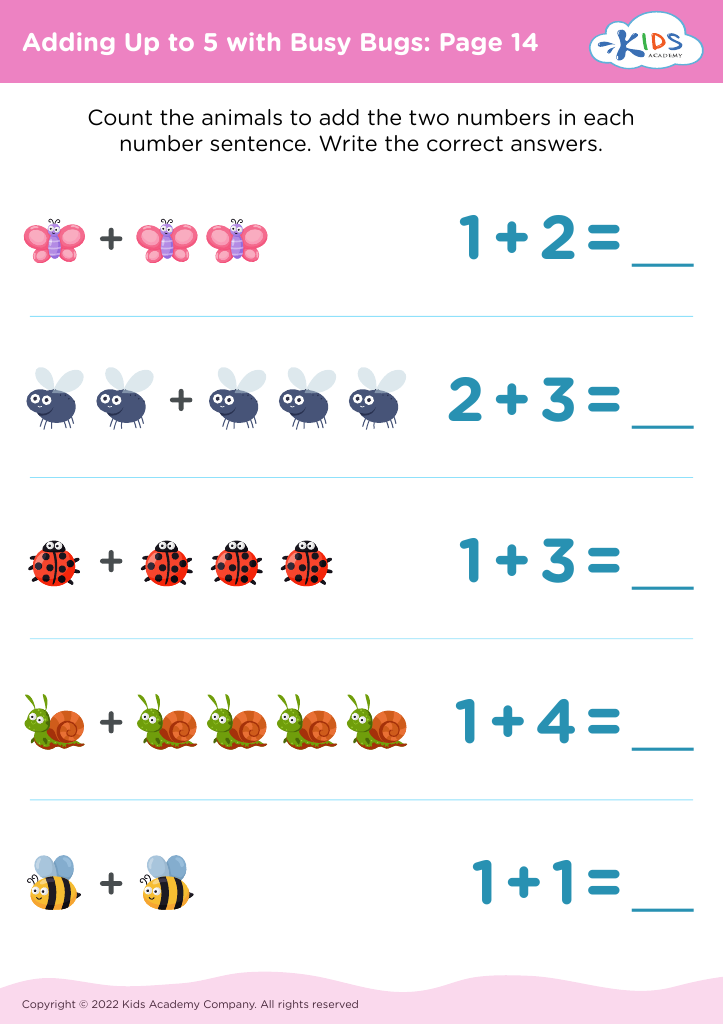
Adding Up to 5 with Busy Bugs: Page 14
Worksheet
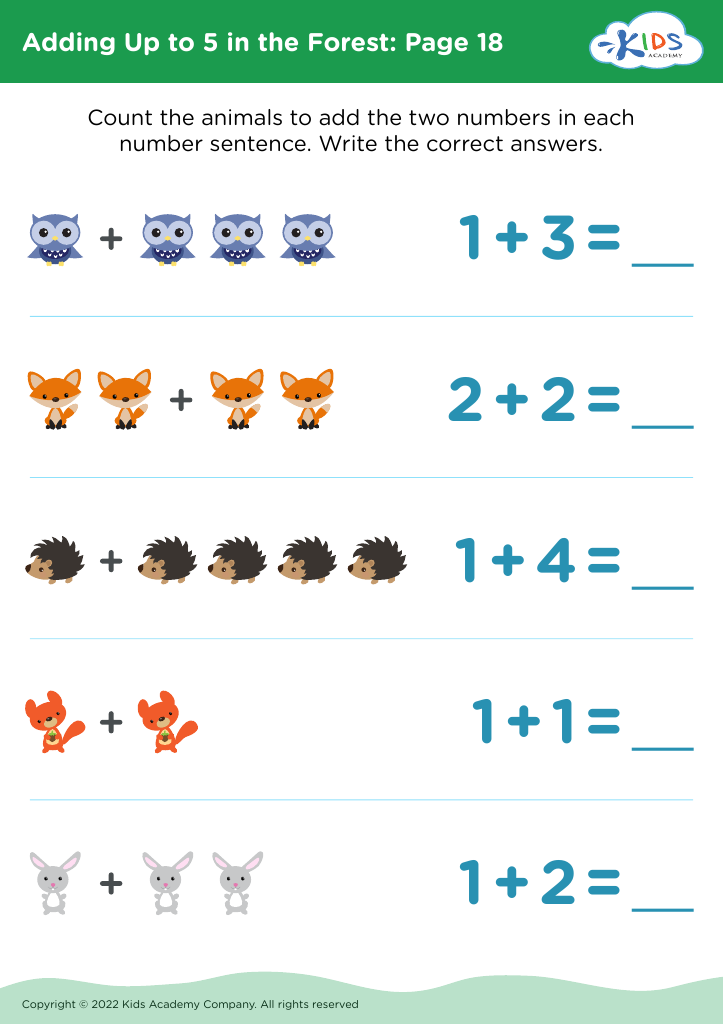
Adding Up to 5 in the Forest: Page 18
Worksheet
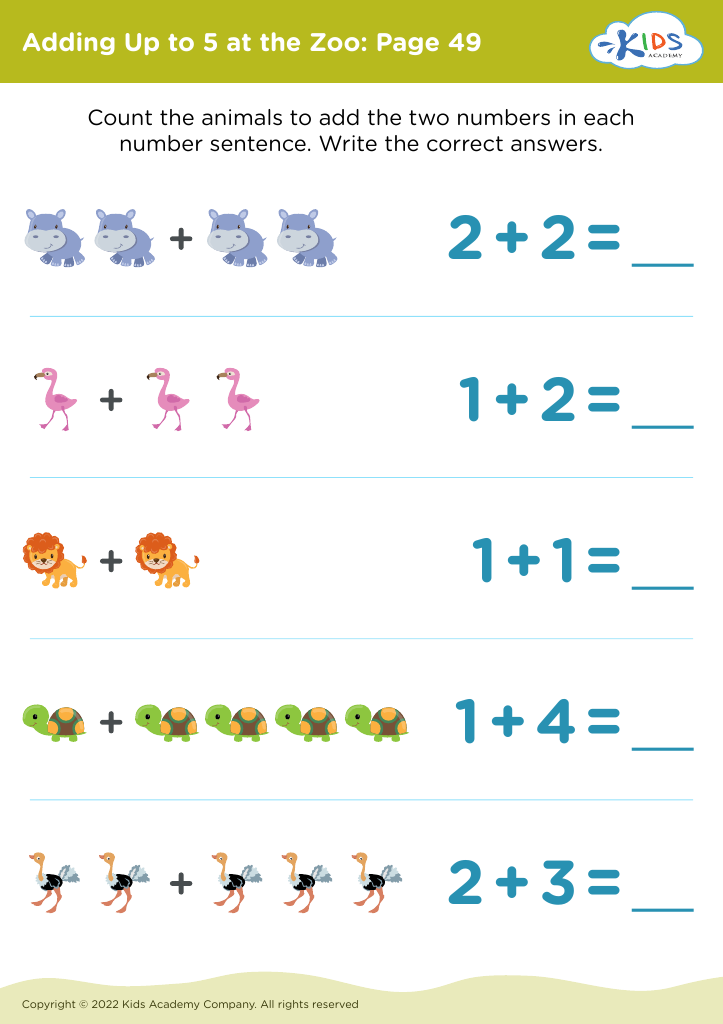
Adding Up to 5 at the Zoo: Page 49
Worksheet
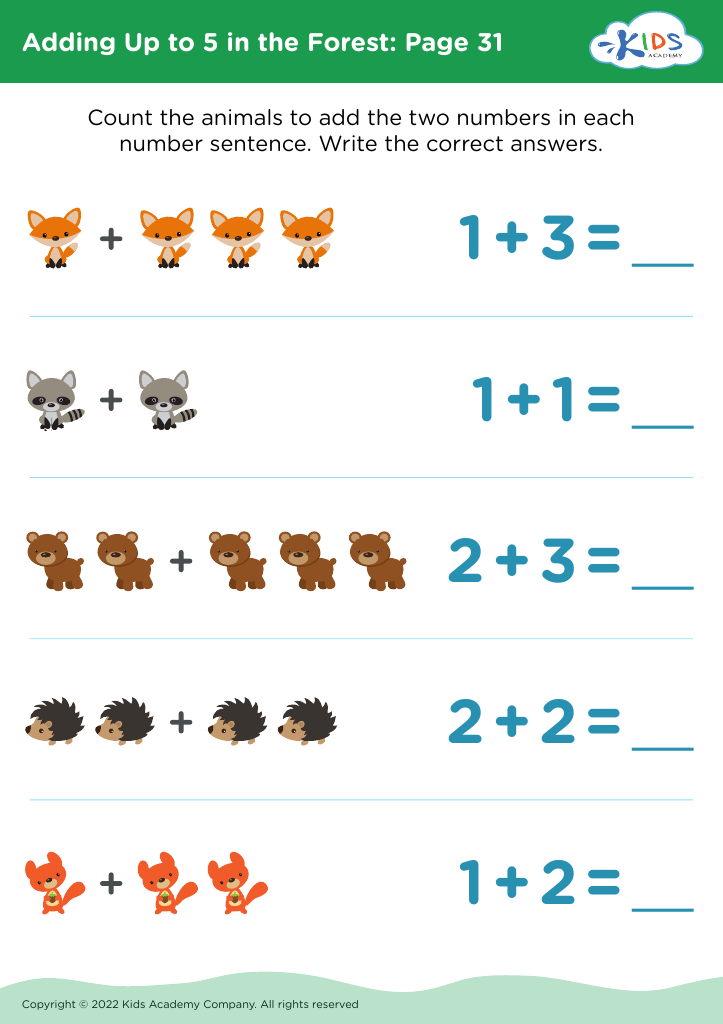
Adding Up to 5 in the Forest: Page 31
Worksheet
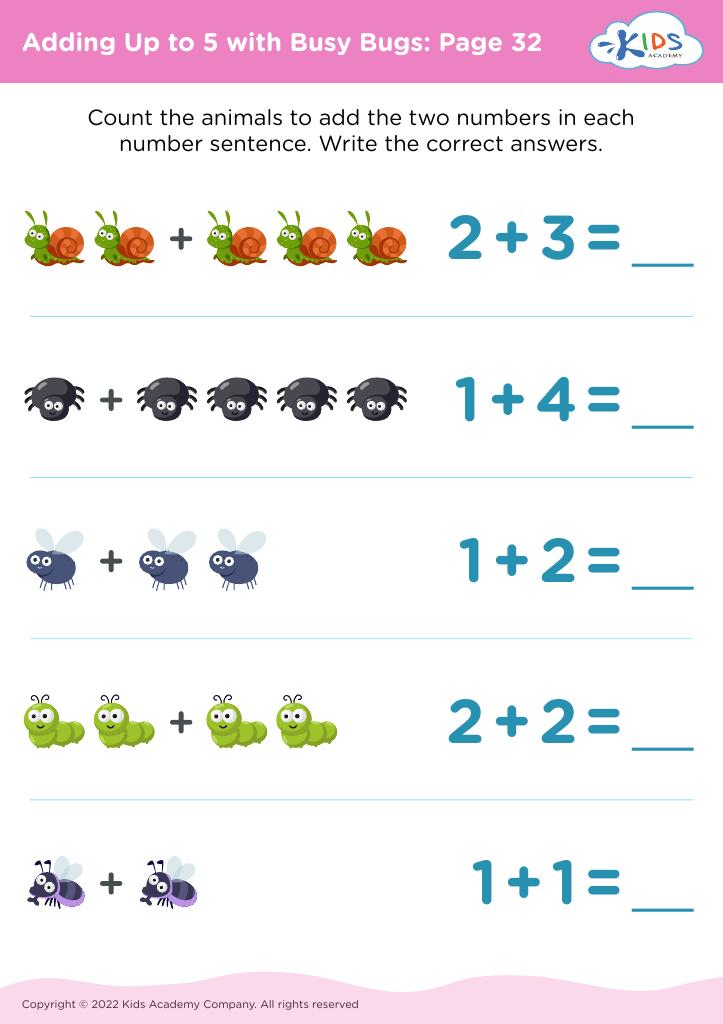
Adding Up to 5 with Busy Bugs: Page 32
Worksheet
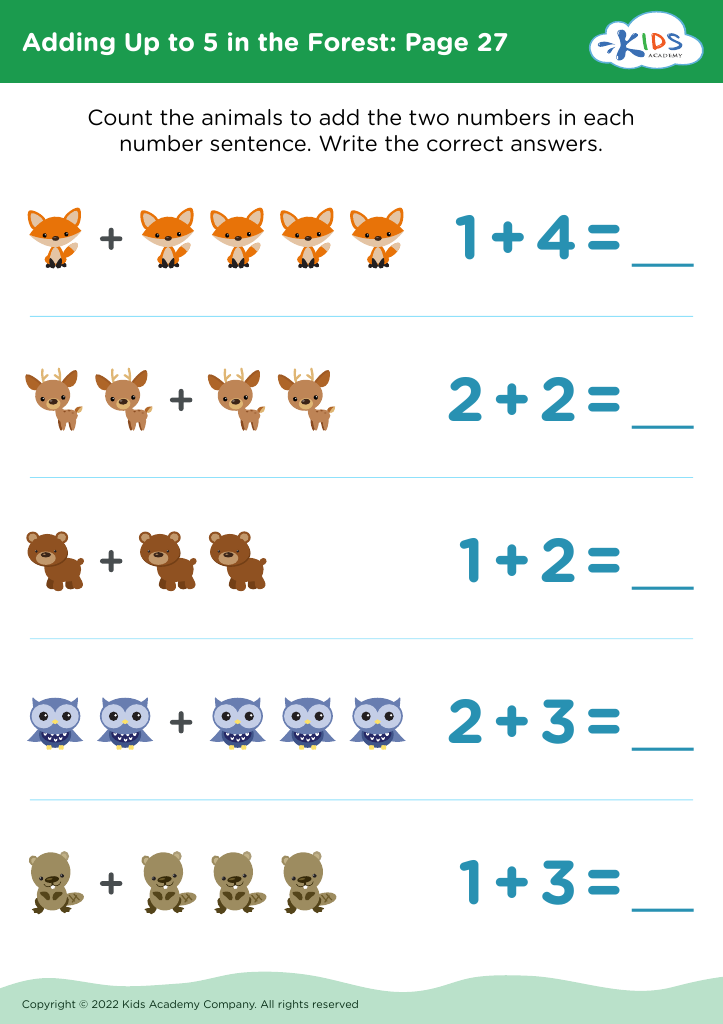
Adding Up to 5 in the Forest: Page 27
Worksheet
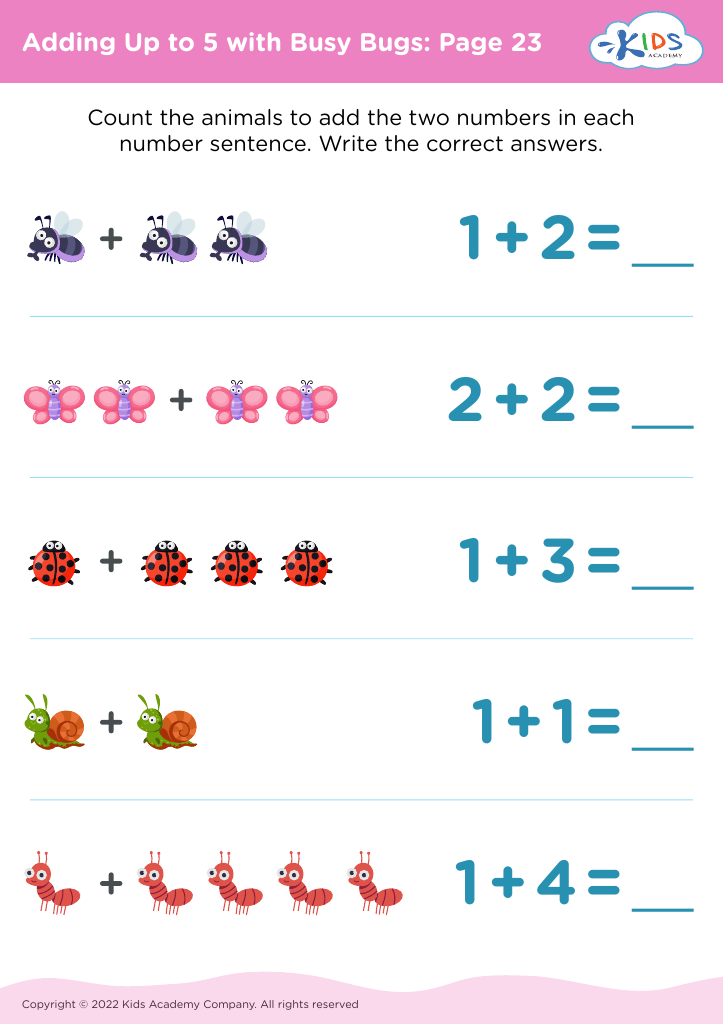
Adding Up to 5 with Busy Bugs: Page 23
Worksheet
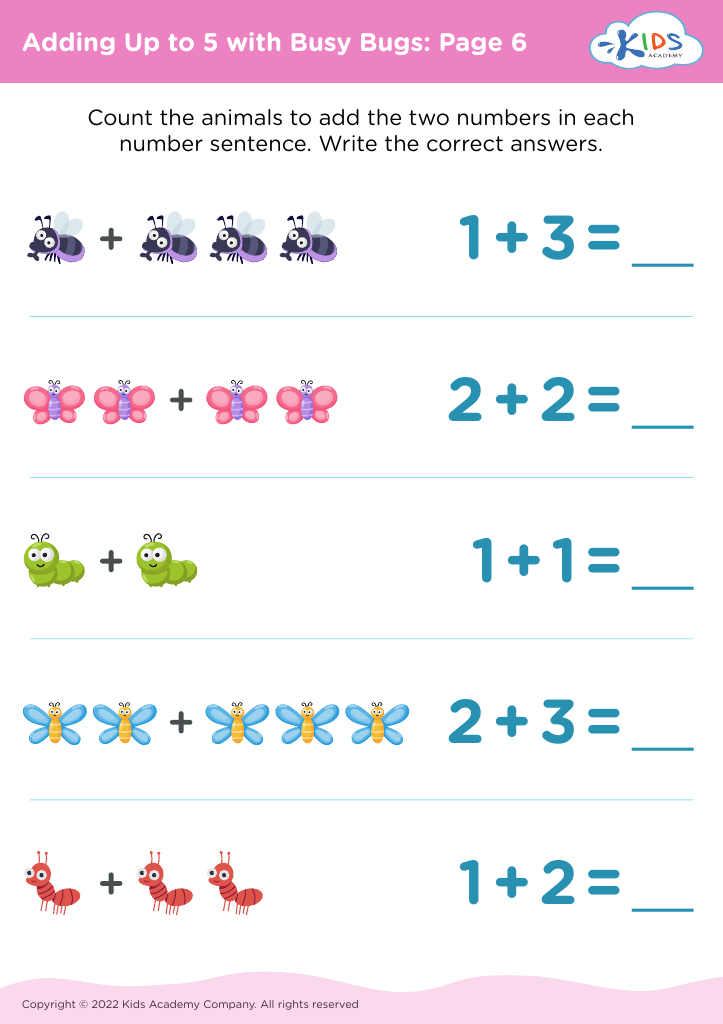
Adding Up to 5 with Busy Bugs: Page 6
Worksheet
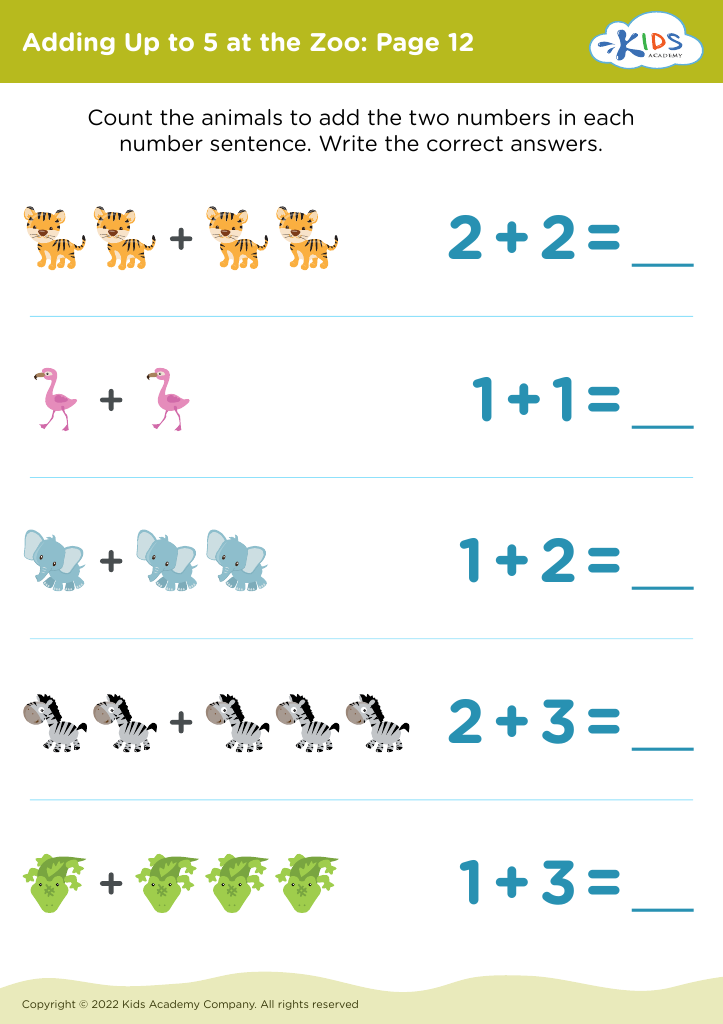
Adding Up to 5 at the Zoo: Page 12
Worksheet


Encouraging basic addition skills, such as adding up to 5, for 3-year-olds can significantly impact their cognitive and educational development. At this age, children's brains are rapidly growing and absorbing information quickly. Learning to add up to 5 helps them develop critical number sense, an essential foundation for future mathematical learning. Understanding basic addition enhances their ability to solve problems, a skill that extends beyond the realm of math and into everyday situations.

Introducing these skills early on also promotes confidence and a positive attitude toward learning. When children achieve small successes, like accurately adding numbers to five, they build self-esteem and enthusiasm for tackling new challenges. Additionally, basic arithmetic encourages pattern recognition and logical thinking, which are crucial cognitive skills.

Parents and teachers play a vital role in making these learnings fun and engaging, using interactive methods like counting objects, singing songs, or playing educational games. Establishing a strong math foundation in a playful manner ensures that children view math as an enjoyable subject rather than a daunting task. Early math proficiency sets the stage for academic success and cultivates lifelong skills, making early instruction in these fundamental concepts a valuable investment in a child’s future.