Basic arithmetic practice Adding Up to 5 Worksheets for 3-Year-Olds
8 filtered results
-
From - To
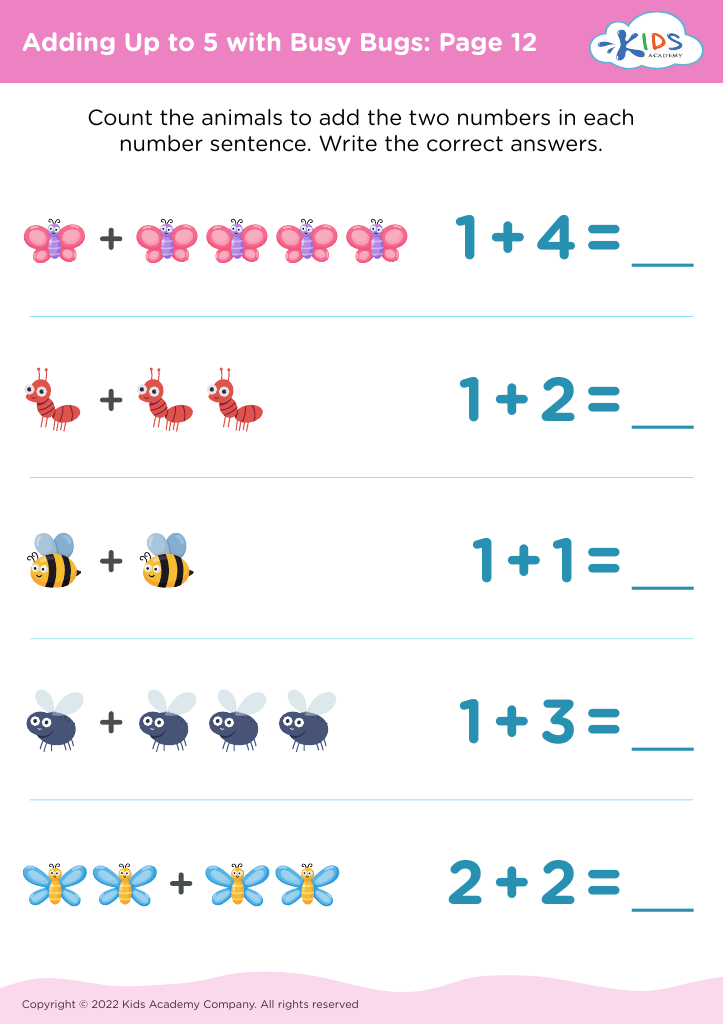
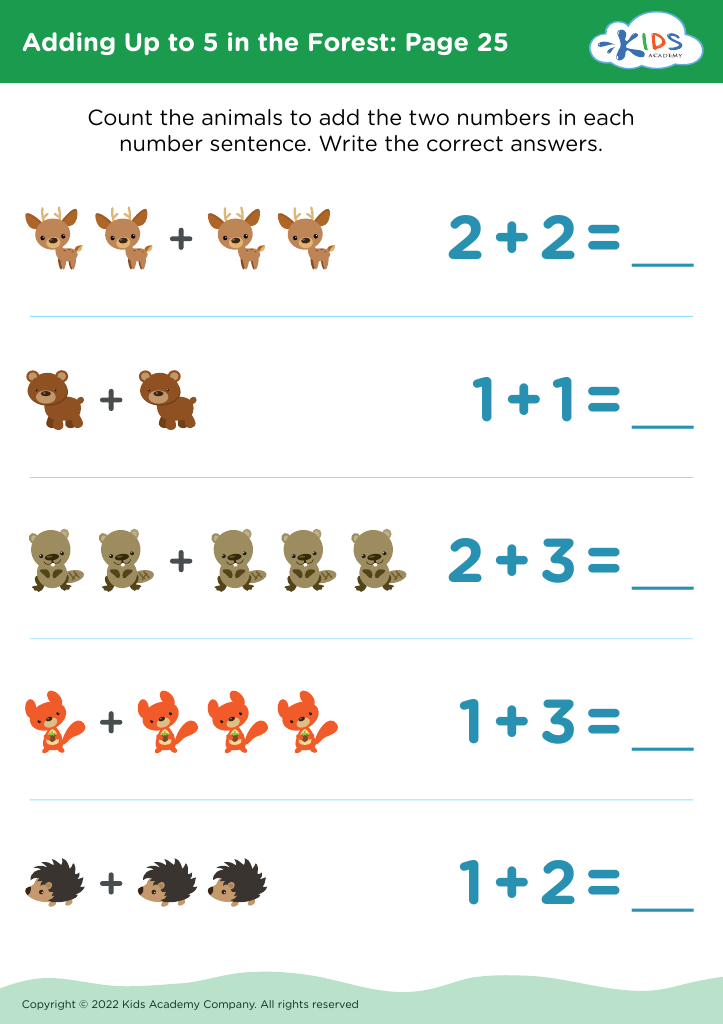
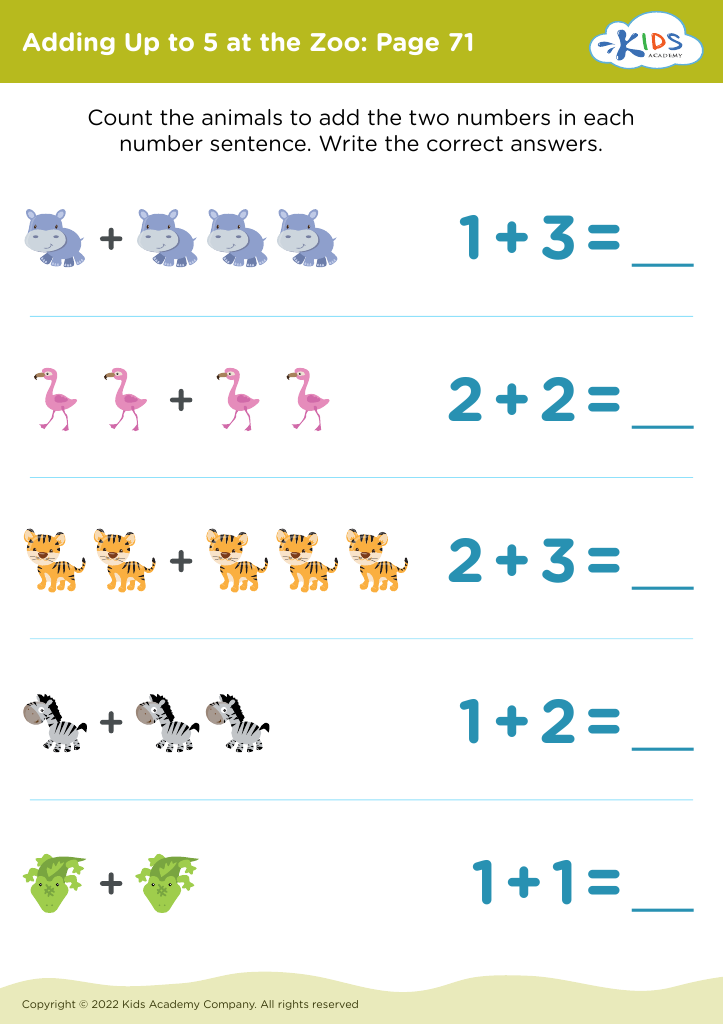
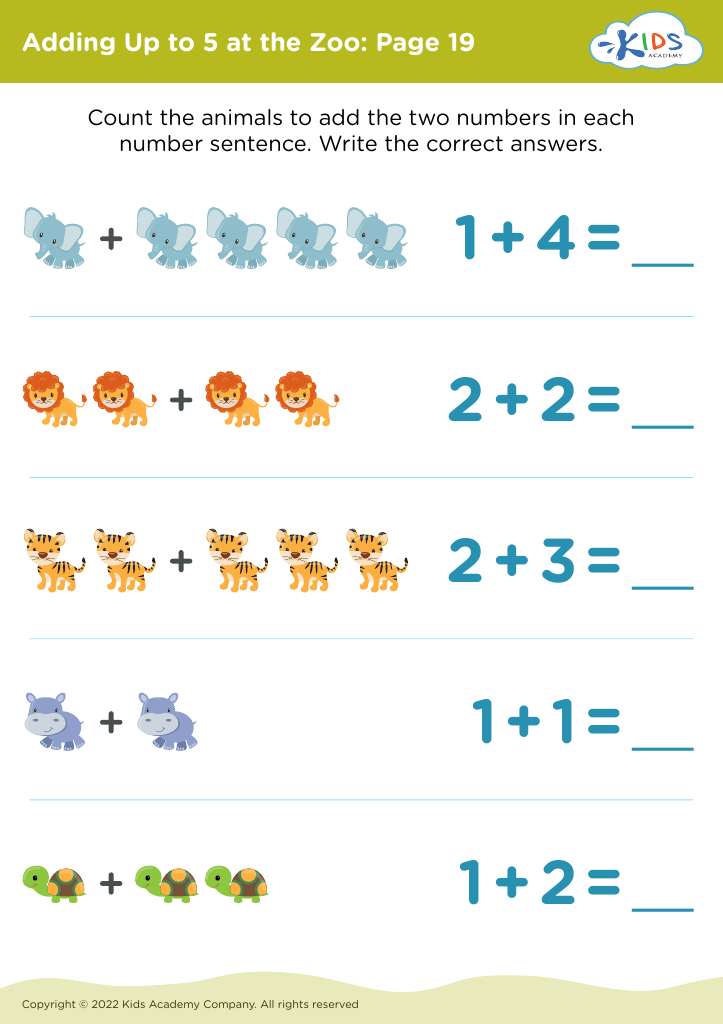
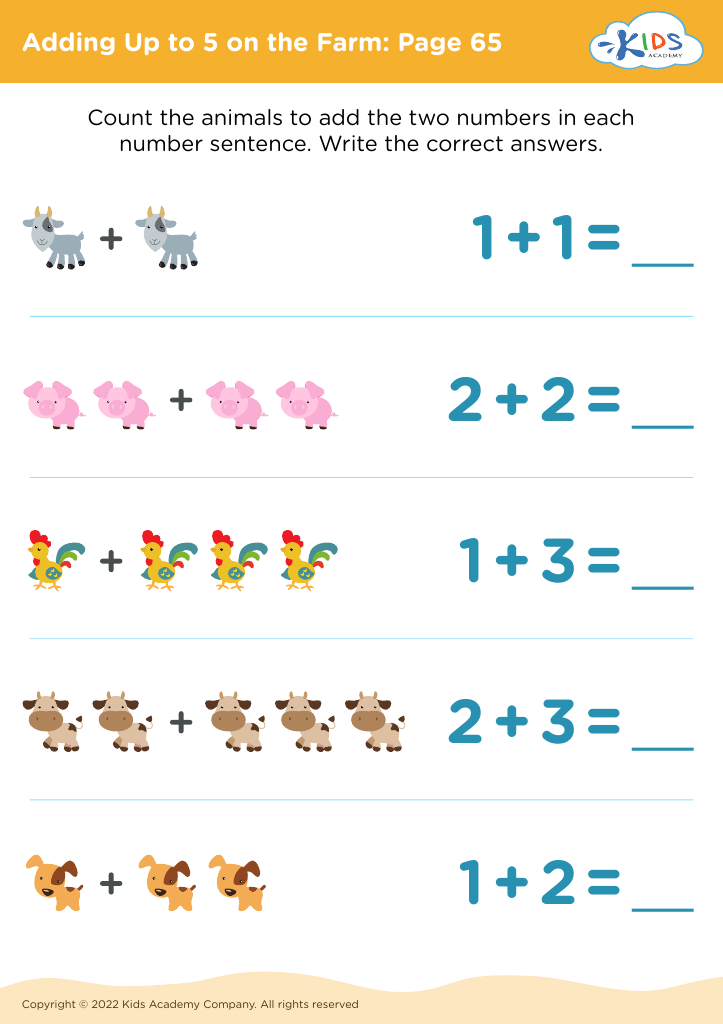
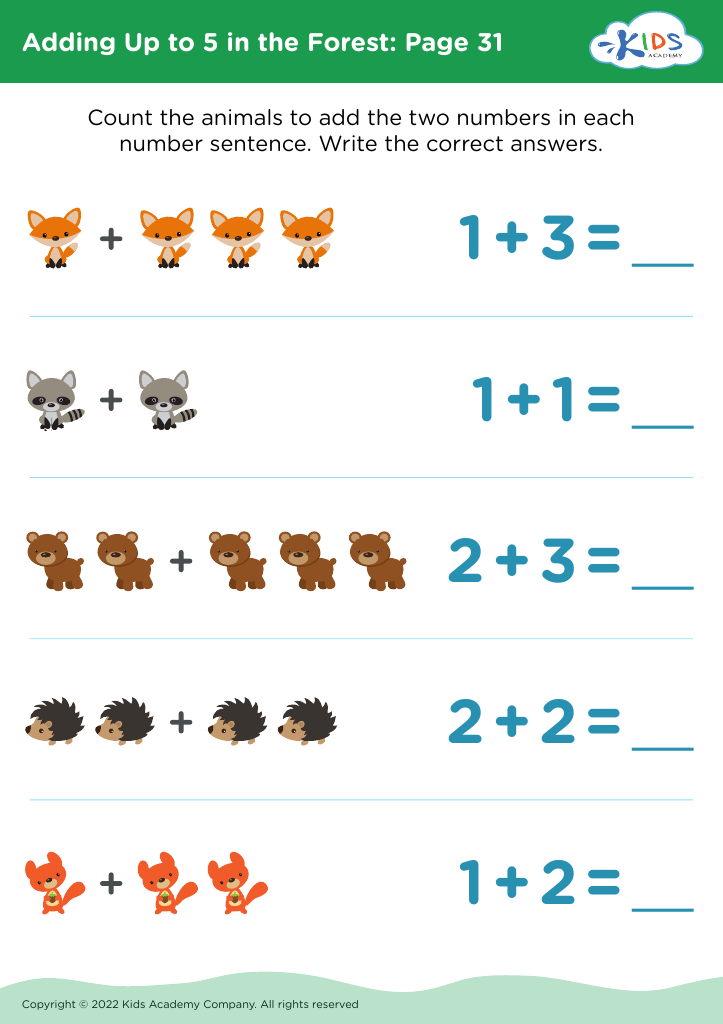
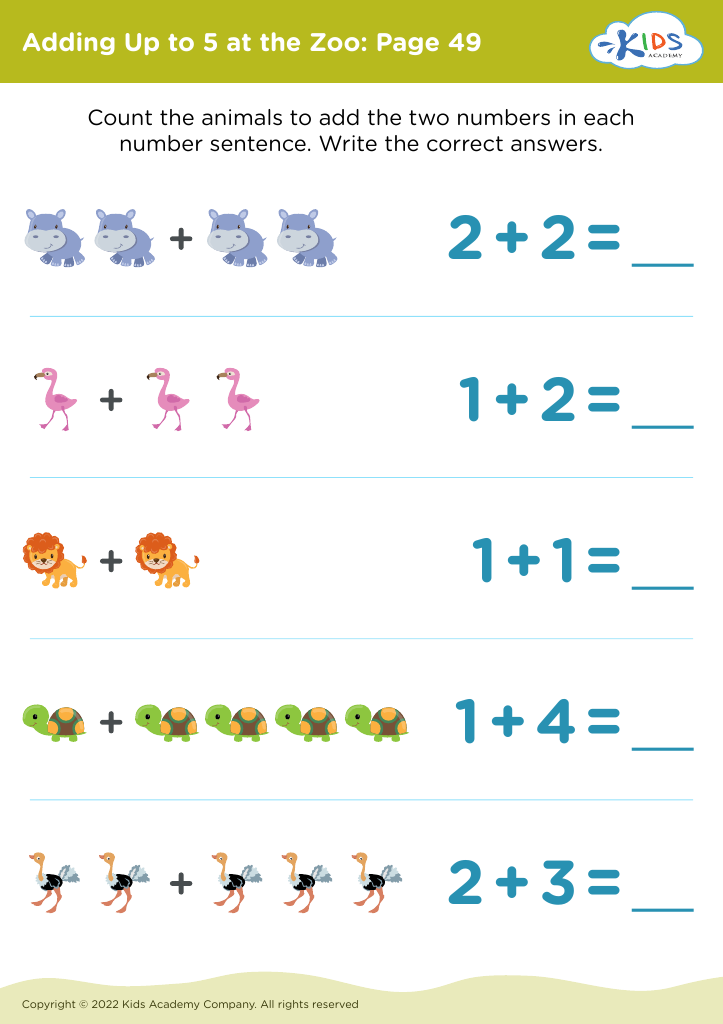
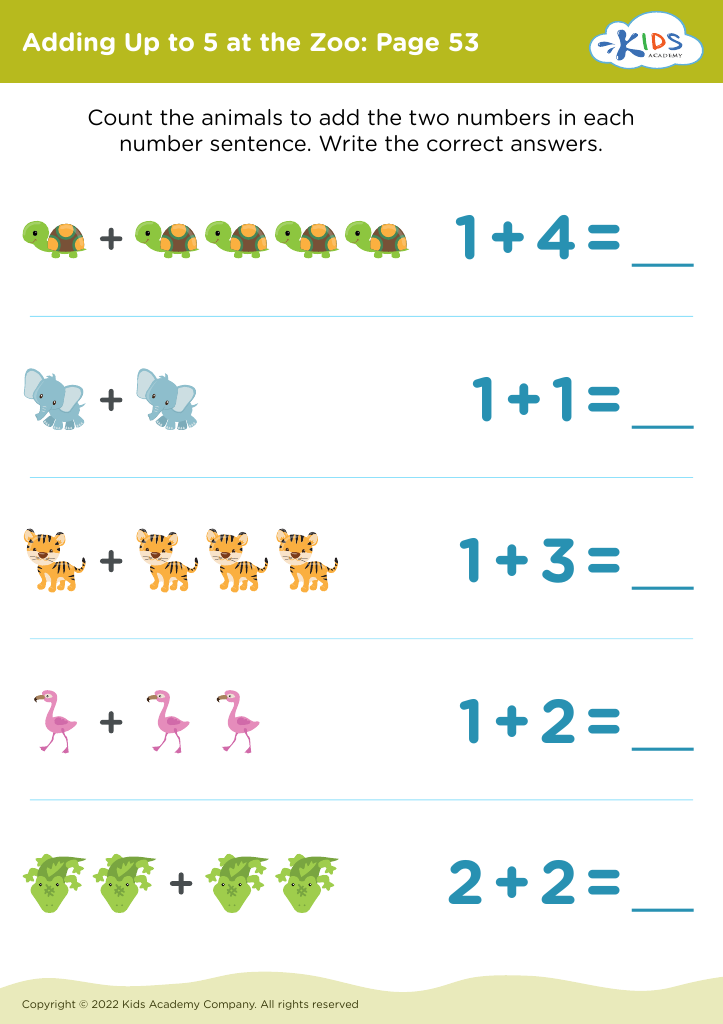
Introduce your 3-year-old to the world of numbers with our engaging "Basic Arithmetic Practice: Adding Up to 5" worksheets. Designed specifically for young learners, these fun activities help preschoolers grasp basic math concepts effortlessly. Kids can enhance their early arithmetic skills and boost their confidence through colorful and interactive exercises. Our worksheets provide a perfect balance of challenge and enjoyment, encouraging hands-on learning through play. Cultivate a solid math foundation for your child while keeping them well-entertained. Download now and watch as your little one delightfully masters the art of addition up to 5!





%20(1).jpg)


Parents and teachers should care about basic arithmetic practice, such as adding up to 5, for 3-year-olds because it lays a crucial foundation for future mathematical learning and cognitive development. At this young age, engaging children in simple addition helps build their number sense, which is the ability to understand and work with numbers. This skill is essential for all higher-level math concepts they will encounter later in their academic journey.
Introducing arithmetic in a fun and interactive way nurtures a child's natural curiosity and enthusiasm for learning. Early practice with numbers also aids in developing critical thinking and problem-solving skills. Additionally, it enhances fine motor skills and reinforces counting abilities, both of which are integral to early childhood education.
Parents and teachers can use everyday moments to teach these concepts, such as counting toys, snacks, or steps, making learning seamless and enjoyable. Consistently practicing basic addition fosters a positive attitude towards math, diminishes math anxiety, and builds the child's confidence. By investing time in arithmetic practice at this stage, parents and teachers help expand cognitive abilities and set children on a path to academic success. Recognizing and encouraging early math skills leads to better academic outcomes and a lifelong affinity for learning.








