Filters

102 filtered results

Clear all filters
Favorites
With answer key
Interactive

102 filtered results

Difficulty Level

Grade


Check out this FREE Trial Lesson on Adding Up to 5 for age 3!

H

Favorites
With answer key
Interactive
  • 3
  • Counting skills
  • Adding Up to 5
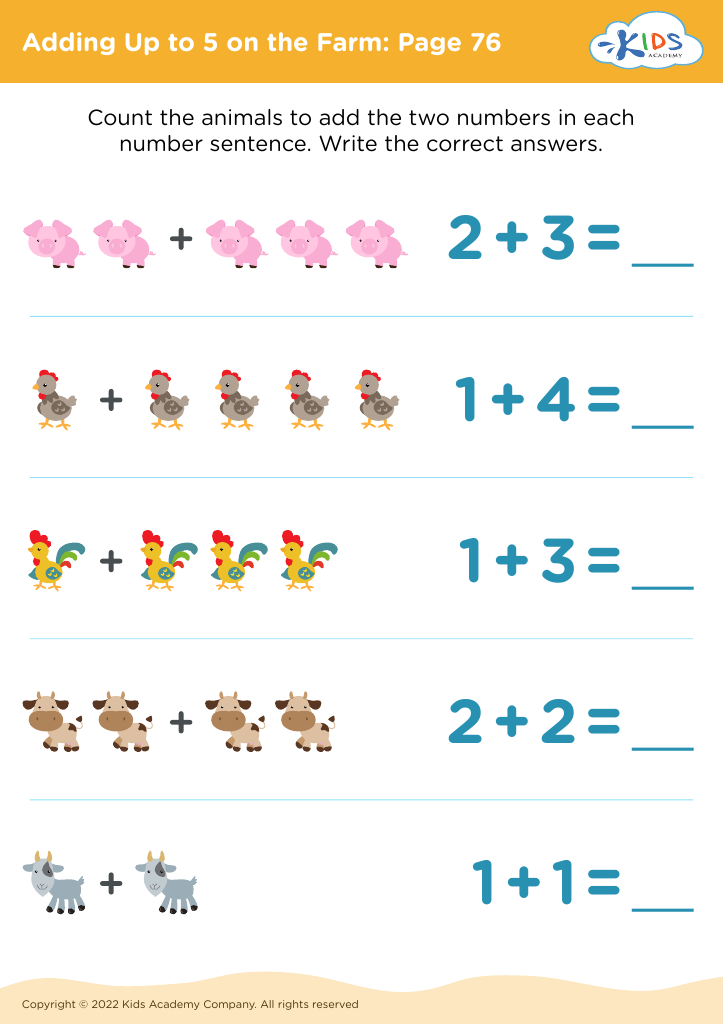
Adding Up to 5 on the Farm: Page 76
Worksheet
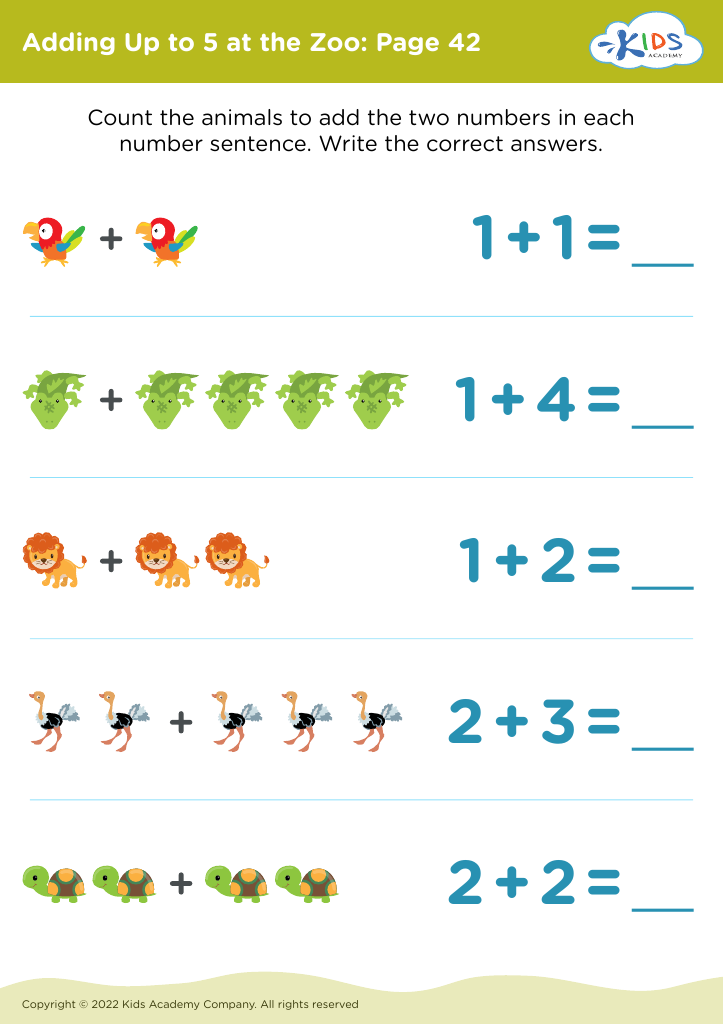
Adding Up to 5 at the Zoo: Page 42
Worksheet
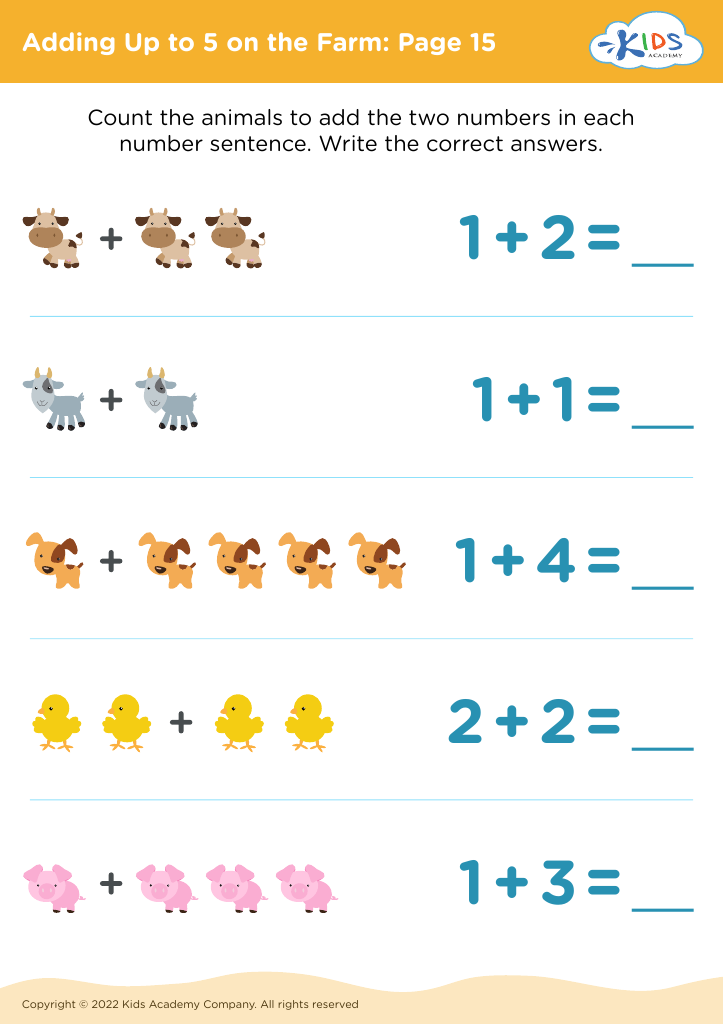
Adding Up to 5 on the Farm: Page 15
Worksheet
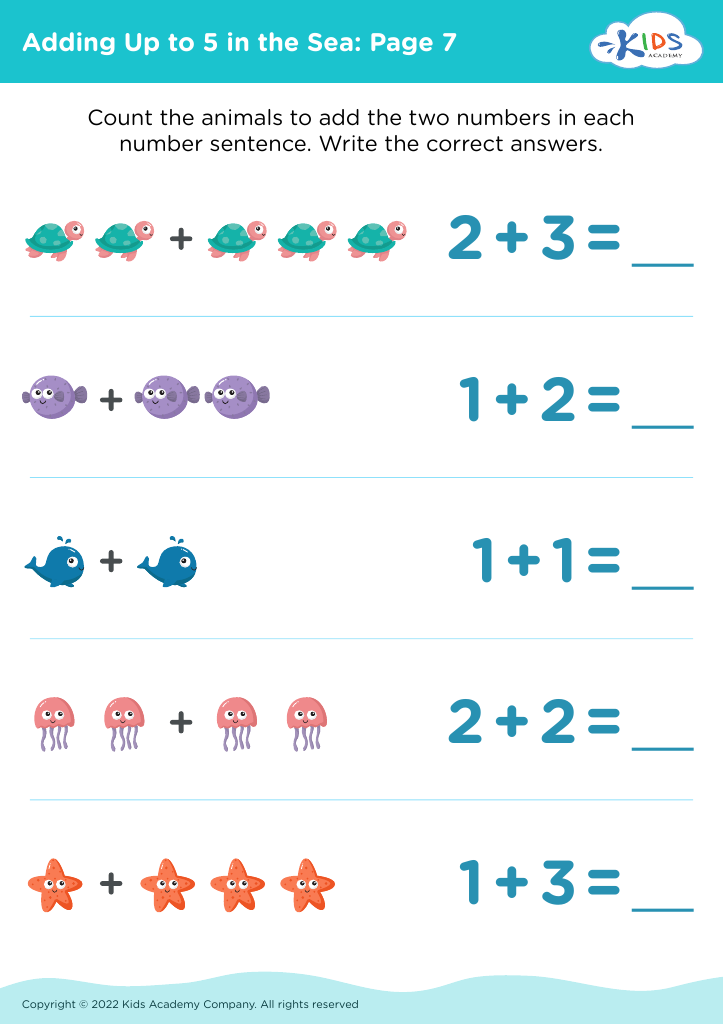
Adding Up to 5 in the Sea: Page 7

Adding Up to 5 in the Sea: Page 7

Adding Up to 5 in the Sea: Page 7
Worksheet
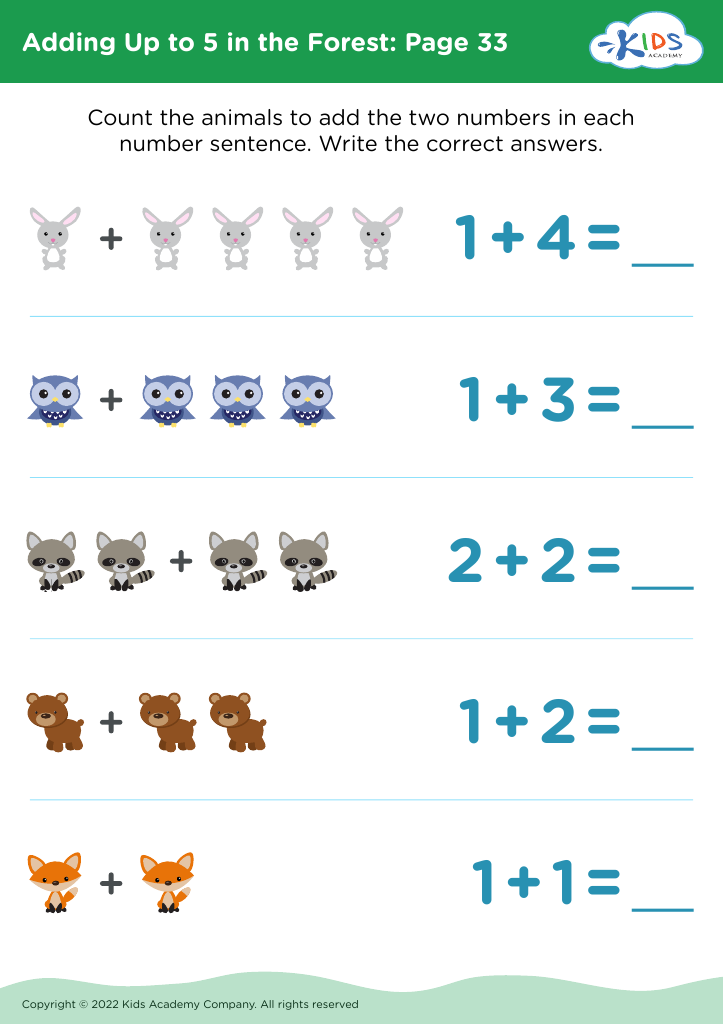
Adding Up to 5 in the Forest: Page 33
Worksheet
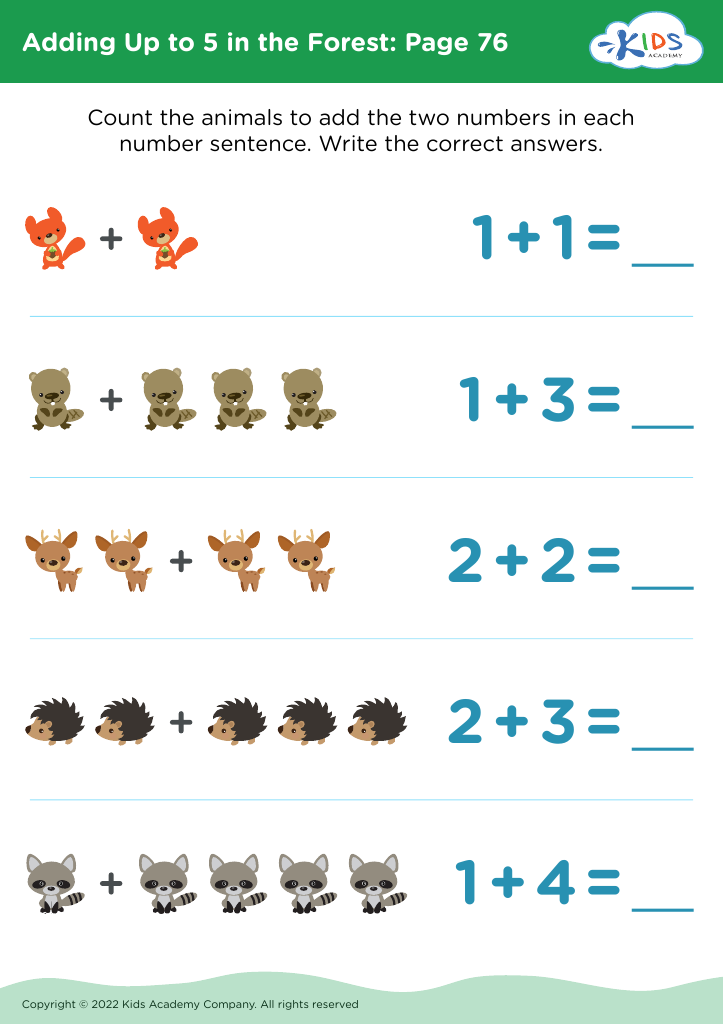
Adding Up to 5 in the Forest: Page 76
Worksheet
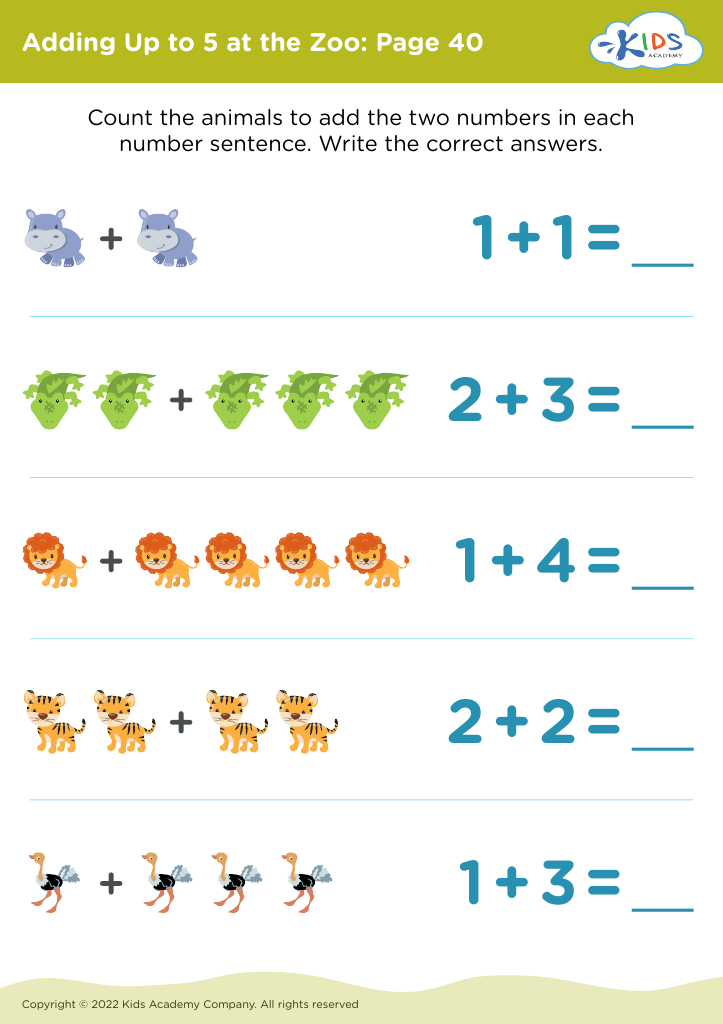
Adding Up to 5 at the Zoo: Page 40
Worksheet
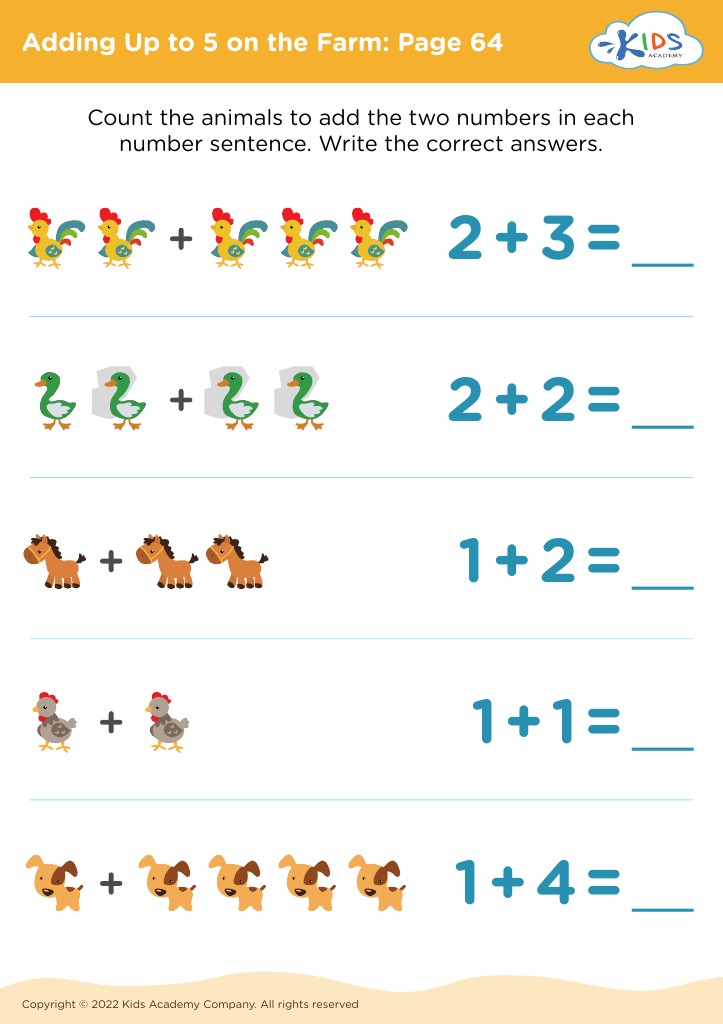
Adding Up to 5 on the Farm: Page 64
Worksheet
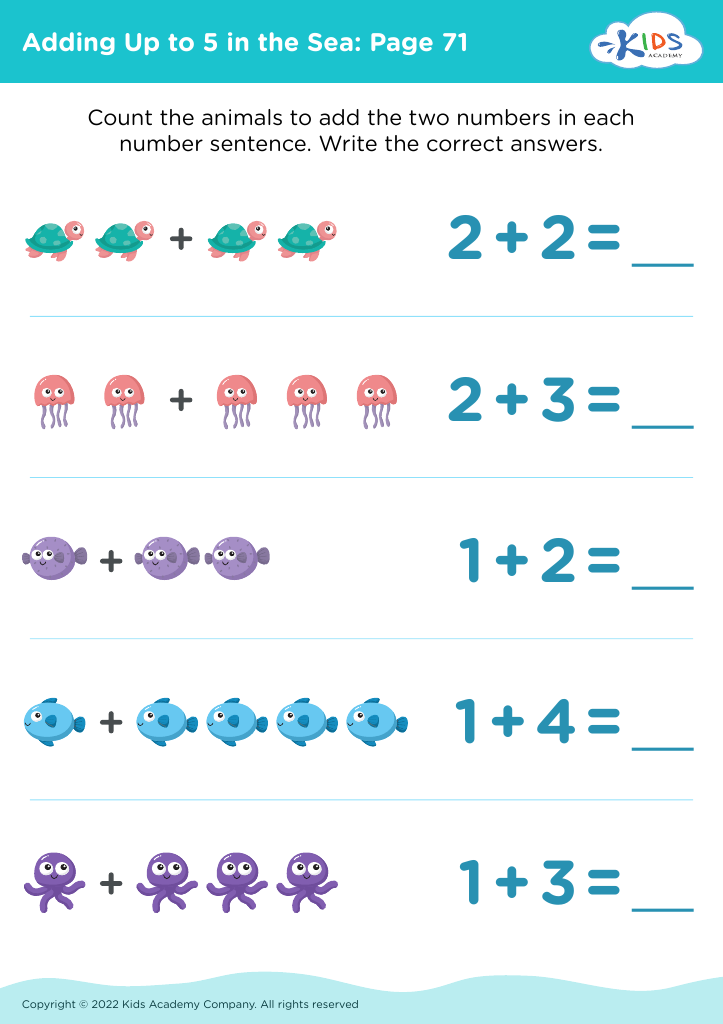
Adding Up to 5 in the Sea: Page 71
Worksheet
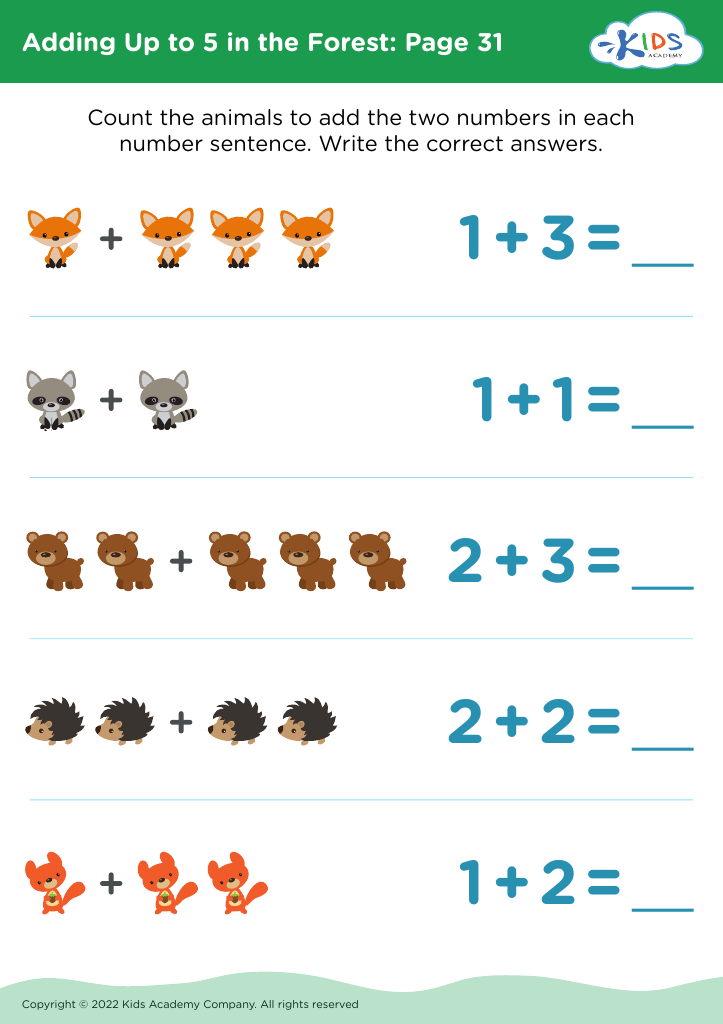
Adding Up to 5 in the Forest: Page 31
Worksheet
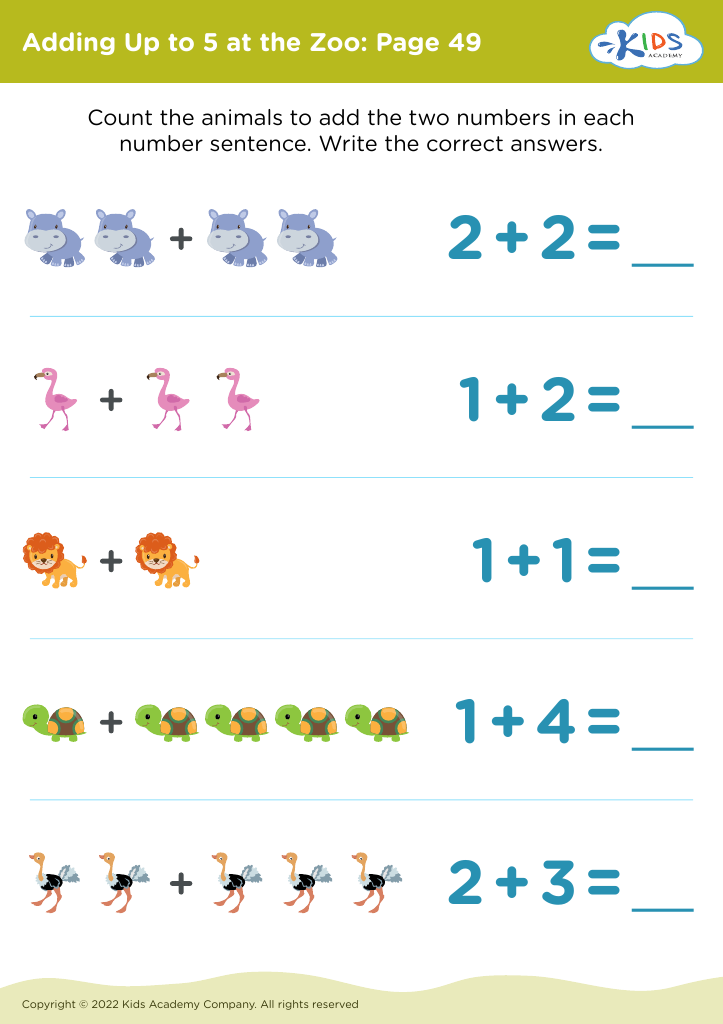
Adding Up to 5 at the Zoo: Page 49
Worksheet
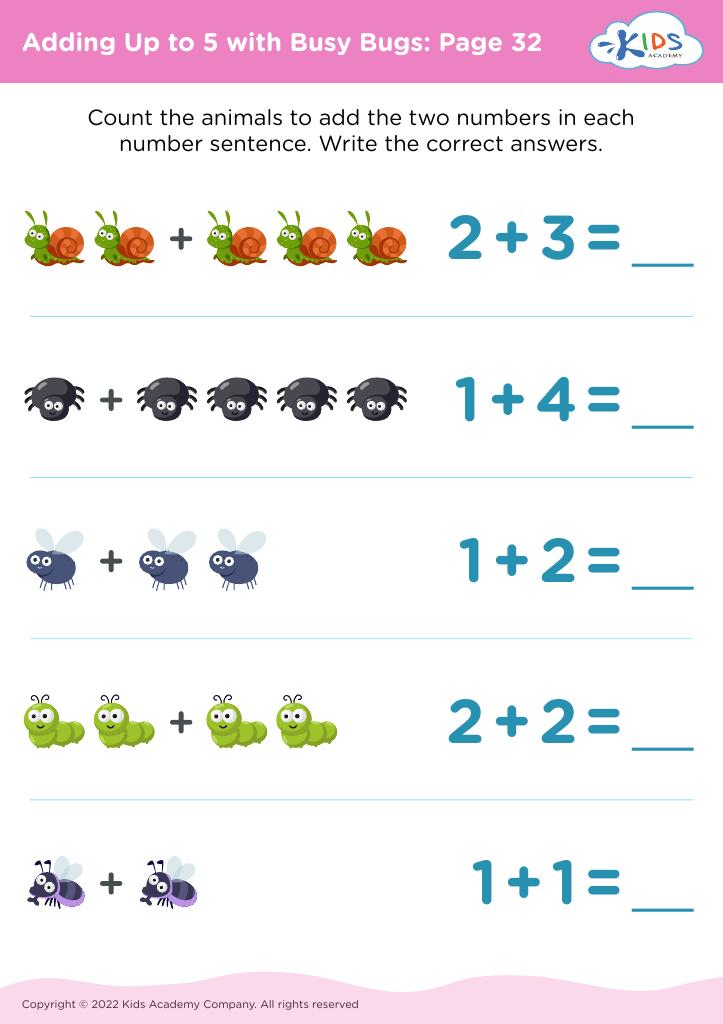
Adding Up to 5 with Busy Bugs: Page 32
Worksheet
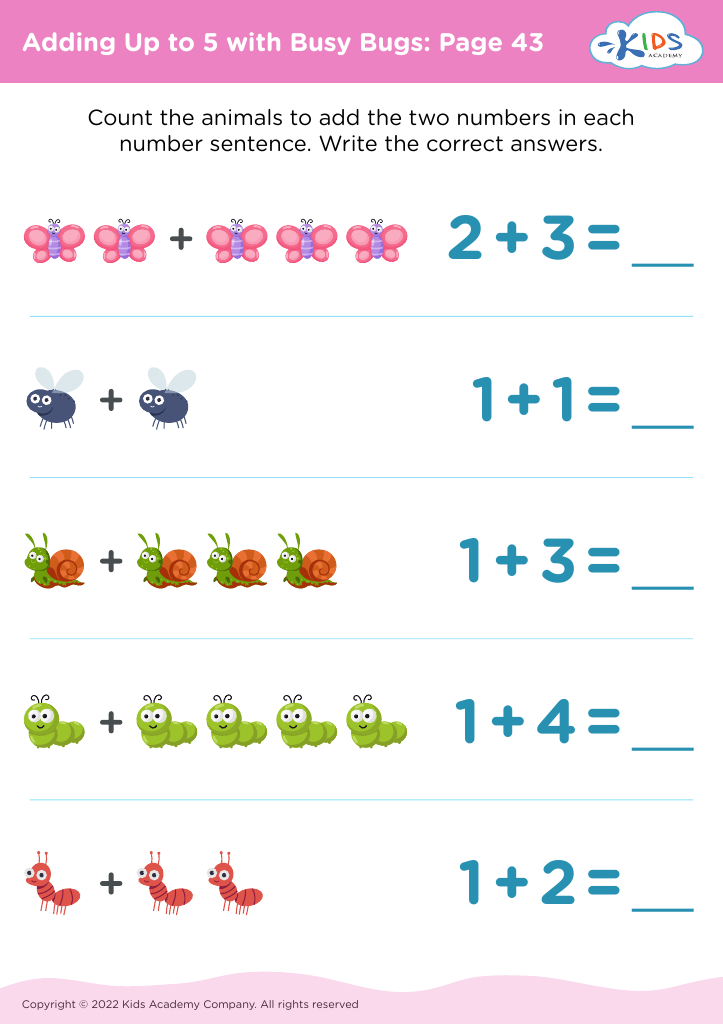
Adding Up to 5 with Busy Bugs: Page 43
Worksheet
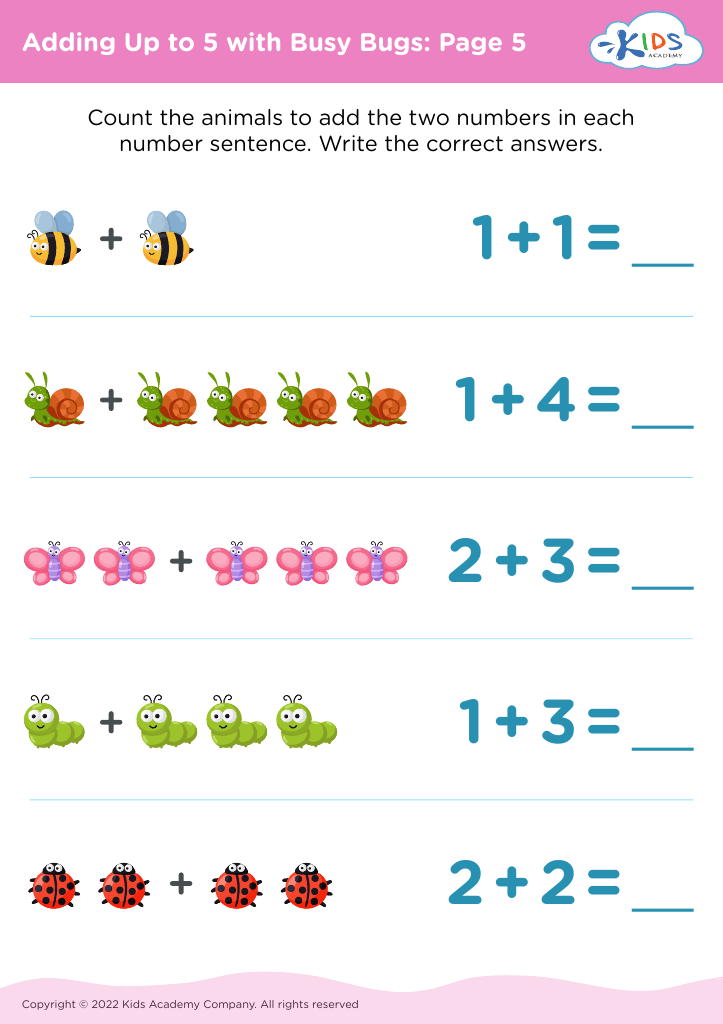
Adding Up to 5 with Busy Bugs: Page 5
Worksheet
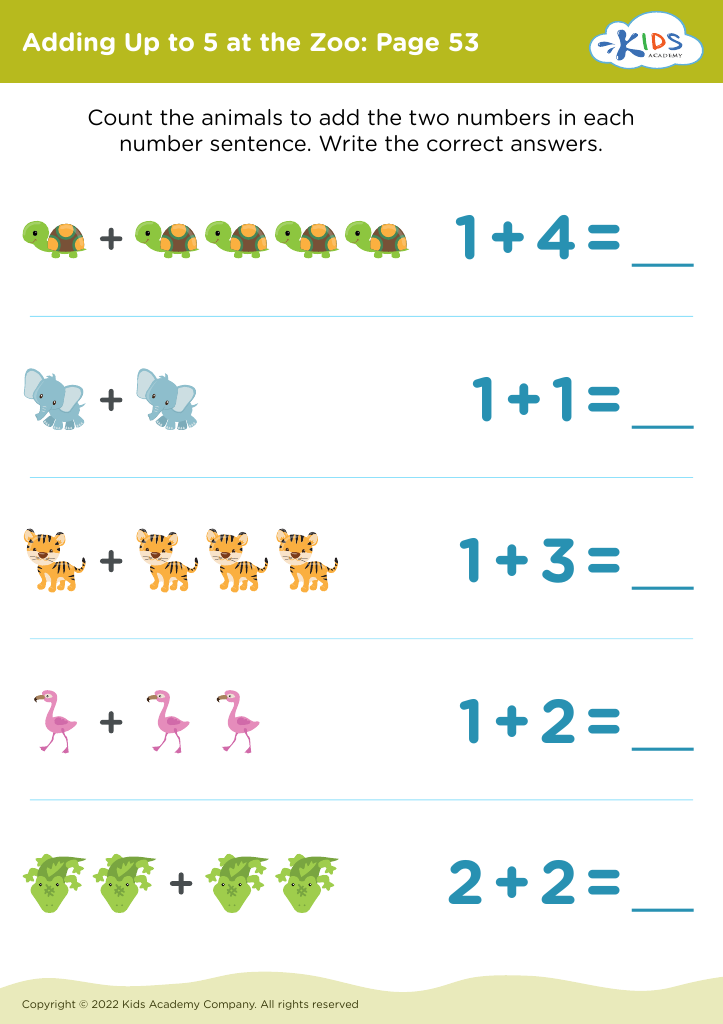
Adding Up to 5 at the Zoo: Page 53
Worksheet
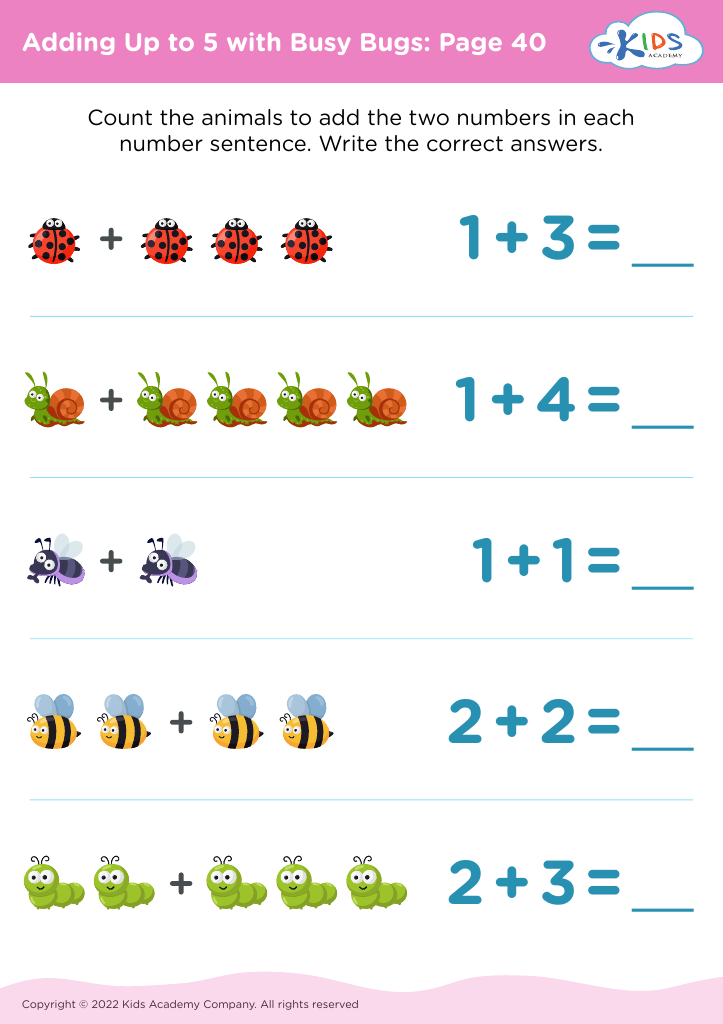
Adding Up to 5 with Busy Bugs: Page 40
Worksheet
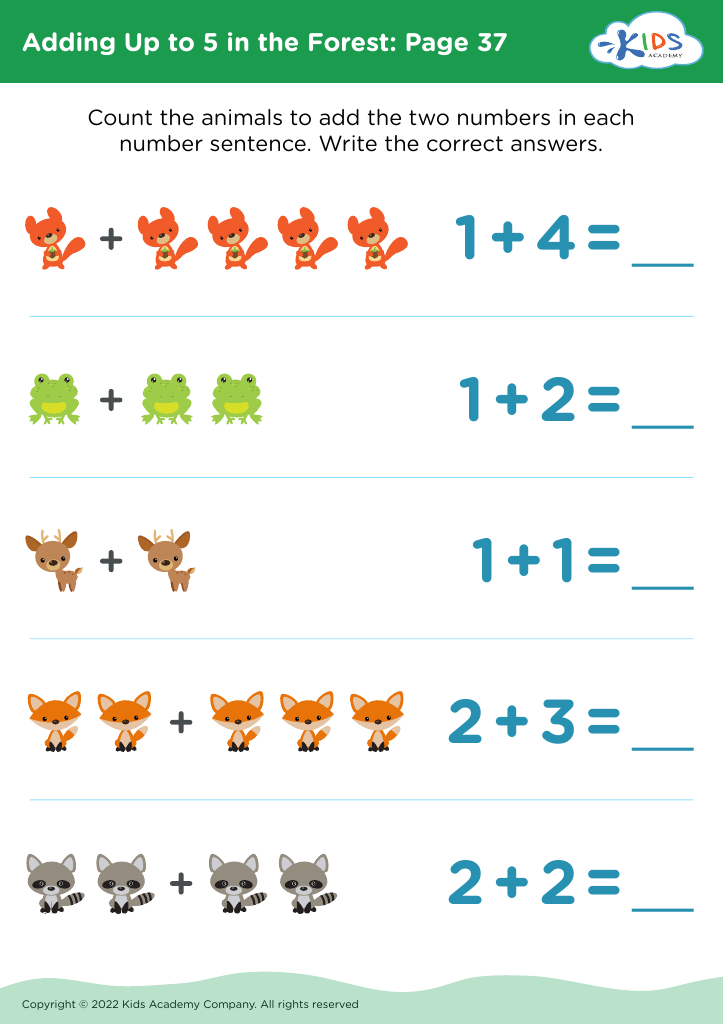
Adding Up to 5 in the Forest: Page 37
Worksheet
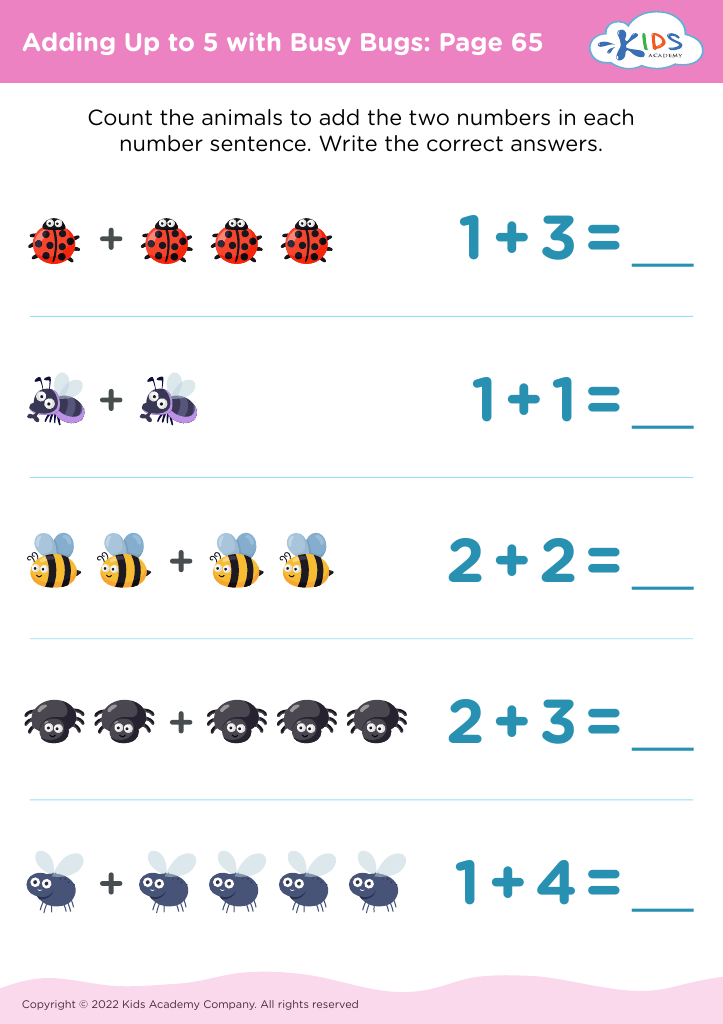
Adding Up to 5 with Busy Bugs: Page 65
Worksheet
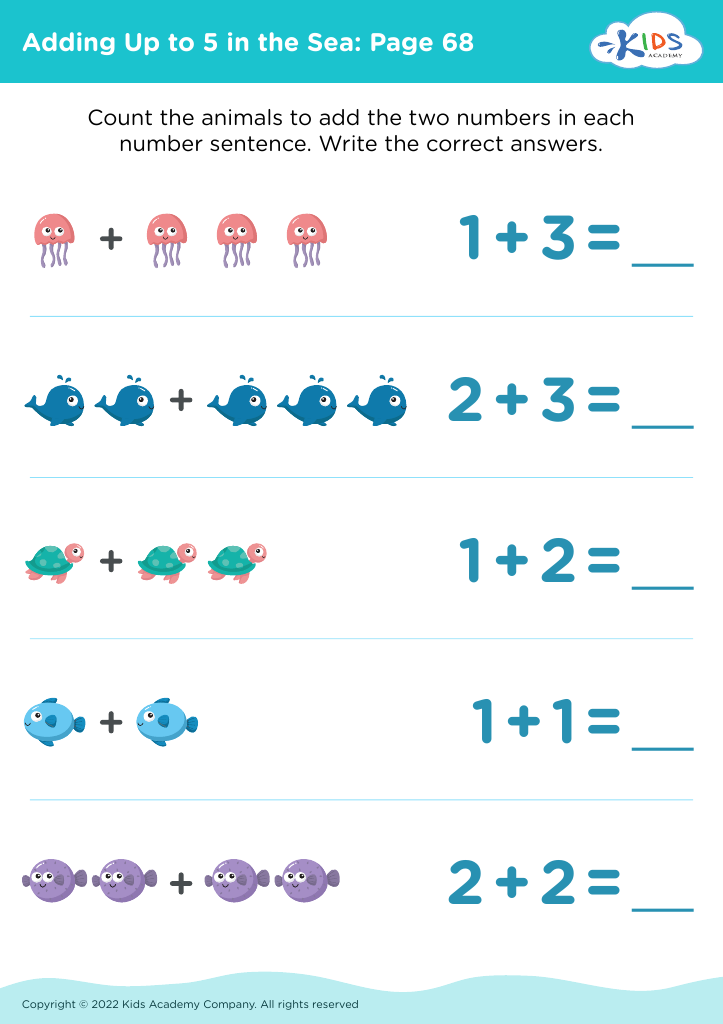
Adding Up to 5 in the Sea: Page 68
Worksheet
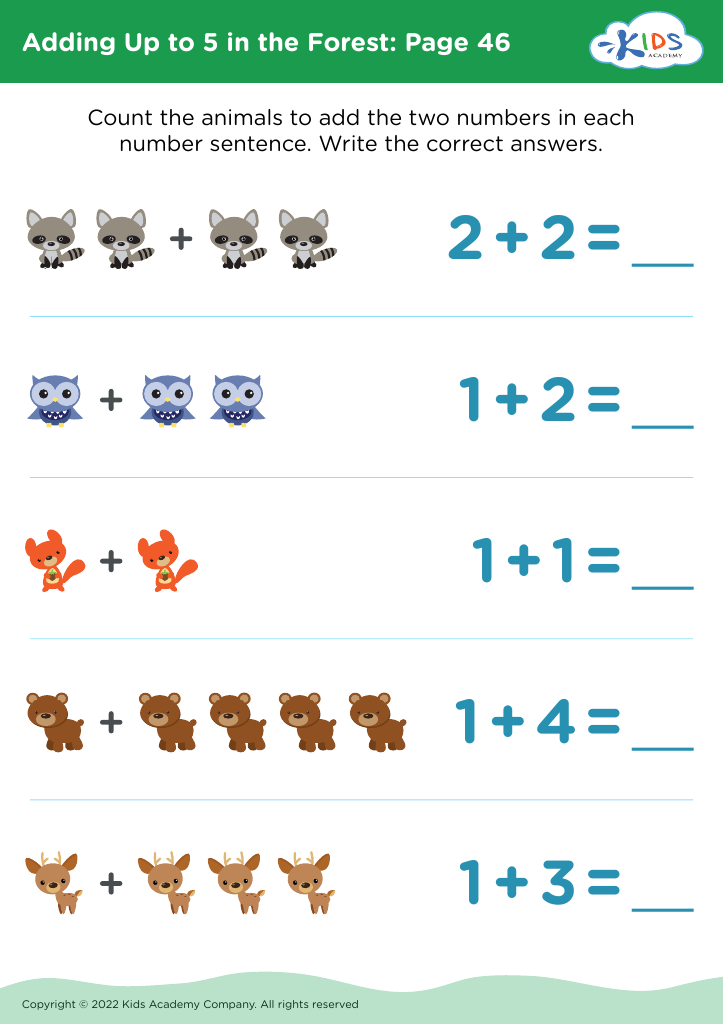
Adding Up to 5 in the Forest: Page 46
Worksheet
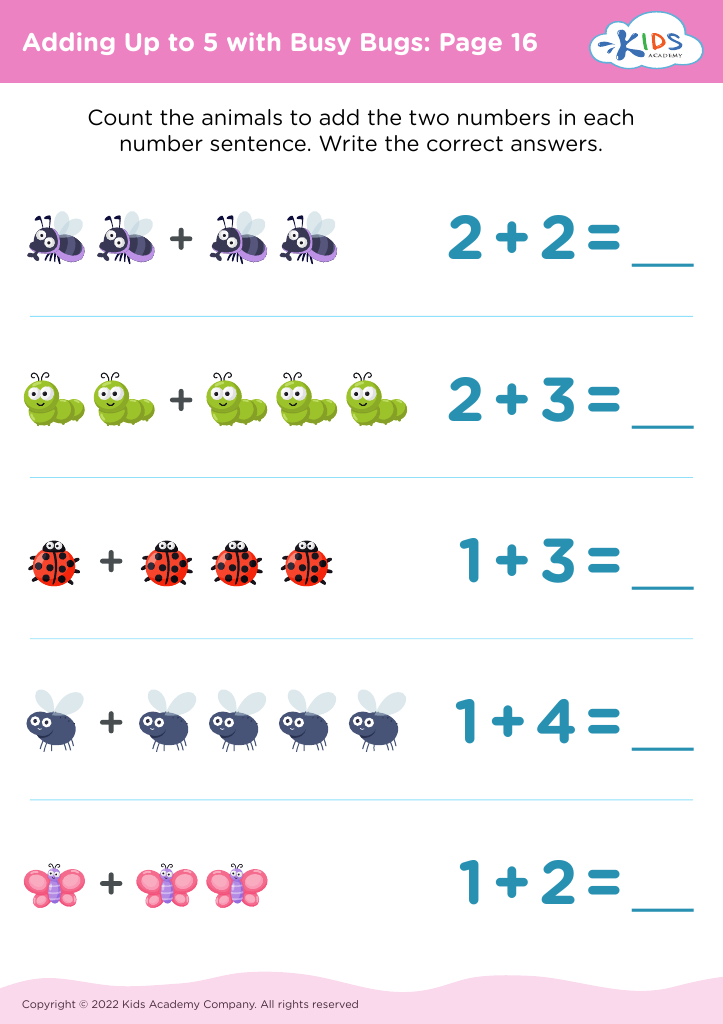
Adding Up to 5 with Busy Bugs: Page 16
Worksheet
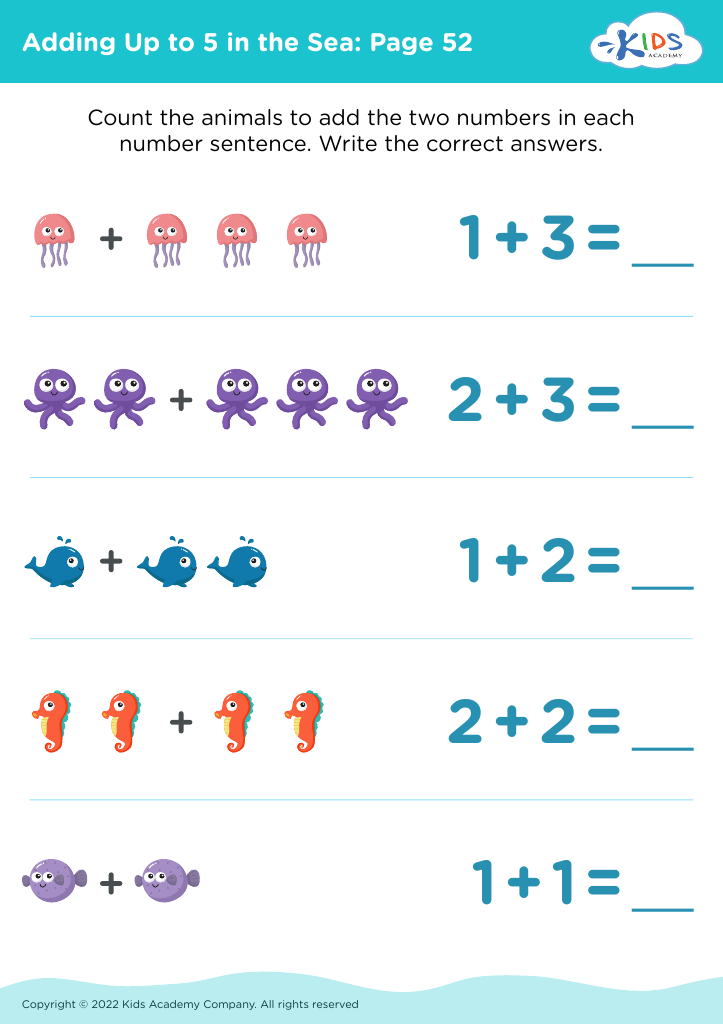
Adding Up to 5 in the Sea: Page 52
Worksheet
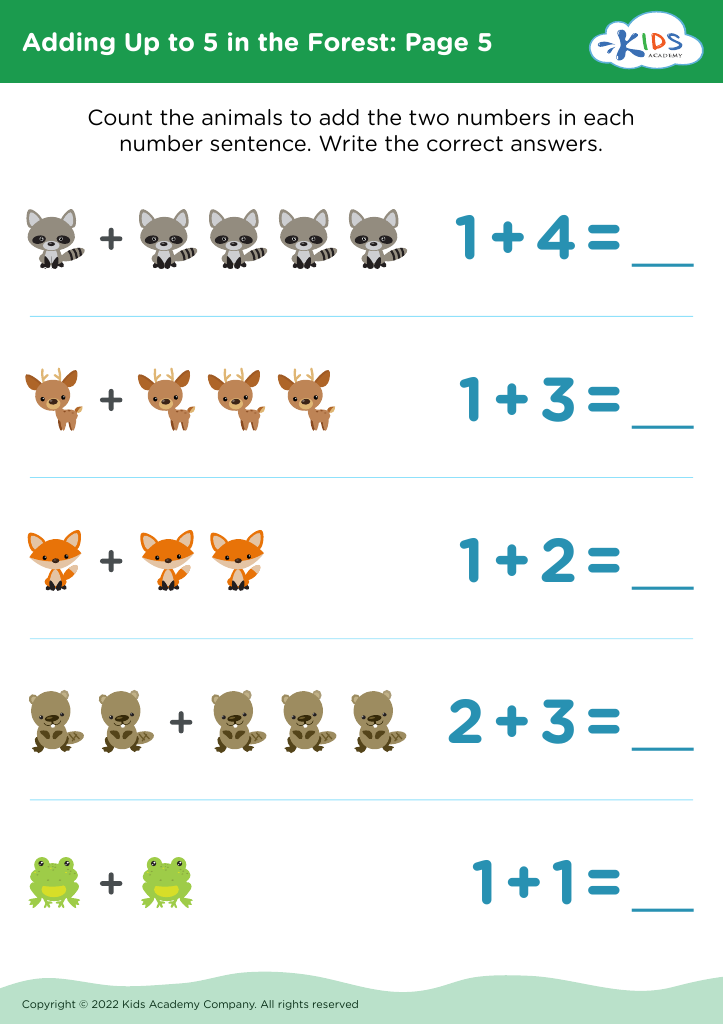
Adding Up to 5 in the Forest: Page 5
Worksheet
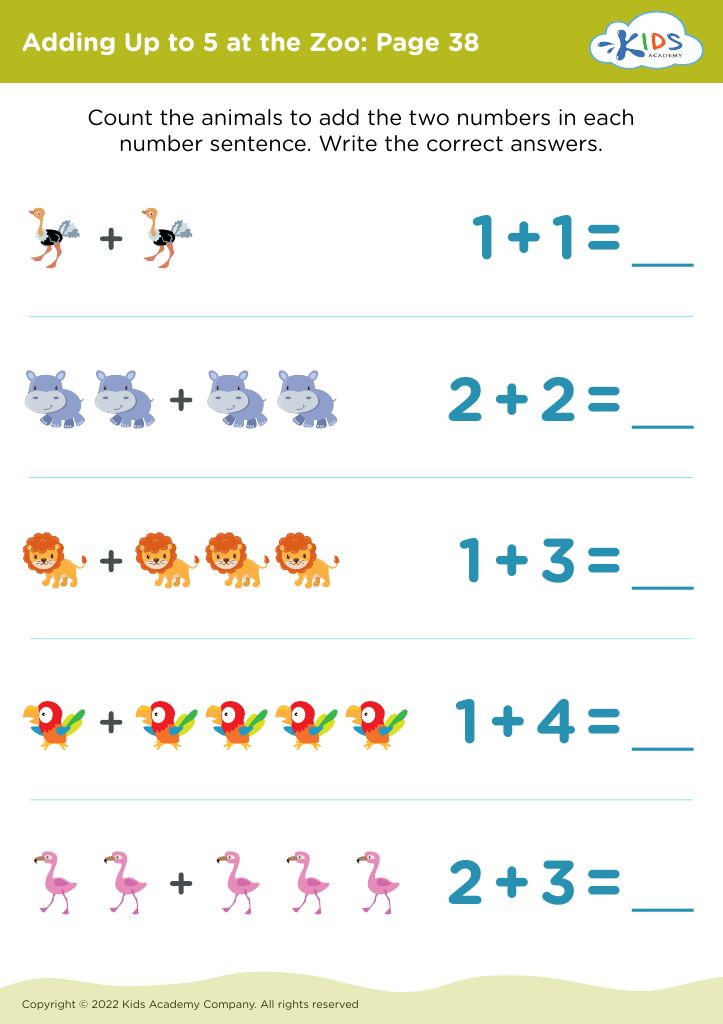
Adding Up to 5 at the Zoo: Page 38
Worksheet


Counting skills, particularly adding up to 5, play a crucial role in a 3-year-old’s cognitive development, setting the foundation for future mathematical understanding. At this age, children are naturally curious and eager to explore their environment, making it an ideal time for parents and teachers to engage them in counting activities. Mastering basic counting helps develop ongoing skills such as number recognition, one-to-one correspondence, and the ability to manipulate quantities, which are all vital precursors to more complex math concepts.

Additionally, learning to count and add can enhance children's problem-solving abilities and critical thinking skills. It encourages them to think logically as they learn to associate numbers with objects, improving their fine motor skills through engaging activities like counting blocks or toys. Furthermore, counting and adding can foster social skills as children often practice these skills during play with their peers.

By prioritizing early counting skills, parents and teachers not only support academic readiness but also instill a love for math in young children. This positive attitude toward numbers can significantly impact their confidence and enthusiasm for learning in future educational settings. Thus, fostering counting skills at this young age is instrumental in supporting holistic development and love for learning.