Fine Motor Skills (coloring) Adding Up to 5 Worksheets for 3-Year-Olds
3 filtered results
-
From - To
Our "Fine Motor Skills (Coloring) Adding Up to 5 Worksheets for 3-Year-Olds" make early math exploration fun and engaging! Designed for toddlers, these worksheets not only strengthen fine motor skills through coloring but also introduce basic addition concepts up to 5. Vibrant images and kid-friendly themes capture young learners' interest as they color and add, ensuring a joyful educational process. Perfect for home or classroom use, these worksheets provide a playful foundation in math while enhancing hand-eye coordination and precision. Sparks a love for learning at Kids Academy! Download now for an enriching, hands-on math adventure.
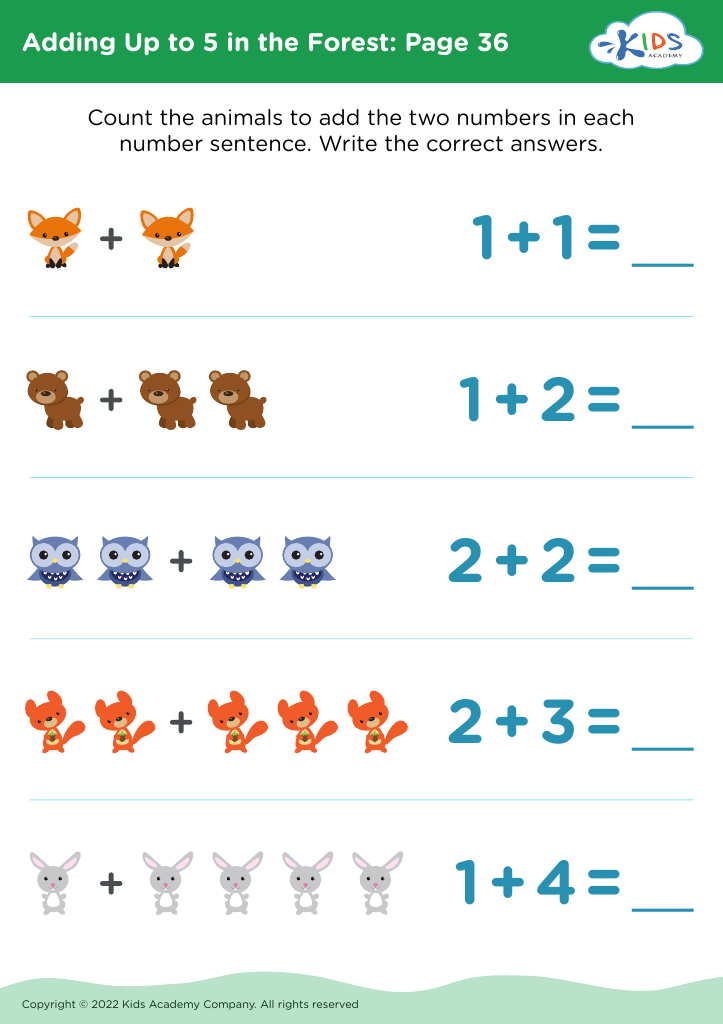
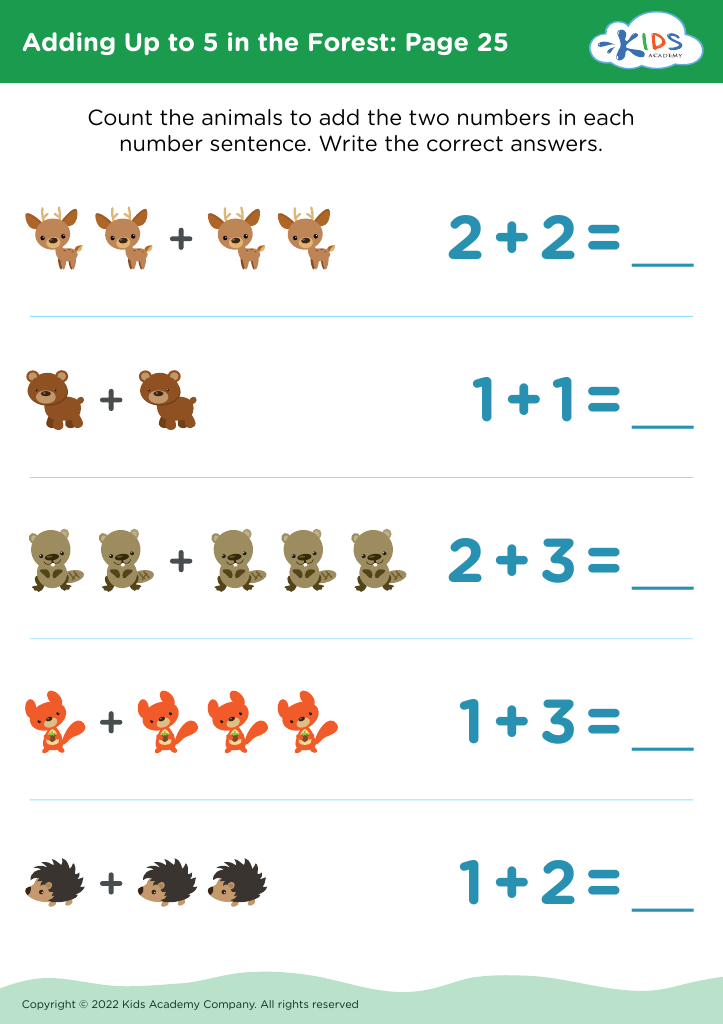
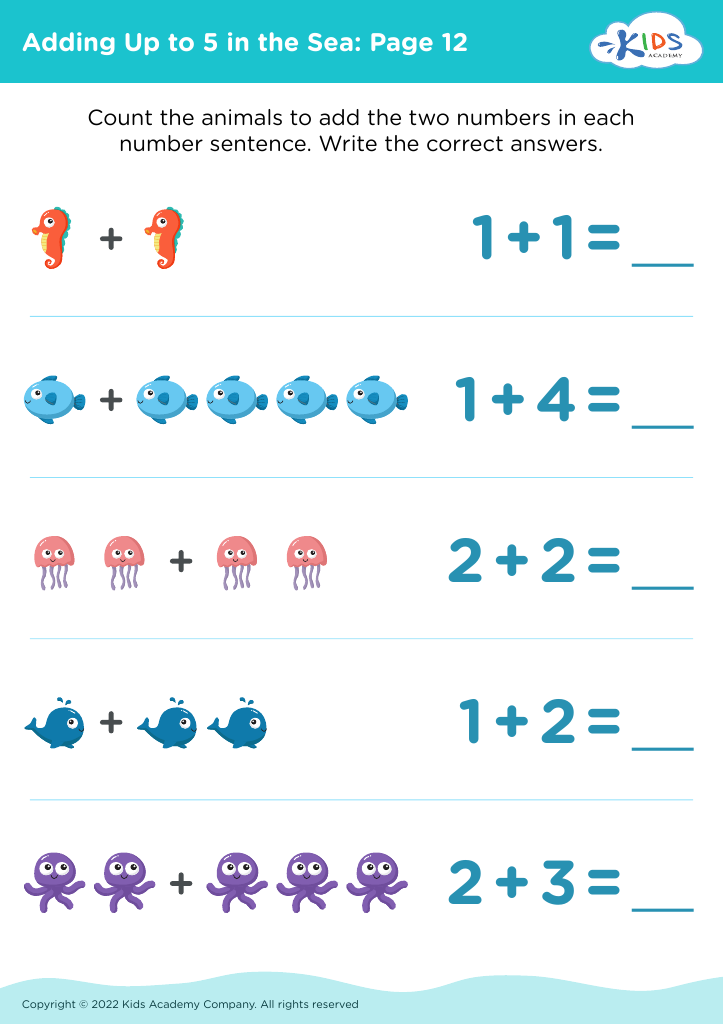







.jpg)
Parents and teachers should give particular attention to the development of fine motor skills, such as coloring, and basic arithmetic skills, like adding up to 5, in 3-year-olds because these foundational abilities play vital roles in overall child development. Fine motor skills involve the coordination of small muscles in the hands and fingers, which is essential not just for coloring but also for everyday tasks like writing, buttoning clothes, and utilizing utensils. By engaging in coloring activities, children develop hand-eye coordination, precision, and control, which translate into improved handwriting skills later on.
Furthermore, introducing basic arithmetic skills like adding up to 5 provides an early exposure to numerical concepts and critical thinking. These early learning experiences build a child's confidence in their ability to solve problems and understand the world around them. At age three, the ability to grasp these concepts lays the groundwork for future academic endeavors in subjects like math and science. For teachers, incorporating these activities into lesson plans ensures a well-rounded curriculum, while parents can foster a supportive environment that motivates continued practice at home. Together, these skills contribute significantly to a child’s cognitive development, academic readiness, and independence, setting the stage for future success in school and daily life.








