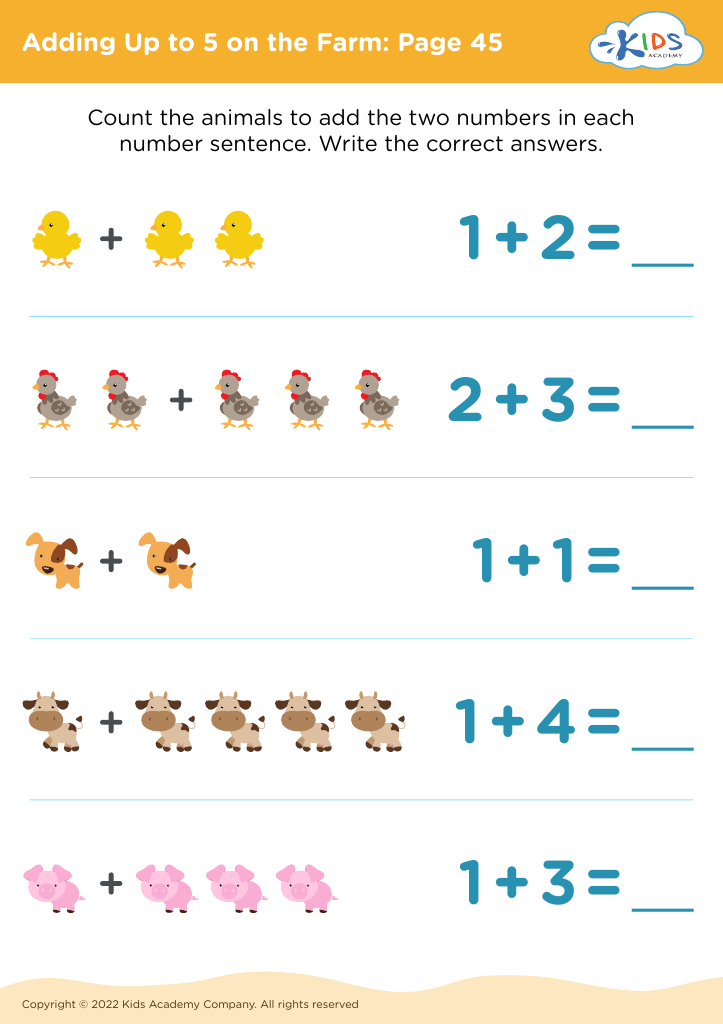
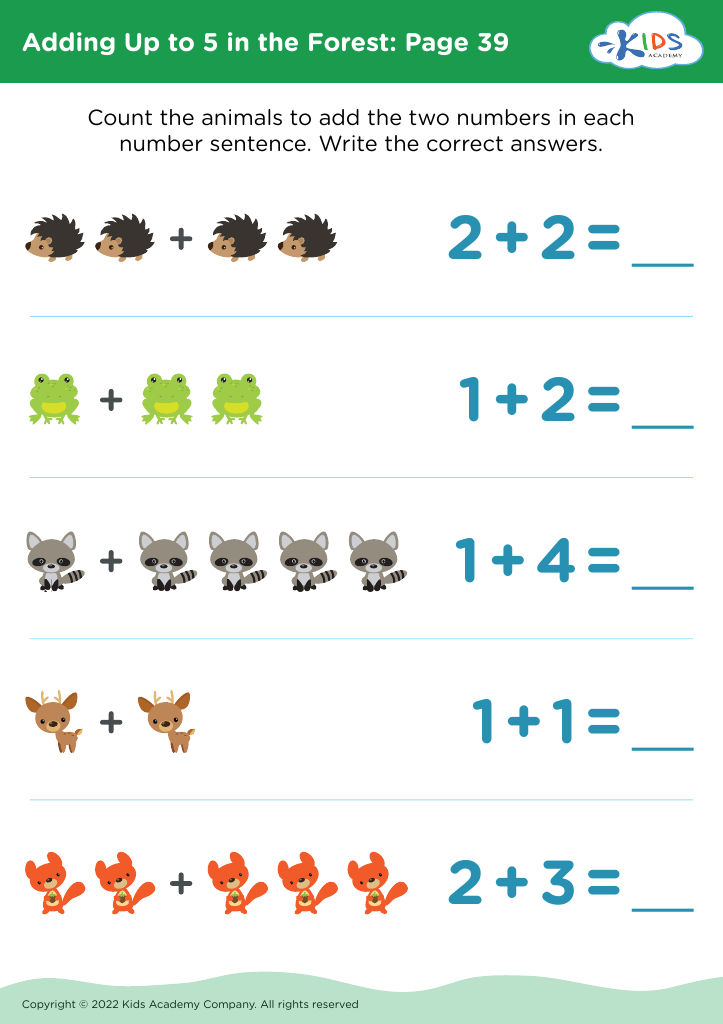
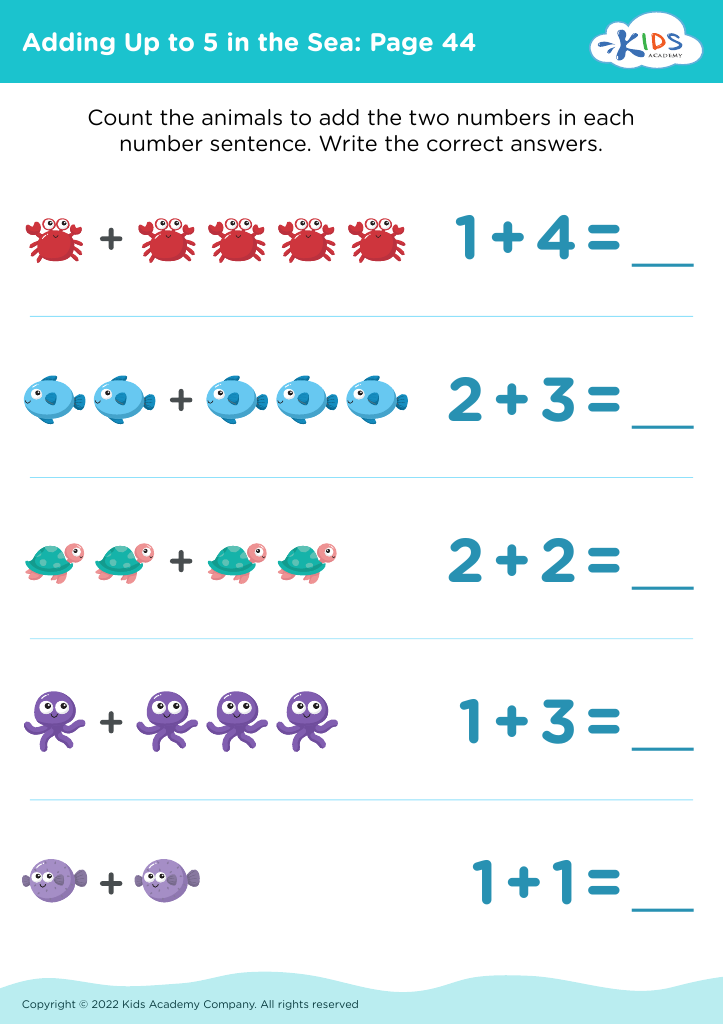
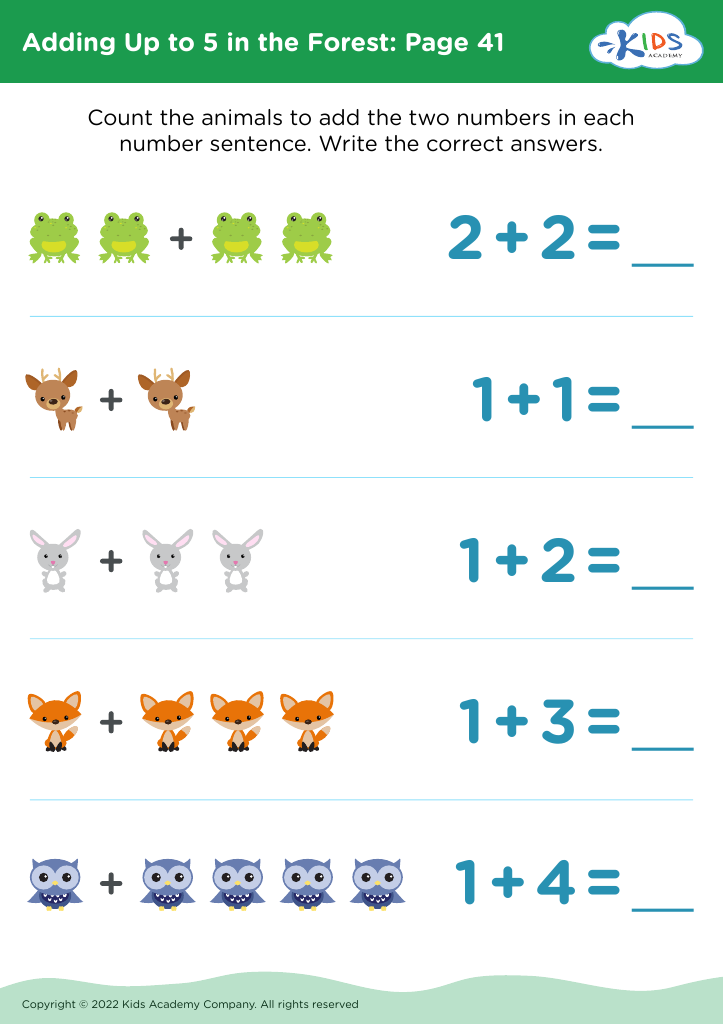








Fine motor skills are essential for the development of young children, especially for three-year-olds who are encountering new challenges in their learning experiences. These skills involve the small muscle movements in the hands and fingers, which are critical for activities such as writing, drawing, and using small objects. Focusing on fine motor skills that add up to 5 helps children improve their coordination, dexterity, and spatial awareness.
For parents or teachers, nurturing these abilities enables children to build confidence as they explore math concepts through practical, hands-on activities. Engaging young learners with materials such as counting beads or finger paints encourages them to participate in foundational math learning. Understanding how to combine small sets—like 2 and 3 or 1 and 4—introduces early addition concepts, making math fun and approachable.
Additionally, developing strong fine motor skills lays the groundwork for future academic success. Children who master these skills are often better prepared for school tasks, including writing and crafting, which are important for literacy development. By prioritizing fine motor development tied to basic math principles, parents and teachers can offer children a robust, well-rounded foundation for lifelong learning and critical thinking.








