
Following instructions Adding Up to 5 Worksheets for 3-Year-Olds
3 filtered results
Difficulty Level
Grade
Age
-
From - To
Subject
Activity
Standards
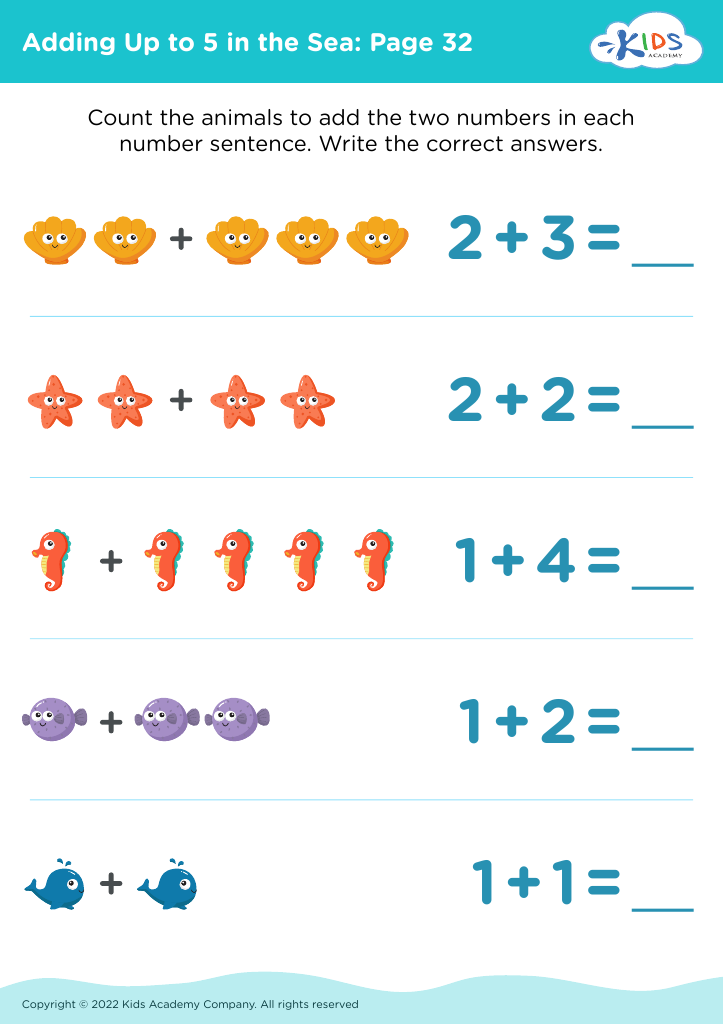
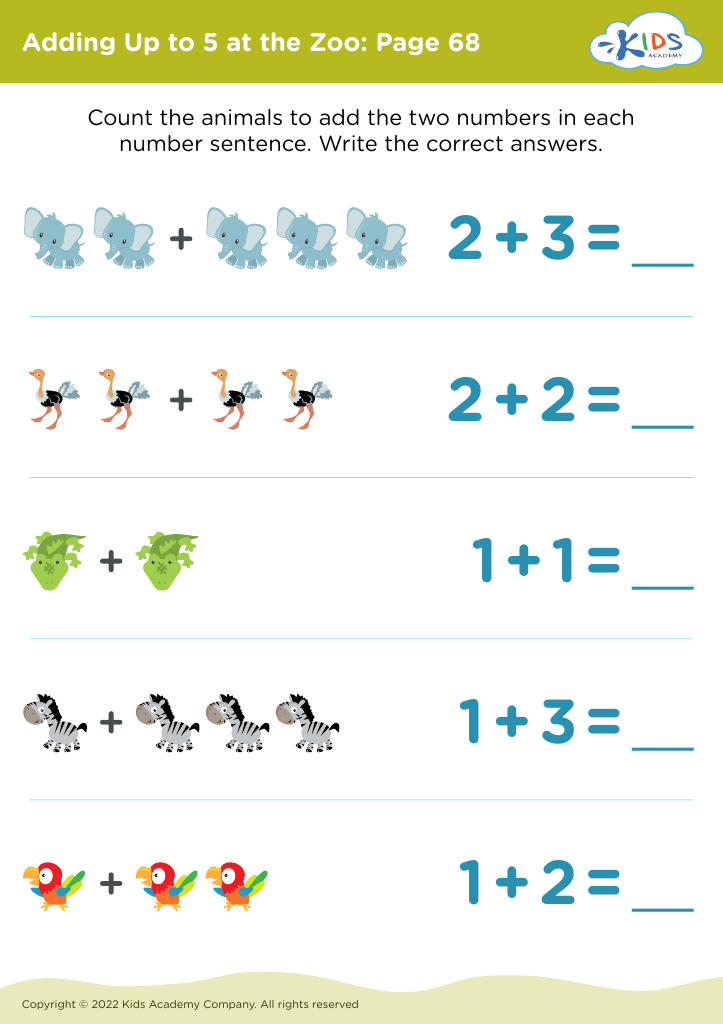
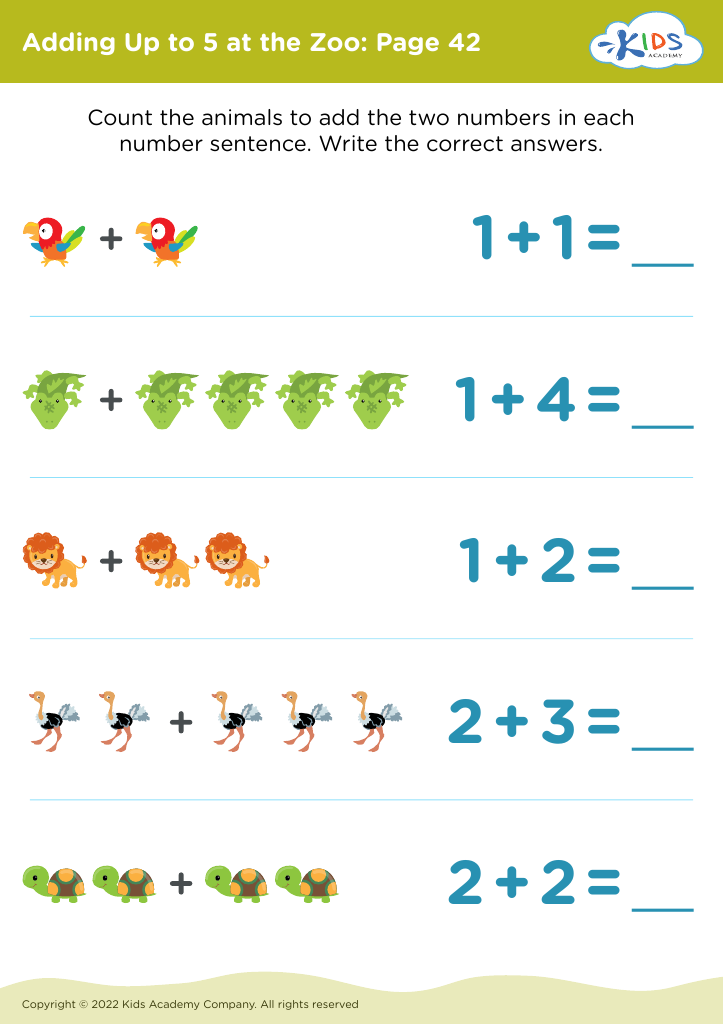
Discover our engaging "Following Instructions: Adding Up to 5" worksheets designed specifically for 3-year-olds! These printable activities help young learners develop essential math skills while improving their ability to understand and follow directions. Children will enjoy colorful visuals and simple instructions as they practice basic addition strategies, enhancing their numeracy skills in a fun and interactive way. Our worksheets are perfect for parents and educators looking to make math a playful and meaningful experience. Encourage independent learning and cognitive development as your child learns to add up to five with confidence! Start their educational journey today with our beloved resources!
Favorites
With answer key
Interactive
Join Kids Academy for Free
Who is primarily going to use this learning content?








Following instructions is a foundational skill that sets the stage for learning and development in young children. For 3-year-olds, engaging in activities that involve "Adding Up to 5" is crucial for several reasons.
First, at this age, children are naturally curious and eager to explore numbers and relationships. Learning to add up to 5 not only introduces basic math concepts but also helps foster critical thinking skills. It allows them to understand quantity and begin forming connections between numbers and real-world objects.
Second, following instructions while participating in this activity promotes listening skills and attention spans. As children learn to follow sequential tasks—such as counting, sorting, or grouping objects—they practice patience and focus, which are essential skills for future learning both in academic settings and everyday life.
Finally, these activities promote social interaction if done in a group setting. Children learn to communicate and work together, enhancing their social and emotional development. Overall, prioritizing following instructions during math activities like “Adding Up to 5” supports a balanced growth encompassing cognitive, social, and emotional factors, laying a solid foundation for lifelong learning.








