Hand-eye Coordination Adding Up to 5 Worksheets for 3-Year-Olds
15 filtered results
-
From - To
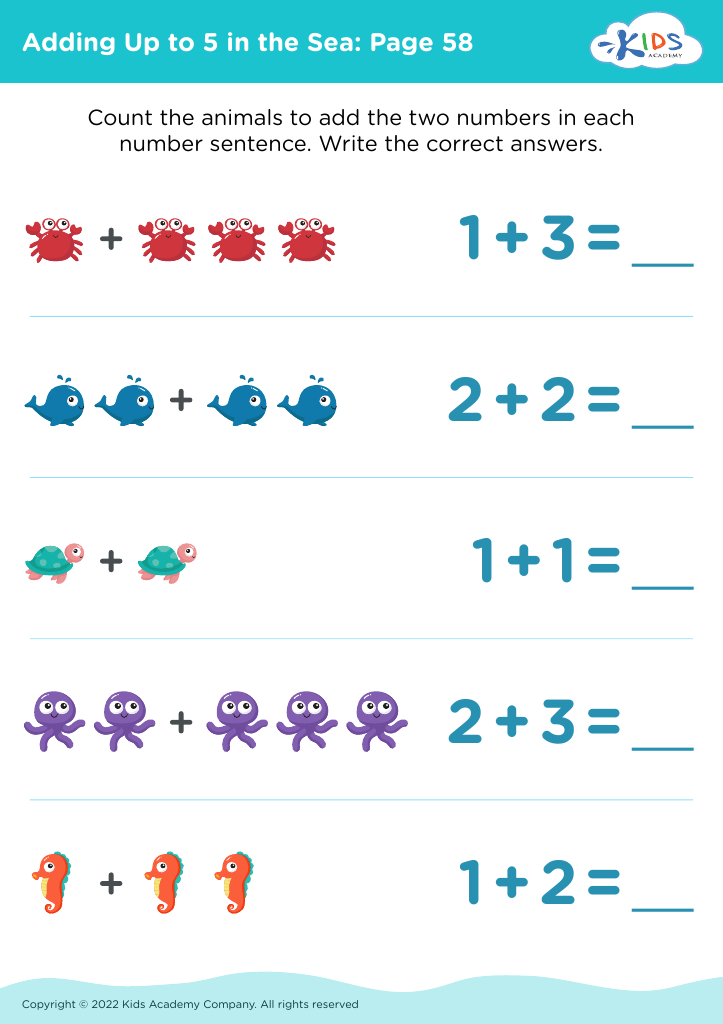
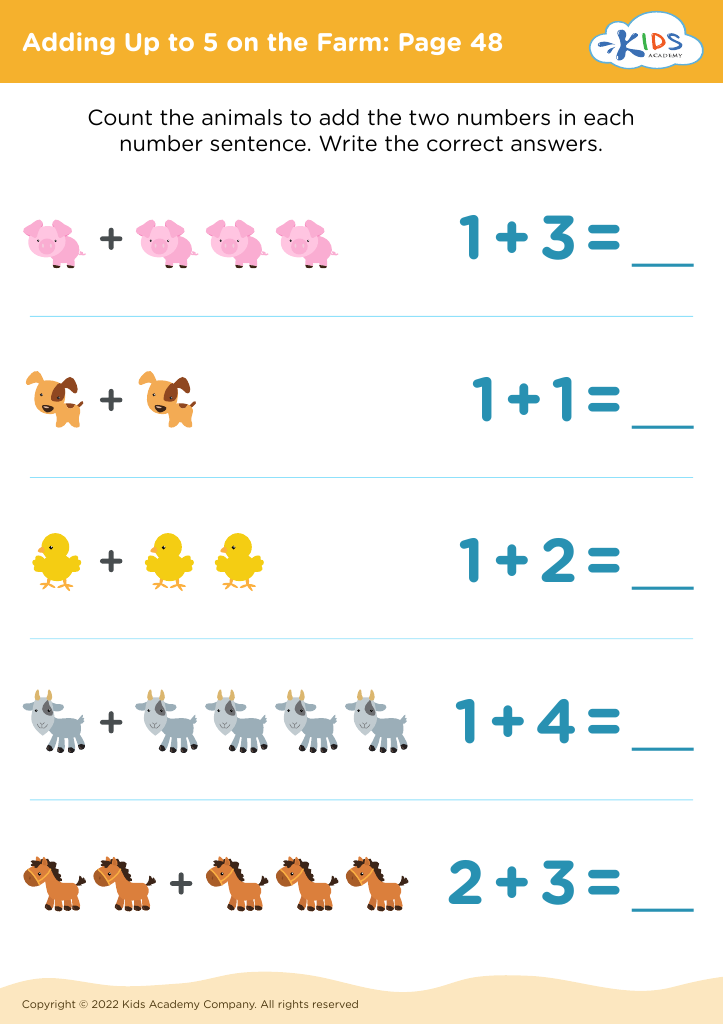
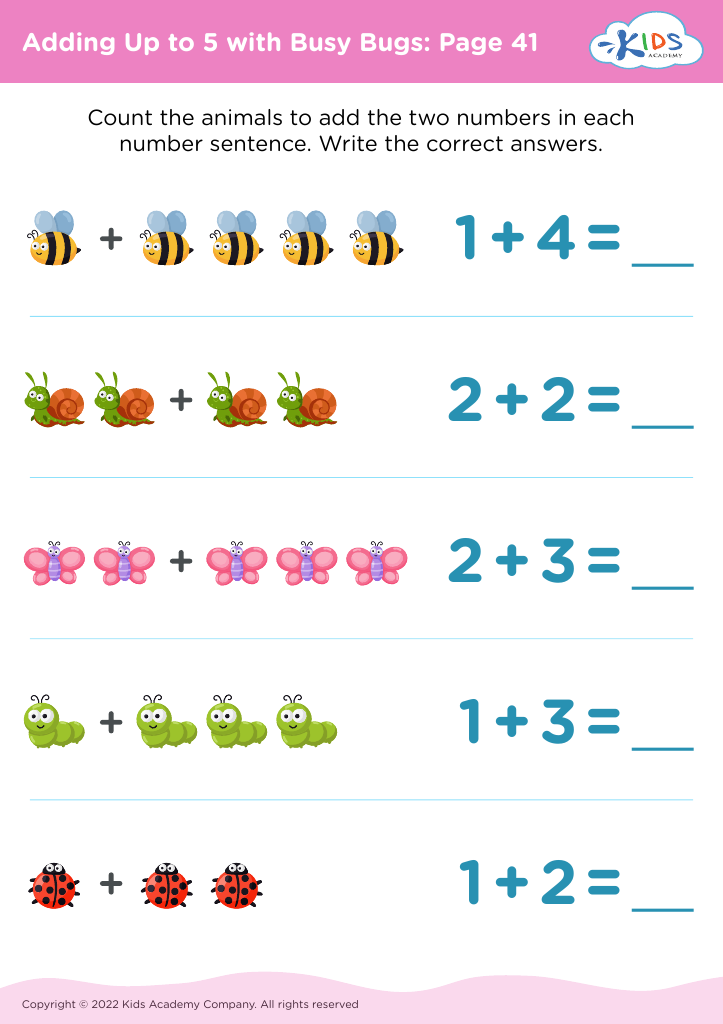
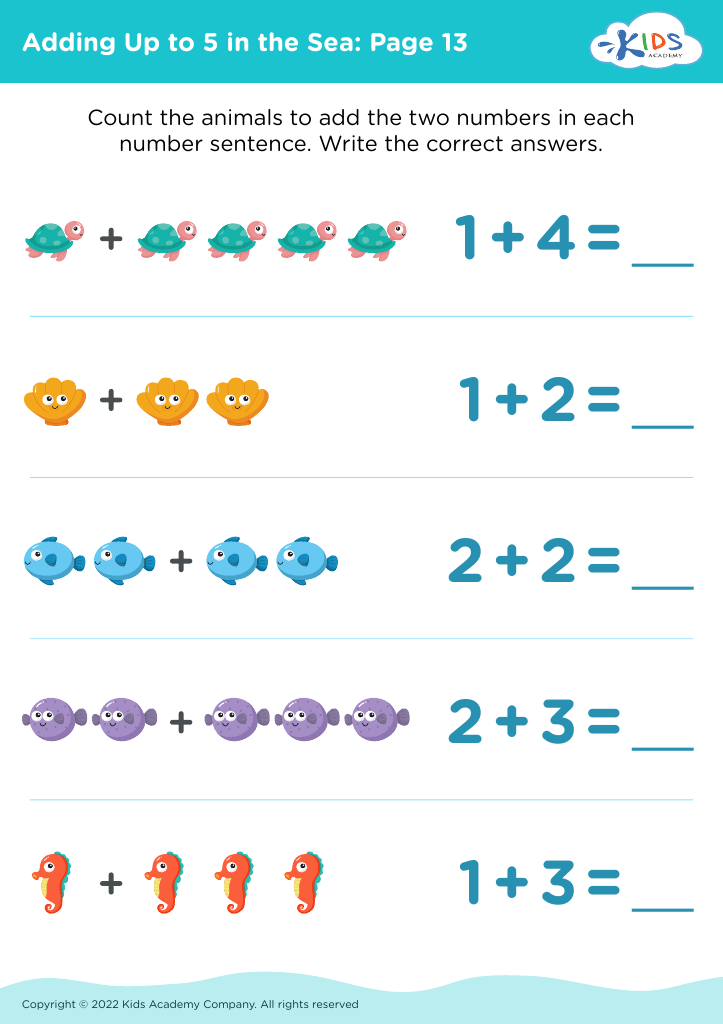
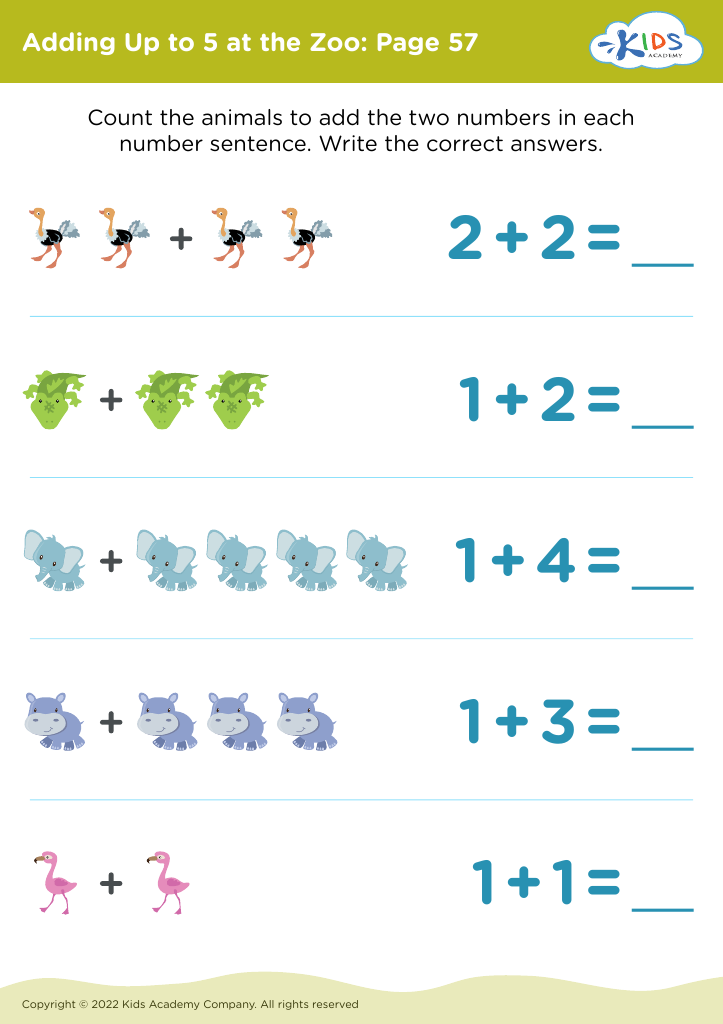
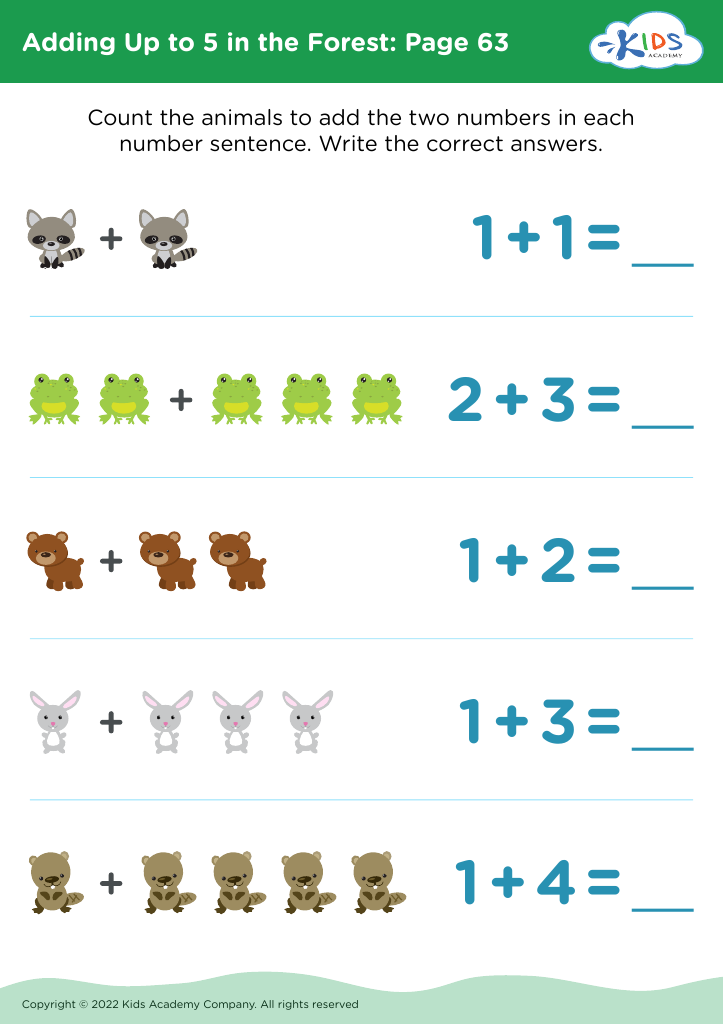
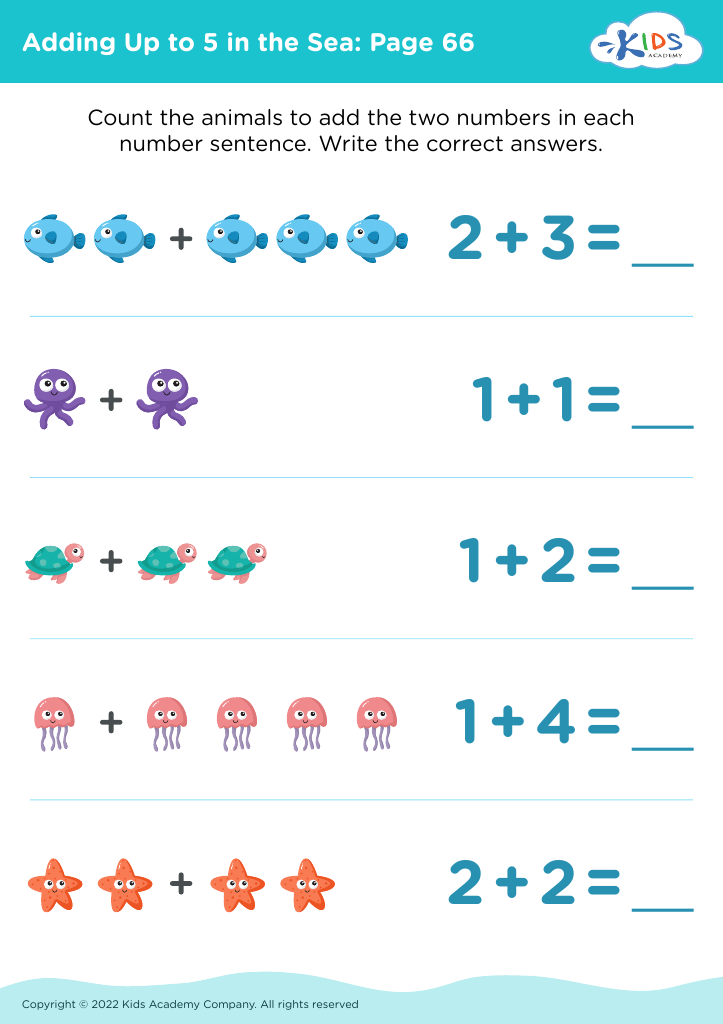
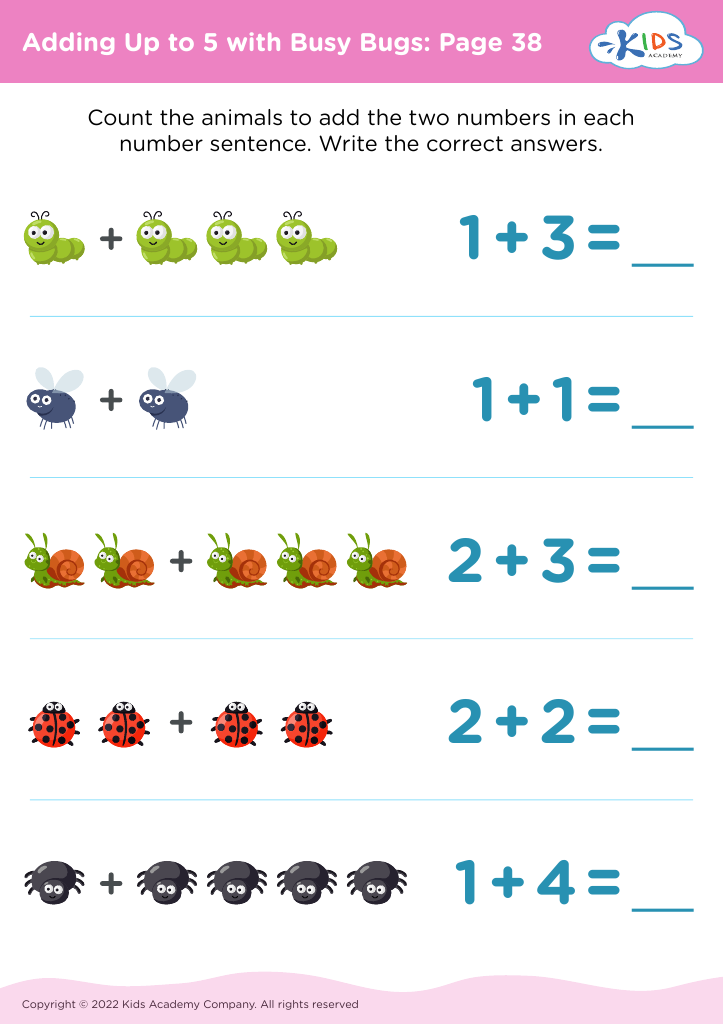
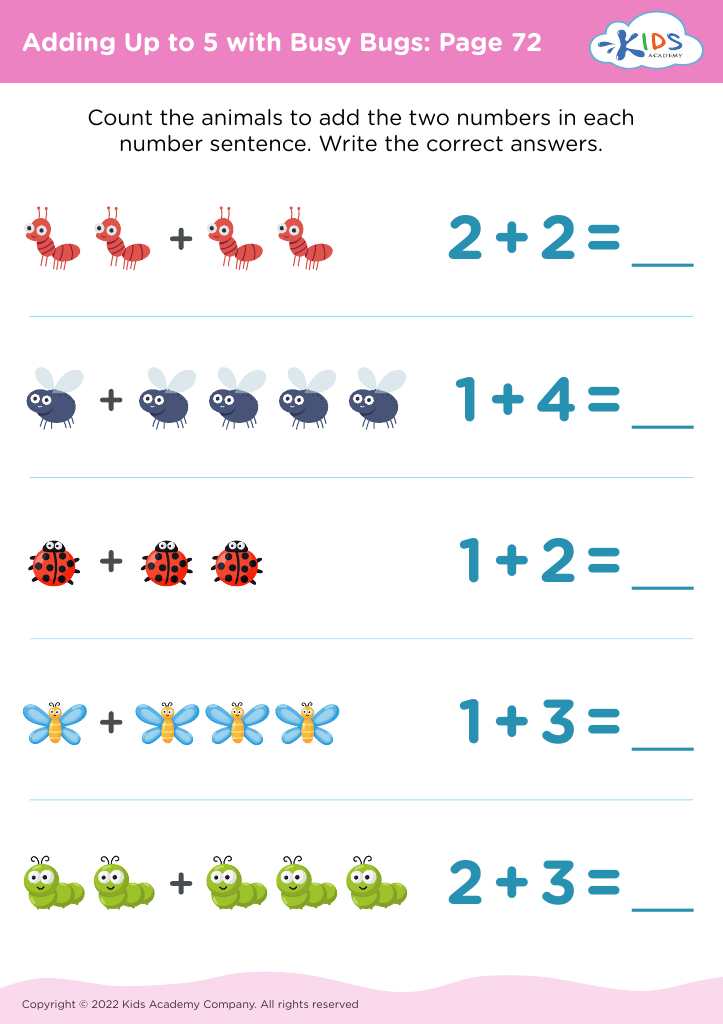
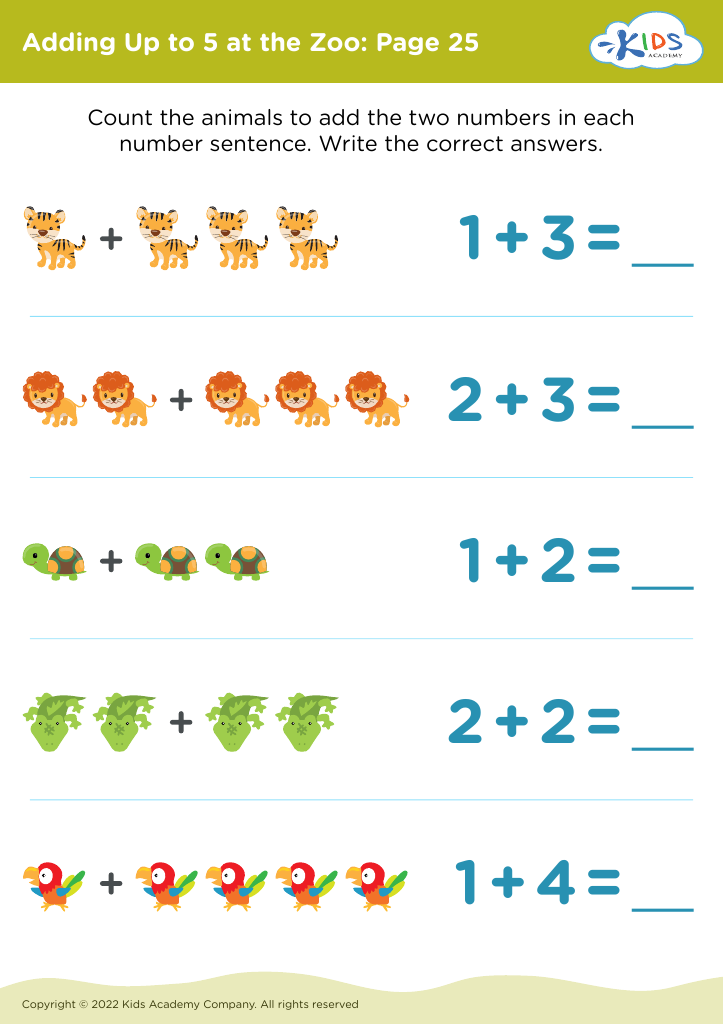
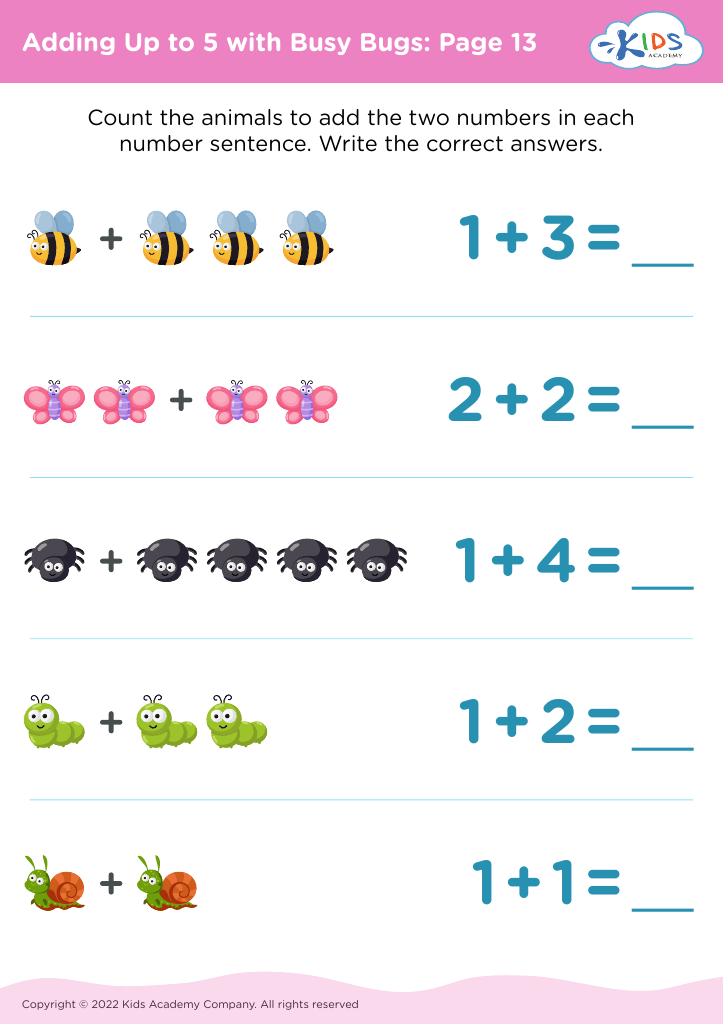
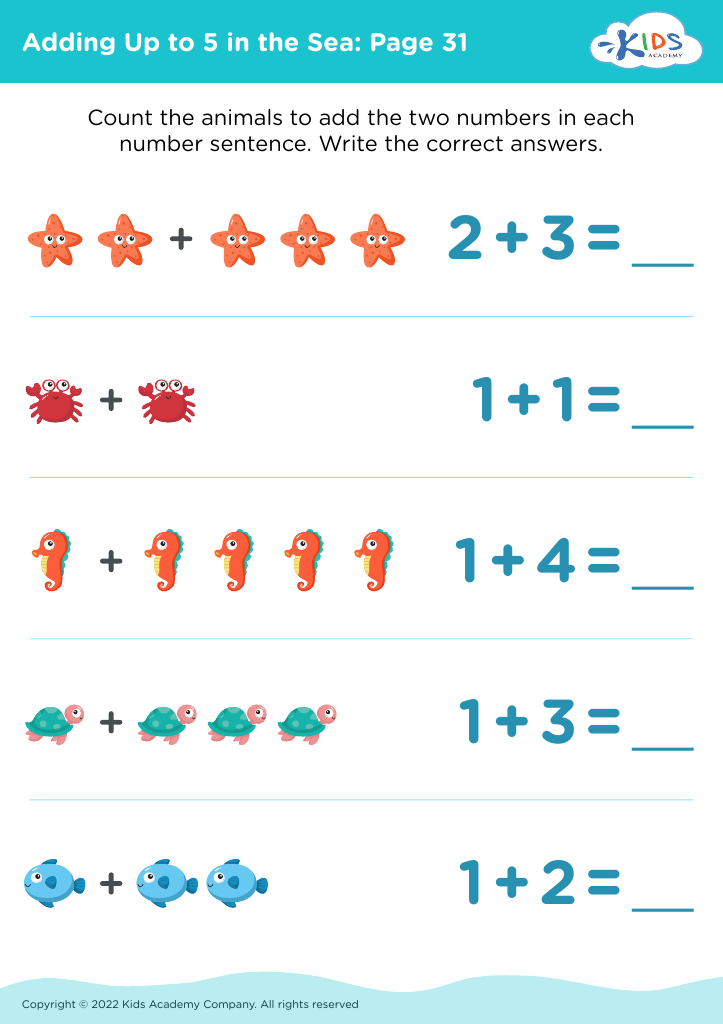
Boost your 3-year-old's hand-eye coordination and basic math skills with our engaging "Hand-eye Coordination Adding Up to 5" worksheets! Designed specifically for young learners, these worksheets integrate fun activities that encourage children to practice addition while improving their fine motor skills. Each page features colorful illustrations, simple equations, and interactive tasks that captivate young minds. Perfect for at-home learning or classroom use, our worksheets foster early math competencies in a playful way. Watch as your child gains confidence in their abilities while mastering adding up to 5 through enjoyable and productive activities! Download your worksheets today and make learning fun!
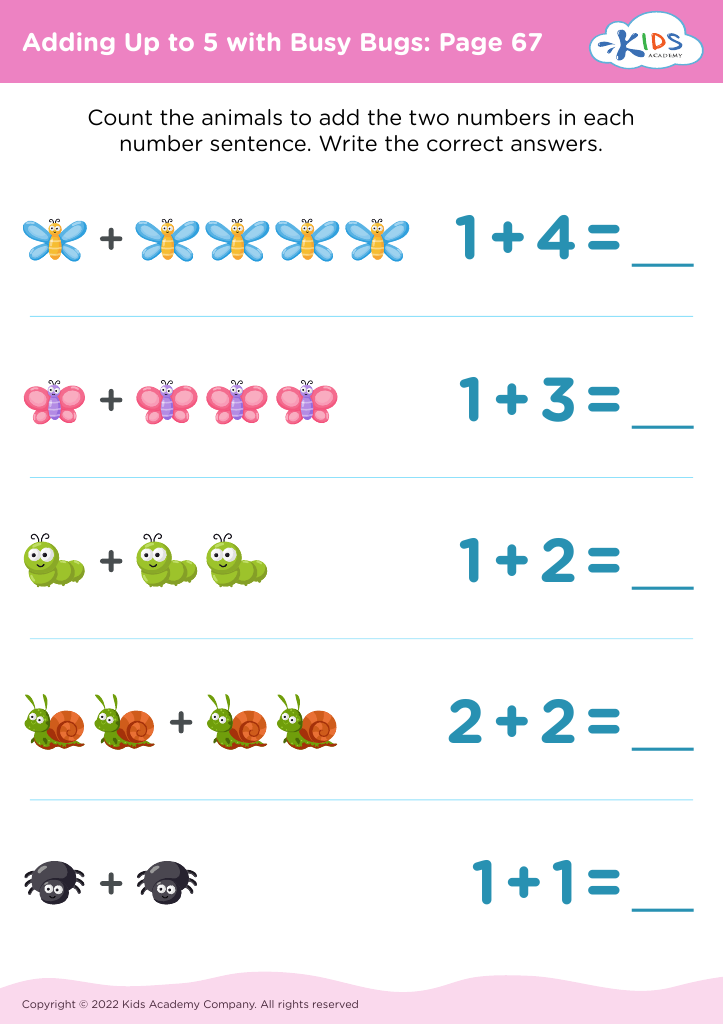
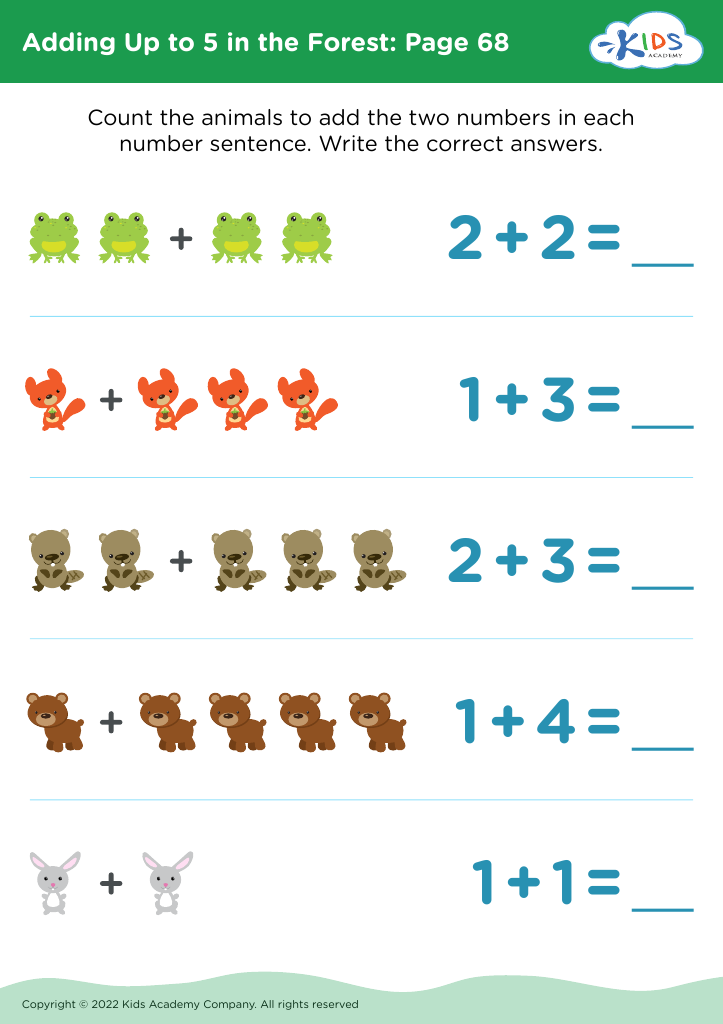
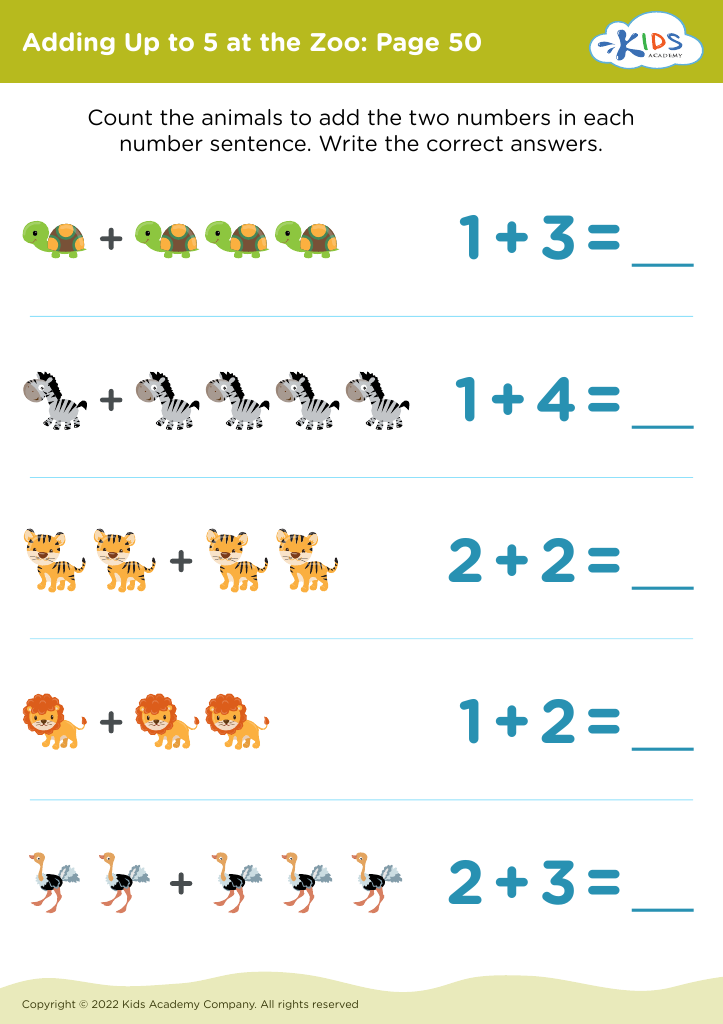








Hand-eye coordination is a vital skill for young children, especially as they embark on their educational journey. For 3-year-olds, mastering hand-eye coordination is essential not only for physical activities but also for cognitive development, including early math skills. When children learn to combine their hand movements with visual input, they develop the ability to manipulate objects and engage in activities like counting and adding—basic concepts that prepare them for future math learning.
In particular, incorporating activities that focus on adding up to 5 can enhance this skill, as it encourages children to practice counting objects, such as blocks or toys. Such hands-on activities reinforce number recognition and basic addition concepts in a fun and engaging way.
Furthermore, parents and teachers who prioritize hand-eye coordination activities can foster a child’s fine motor skills, which are critical for tasks such as writing, cutting, and buttoning clothing. This foundational skill set not only supports academic success but boosts confidence and independence in young learners. By recognizing the importance of hand-eye coordination and playful math activities, adults can help their children build a strong foundation for both their cognitive and physical development.








