Understanding number relationships Adding Up to 5 Worksheets for 3-Year-Olds
3 filtered results
-
From - To
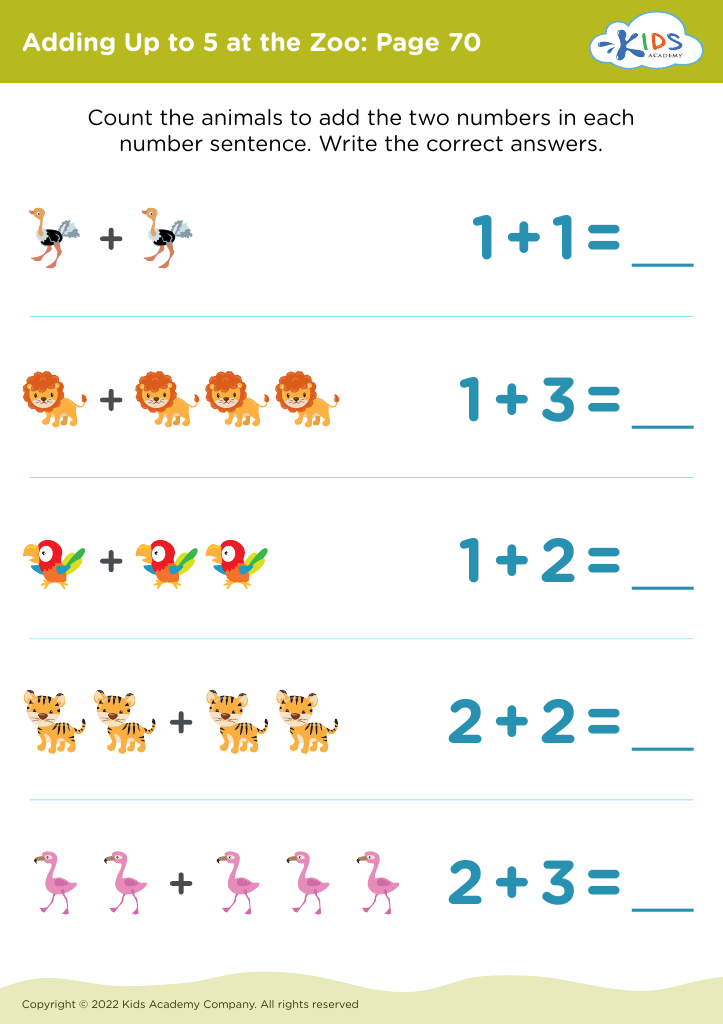
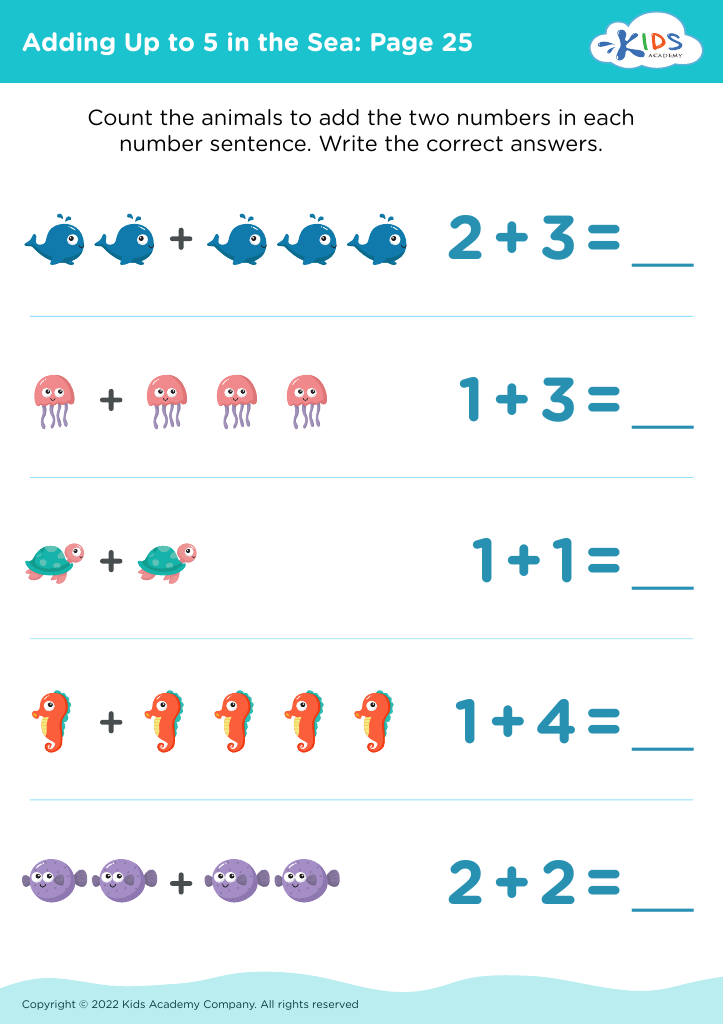
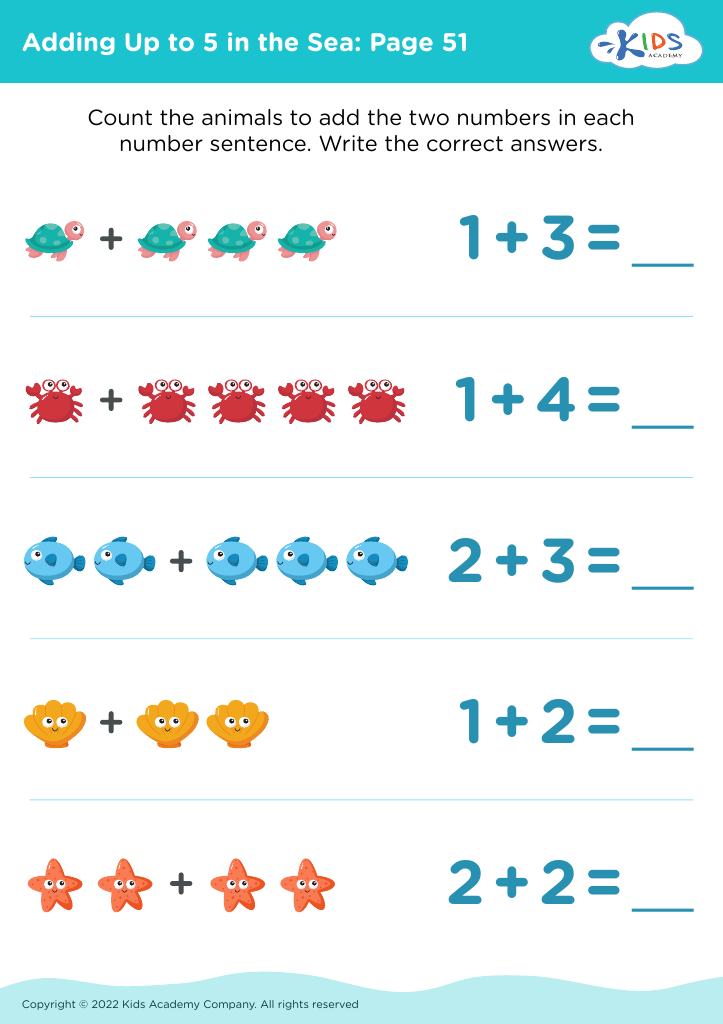
Introduce your 3-year-old to the basics of math with our "Understanding Number Relationships: Adding Up to 5 Worksheets." Designed to help young learners grasp early math concepts, these fun and engaging worksheets focus on number recognition and simple addition. Our activities use colorful visuals and relatable themes to make learning enjoyable and effective. With these worksheets, children will build a solid foundation in counting, understanding number relationships, and basic addition—all crucial skills for future math success. Perfect for preschoolers, these educational resources offer a playful way for young minds to explore and enjoy math. Get started today!







.jpg)
Understanding number relationships adding up to 5 is crucial for 3-year-olds and should be a focus for parents and teachers for several reasons. During early childhood, foundational math skills like number recognition, counting, and basic addition are pivotal in setting the stage for future educational success. Teaching young children how numbers interact, such as how different combinations of smaller numbers make up larger ones (e.g., 2 + 3 = 5), enhances their cognitive development and helps them internalize basic mathematical concepts.
Early exposure to these principles fosters a sense of confidence and curiosity in mathematical learning. It encourages a hands-on, explorative approach to problem-solving, which is essential for their overall intellectual growth. By understanding number relationships, children develop important skills such as pattern recognition, logical thinking, and memory.
Additionally, learning to add numbers up to 5 is not just about arithmetic; it's a comprehensive exercise that can involve using physical objects, engaging in group activities, and employing visual aids. These methods are essential for developing fine motor skills, social interaction abilities, and spatial awareness.
Therefore, parents and teachers should integrate simple addition into daily activities, using fun and engaging methods, to cultivate a strong mathematical foundation. This will provide young children with the tools they need to excel not just in math, but in various aspects of their academic lives.








