Understanding Quantities Adding Up to 5 Worksheets for 3-Year-Olds - Page 2
36 filtered results
-
From - To




%20(1).jpg)



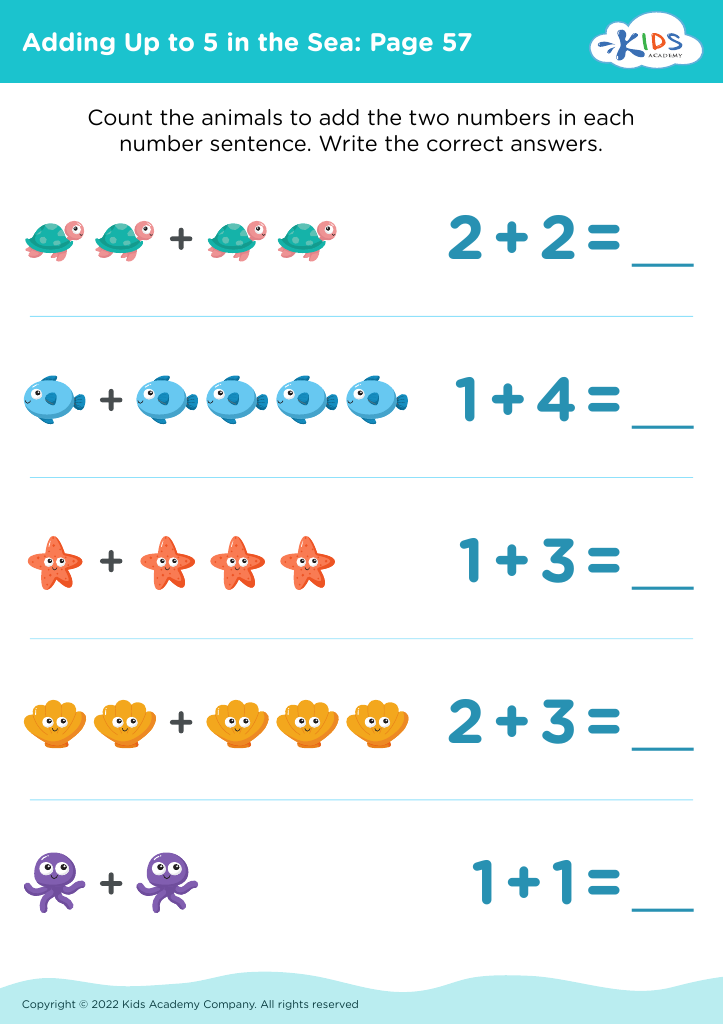
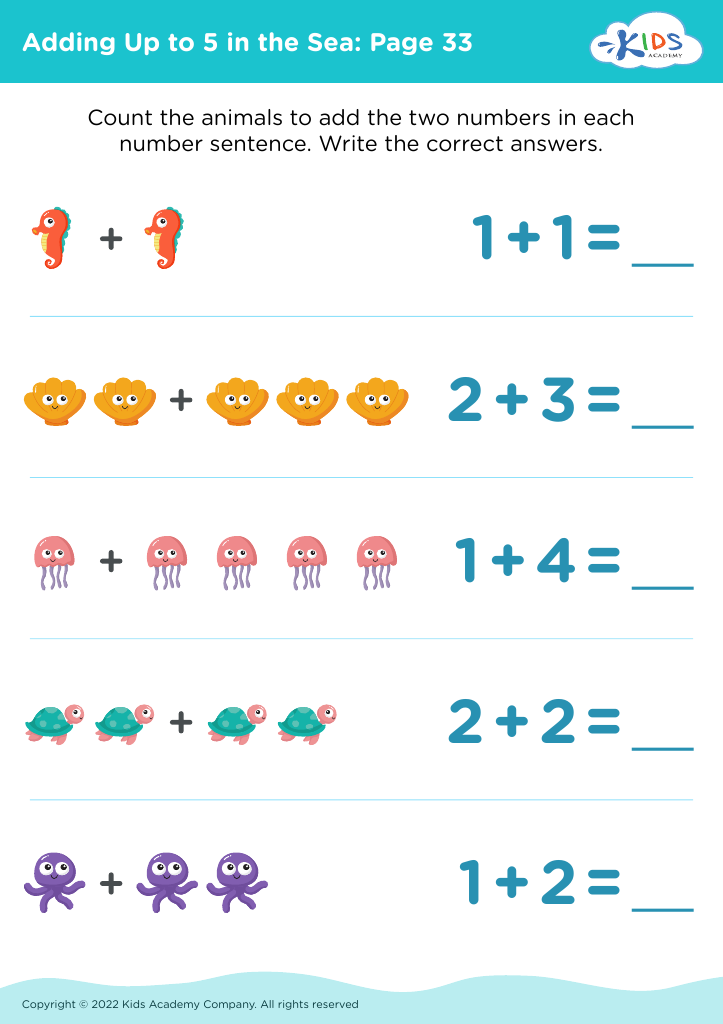
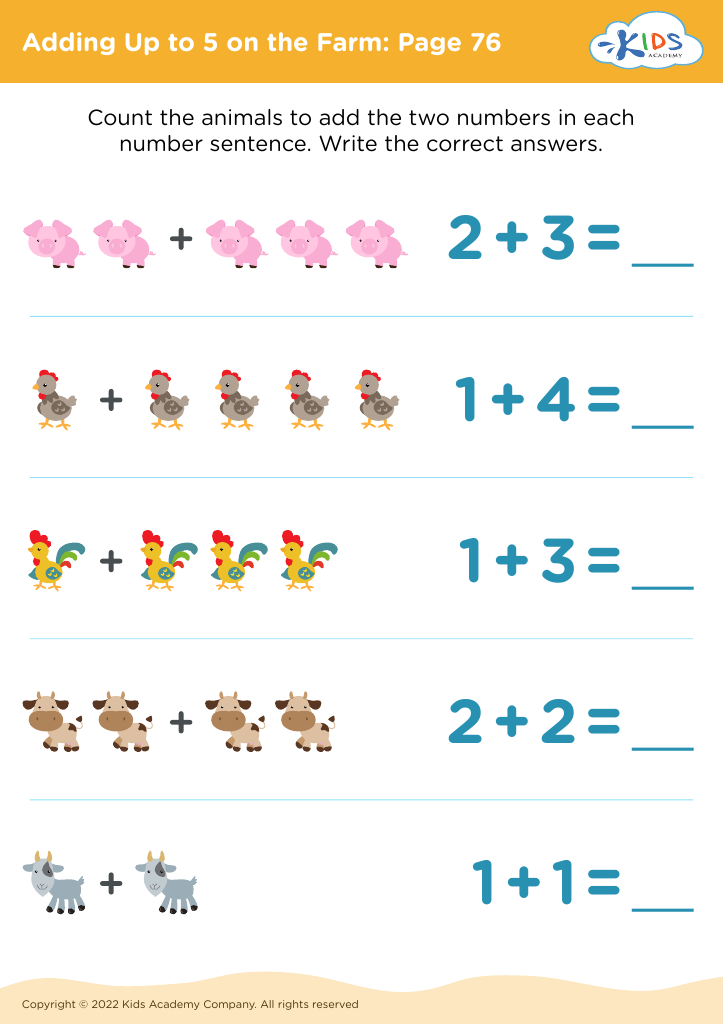
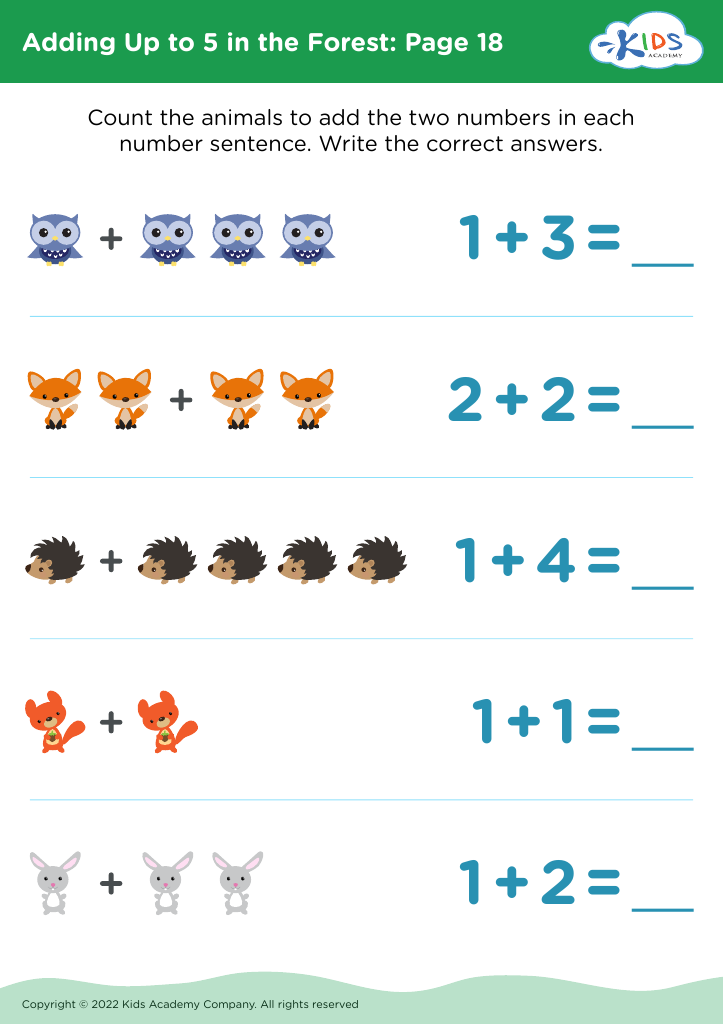
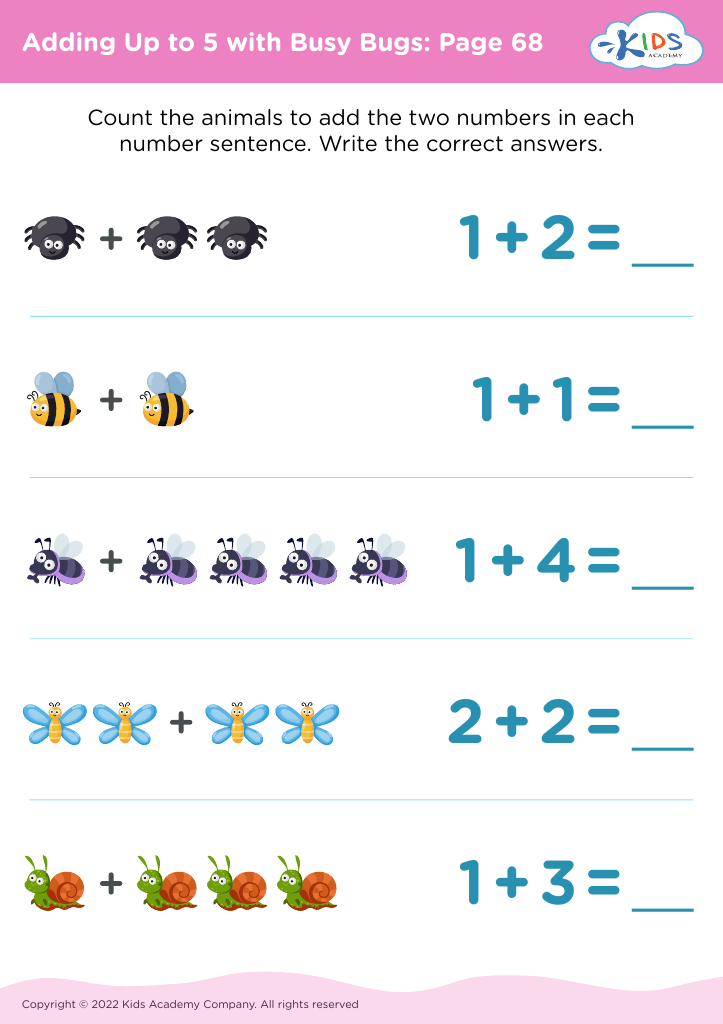
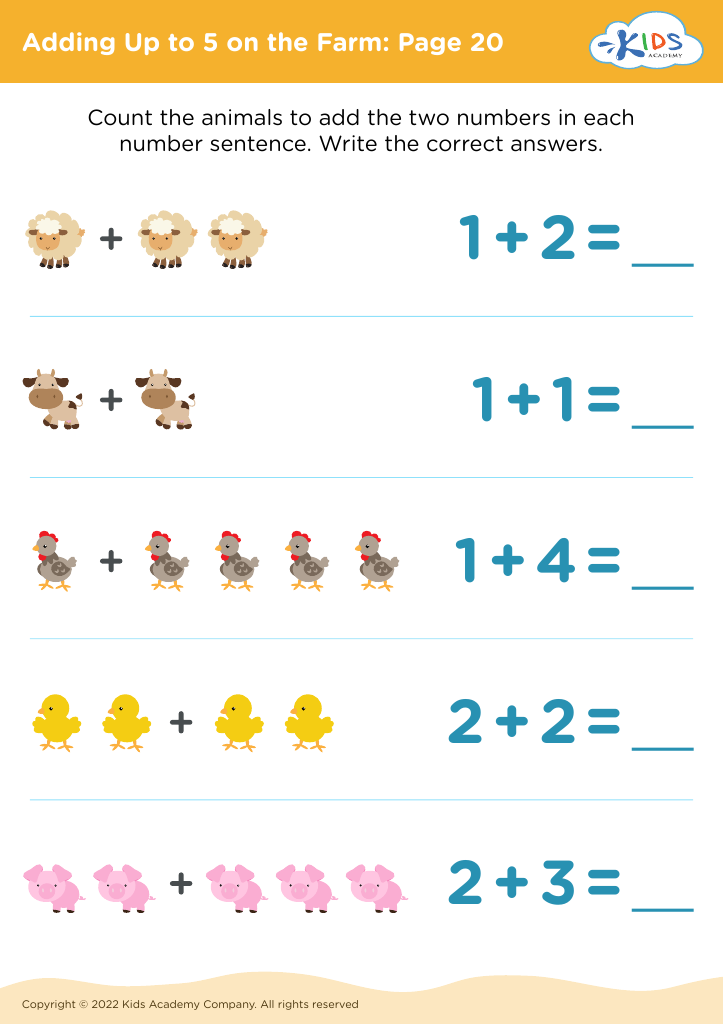
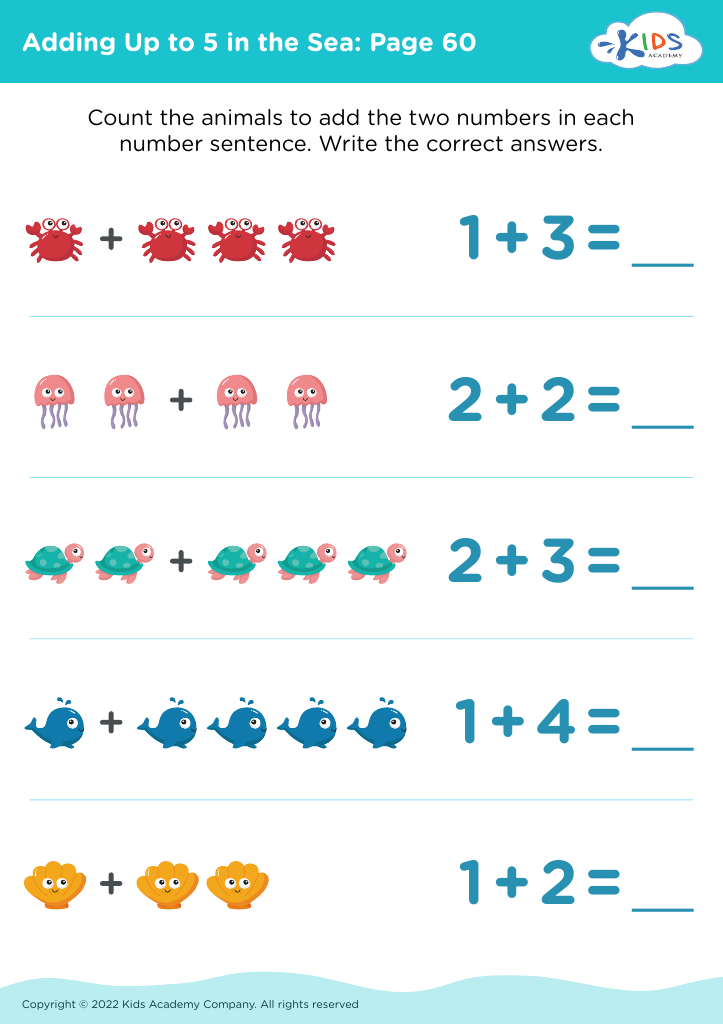
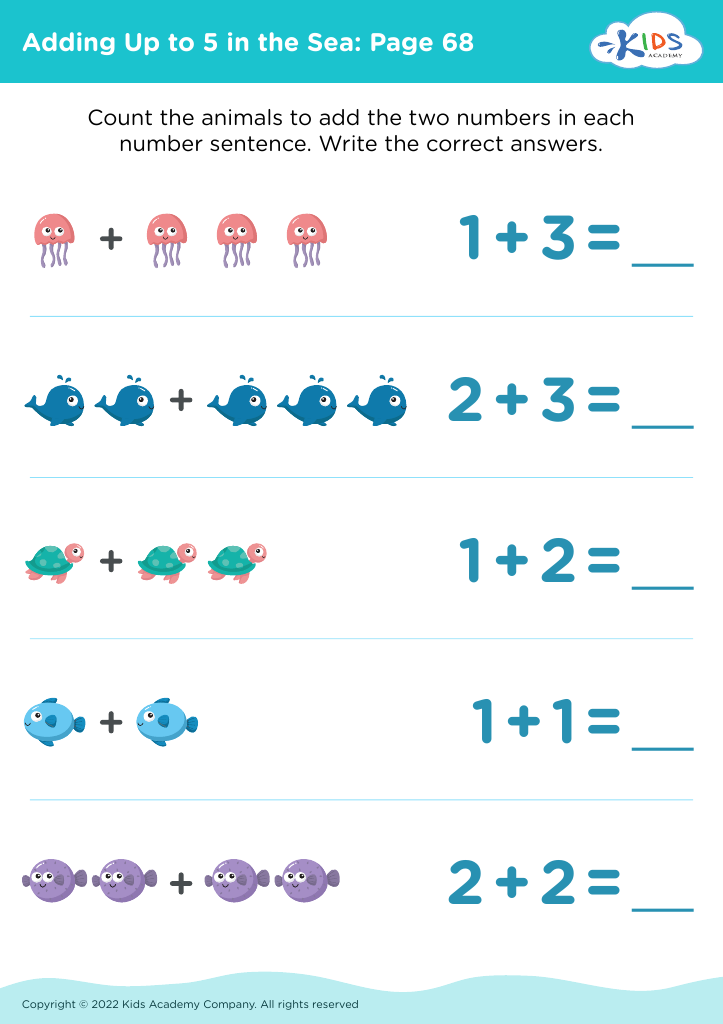
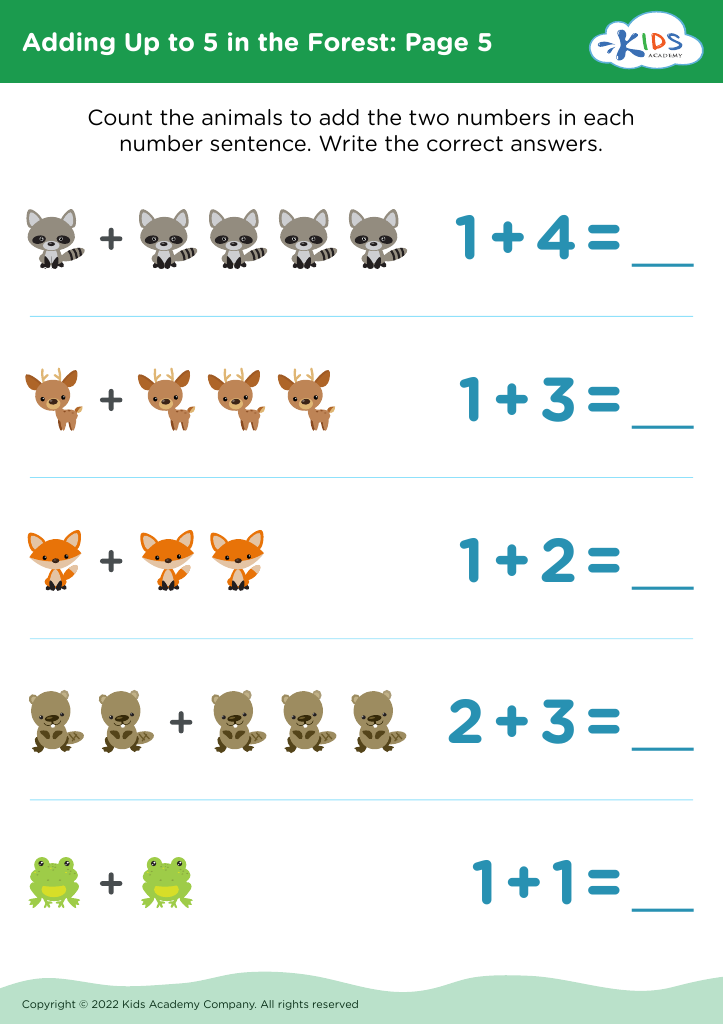
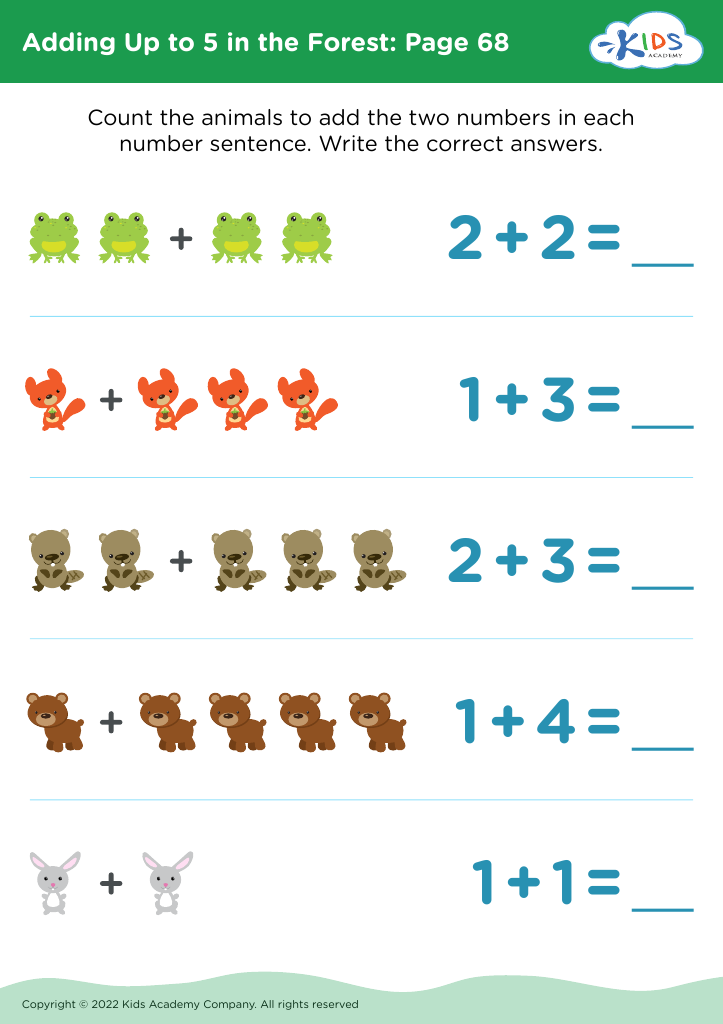
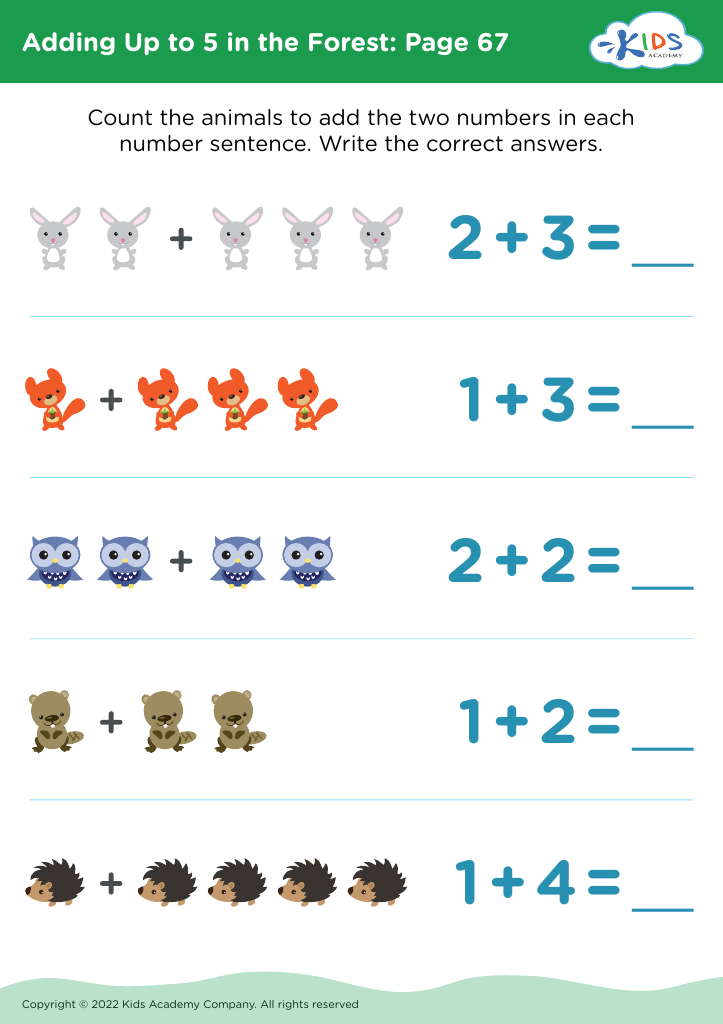
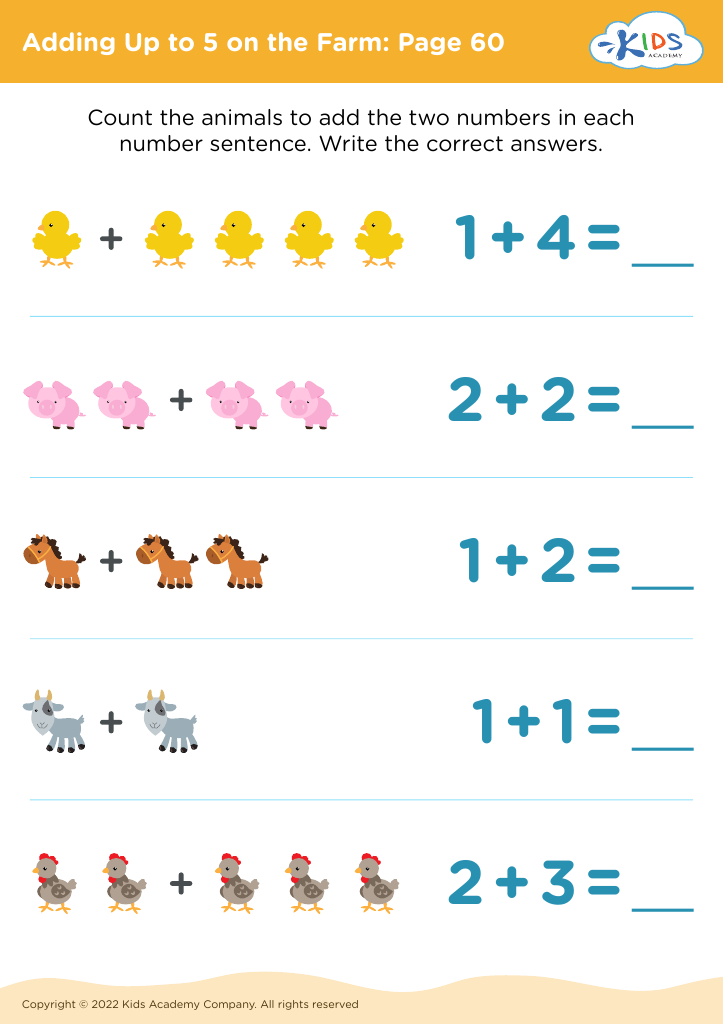
Parents and teachers should place importance on teaching 3-year-olds to understand quantities adding up to 5 because it creates a strong mathematical foundation during early childhood, which is crucial for later academic success. At this developmental stage, children are naturally curious and rapidly developing cognitive skills. Grasping basic concepts such as adding quantities up to 5 enhances their number sense, an essential precursor to more complex mathematical learning.
Understanding small quantities fosters the ability to recognize patterns and relationships between numbers, critical thinking, and problem-solving skills. For instance, learning that 2 and 3 make 5 not only teaches a fundamental arithmetic fact but also helps children comprehend the idea of parts making up a whole. This understanding is key for future arithmetic, algebra, and even logical reasoning.
Moreover, early math skills have been linked to better academic performance in both math and literacy as children progress through school. By engaging young minds with fun, hands-on learning activities such as counting objects, using fingers, or playing simple number games, parents and teachers can make learning enjoyable and boost confidence in the child's ability to tackle new challenges.
In essence, investing attention in this developmental milestone paves the way for academic achievement, nurturing confidence, and an ongoing interest in learning.








