Underwater animal identification Adding Up to 5 Worksheets for 3-Year-Olds
3 filtered results
-
From - To
Explore our engaging "Underwater Animal Identification - Adding Up to 5 Worksheets" designed for 3-year-olds! This collection of five colorful and captivating worksheets combines early math skills with exciting underwater themes, helping your little learners identify aquatic animals while practicing basic addition. Each worksheet features vivid illustrations and simple activities tailored to spark curiosity and promote foundational math skills. Perfect for home or classroom use, these worksheets will keep young minds active as they discover the wonders of marine life while mastering adding up to 5. Dive into fun learning today and watch your child's confidence in math grow!
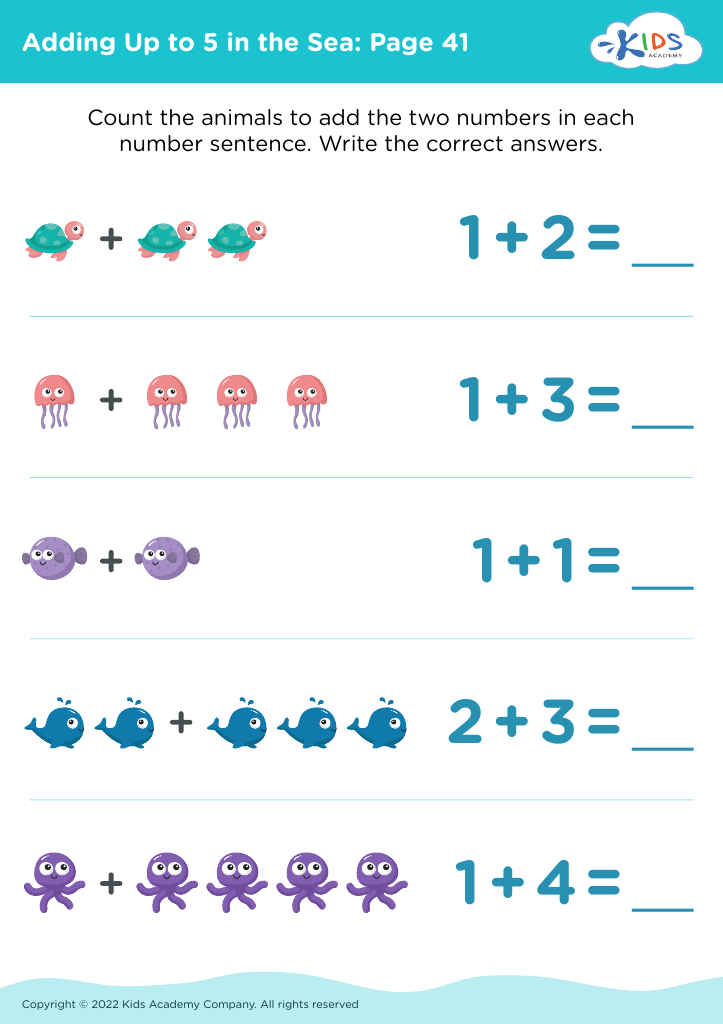
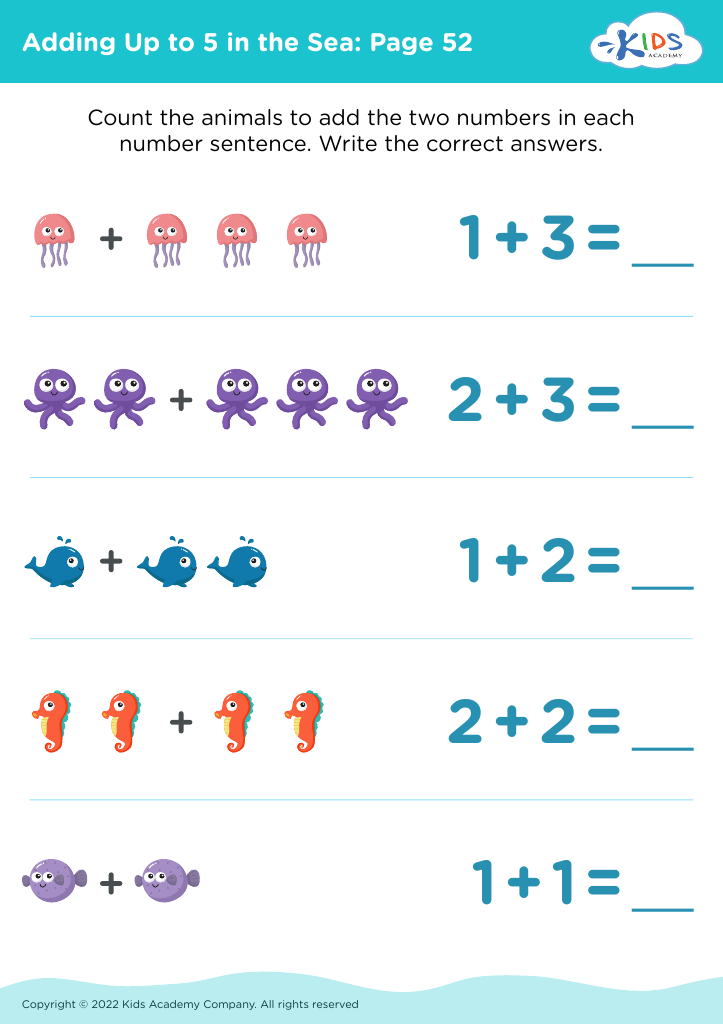
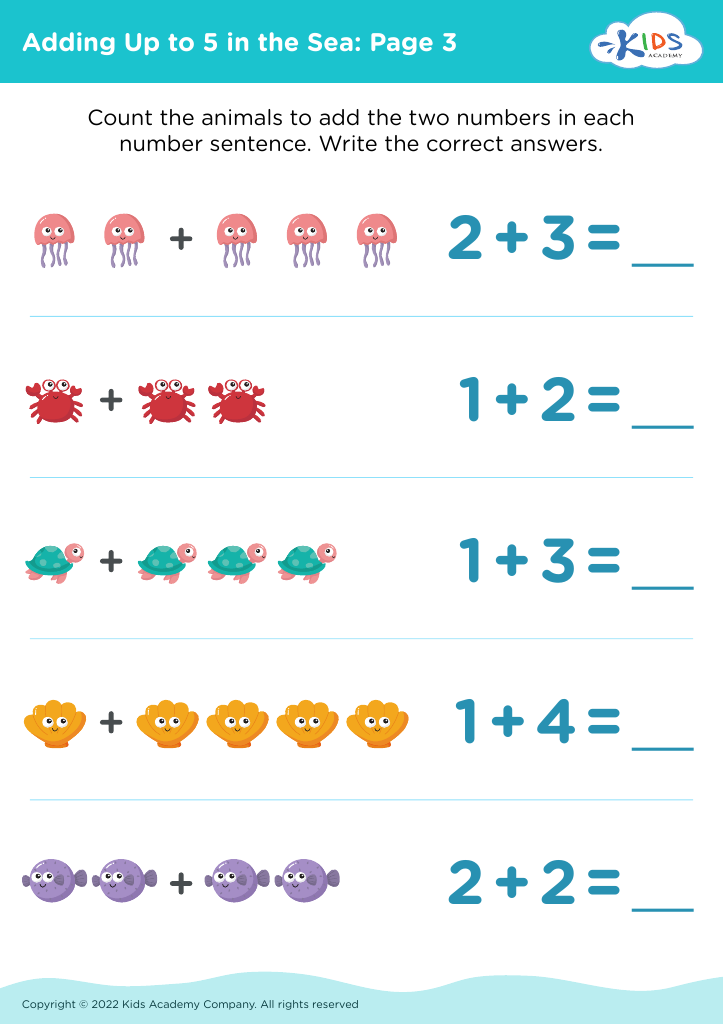






.jpg)

Teaching 3-year-olds about underwater animal identification and introducing simple addition through these animals can be an exciting way to nurture early learning. Parents and teachers should care because this interconnected approach promotes both curiosity about marine life and foundational math skills.
Learning about underwater animals introduces children to the diversity of life in oceans, igniting their curiosity and fostering a sense of wonder about nature. As children identify various species, they engage with questions about their habitats, behaviors, and characteristics, which can lead to further discussions about biodiversity and environmental conservation.
Incorporating simple addition, like counting fish or combining different animal groups, strengthens their cognitive development. This adds an interactive component to learning, making it fun and engaging. It encourages critical thinking and problem-solving skills, as children visualize and manipulate numbers during play.
Additionally, activities that combine education with creativity, such as crafting underwater scenes or engaging in songs about sea animals, provide opportunities for fine motor skill development. By blending identification with arithmetic, parents and teachers can create a rich learning environment that not only educates but gives children a lifelong appreciation of both marine life and mathematics.








