Visual learning enhancement Adding Up to 5 Worksheets for 3-Year-Olds
4 filtered results
-
From - To
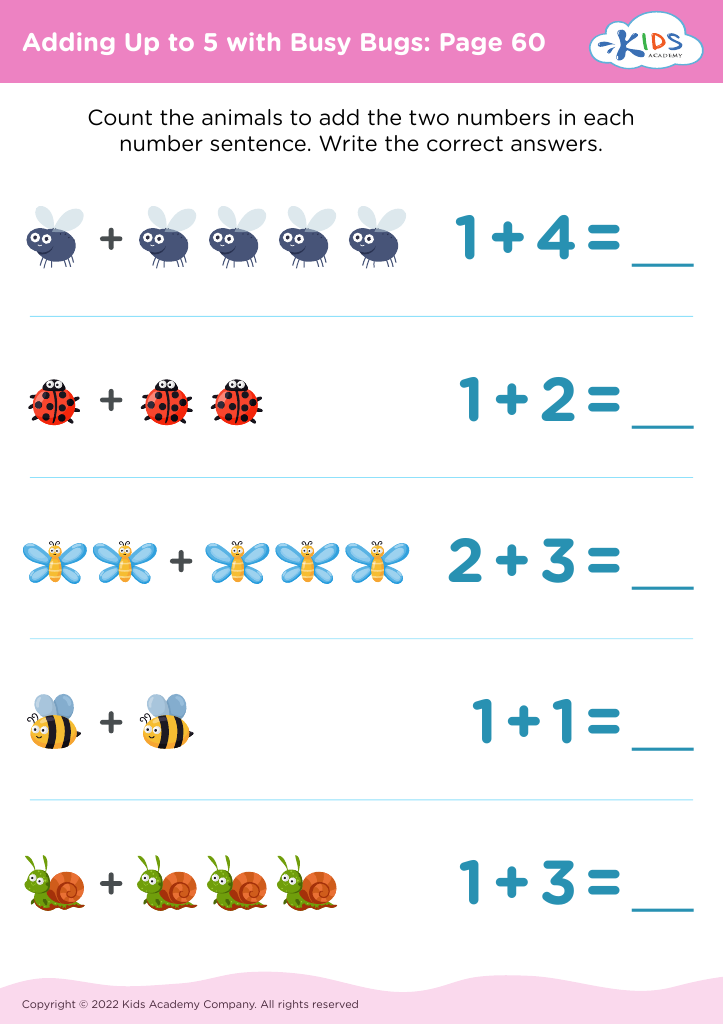
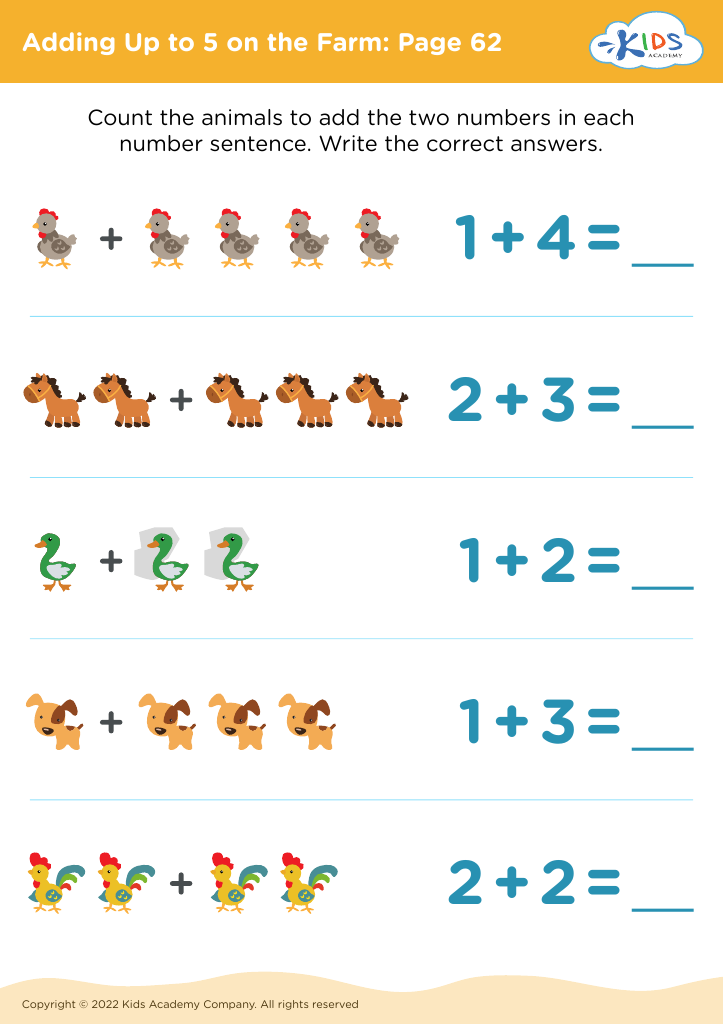
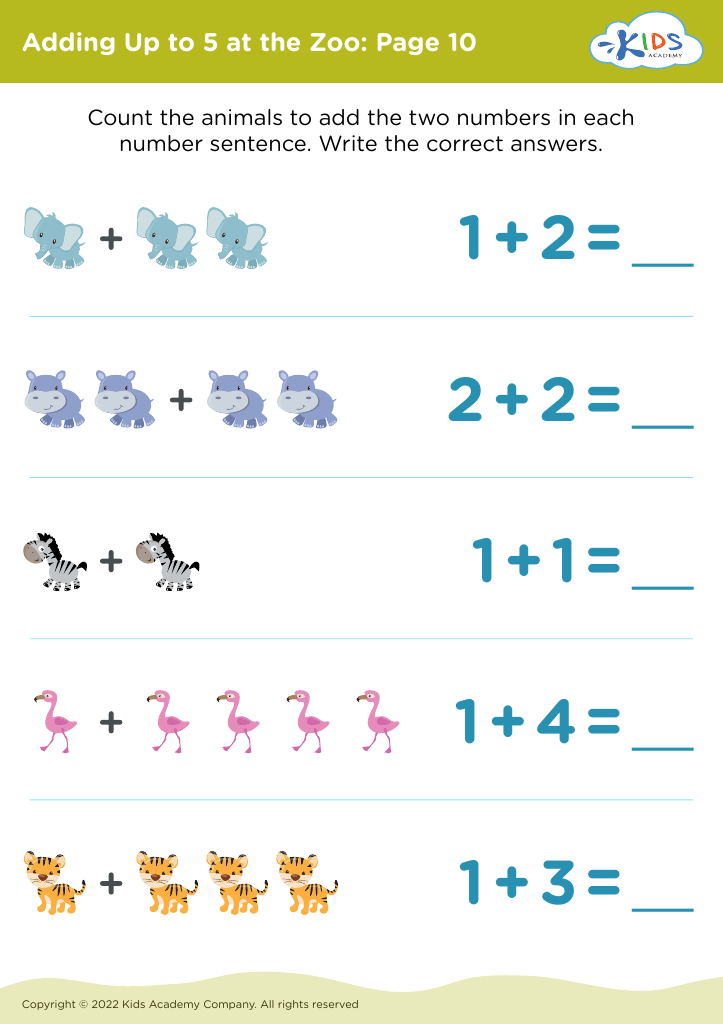
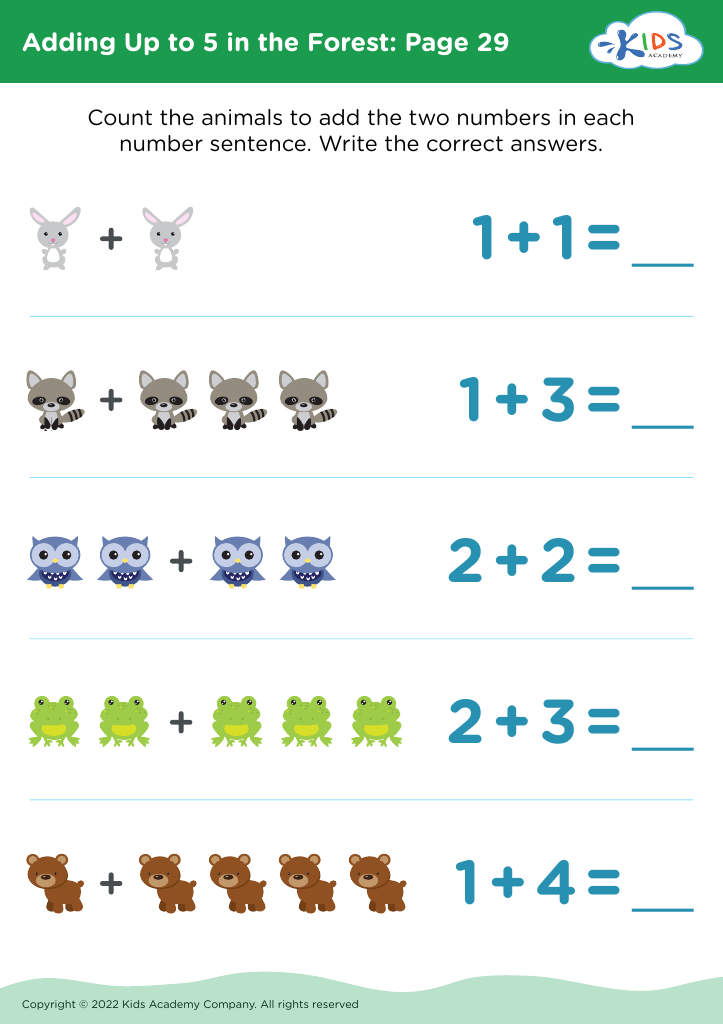
Enhance your 3-year-old's math skills with our interactive "Visual Learning Enhancement Adding Up to 5 Worksheets." Designed to foster early arithmetic understanding, these worksheets use colorful visuals to engage young learners, helping them grasp basic addition concepts effortlessly. Tailored for little ones, each exercise supports cognitive development through playful and intuitive illustrations. With a focus on visual representation and fun elements, our resources ensure that learning is both effective and enjoyable. Ideal for parents and educators, these worksheets provide a strong foundation for future math success. Explore our collection today and watch your child's numerical skills blossom!



%20(1).jpg)




Visual learning enhancement, especially for activities like adding up to 5, is crucial for 3-year-olds due to several compelling reasons connected to their cognitive and developmental growth. At this tender age, children's brains are exceptionally receptive to visual stimuli. Bright colors, engaging pictures, and tangible objects help to capture their interest and retain their focus. Introducing visual learning tools transforms abstract math concepts into something measurable and perceivable, making instruction comprehensible and enjoyable.
Providing visual aids such as number blocks, colorful beads, or illustrated flashcards in counting exercises allows children to visually map out and manipulate quantities. This helps in developing their fine motor skills and hand-eye coordination, vital components at this developmental stage. Moreover, visual learning fosters better memory retention, as young brains are typically adept at remembering shapes and pictures more easily compared to spoken words or text.
Involving visual elements in math learning not only strengthens number recognition and counting skills but also encourages problem-solving and critical thinking at an early age. Implementing visual methods nurtures a positive attitude toward learning and builds a strong foundation for numeracy skills. This sets children on a path of continued cognitive and academic success, instilling confidence and curiosity as they proceed to more complex concepts.








