Visual learning reinforcement Adding Up to 5 Worksheets for 3-Year-Olds
5 filtered results
-
From - To
Explore the engaging "Visual Learning Reinforcement: Adding Up to 5 Worksheets" designed specifically for 3-year-olds! These fun and colorful worksheets utilize visual aids to help young learners grasp the foundational concepts of addition. Through interactive activities, children will enhance their counting skills while enjoying delightful illustrations that make learning enjoyable. Perfect for early childhood educators and parents alike, these resources support developmental milestones and cognitive growth. Each worksheet is crafted to reinforce visual recognition and encourage independent problem-solving. Get ready to ignite a love for math in your little one with our tailored worksheets—paving the way for a strong educational future!
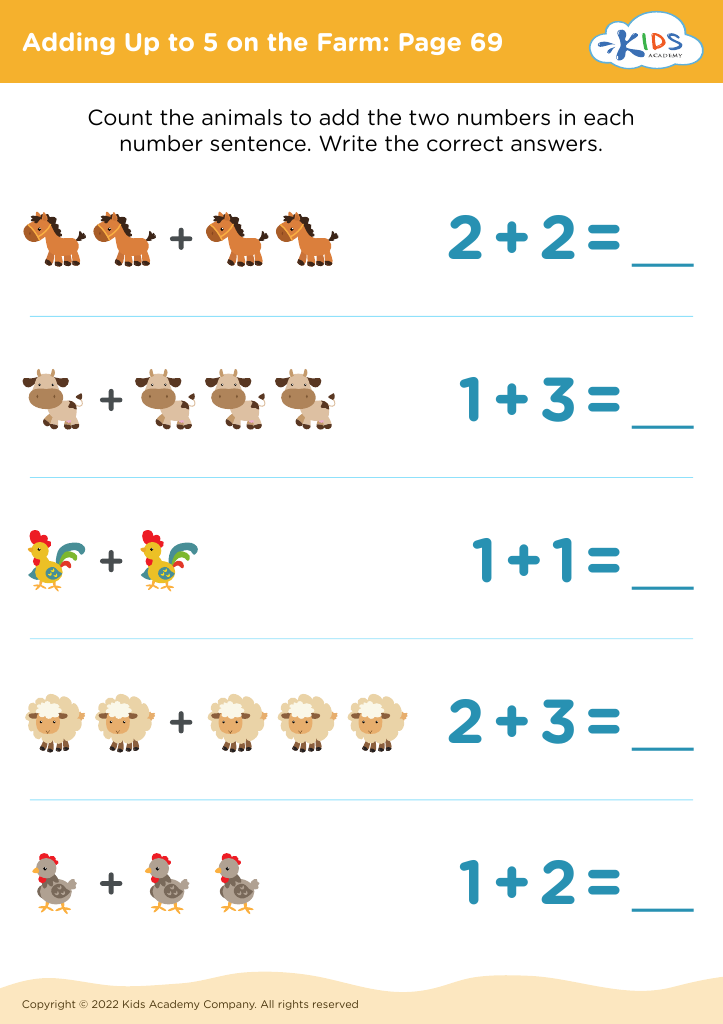
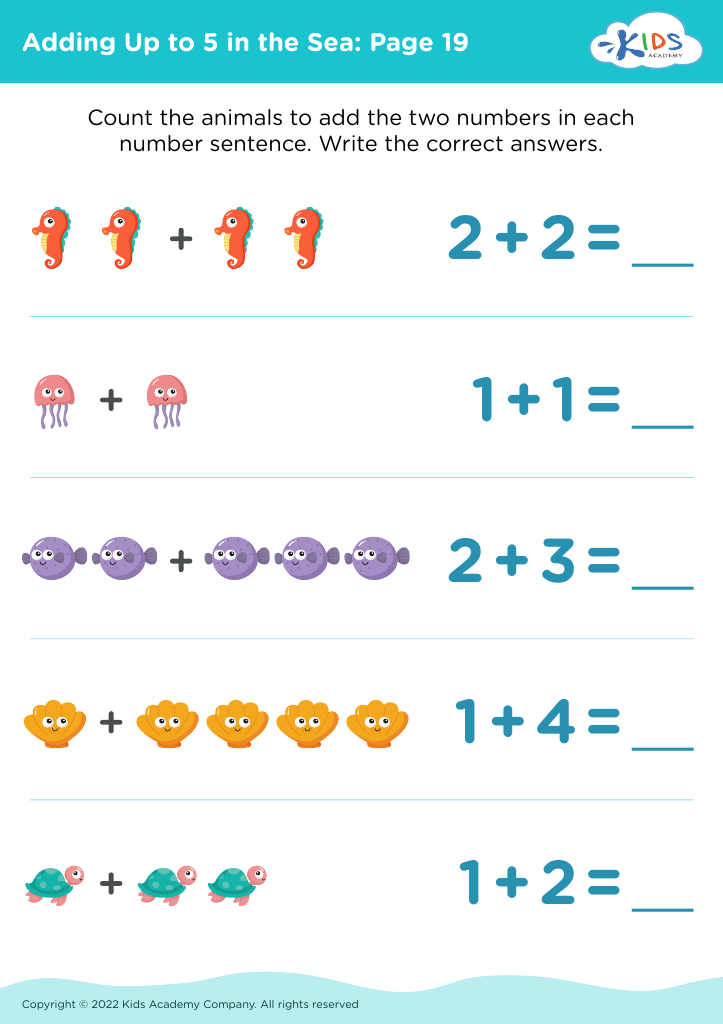
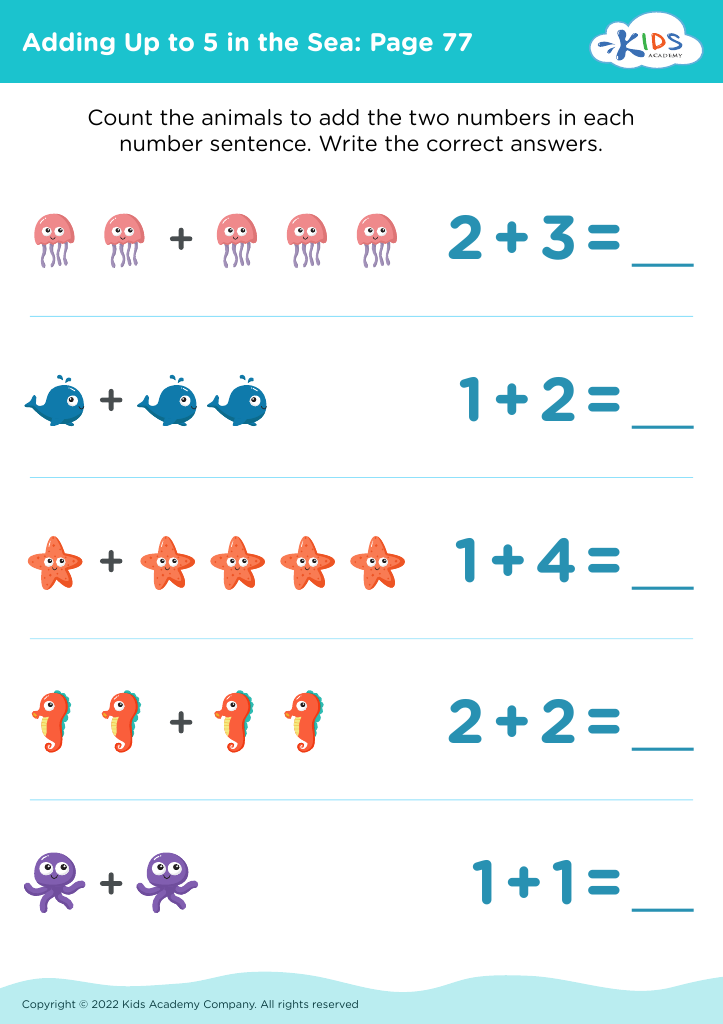
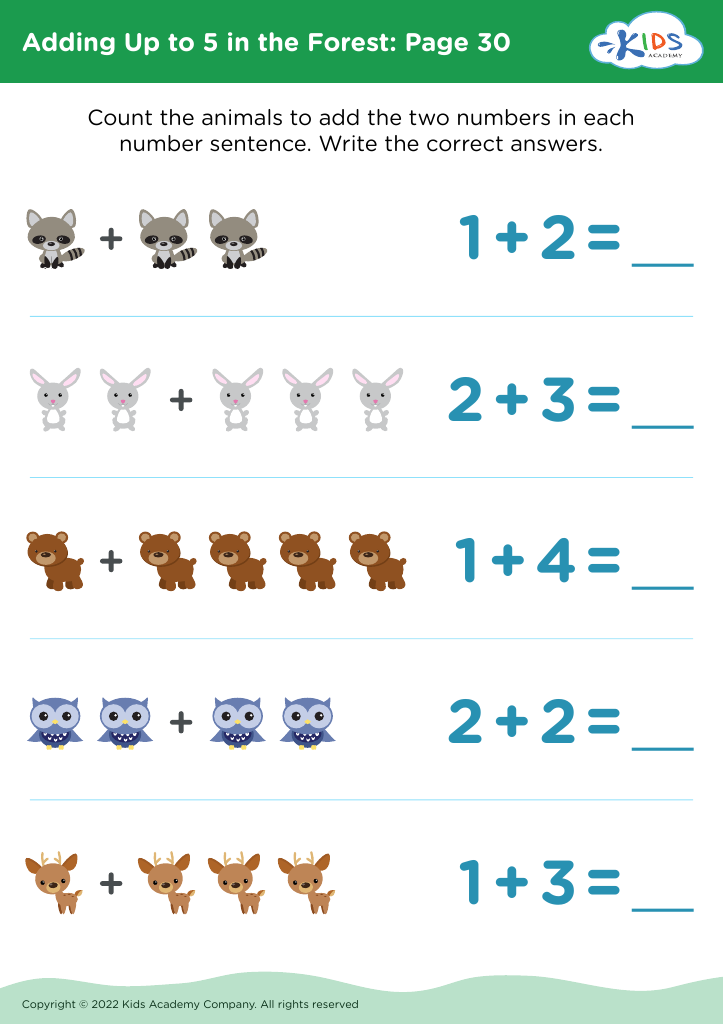
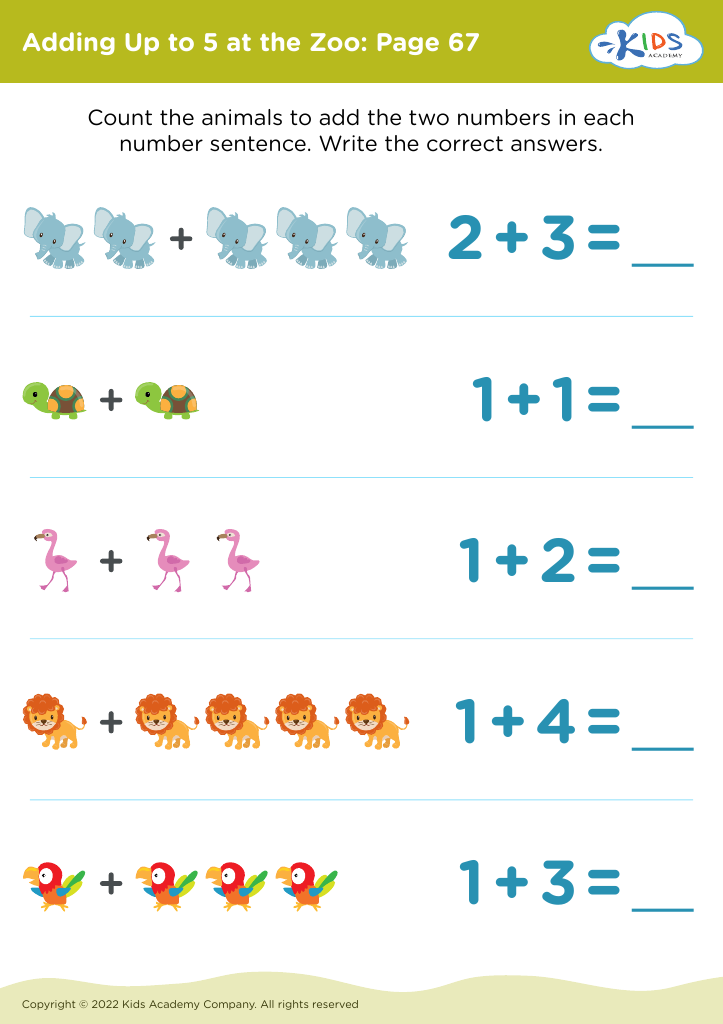







Visual learning reinforcement is crucial for toddlers as they grasp fundamental concepts like adding up to 5, benefiting from engaging and multisensory experiences. At this age, children are naturally curious and learn best through exploration and play. Visual aids, such as colorful counters, number charts, and interactive games, not only capture their attention but also help them understand abstract concepts through concrete representation.
When parents and teachers incorporate visual elements into learning, they facilitate a deeper comprehension. For instance, using illustrations or manipulatives allows children to see and touch the numbers, making addition tangible. This active involvement can reinforce their understanding, making learning both enjoyable and effective.
Moreover, given that every child has a unique learning style, visual learning supports diverse learners who might struggle with traditional methods. It strengthens their cognitive skills, such as memory and problem-solving, and promotes early mathematical fluency. Engaging with visual learning tools also fosters a positive attitude toward mathematics, paving the way for future academic success. Therefore, by emphasizing visual learning reinforcement for adding up to 5, parents and teachers create a rich learning environment that nurtures young minds, builds confidence, and inspires a lifelong love for learning.








