Developing Concentration Adding with Busy Bugs Worksheets for 3-Year-Olds
3 filtered results
-
From - To
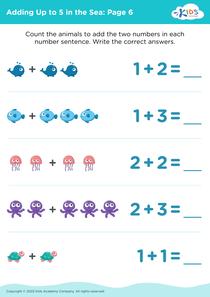
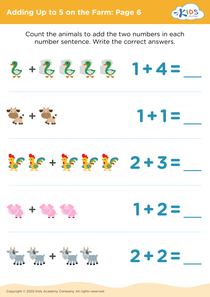
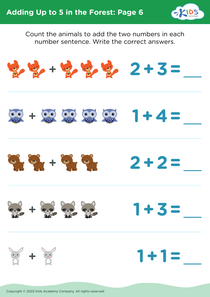
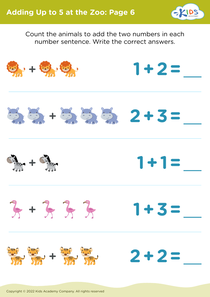
Enhance your 3-year-old's concentration and foundational math skills with our "Adding with Busy Bugs" worksheets! Designed to captivate young minds, these engaging activities combine colorful illustrations and fun themes to make learning enjoyable. Each worksheet encourages focused attention while introducing simple addition concepts through interactive exercises. As children playfully add various busy bugs, they improve their cognitive abilities and sharpen concentration skills. Perfect for home or early learning environments, these worksheets not only promote numerical understanding but also foster essential cognitive development. Give your little ones a head start in math with the delightful Busy Bugs activities today!
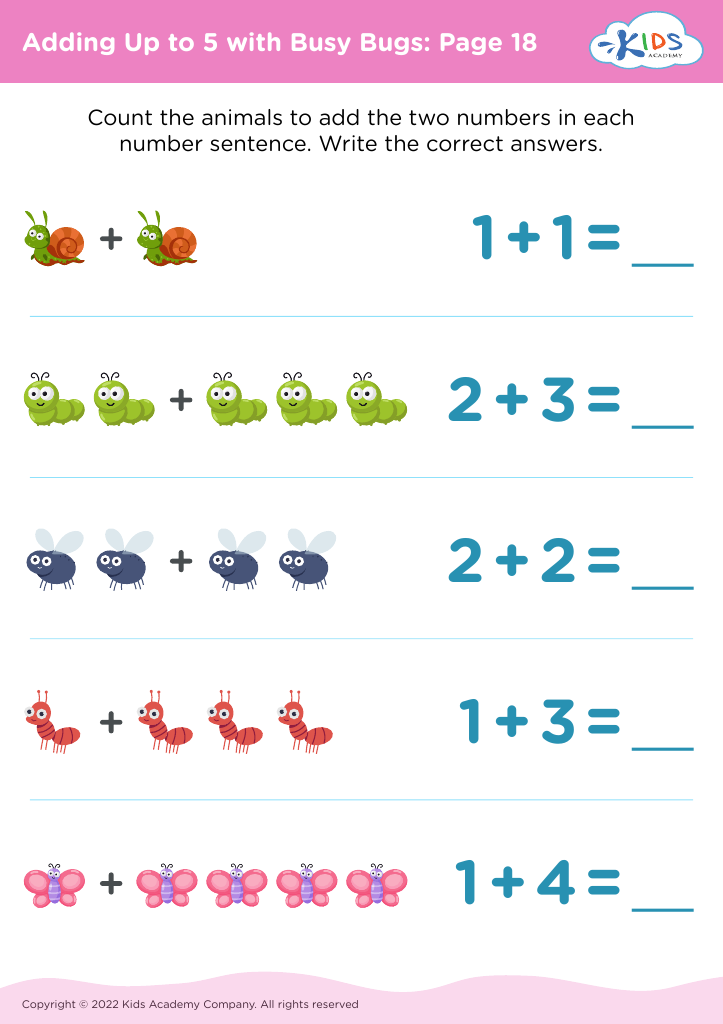
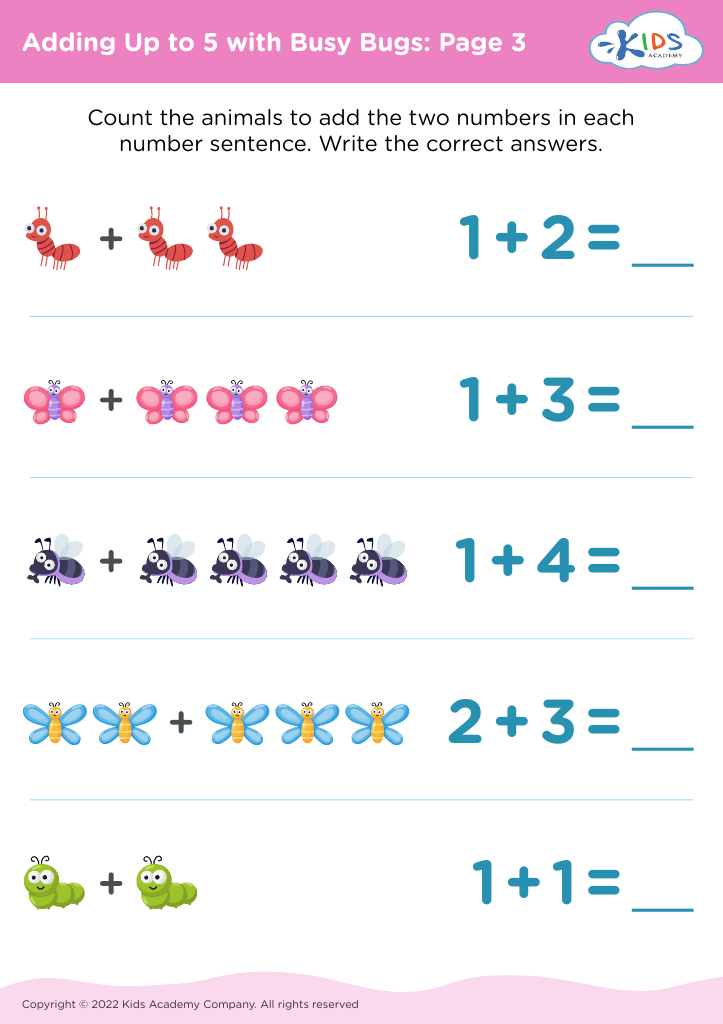
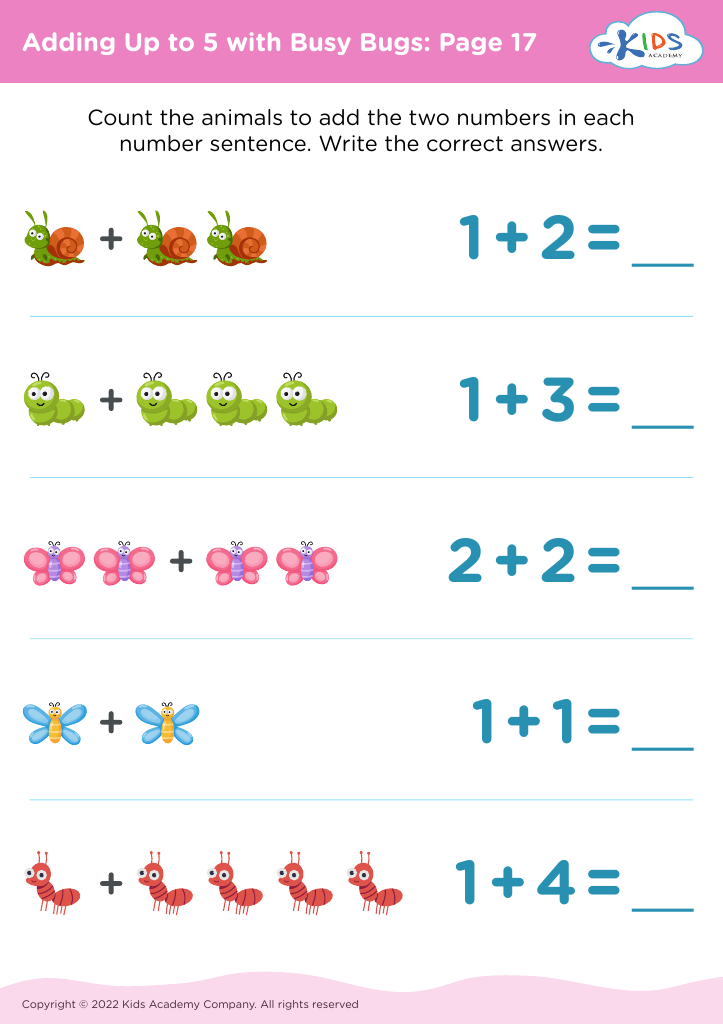



Developing concentration in 3-year-olds is crucial as it lays the foundation for their future learning and social interactions. Busy Bugs activities, focused on enhancing attention spans, engage young children in enjoyable, hands-on experiences that capture their innate curiosity. These activities motivate children to focus on tasks, fostering cognitive skills essential for academic success.
Concentration not only aids in learning but also improves children's ability to follow instructions, listen attentively, and complete tasks. As children navigate through Busy Bugs activities, they also learn to work collaboratively, building social skills as they interact with peers and adults. These positive experiences stimulate brain development, aiding in self-regulation and emotional control.
Parents and teachers play a pivotal role in nurturing these skills. By incorporating concentration-enhancing activities into daily routines, they create a supportive environment where children can thrive. Understanding the importance of focus at an early age promotes lifelong learning habits, ensuring that children are prepared for more complex tasks in the future. Investing time in developing concentration through play-based learning promotes not only academic readiness but also enhances children's overall well-being and social competence. In essence, caring about these skills helps shape confident, resilient learners.