Fine motor skills (writing) Adding with Busy Bugs Worksheets for 3-Year-Olds
5 filtered results
-
From - To
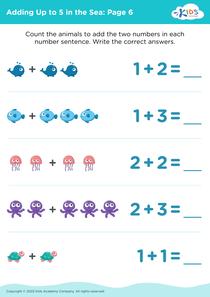
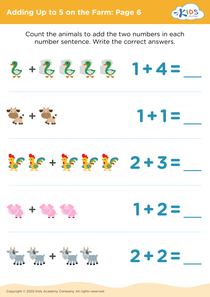
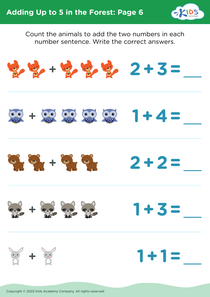
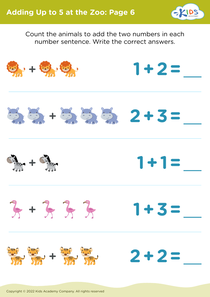
Boost your child's early math and fine motor skills with our "Adding with Busy Bugs Worksheets for 3-Year-Olds"! Designed with bright, engaging bug illustrations, these worksheets are perfect for introducing addition in a fun and interactive way. Each activity not only enhances numerical skills but also promotes essential fine motor development as your little one traces, writes, and counts adorable insects. Ideal for parents and teachers aiming to make learning an adventure, these worksheets help build foundational skills in a playful and educational manner. Grab yours today to start your child on a path to success!
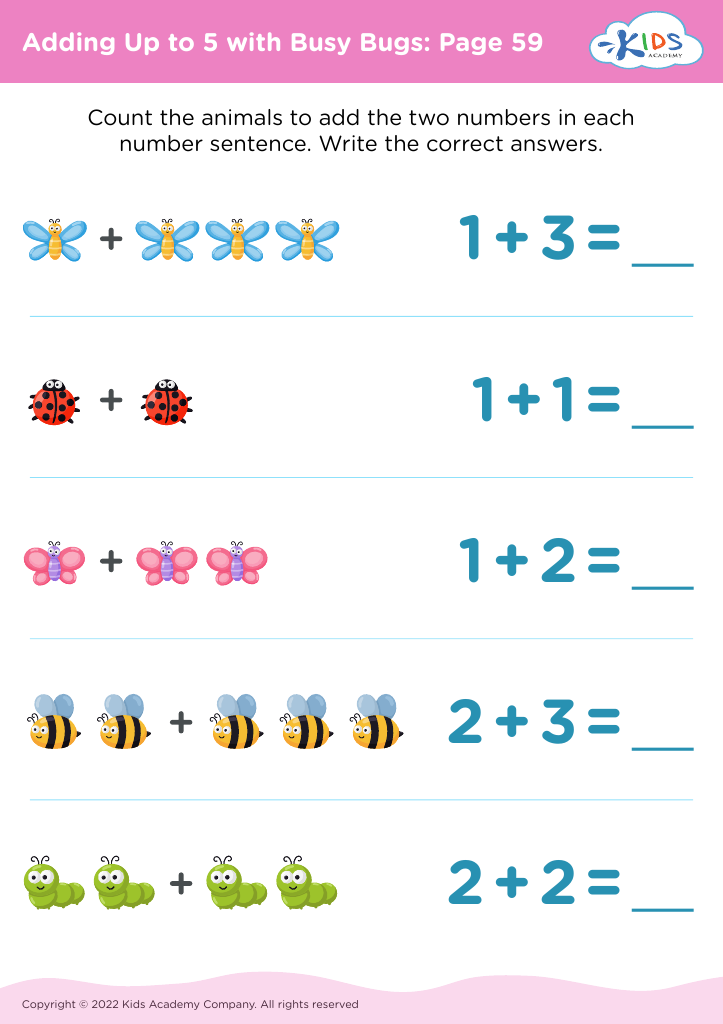
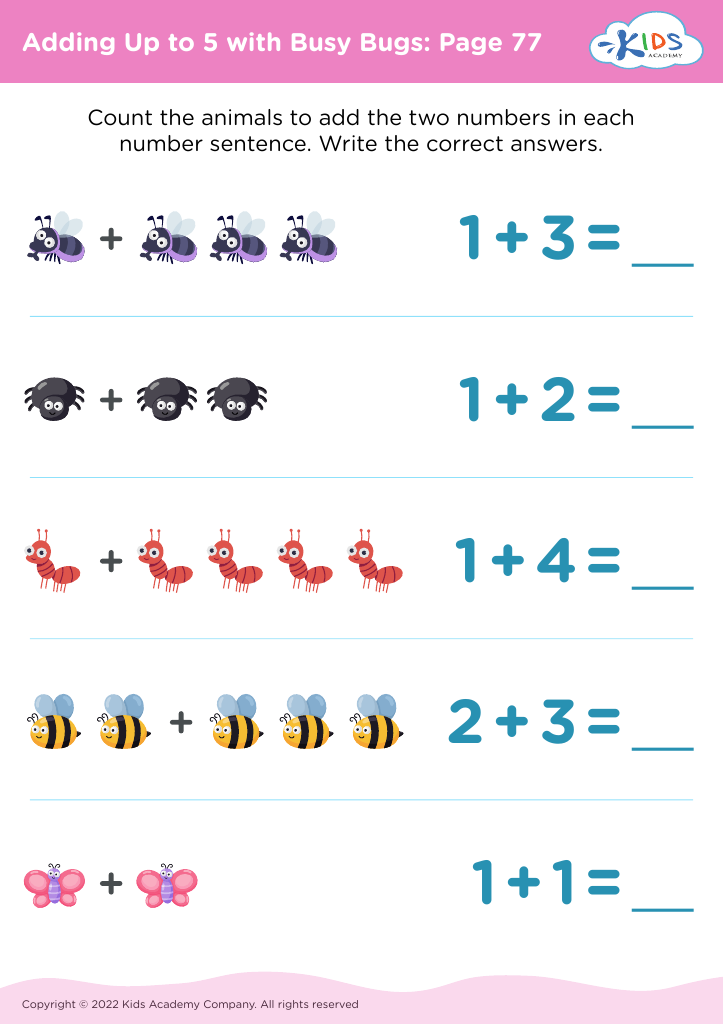
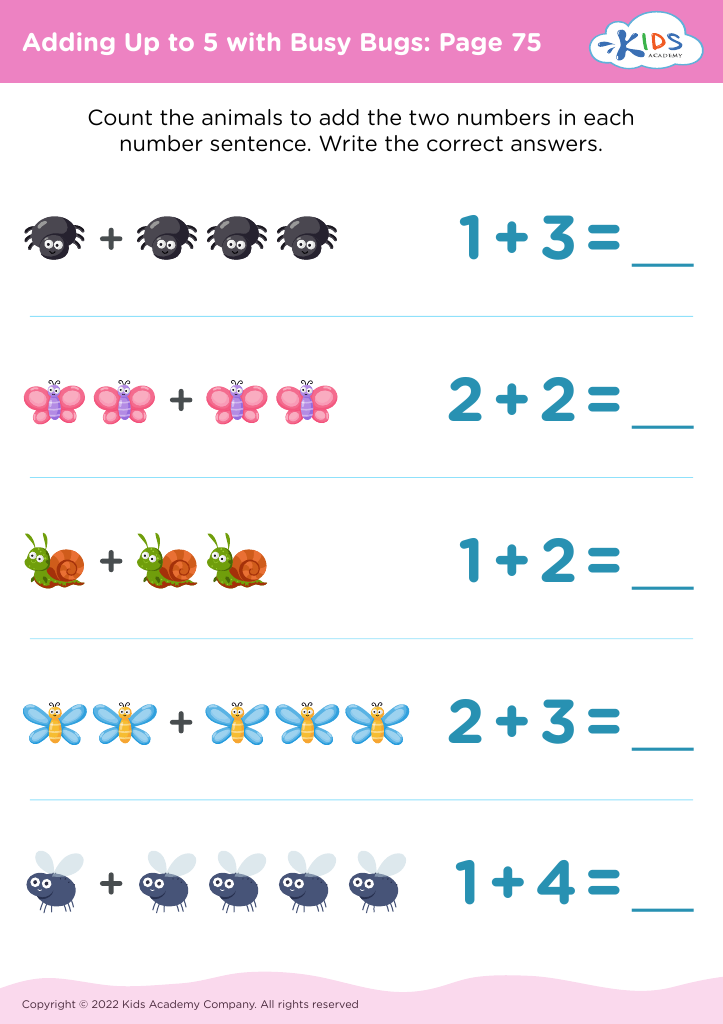
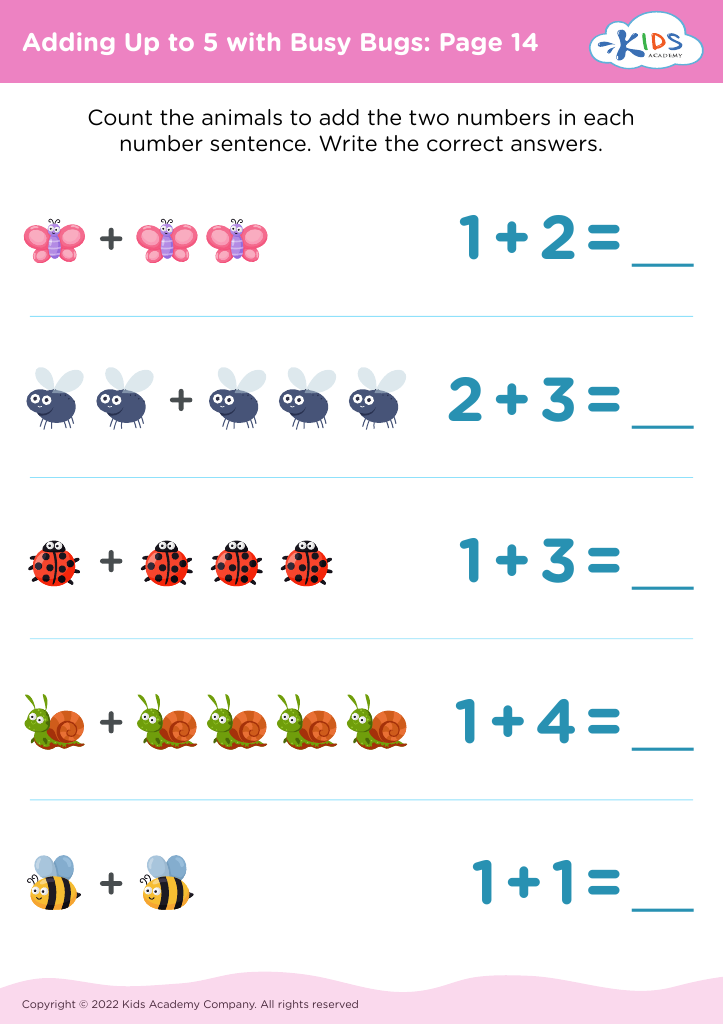
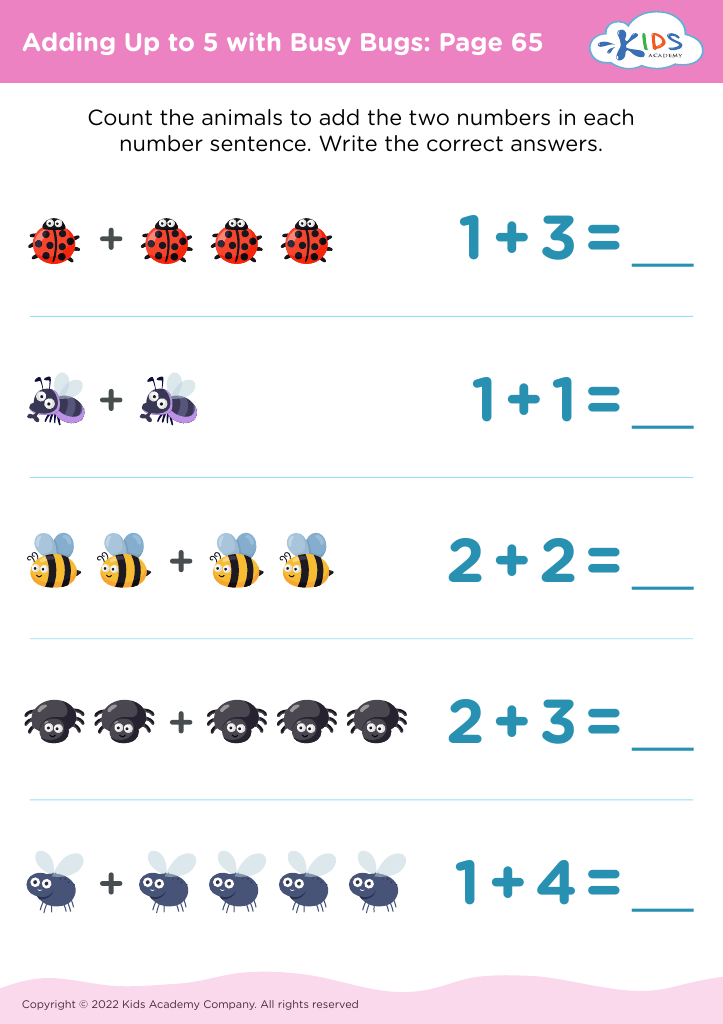



Parents and teachers should care about developing fine motor skills, such as writing, for 3-year-olds, as it lays a vital foundation for their future learning and overall development. Fine motor skills involve the coordination of small muscles, particularly in the hands and fingers, which are essential for tasks like writing, drawing, and manipulating small objects. These skills not only enhance academic readiness but also foster independence and confidence in young children.
Using engaging activities like "Adding with Busy Bugs" can make learning these skills fun and more effective. By incorporating playful, hands-on tasks, children are encouraged to practice precision and control, key elements of fine motor development. For instance, manipulating small toy bugs while counting and adding helps children refine their pincer grip and hand-eye coordination.
Furthermore, activities that blend learning and play spark curiosity and sustain a child's interest. Developing these skills early can prevent frustration later on when they are required for more complex tasks, such as writing letters and numbers. Structured yet enjoyable activities ensure a smoother transition later into formal schooling, making learning a positive experience and promoting a lifelong love for education. Wielding such skills early on empowers children to explore, create, and effectively communicate their ideas.